
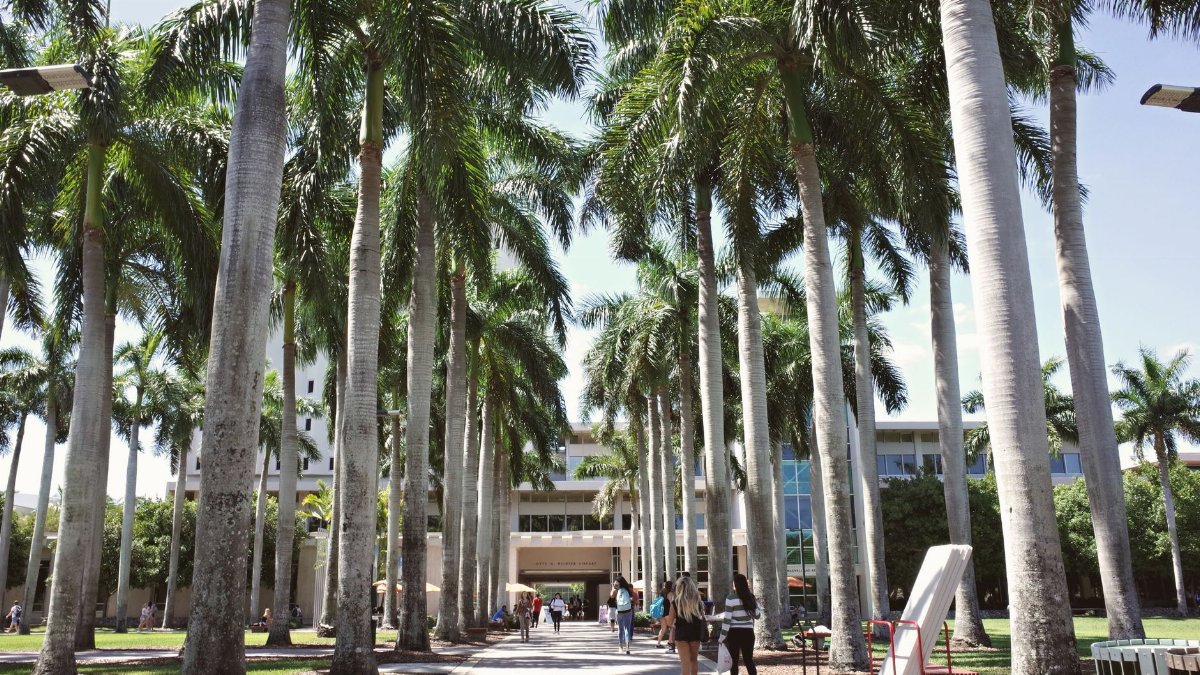
On a warm afternoon in Wynwood, the murals still do most of the talking, yet a quieter announcement is now competing with the paint. Carnegie Mellon has named Jignesh Patel founding dean of a planned research campus whose backers describe it as a $2 billion project, financed in significant part by a record gift from Ken Griffin. The Carnegie Mellon Miami campus is no longer only a rendering and a press release. It has a person whose job is to turn land, money, and ambition into a university people can actually attend. That choice matters more than the architectural sketches, because a founding dean sets the habits a school keeps long after the donor’s name fades from the headline.
A name on a job that does not yet have a building

Universities love announcements. They love groundbreakings even more. What they often postpone is the harder sentence: who is responsible when the promise meets a city that did not ask to be a construction site. Naming a founding dean answers that sentence, at least on paper. Patel now carries a title that sounds ceremonial and is, in practice, almost entirely operational. He will be judged on faculty he can recruit, students he can persuade to take a chance on a new address, and neighbors he can convince that a research university is not just another tower with a logo.
A founding dean is not a caretaker of tradition. There is no tradition yet. There is a parent university in Pittsburgh with a formidable reputation in computer science, engineering, drama, and public policy, and there is a Miami plan that must earn its own reputation without borrowing the old one forever. The person in that seat has to decide which parts of Carnegie Mellon travel south intact and which parts must be invented for a different climate, a different economy, and a different student body. That is not a branding exercise. It is a curriculum, a hiring plan, and a set of promises to people who will move their lives.
Why the first leader matters more than the rendering

Early choices calcify. The first departments hired tend to hire people like themselves. The first majors advertised become the story guidance counselors repeat. The first research partnerships with hospitals, ports, banks, or city agencies become the pipeline everyone else has to fit. If those choices are narrow, the campus stays narrow even after the endowment looks generous. If they are impatient, quality suffers and the parent university’s name becomes a costume rather than a standard.
Readers outside higher education sometimes treat a dean as a figurehead who cuts ribbons and writes thank you notes. On a new campus the dean is closer to a founder. Schedules, labs, housing, visas for international scholars, relationships with Florida regulators, and the daily question of what “Carnegie Mellon” means when it is not in Oakland all land on that desk. A weak appointment would not merely slow construction. It would teach the institution that Miami is a satellite, a billboard, a place where the real work happens somewhere else.
What the public actually knows, and what it does not

Public accounts identify Jignesh Patel as the person Carnegie Mellon picked. That is the fact that changes the story from a gift into a governance decision. Beyond the name and the title, a careful reader should resist the urge to fill gaps with legend. A polished profile can wait. What matters now is the mandate attached to the name: build an academic home worthy of the sum being discussed, in a neighborhood that already has a strong identity of its own.
Transparency will be the early test. Who reports to the dean, and who does the dean report to in Pittsburgh? Which degrees will be offered in the first years, and which will remain aspirations in a brochure? How will admissions standards be protected when a new campus is hungry for enrollment? Families considering a move, and faculty considering a risk, deserve answers that are plainer than a capital campaign video. The appointment is the start of that conversation, not the end of it.
Ken Griffin’s gift and the discipline it demands

Large gifts distort as easily as they enable. A record gift, attached to a $2 billion vision for a Wynwood campus, can free a university from the small humiliations of annual scrambling. It can also create a court around the donor’s preferences, spoken or imagined. The healthiest version of this project treats the money as a trust, not as a script. Research universities exist to follow evidence where it leads, including into questions a financier might find inconvenient. A founding dean who cannot say that out loud, politely and firmly, is not really independent.
None of that requires ingratitude. Miami has watched philanthropists shape museums, medical centers, and waterfronts. Some of those gifts aged well. Some purchased naming rights and little else. The difference was rarely the size of the check. It was whether the institution kept a mission thicker than the donor’s biography. Patel’s success will depend on whether he can honor the scale of Ken Griffin’s commitment while keeping academic judgment in academic hands. That balance is the whole job, stated without romance.
Wynwood is not a blank page

Wynwood already has a public life. Artists, small businesses, night crowds, and residents who remember when the warehouses were cheaper and quieter all have a claim on the streets a campus will share. A university that arrives as if the neighborhood were empty land will spend years repairing a wound it did not need to make. A university that arrives as a guest with resources can do something rarer: add laboratories and classrooms without sanding off the place that drew people there.
The Carnegie Mellon Miami campus will be watched for how it treats rent, traffic, and the ordinary friction of a dense neighborhood. Students need housing. Faculty need schools for their children and labs that do not flood. Neighbors need to know whether “innovation district” is a euphemism for displacement. These are not side issues for a communications office. They are academic issues, because a research university that cannot live honestly with its block will not teach civic responsibility with a straight face. Patel does not control the real estate market. He does control whether the university acts as if that market is someone else’s problem.
Students who will have to trust a place that is still becoming

The first classes are an act of faith. A student who chooses a new campus gives up the safety of an older quad, older alumni networks, and the simple comfort of knowing where the library closes. In return, that student should receive faculty who are present, not commuting celebrities, and a degree whose value does not depend on a press release remaining true. Parents in their forties and fifties, the ones writing tuition checks and asking hard questions at kitchen tables, will want to know who teaches, who advises, and what happens if the grand plan slips by a year.
There is a spiritual dimension to that trust, if the word is allowed to mean something sturdier than mood. To ask an eighteen year old to stake four years on an unfinished institution is to ask for belief. Belief, in this setting, should be earned by syllabi, office hours, and laboratories that work, not by renderings of glass. A founding dean who remembers that will spend less time on spectacle and more time on the unglamorous calendar of a school day. That is the kind of leadership middle aged readers, many of them parents, can recognize without a brochure.
Faculty, labs, and the temptation to import a brand
Carnegie Mellon’s name is a magnet. It will draw applications. It will also draw the temptation to staff a Miami outpost with visitors who keep their real lives in Pennsylvania. Visiting talent has a place. A campus does not. If the serious appointments, the ones with tenure lines and graduate students and multiyear grants, remain elsewhere, Miami becomes a showroom. Patel’s early hiring will tell the truth faster than any slogan. Watch where the permanent offices are. Watch who advises doctoral students. Watch whether Miami faculty sit on the committees that actually decide promotion.
The research agenda should fit the region without becoming a souvenir shop of local themes. South Florida has real problems that reward serious science and policy: water, heat, housing, logistics, health disparities, the security of a city that is also a financial capital. A university can study those subjects with rigor or with tourism. The difference is method, data, and the freedom to publish results that complicate a booster’s narrative. A dean worthy of the post will protect that freedom even when a gala would prefer a simpler story.
Pittsburgh’s standard, carried into a different city

The parent campus is not a myth. It is a place with laboratories, union contracts, arguments about curriculum, and a culture that took decades to become more than a claim. Exporting a standard is harder than exporting a logo. Grades, research ethics, and the expectation that students do the work themselves have to survive contact with a market that will offer shortcuts. Online hybrids, executive certificates, and partnerships with companies can be legitimate. They can also hollow out a degree until the name is the only thing left.
Holding the standard will sometimes look unfriendly. It may mean smaller first classes than boosters want. It may mean saying no to a corporate sponsor who wants a curriculum written in advance. It may mean telling Pittsburgh that Miami is not a branch plant. Mature institutions can bear that friction. New ones often cannot, because they are desperate to look successful on a timetable set by donors and trustees. The appointment of a founding dean is the moment to decide which impatience will win.
Money on a scale that can confuse even careful people

A figure like $2 billion numbs the ear. It is large enough to end an argument in a headline and too large to explain a Tuesday. Operating budgets, not capital announcements, reveal whether a campus can pay faculty, maintain equipment, and support students who are not wealthy. Construction can be funded and the teaching still starved. Endowments can be announced and the annual draw still too thin for the ambition painted on the wall.
A reader does not need a spreadsheet to ask the right questions. What portion of the vision is pledged, what portion is hoped for, and what portion depends on tuition from students who have not yet applied? Who pays if costs rise, as they do on almost every large project in a hot city? Which programs are funded for a decade, and which are funded for a photo opportunity? Patel cannot answer all of that alone. He can refuse to let the round number substitute for a plan. That refusal is a form of respect for the public, including people who will never set foot in a lab but will live beside the traffic.
A city that has heard promises before

Miami is not naive about grand projects. It has celebrated stadiums, museums, medical brands, and technology corridors, and it has also watched some of them thin out once the cameras left. Skepticism is not cynicism. It is local knowledge. The fair request is not that residents cheer on command. It is that the university show its work: jobs that are real, classes that meet, research that is published, and a door that opens to students from Miami Dade County as well as to students flown in from elsewhere.
Town and gown failures are usually failures of attention. Universities talk to themselves. Cities talk to developers. The people who live between those conversations get a newsletter. A founding dean who spends time off campus, in schools and churches and small businesses, without turning those visits into content, will learn things a consultant will miss. I have watched enough institutional arrivals to believe that the unphotographed meeting is often the one that prevents a fight. Presence is not a mystic virtue. It is how you find out what you are about to break.
Leadership as a kind of stewardship
Spiritual language can be misused around money, as if a large gift were itself a blessing and criticism a kind of ingratitude. A better use of that language is plainer. Stewardship means you hold something you did not create, for people you will not fully meet, and you give it back in better condition. A campus is that kind of holding. The students of 2040 will inherit Patel’s early decisions about culture, honesty, and who belongs. They will not care what the groundbreaking felt like. They will care whether the place tells the truth.
Calling is another word worth keeping, stripped of costume. Some academic jobs are careers. A founding deanship is closer to a vocation, because the personal cost is high and the credit is unstable. If Patel treats the role as a stepping stone, the campus will feel it. If he treats it as a duty to students, faculty, and a neighborhood that did not elect him, the campus has a chance to become more than a transaction between a famous university and a famous donor.
What to watch in the next few years

The useful scorecard is boring, which is why it is reliable. Count permanent faculty, not visiting dignitaries. Read the majors actually offered, not the fields mentioned in a speech. Ask whether Miami students can transfer in, and on what terms. Notice whether research groups publish under Miami affiliations or merely visit. Listen for whether community agreements are written down. Watch the gap between the capital announcement and the operating budget. Those items will say more about the Carnegie Mellon Miami campus than any further unveiling of the name already chosen.
There will be delays. There will be arguments about design, about traffic, about which department arrives first. Delay is not failure if the academic core stays intact. Speed is not success if the core is hollow. Patel’s public task is to keep that distinction visible when boosters and critics both prefer a simpler moral. A university confident in its purpose can tolerate a slow year. A university unsure of its purpose will rush the ribbon and spend a decade explaining the thinness behind it.
The announcement is the easy part

Carnegie Mellon has made its pick. Jignesh Patel is the founding dean, and the Wynwood plan now has a human scale that a gift, however large, cannot supply by itself. The rest is work: hiring, teaching, listening, and refusing to let $2 billion become a substitute for judgment. Miami has room for a serious research university if that university is willing to be serious about Miami, not only about its own expansion.
The Carnegie Mellon Miami campus will be remembered, if it is remembered well, for the students who learned something true there and for the neighbors who were not treated as scenery. Titles fade. Gifts are spent. What remains is the character of the place, set early by the person asked to lead it, and tested every semester after the headlines move on.