

On a mild afternoon at Stanford, a man who helped build one of the most valuable companies on earth offered a plain instruction to people tempted by cheaper houses and lower taxes. Stay in California. Jensen Huang, the chief executive of Nvidia, framed the plea around sunshine, proximity, and a culture of invention that still gathers more engineers, investors, and restless ideas than almost any other region. The remark traveled quickly because it cut against a familiar story of departure. For years, public conversation has tracked founders packing boxes for Austin, Miami, and the mountain west. Huang asked his audience to look again at what they would leave behind, and why a state so often declared finished keeps producing the tools that reshape work.
What the Stanford remarks actually carried
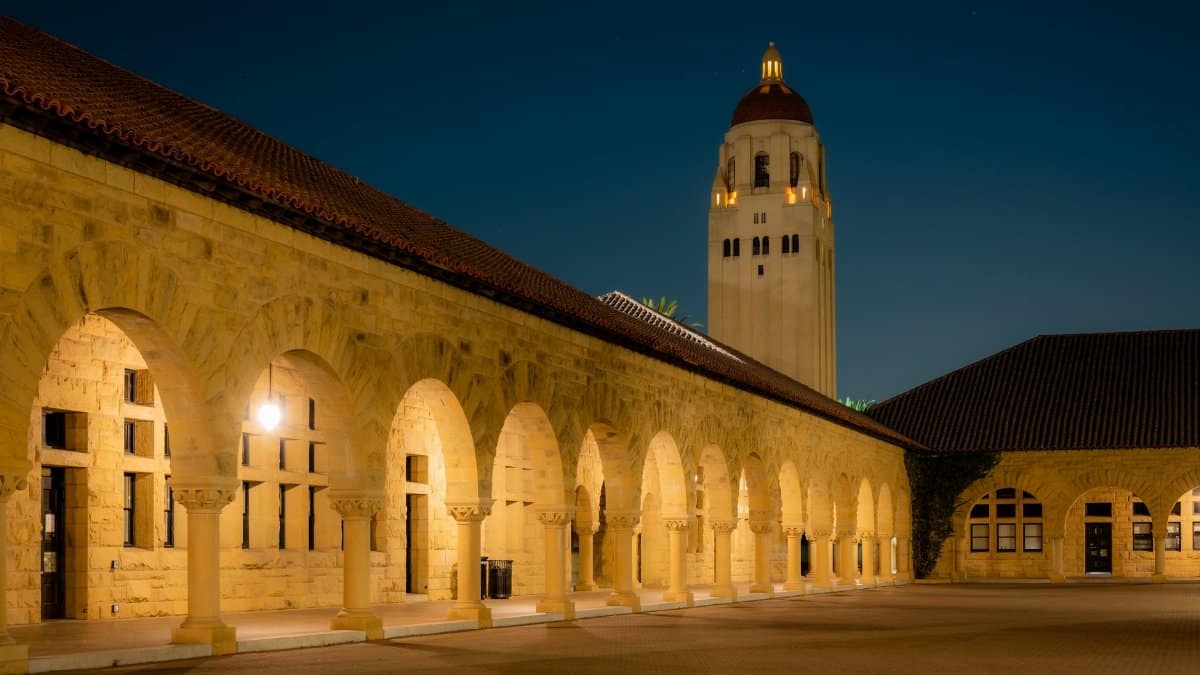
Huang was not reading a chamber of commerce script. He was speaking in the informal register of a founder who has spent decades inside the same valley that critics now call exhausted. Reports of the talk, including coverage from SFGate, described a leader urging people to remain, pointing to great weather and to the continuing status of the state as an innovation hub. The phrasing mattered. He did not claim that California is cheap, gentle, or politically tidy. He claimed that the combination of climate, talent, and institutional memory still outweighs the friction.
That is a narrower argument than the slogans that usually surround the state. Boosters promise paradise. Detractors promise collapse. Huang offered something closer to a workplace judgment: if your life is bound up with computing, chips, and the companies that turn research into products, the density of colleagues still counts. Weather, in that telling, is not a postcard. It is one reason people keep showing up to the same campuses, coffee shops, and late meetings year after year.
A leader speaking from inside the boom

Nvidia sits at the center of the current rush toward artificial intelligence. Its chips power the training runs that universities, startups, and global firms now treat as essential. Huang has become a public face of that rush, less because he courts celebrity than because the company’s rise forces everyone else to listen. When such a figure tells people to stay in California, the line lands differently than the same sentence from a tourism office.
Listeners hear an implicit bet. The next wave of tools will not be designed in isolation. It will be designed where chip architects, software teams, university labs, and capital already share a commute. Leaving may save on rent. It may also thin the accidental conversations that turn a half formed idea into a company. Huang’s career is itself an exhibit in that pattern. Nvidia grew up in the orbit of Silicon Valley customers, rivals, and recruits, even as its products shipped worldwide.
Weather as a serious claim

It is easy to smirk at a billionaire praising the climate. Housing costs do not shrink because February is kind. Wildfire smoke does not respect a pleasant average. Still, the weather argument has a practical core that people who have tried to build teams elsewhere sometimes admit in private. Mild days lower the cost of gathering. Outdoor meetings, campus walks, and the simple fact of wanting to be outside keep networks loose and frequent.
California has sold sunshine for generations, from film lots to retirement brochures. Huang’s version is more instrumental. Climate becomes part of the infrastructure of invention, alongside airports, universities, and a deep bench of specialists. A region can copy tax policy faster than it can copy a climate that makes daily collaboration feel light. That does not make the climate a moral good. It makes it a competitive fact, one reason a plea to stay in California can sound less sentimental than it first appears.
The long habit of declaring the exodus

Every few years a new census snapshot or moving truck anecdote revives the claim that California is emptying. Some of the movement is real. Remote work loosened the tie between a paycheck and a zip code. Families chased yards, schools, and quieter streets. Companies opened offices in Texas, Florida, and the interior west, often with loud announcements about freedom and cost.
The numbers, read carefully, tell a more mixed story. People leave, and people arrive. The state remains enormous, wealthy, and crowded with institutions that do not relocate when a single headquarters does. A chip firm can open a site in another state and still depend on California labs for the hardest design work. A founder can buy a house elsewhere and still fly back for the meetings that matter. Departure, in other words, is often partial. The public story prefers a clean break. The labor market prefers overlap.
What density still buys

Innovation hubs are not magic circles. They are accumulations of people who know how to do difficult things and who can find one another without a formal introduction. California holds several such accumulations: the peninsula and the South Bay for computing and chips, Los Angeles for entertainment and a growing tech scene, San Diego for life sciences and wireless work, university towns that feed all of them. Huang’s point about an ongoing hub is really a point about this thickness.
Thickness shows up in small ways. A recruiter can fill a specialized role in weeks rather than months. A graduate student can walk into an industry talk and leave with a job conversation. A supplier already understands the strange demands of a hardware schedule. None of that vanishes because another city offers a grant. It erodes slowly, if at all, and only if the people who carry the craft decide the erosion is worth it. A public request to stay in California is, at bottom, a request to keep that thickness intact.
The bill that staying presents

Honesty requires the other side of the ledger. Staying is expensive in ways that a keynote cannot dissolve. Median rents and home prices in the coastal metros sit far beyond what many salaries, even strong ones, can comfortably carry. Child care, insurance, and taxes compound the squeeze. Traffic steals hours that no networking benefit fully returns. For workers outside the highest paid technical roles, the romance of the hub can feel like a closed door.
Huang speaks from a summit. Nvidia’s success has made him one of the richest people alive. Advice from that height can sound like a request that others subsidize a scene he no longer needs to afford in the same way. A fair reading holds both truths. The state can be the best place to build certain kinds of companies and a punishing place to raise a family on an ordinary wage. Any serious response to his plea has to say who is being asked to stay, and what public choices would make staying less brutal.
Leadership voice in a restless industry

Tech culture prizes mobility. The heroic story is the leap: new city, new cap table, new identity. Against that story, a call to remain sounds almost old fashioned, closer to a craft guild than to a pitch deck. Yet the industry’s own history is full of people who stayed. They stayed through busts, through bubbles, through the years when everyone insisted the next platform would be built somewhere else.
Leaders shape that mood more than they admit. When chief executives announce relocations, employees hear permission to treat place as temporary. When a figure of Huang’s stature praises the state he already inhabits, employees hear a different permission: that loyalty to a region can be a strategic choice, not a failure of ambition. The effect is cultural before it is statistical. It changes what feels normal in a hiring meeting or a family argument about whether to renew a lease.
Place, vocation, and the hunger to belong

There is a quieter layer under the business case, one that fits a moment when many readers are asking what work is for. People do not only optimize spreadsheets. They want a landscape that matches the life they are trying to live. For some, that landscape is a smaller city with a porch and a short commute. For others, it is a coast where the work they care about is thick on the ground, and where the light itself feels like part of the bargain.
Spiritual language is risky around money and chips. Still, vocation is an old word for the fit between a person and a task, and place is part of that fit. Huang’s weather talk brushes this without naming it. To stay in California, in his framing, is to accept a particular form of life: crowded, inventive, expensive, bright. To leave is not a moral failure. It is a different vow. The useful question is whether the vow matches the work. A region can be a calling for one worker and a trap for another. Public figures rarely say that out loud. The audience has to supply it.
Rivals are real, and so is imitation

Other states have not been passive. Texas has courted manufacturers and corporate campuses with land, energy, and a political brand built on contrast. Florida sells tax advantage and a growing finance scene. Cities in the mountain west offer trails and remote friendly offices. Some of those bets have paid off in jobs and in headlines. Pretending California has no competition would be as foolish as pretending the competition has already won.
Imitation cuts both ways. The features rivals advertise, from research parks to startup weekends, are attempts to reproduce a density that California spent decades assembling. Reproduction is possible at the edges. It is harder at the core, where universities, immigrant talent, venture memory, and specialized suppliers reinforce one another. Huang’s confidence rests on that difficulty. He is betting that the original, for all its flaws, remains harder to copy than the brochures suggest.
Why the line traveled so far

The remark spread because it arrived at a tense hour. Artificial intelligence has made computing feel urgent again, and urgency revives old arguments about where the work should live. At the same time, residents are tired of being told their home is either paradise or a warning. A short plea from a prominent executive gave both camps a fresh text. Supporters heard validation. Skeptics heard complacency. Journalists heard a quote that organized a larger argument.
Timing also mattered inside the industry. After years of layoffs, remote experiments, and public fights over office mandates, workers are renegotiating what they owe an employer and what they owe a city. A chief executive saying the state is still worth it does not settle those negotiations. It does set a tone. Tone, in a status conscious industry, moves people.
What staying would actually require

If the advice is more than a mood, it implies obligations that extend past any one speech. Companies that want talent to remain have to pay wages that meet the cost of coastal life, or they have to build in the inland cities where that cost is lower. Universities have to keep producing researchers who can afford to start careers nearby. State and local governments have to treat housing supply, transit, and schools as economic policy, not as side disputes. Weather will not carry those burdens alone.
Workers have obligations of their own, though of a different kind. Staying can mean accepting tradeoffs with open eyes: a smaller apartment, a longer path to ownership, a politics that frustrates. It can also mean refusing the fantasy that every frustration is a reason to go. Communities hold together when enough people decide the frustrations are worth the work of repair. That decision is personal. A billionaire can recommend it. He cannot make it for anyone else.
A measured reading of the plea
The fairest summary is modest. Huang told an audience at Stanford that California’s climate and its role as an innovation hub are reasons to remain. He spoke as the leader of a company whose rise has been intertwined with that hub. He did not erase the costs, and he did not need to pretend the state has no rivals. The power of the comment lies in its refusal of the exit narrative at a moment when exit is fashionable.
Readers outside the chip industry can still use the episode as a test. When a leader asks people to stay, ask what density they are protecting, who can afford the request, and whether the place in question still does the thing it claims to do better than the alternatives. California, for now, still does a particular kind of technical invention at a scale that is hard to match. That is not a hymn. It is a description. It is also why a single sentence, stay in California, could sound less like boosterism than like a field report from someone who has watched the work get done.