
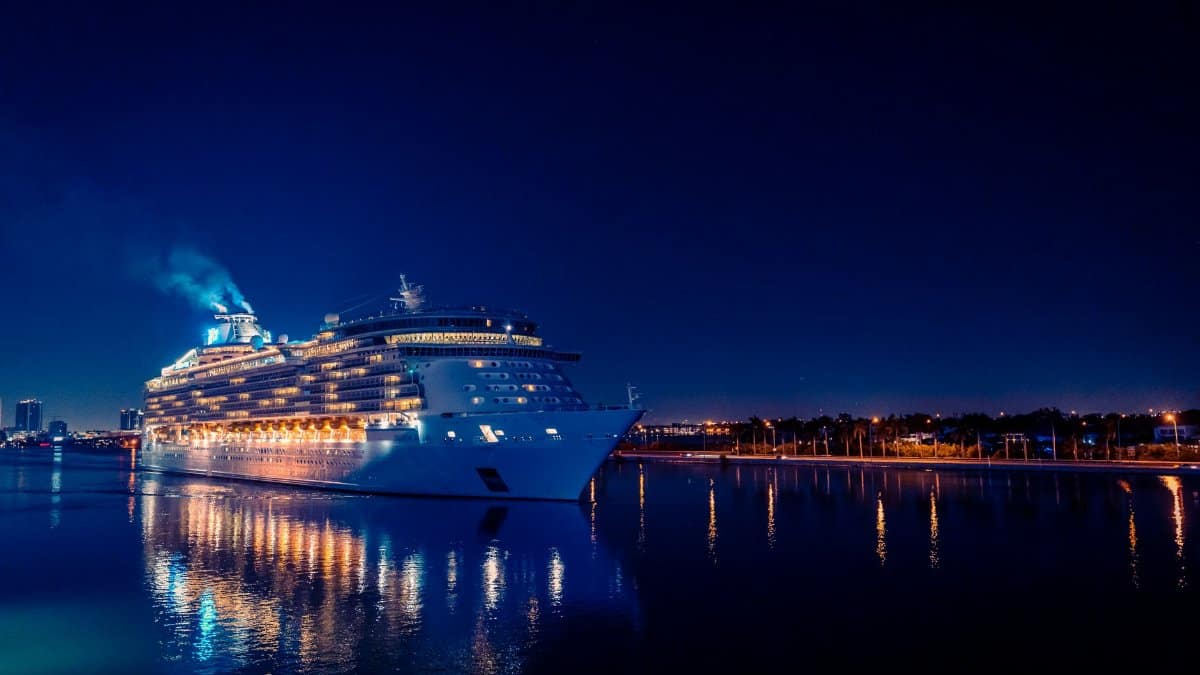
Before sunrise the port lights still outshine the sky, and a white hull eases toward the berth with the slow confidence of a ship that has been away long enough to be missed. Tug crews talk in short phrases. Dockworkers shift their weight and watch the gap close. Somewhere in that arrival, between the low horn and the first line thrown ashore, sits the ordinary drama of Cruise ship Miami, a phrase that sounds like a schedule item until you stand close enough to feel the water move. The vessel is MSC Poesia, back after a major refurbishment, and the city that receives her is already counting what her winter weeks might mean.
A harbor that knows how to wait
Miami does not treat a returning ship as a novelty. The port has spent decades learning the choreography of arrival, from pilots who read the current by habit to agents who already know which bus will be late. What changes is the mood on the quay when a familiar name comes back altered. People who work the waterfront notice paint, stairwells, and the way a gangway sits. They also notice whether the ship feels finished or merely decorated.
Poesia spent her yard time being taken apart in the places guests never see and dressed again in the places they photograph. Steel work, wiring, public rooms, and cabins do not renovate on the same clock. A ship can look festive from the channel and still be living with punch lists below. The first Miami call is therefore less a parade than a test. If the elevators behave, if the galleys hold temperature, if the new lounges do not echo like empty halls, the winter program has a chance to feel inevitable rather than provisional.
I have stood on other piers and mistaken shine for readiness. The better measure is quieter. Crew members walk without hurrying, and vendors are not still arguing about a missing crate when passengers appear. On this morning the ship looked settled, which is a different compliment from looking new.
What the yard changed and what it left alone
A refurbishment is a negotiation with a vessel that already has a personality. Poesia was never built to impersonate a floating resort the size of a neighborhood. Her scale is large by any land standard and modest beside the newest giants. The work appears to have respected that middle ground. Public rooms were refreshed rather than erased. Cabins gained storage, lighting, and finishes that read as calm instead of loud. Dining rooms were rearranged so service paths are shorter, which matters more to a guest at 7 p.m. than any brochure adjective.
Outdoor decks received shade, seating that does not punish a long afternoon, and sightlines that keep the water in view instead of hiding it behind structures. Pools and whirlpools were renewed. A few specialty venues were added for guests who want a meal that feels chosen rather than assigned. None of this reinvents cruising. It tries to remove the small frictions that make a week at sea feel cheaper than the fare.
What the yard left alone may matter as much. The ship still carries the proportions of an earlier generation, with promenades you can actually walk and lounges that do not require a map. In a market obsessed with height and spectacle, keeping a human scale is a design decision, not an accident of budget.
The first hours after the lines go on

Once the lines are fast, the ship becomes a workplace with a deadline measured in hours. Fresh produce, linen, spare parts, and entertainment gear move in a sequence that looks chaotic only if you do not know the order. Stevedores and hotel staff pass one another without much conversation. A delayed pallet is not a story. It is a dinner that might not happen.
Refurbishment adds a second layer. New equipment has to prove it can live with salt air, vibration, and a crew that learned the old layout by muscle memory. A beautiful bar that cannot be restocked quickly is a liability. A cabin control that confuses a housekeeper costs the turn more than the gadget saved in theory. Officers walk the ship with tablets and with the older habit of touching a rail to see if it is true.
Passengers boarding later in the day will not see this interval. They will inherit it. If the work was honest, the inheritance feels like ease. If it was cosmetic, the ease frays by the second night.
Why this port still anchors the winter trade
Geography has not repealed itself. From Miami a ship can reach a string of Caribbean ports without burning the week on the crossing. Airlift is deep. Hotels absorb early arrivals and late departures. The labor pool includes people who have worked ships, airports, and kitchens, sometimes all three in one family. That density is why Cruise ship Miami remains a working phrase in the industry and not only a postcard caption.
Poesia is not trying to invent a new map. She is sliding back into a winter pattern of warm water itineraries that Miami has sold for generations. The competition is fierce. Newer ships advertise bigger theaters and more water slides. Older ships compete on price, intimacy, and the sense that you might learn the names of people who serve you. A refurbished mid sized vessel occupies a lane that still has customers, especially travelers who want comfort without a floating city.
Port officials care less about brand philosophy than about calls on the calendar. Each arrival supports pilots, longshore labor, provisioning, transport, and the shops that catch passengers before they fly home. A ship that stays in the rotation through the season is worth more than a ship that makes one ceremonial visit and vanishes.
Crews, vendors, and the quiet economy

The visible luxury is only the top of the ledger. Below it sits a web of contracts that restart when a ship returns to a home port. Bakers, florists, laundry plants, bus companies, and medical suppliers all recalibrate. A refurbishment can shift those contracts. New menus need different suppliers. New cabin textiles need a laundry process that will not destroy them. Entertainment upgrades need technicians who can fly in on short notice when a show control fails on a Sunday.
Crewing is its own economy. Many of the people who will run Poesia this winter signed on before the yard work ended. They trained on mock ups, videos, and hurried walk throughs. The Miami arrival is where training meets guests who do not care that the ship was in pieces six weeks ago. Service either holds or it does not. Tips, evaluations, and contract renewals follow from that first impression more than executives like to admit.
For the city, the spending is steady rather than spectacular. It does not look like a stadium opening. It looks like overtime, like a produce order that repeats every Saturday, like taxi lines that thicken and thin with the ship schedule. That repetition is the real boost. One arrival is a photograph. A season is payroll.
Guests who book a ship for how it feels
People choose ships for reasons they rarely put on a comment card. Some want a pool deck that stays social without becoming a nightclub. Some want a dining room where a jacket still means something. Some want to bring parents who will not enjoy a vessel the size of a shopping district. Poesia, freshened but not inflated, speaks to that group.
The new amenities are real enough to market. Suites with better baths. A revised spa. Venues for wine, for a quieter breakfast, for an evening that does not require a reservation war. None of those features matter if the ship feels anxious. Guests notice when staff are still hunting for their stations. They notice when a refurbished corridor smells like adhesive. They also notice, with surprising loyalty, when a place feels looked after.
In that sense Cruise ship Miami is not only a logistics headline. It is the moment a private hope meets a public machine. Someone has saved for this week. Someone else has worked twelve hours so the week can begin on time. The refurbishment succeeds only if both of those facts can occupy the same gangway without embarrassment.
Rest, ritual, and the open water
There is a reason travel writing keeps returning to departure, and it is not only romance. A ship leaving a known harbor makes a clean cut in the week. Phones lose their urgency. Meals arrive without a grocery list. The horizon refuses to be optimized. For some travelers that cut is the point, closer to a retreat than to a tour. The category of spiritual news can sound strange beside a cruise schedule, yet the hunger underneath is familiar. People want a few days in which attention is not auctioned every minute.
A refurbished ship can serve that hunger or mock it. If every new venue is a prompt to spend, the quiet never arrives. If the design leaves room to sit, to walk, to eat without a show, the sea does the rest. I do not think a cruise is a pilgrimage. I do think a well run ship can offer a modest discipline. You show up for dinner. You watch the light change. You let other people carry the logistics for a while. That is not enlightenment. It is a pause, and pauses are rarer than amenities.
Poesia will not convert skeptics who dislike cruising on principle. She may satisfy travelers who already know they want the water, the routine, and a vessel that has been cared for rather than merely enlarged.
Money on the pier and money offshore
Economic claims around cruise calls are easy to inflate. A ship brings spending, and it also brings costs. Traffic thickens. Some downtown businesses gain, and some residents mainly gain congestion. Honest accounting counts wages paid locally, goods purchased locally, and fees paid to the port, then subtracts the leakage when ownership, fuel, and much of the retail margin sit elsewhere.
Even with that caution, a winter deployment based in Miami is not trivial. Crew joinings and leavings move through local airports. Shore excursions sold before sailing still require local offices. Maintenance that cannot wait for the next yard period is often handled by specialists who live in South Florida because the ships do. The refurbishment itself happened elsewhere, but the proving of it happens here, in public, under a schedule the Caribbean ports downstream will feel if Miami gets it wrong.
Passengers rarely see that balance sheet. They see a clean cabin and a departure board. The city sees berth occupancy. Both views are incomplete, and both are true enough to plan around.
What the Caribbean circuit will test
The first sailing is a dress rehearsal with paying guests. Tender ports, pier conflicts, weather that closes a call, and a medical case that needs a helicopter are all ordinary risks. A refurbished ship adds the risk of unfamiliar systems. The crew that looked smooth in Miami may still be translating new procedures when the first rough afternoon arrives.
Itinerary planners have little patience for a vessel that cannot keep time. Missed ports anger guests and vendors ashore. Repeated delays invite a reputation that marketing cannot sand away. The advantage of a known ship is history. Officers understand how she handles. Engineers know her noises. The disadvantage is expectation. People who sailed her before the yard will compare every corridor with a memory, and memory is a harsh critic.
If the winter weeks go well, Poesia becomes another reliable name in a crowded folder of brochures. If they go poorly, the refurbishment will be remembered as paint. The difference will not be decided by the arrival photograph. It will be decided at 2 a.m. in a machinery space and at noon in a dining room when a table of strangers decides whether to come back.
A city watching from the channel

From shore, the departure looks simple. The lines drop. The gap opens. The horn answers the skyline, and the ship becomes a shape again. Miami has watched that shape for so long that indifference is a local privilege. Yet indifference is not the same as irrelevance. The port remains one of the few places where global leisure, immigrant labor, and municipal revenue share a single concrete edge.
Cruise ship Miami, repeated as a headline, can flatten all of that into tourism cheer. Standing nearer, you hear more than cheer. You hear a workplace restarting, a design being judged, and a set of private vacations beginning on a public timetable. Poesia carries new upholstery and old responsibilities. Both will be tested as soon as the channel opens into weather that does not care about a press release.
The winter voyages ahead are ordinary in the best and hardest sense. They must be repeated until repetition itself becomes the product. Guests will remember a particular sunset or a particular waiter. The port will remember whether the ship kept her promises to the clock. Between those memories, a refurbished hull does what hulls have always done here. She arrives, she is judged, and she leaves room for the next arrival to matter just as much.