

On a late September morning, before the city had fully turned toward the November ballot, a new survey put a sitting mayor behind a council member who has spent years arguing that Los Angeles can be governed with more urgency and less ceremony. The Raman Bass mayor poll, conducted by the Berkeley Institute of Governmental Studies for the Los Angeles Times, found Nithya Raman at 39 percent and Karen Bass at 28 percent among likely voters, with roughly one third still unwilling to choose. Those figures do not crown a winner. They do mark a campaign in which the advantage has shifted, at least for now, away from the incumbent and toward a rival who entered the conversation as a neighborhood legislator rather than a citywide executive. For a city that measures its leaders against housing costs, street conditions, and the pace of recovery after crisis, the gap is large enough to reset the story and narrow enough, given the undecided share, to keep the outcome open.
What the survey actually reports
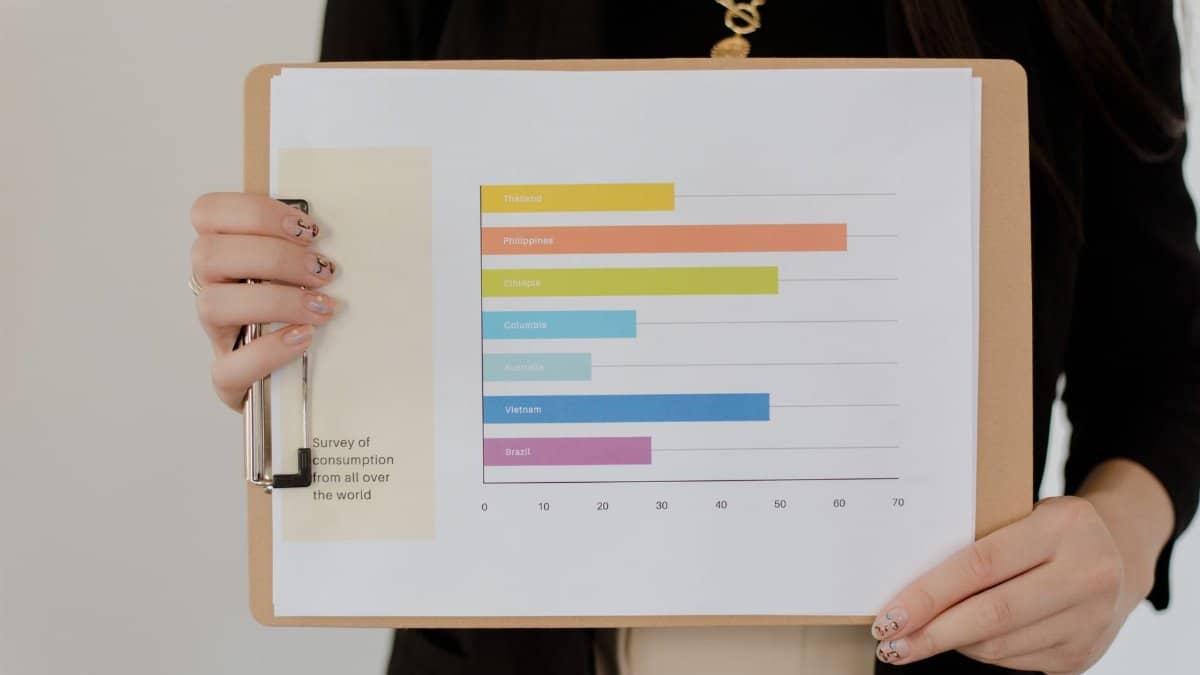
The headline comparison is simple. Raman leads Bass by eleven points, 39 percent to 28 percent, in a contest scheduled for November 3. The more important number may be the remainder. About one third of likely voters told interviewers they had not settled on a candidate. In a two person frame, that undecided bloc is larger than the margin between the two names already on the page. A lead of this size is real. It is also unfinished. Campaigns like to treat a September advantage as momentum. Voters often treat it as a draft.
Readers should also notice what a single published topline cannot do. It cannot show whether the lead is uniform across the city or concentrated in a few council districts. It cannot show whether Bass retains strength among older homeowners, union households, or communities that powered her earlier victory. It cannot show whether Raman’s support is intense or merely preferable to the status quo. The Berkeley Institute of Governmental Studies has a long record of California surveys conducted with the Los Angeles Times. That pedigree makes the Raman Bass mayor poll worth taking seriously. It does not turn one snapshot into a forecast.
An incumbent measured against daily life

Karen Bass came to the mayoralty with a résumé that few municipal candidates can match: years in Congress, a turn in state legislative leadership, and a reputation for coalition work that crossed party lines even in a formally nonpartisan city race. Incumbency in Los Angeles is not a ceremonial asset. It is a daily audit. Residents judge the mayor by whether buses arrive, whether encampments shrink without simply moving, whether permits move, and whether a crisis produces visible order rather than another press conference.
A 28 percent showing for a sitting mayor is a warning, not a verdict. Some of that softness may reflect fatigue with problems that no single term can finish. Housing scarcity, street homelessness, and a sense that city government moves slowly are not new complaints, and they do not belong to one administration alone. Still, voters rarely grade structural failure with historical nuance. They grade the person whose name is on the door. If Bass is trailing, it is because a sizable share of the likely electorate is open to the idea that the city needs a different tempo, not merely a continuation of familiar arguments.
A council member asking for a larger stage

Nithya Raman built her public profile on the City Council, where district politics can be intimate and unforgiving. Constituents know whether a member returns calls. They know whether a member treats homelessness as a moral slogan or as a set of beds, services, and enforcement choices that collide in real neighborhoods. Raman’s appeal, as it appears in this early read of the race, is less about celebrity than about a claim of proximity: that she has stood closer to the friction of land use, policing debates, and street level disorder than a mayor’s office sometimes appears to.
That claim has limits. A council district is not a city of nearly four million people. The skills that win a district, including sharp criticism of city process and a talent for mobilizing frustrated residents, do not automatically scale to labor negotiations, state relations, or a budget measured in billions. The Raman Bass mayor poll suggests that many likely voters are willing to test that translation. It does not prove the translation will hold once the choice feels final.
The undecided third is the real contest

In close reading, the undecided share is the story inside the story. One third of likely voters is not a decorative remainder. It is a reservoir large enough to erase an eleven point lead or to widen it into something that looks decisive by early November. Undecided voters in a mayoral race are rarely blank slates. Many have opinions about the city and reservations about both people asking to run it. Some are waiting for a mistake. Some are waiting for a plan that sounds payable. Some will not engage until ballots arrive and the choice stops feeling abstract.
Campaigns will fight over this group with very different theories. An incumbent typically argues for continuity with correction: the work is underway, the alternative is risk, and familiarity should count as competence. A challenger typically argues that familiarity is the problem. Both arguments can be true in part. Los Angeles has improved on some measures that matter to residents and stalled on others. The voters still parked between 39 and 28 will decide which partial truth feels more urgent on November 3.
Why September is a loud month and a poor prophet

Early fall polls shape donor calls, staff morale, and the tone of coverage. They are less reliable as predictions, especially when a third of the sample withholds a choice. Attention in Los Angeles is fragmented. A wildfire, a transit failure, a budget fight, or a national political storm can reorder what voters think a mayor is for. Name recognition also moves. A council member who is well known in one part of the city can still be a thin sketch in another. An incumbent who looks bruised in September can recover if the closing argument is about stewardship rather than nostalgia.
There is a further caution that serious readers apply to any horse race number. People who say they are likely to vote are not the same as people who will vote. A survey captures a mood among a defined electorate at a defined moment. The Raman Bass mayor poll captures a mood in which dissatisfaction has found a vehicle. Moods change when the vehicle is inspected. Between now and November, both campaigns will be inspected at a level of detail that a topline percentage cannot supply.
The issues that will test both numbers

Housing will sit at the center, as it has for years. Voters want more homes and also want a say over what rises on their block. They want rents to ease and also want neighborhoods that still feel legible. Any mayor who promises speed will collide with process, lawsuits, and the simple fact that construction takes time. Raman’s lead may reflect impatience with that collision. Bass’s remaining support may reflect a belief that impatience without a governing majority is just another speech.
Homelessness will test rhetoric even more sharply. Residents distinguish between compassion and disorder, and they punish leaders who seem unable to hold both ideas at once. Public safety, transit reliability, and the condition of commercial corridors will do similar work. None of these issues belongs cleanly to left or right in the way national politics prefers. They belong to people who drive surface streets, ride buses, own small shops, or spend evenings navigating sidewalks that do not feel predictable. A poll can rank the candidates. It cannot rank the tradeoffs those candidates will be forced to make.
Money, organization, and the quiet campaign

Published vote shares say little about the machinery underneath. Los Angeles mayoral races are expensive, geographically vast, and dependent on coalitions that do not always advertise themselves in a survey question. Labor, business associations, neighborhood groups, and faith communities still move mail, volunteers, and late persuasion. A candidate at 39 percent with a thin field operation can stall. A candidate at 28 percent with deep institutional ties can climb, especially if the undecided voters lean older and more habitual in their turnout.
That is not a prediction that Bass will close the gap, nor a prediction that Raman will coast. It is a reminder that the Raman Bass mayor poll measures preference, not capacity. Preference is what newspapers lead with, because it is legible. Capacity is what wins in a city where the last two weeks of a campaign are fought in languages, media channels, and precincts that a single English language headline flattens.
How to read a lead without mythologizing it
Eleven points is not a rounding error. If the same pattern appeared in a survey taken in late October, analysts would describe the race as Raman’s to lose, while still noting the undecided share. In late September, the honest description is narrower. Raman has the advantage. Bass has a deficit that incumbents dislike and challengers advertise. Neither has a majority. The path to 50 percent runs through people who have not yet granted either candidate their confidence.
There is a temptation, in political coverage, to turn every mid campaign survey into a character study. The trailing mayor becomes embattled. The leading challenger becomes inevitable. Those labels are useful for headlines and poor for judgment. Bass is not a diminished figure because one survey has her at 28 percent. Raman is not mayor because another name sits at 39. The city is not a morality play. It is a government problem with a ballot attached.
What residents can reasonably ask next

The useful response to a poll like this is not cheerleading. It is a sharper set of questions. What, specifically, would each candidate do in the first year that the current city government has not done? Which constraints are real, and which are excuses? How would each handle a budget shortfall, a summer spike in street homelessness, or a fight with Sacramento over housing law? Where do they disagree in ways a voter can actually see, rather than in slogans about vision and experience?
Those questions will not fit inside a percentage. They are the only way the percentage earns its keep. A broad audience does not need to become a polling technician to follow this race. It needs to notice when a number is being used as a substitute for a plan. The plan is what the next six weeks ought to force into the open, in forums, in reporting, and in the plain language of mail that will soon fill kitchens across the city.
The distance between a snapshot and a decision

Los Angeles has a habit of treating its mayoral elections as referendums on the mood of the metropolis. Sometimes that habit is fair. The mayor cannot pave every street or house every person, but the office sets priorities, hires the managers who fail or succeed in public, and tells the rest of California what this city is willing to fight for. A survey that places Raman ahead of Bass says the mood is restless. The one third still undecided says the mood is also unresolved.
Between this reading and November 3, the race will acquire details that no September instrument can hold: debates, fundraising totals, endorsements, mistakes, and the slow work of voters deciding whether change is a promise they trust. Until then, the Raman Bass mayor poll is best kept in its proper size. It is evidence of a lead. It is evidence of vulnerability. It is not the election. The election remains a choice that a large share of likely voters has not yet agreed to make.