
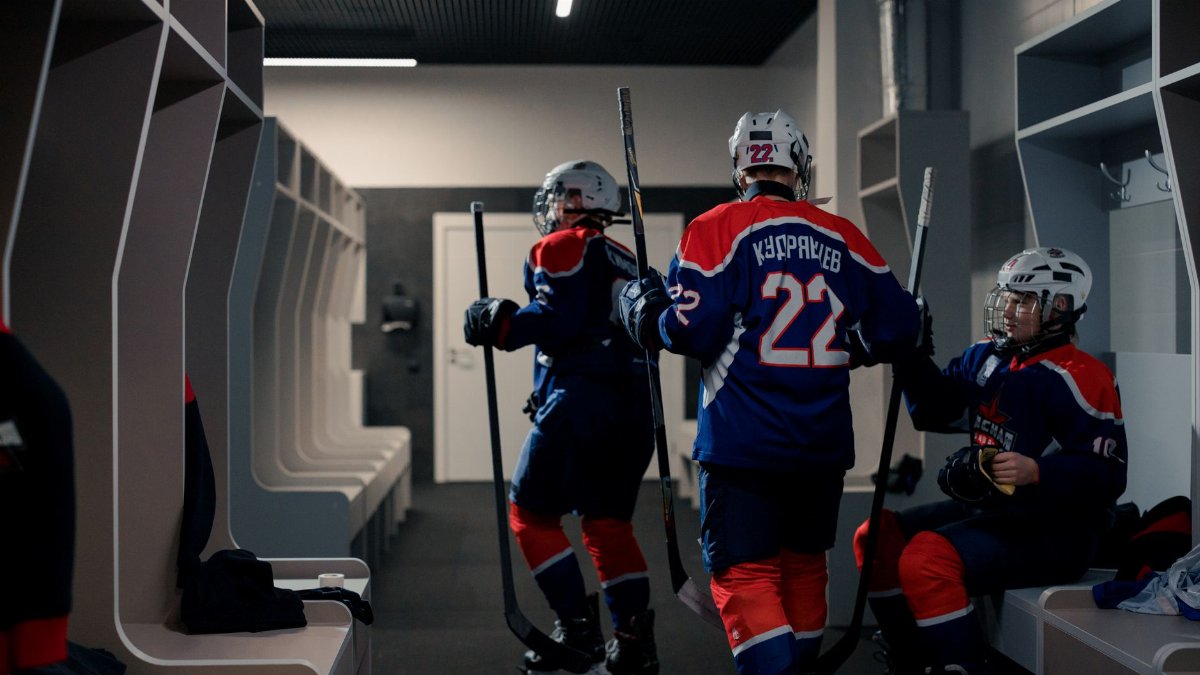
The Philadelphia Union did not invent a new system between one whistle and the next. They cleared a room, reset who was allowed to set the tone, and then stopped dropping points. Twelve games without a loss will always look clean on a table. The messier fact is captured in the phrase Union unbeaten streak toxicity, which names the culture problem the club had to confront before the results began to look inevitable. Interim coach Ryan Richter walked into a squad that could still play and a dressing room that, by accounts from people around the club, had grown brittle, score settling, and hard to trust. The unbeaten run did not start with a slogan. It started when fewer people were willing to protect a bad habit because the habit belonged to a useful player.
A streak that only makes sense after the cleanup

Supporters remember streaks as proof of quality. Coaches remember them as proof that something stopped leaking. Philadelphia had talent before the run. What it lacked, people close to the team have said in recent weeks, was a shared standard that applied on Tuesday as well as on Saturday. Toxicity in a locker room rarely arrives as one dramatic incident. It arrives as side conversations, selective effort, and the quiet decision that some voices matter more than the group. When that pattern sets in, even good tactics look fragile, because players spend energy managing one another instead of managing the opponent.
The cleanup under Richter was not a public purge with a press conference script. It was closer to a series of private lines drawn in plain language. Who speaks in the group. Who gets minutes when the attitude slips. Who is allowed to treat a bad day as everyone else’s problem. Those choices are dull to describe and decisive in practice. Clubs that skip them often buy a short burst of form and then watch it collapse the first time a star is unhappy.
What toxicity actually looked like

In soccer, the word toxicity gets used too loosely, as if any disagreement were poison. Disagreement is normal. A healthy room argues about pressing triggers and set piece marks. An unhealthy room argues about status. The distinction matters. When veterans police effort and younger players are allowed to fail in public without being mocked in private, friction can be useful. When mockery becomes the price of a mistake, players hide. They stop demanding the ball. They stop telling a teammate the truth.
People around the Union have described a period in which standards were uneven. Some players carried the dirty work. Others treated accountability as optional if their name was loud enough. That imbalance is the classic fuel for Union unbeaten streak toxicity as a story, because the unbeaten part only became possible after the toxic part was treated as a performance issue rather than a personality quirk. Richter, still interim, had a narrow kind of authority. He could not promise anyone a future. He could promise clarity. In a messy room, clarity is often more valuable than charisma.
Ryan Richter and the interim advantage

Interim coaches are usually framed as caretakers. Sometimes the temporary title is the point. A permanent manager arrives with a project, a contract, and a need to keep powerful people calm. An interim can spend political capital he may not get back. Richter appears to have used that window to simplify the daily life of the squad. Training had a visible order. Meetings were shorter. Roles were stated out loud. Players who wanted ambiguity found less of it.
There is a risk in praising that approach too quickly. Twelve games is a sample, not a verdict. Schedules soften. Goalkeepers get hot. Opponents rotate. A coach can look transformative because variance smiled. Still, the sequence matters. The behavioral cleanup came first. The results followed. If the order had been reversed, it would be easier to call the culture talk a victory lap. It is harder to dismiss a cleanup that preceded the points.
Young players and the cost of a sharp room
Philadelphia has invested in youth in a way few Major League Soccer clubs match. That choice raises the stakes of the dressing room. A teenager can absorb a tactical correction. He absorbs a social correction differently, especially if the correction is really a status display. Cavan Sullivan and other young players do not need a soft room. They need a room in which criticism is about the action, not the person, and in which seniority is earned in the work rather than inherited from a contract.
A toxic stretch does particular damage to development because it teaches the wrong lesson about survival. The lesson becomes: stay quiet, find an ally, do not be the one who names the problem. Clubs that sell themselves as academies cannot afford that lesson. The unbeaten run will be judged on goals and clean sheets. The more important test is whether a sixteen year old or a twenty year old can make a mistake on a Wednesday and still be trusted on a Saturday. If that trust is real, the cleanup did something the table cannot fully show.
How winning can hide the same problem

Here is the uncomfortable part. Winning can launder a bad culture for a while. A team that takes points gives everyone a reason to postpone the hard conversation. Staff tell themselves the edge is competitive fire. Veterans tell themselves the kids need toughening. Ownership tells itself the product is fine because the product is winning. Then a slump arrives, and the postponed conversation arrives with interest.
That is why Union unbeaten streak toxicity should not be read as a claim that the streak itself is poisonous. The phrase points at a sequence: toxicity addressed, streak achieved, temptation to declare the culture fixed because the scoreboard agrees. Scoreboards agree until they do not. The clubs that stay healthy are the ones that keep the same rules in a draw as in a win. If Philadelphia only polices attitude when results dip, the cleanup was a tactic, not a standard.
What the twelve games do and do not prove

The run proves competence under pressure of a certain kind. It proves that this group can manage games, protect leads, and avoid the self inflicted errors that turn a point into none. It suggests that Richter has a dressing room willing to follow a plan for more than a week. Those are real achievements in a league where travel, congestion, and roster churn punish fragile groups.
The run does not prove that every grievance is settled. It does not prove that the next permanent coach will inherit a finished culture. It does not prove that star minutes and team minutes will stay aligned when the stakes rise in the final weeks. Fans should enjoy the table. They should also notice who is still doing the unglamorous work when the cameras are not hunting a narrative. Culture shows up in substitutions accepted without a performance, in warmups taken seriously, in who speaks after a draw that felt like a loss.
The locker room as a workplace

It helps to drop the romance for a minute. A professional locker room is a workplace with unusual hours, public failure, and a short career. In any workplace, unclear rules create informal power. Informal power favors the loud, the connected, and the hard to replace. Soccer adds a twist: the hard to replace person is often the one whose bad day can swing a result. Clubs then bargain with behavior because they fear the alternative.
Richter’s stretch suggests a different bargain. Availability and effort became part of selection, not a speech after selection. That is not cruelty. It is the only way a group standard survives contact with ego. Players can accept a hard rule if it is the same rule for everyone. They revolt, quietly or loudly, when the rule bends for a name. The unbeaten run is downstream of that choice. Treat the choice as optional and the downstream result will not hold.
Fans, narrative, and the urge to pick a villain

Outside the building, toxicity becomes a story with characters. A reporter needs a cause. A fan base needs someone to blame when the soccer looks smaller than the payroll or the academy promise. The danger is that a real cultural problem gets flattened into a single antagonist. Sometimes there is a central figure. Often there is a permission structure: staff who looked away, teammates who laughed, a front office that measured only output.
Philadelphia’s recent chapter is more useful if it is told that way. The cleanup was not magic. It was a refusal to keep granting permission. Readers looking for a morality play will be disappointed. Readers looking for a management lesson will find one. Standards that are spoken once and enforced unevenly are not standards. They are decorations. The Union unbeaten streak toxicity discussion belongs in that frame, as a reminder that the interesting variable was not belief. It was consequence.
What other clubs can copy without copying the slogan
Other teams will be tempted to borrow the language and skip the inconvenience. They will talk about culture in a preseason video and then protect a high usage player who poisons meetings. Copying Philadelphia, if there is anything to copy, means copying the unfashionable parts. Shorter meetings with clearer outcomes. Selection that matches the stated values. A temporary coach, or a permanent one, willing to absorb a bad week in exchange for a cleaner month.
It also means resisting the victory narrative too early. Twelve games unbeaten is a headline. A year of consistent accountability is a club. Major League Soccer seasons are long enough to expose a performance. They are also long enough to expose a relapse. The clubs that improve are the ones that treat a good month as data, not as identity.
The spiritual language hiding in a sports story

This is, on the surface, a soccer column. Underneath it is an old question about how groups stay decent when winning is available as an excuse. Every tradition that takes character seriously has a version of the same warning. Success is a poor referee. It flatters the habits that happened to be present when the results arrived, including the habits that should have been retired.
A locker room is not a congregation. It is still a place where people learn what the group will tolerate. If the group tolerates contempt because the score is fine, contempt becomes part of the method. If the group withdraws that tolerance before the score improves, the later wins mean something sturdier. That is the modest claim worth making about Philadelphia right now. Not that the club has been purified. That it stopped confusing results with permission.
What to watch when the run ends

The run will end. Every unbeaten stretch ends, often in a game that feels smaller than the story built around it. The useful question is not whether Philadelphia can reach thirteen or fifteen. The useful question is what the first loss reveals. Does the room fragment into blame. Does a starter who loses his place become a commentator in the hallway. Does the interim label become an excuse to delay hard choices until a permanent hire arrives with a new set of promises.
Watch the players who were central to the cleanup, not only the players central to the highlight packages. Watch whether young teammates still receive the ball in moments that matter. Watch whether staff describe the next dip as a tactical problem only, or whether they keep the behavioral standard in the same sentence as the formation. If they separate those things again, the club will have learned the wrong lesson from its own recovery.
A measured reading of the moment

Credit is due, and it should be specific. Richter steadied a group that needed fewer dramas and more repeatable days. Players who accepted a narrower role made the unbeaten sequence possible. The front office, by allowing an interim to draw lines, accepted short term discomfort. None of that requires a coronation. It requires a clear description.
The Philadelphia Union’s twelve game unbeaten run follows a locker room cleanup. That sentence is the whole story if it stays true in both directions. The cleanup explains the run better than any single tactic. The run does not excuse the club from maintaining the cleanup. Hold both ideas at once and Union unbeaten streak toxicity stops being a catchy label. It becomes a test the club can pass or fail in public, one ordinary week at a time, long after the interim tag is gone and the table has moved on to someone else.