
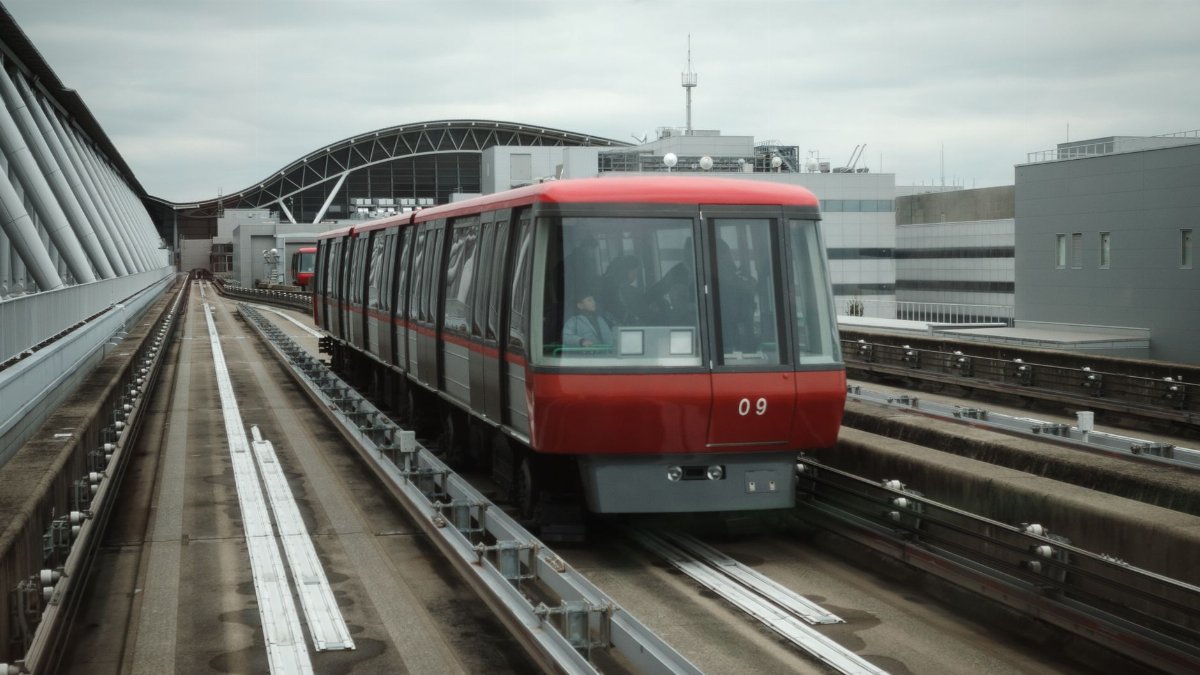
Stand on the upper deck of a parking structure at Los Angeles International Airport and the view is mostly brake lights. Cars inch toward terminals. Shuttles nose into the same tangle. Somewhere above that mess, a guideway was supposed to carry people clear of the curb. The LAX people mover, approved in 2018, still has not opened. Walt Disney’s company famously put a monorail into daily service after about a year of work. The airport train has had nearly eight years and still has not left the station in any public sense.
A train meant to end the horseshoe crawl
The idea was never romantic. It was practical. Los Angeles International Airport grew up as a cluster of terminals wrapped around a looping road, and that road became the city’s least loved public square. Families with car seats, flight crews with roller bags, and rental customers hunting a shuttle all competed for the same curb. The automated train was supposed to pull much of that conflict off the street.
In the plan, travelers would arrive at a station east of the terminals, connect with rail and buses, and ride above the congestion into the central terminal area. Rental car customers would no longer depend on a small bus odyssey between a distant facility and a departure gate. The train would be driverless, frequent, and dull in the best civic way: a machine you stop noticing because it simply works.
That modesty is part of why the delay feels so large. This was not a cross town subway bored under dense neighborhoods for a generation. It was an airport circulator, the sort of project other hubs treat as basic furniture. When furniture takes the better part of a decade, people start asking what else in the house is unfinished.
Why the monorail comparison stings and misleads
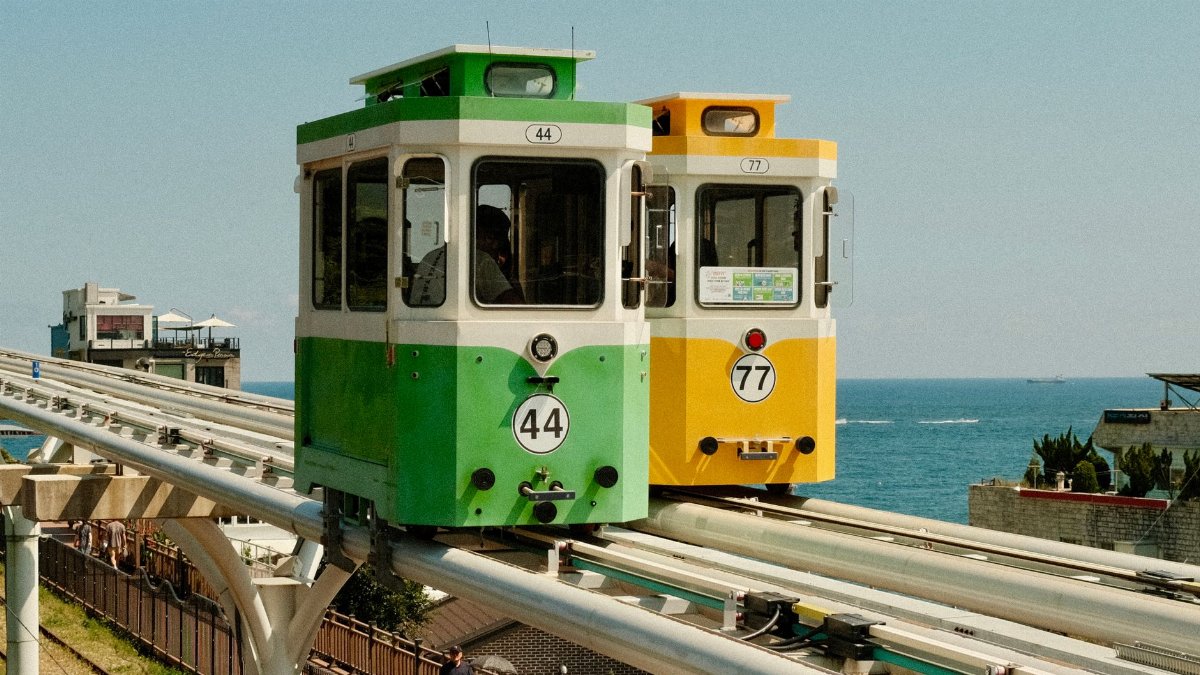
The Disney line is an easy jab, and it lands because the pictures are so clear. In 1959, crews raced a monorail into service for the opening of Disneyland’s new Tomorrowland. The beam, the trains, and the cheerful futurism arrived fast enough to become part of the park’s myth. A private company, building on its own land, for a single opening day, can move with a speed that a public airport almost never matches.
The comparison is also unfair if it is asked to do too much work. Disney was not relocating utilities under one of the busiest airports on earth. It was not synchronizing airlines, federal security rules, a rental car campus, and a regional rail connection. It was not answering to bondholders, city commissions, and a traveling public that cannot simply stay home while the concrete cures. A theme park can close a path. An airport cannot close the sky.
Still, the jab survives those caveats. Angelenos have heard, for years, that complexity explains every late project. Complexity is real. It is also a place where delay goes to hide. If a private entertainment company could deliver a working train in roughly a year, a public agency with a clearer public purpose ought to be able to explain, in plain language, why eight years have produced guideways, arguments, and a date that keeps sliding toward 2027.
A budget that refused to sit still

Money has moved almost as much as the schedule. Early figures put the project near $1.9 billion. Later accounting has carried the total toward $3.3 billion. Those are not rounding errors. They are the difference between a costly improvement and a project that starts to crowd out other needs, from terminal work to the ordinary maintenance that keeps an airport from fraying.
Public private deals were supposed to discipline that risk. A consortium would design, build, finance, operate, and maintain the line, and the airport would pay as a customer rather than as a builder inventing every detail. In theory, private capital hates delay because delay is interest, idle crews, and a reputation that follows the next bid. In practice, the airport and its builders have spent years in the thicket of claims, testing disputes, and questions about who owes whom for time that nobody can get back.
None of this is abstract to the people who fly. Airport improvements are often paid by passengers through facility charges, by airlines through rents, and by the whole regional economy through the cost of a hub that is harder to use than it should be. When the LAX people mover grows more expensive while remaining closed, the bill arrives before the ride.
Deadlines that became a habit

First the opening was ahead of a major sporting summer. Then it was the following year. Then it was a testing window. Then it was a new year entirely. Each revision came with a technical reason, and some of those reasons were legitimate. Automated trains must prove they can stop, switch, and fail safely. Stations must meet security and accessibility rules. Pandemic shutdowns scrambled labor and supply lines. None of that is fiction.
What wore people down was the pattern. A deadline in Los Angeles too often functions as a press release rather than a promise. Officials announce a season. Builders miss it. A new season appears, described as realistic this time. Reporters write the story again. Travelers learn to translate every date into a shrug.
By the time service is discussed for 2027, the project will have spent nearly a decade as a future tense noun. That is long enough for a child who was in elementary school at approval to be applying to college. It is long enough for airlines to redraw schedules, for rental brands to sign and renew contracts, and for a generation of ride hail drivers to build a business model around the very curb chaos the train was meant to retire.
Contractors, claims, and a quiet platform
Large projects fail in public and argue in private. The visible part is a guideway that looks, from certain angles, finished enough to mock the calendar. The invisible part is a stack of claims about design changes, vehicle performance, site access, and the cost of waiting. Lawyers are not a punchline here. They are a sign that the risk sharing written into the contract did not survive contact with the job.
Testing is the phase where optimism goes to be measured. A train that glides for a camera is not the same as a train that runs all day, recovers from a fault, and meets a headway when three terminals dump passengers at once. Airports have been burned before by systems that opened early and then embarrassed everyone. Caution is not cowardice.
Caution without a credible clock, though, becomes its own failure. Riders cannot board a safety case. They can only watch an empty platform and wonder whether the next announcement will finally name a month that survives the season. I have waited at that airport with a bag at my feet and a shuttle that might or might not appear, and the guideway overhead did not feel like progress. It felt like a rumor made of concrete.
The people still doing the hard transfer
The delay is not evenly distributed. A business traveler with a car service and a loose connection loses minutes and temper. A family arriving late, with car seats and a tight budget, loses something closer to the trip itself. Workers who clean planes, push wheelchairs, and staff gates absorb the congestion as a daily tax on wages that do not rise when the loop slows down.
Consider the rental car trip that the train was built to simplify. A customer lands, claims a bag, finds a bus, rides to a facility that can feel like its own city, and reverses the journey on the way home. Each transfer is a chance to miss a sign, to wait in weather, to lift a suitcase one more time. The LAX people mover was the promise that this sequence would shrink to a walk and a ride. Until it opens, the sequence remains a small expedition.
There is also the regional rail connection that civic boosters have sold for years. A train to the airport matters only if the last mile does not swallow the time you saved. Without the people mover in service, the story of a car free arrival stays half written. Visitors still meet Los Angeles first as a traffic jam, which is a truthful introduction and a terrible one.
What a late train costs a city that flies
Los Angeles sells itself as a Pacific capital. Its airport is the front door. When that door sticks, the cost is not only the construction invoice. It is missed connections, airline frustration, and a reputation that travels farther than any local column. Frequent flyers compare notes. A hub that cannot finish a circulator starts to look like a hub that cannot finish much else.
There is a climate cost, too, though it is easy to oversell. Every shuttle loop and every extra circling car burns fuel that a frequent electric train would not. The savings appear only when the train actually runs and when people trust it enough to leave the car behind. A guideway without passengers is a climate policy in costume.
Trust is the quieter casualty. Residents who support transit already spend political capital defending projects that take time. Every late airport train becomes an anecdote in a dinner argument about why the next rail line will also slip. Opponents do not need a detailed briefing. They need a punch line, and this project has been generous with those.
Lessons from projects that actually opened

Other airports have built people movers, sometimes late and over budget, and then folded them into ordinary life. The lesson is not that Los Angeles is uniquely cursed. It is that opening day is a management problem as much as an engineering one. Someone has to own the date, publish the obstacles, and stop treating the public as an audience for reassurance.
A better habit would sound plain. Here is what failed in testing. Here is what it costs to fix. Here is the month we will not announce until the trains have run the hours we promised ourselves. Here is who pays if that month moves again. Specificity is a form of respect. Vague optimism is how agencies teach citizens to stop listening.
The Disney monorail cannot be the operating manual. It can be the irritant. Private speed on private land is not a template for a federalized airport. It is a reminder that long duration is not a law of nature. When leaders say a project is hard, the next sentence should be what they are changing so that hard does not mean endless.
Opening day will not erase the wait
If the trains run in 2027, a lot of this anger will soften. Riders will film the first glide above the loop. The stations will smell like new paint. Columnists will take a ceremonial ride and admit that the view is better than the shuttle. That is how infrastructure redeems itself: not with an apology, but with a service so regular that the argument dies of boredom.
Redemption should not be confused with amnesia. Nearly eight years and a climb from about $1.9 billion toward $3.3 billion will still have happened. The contracts that produced claims instead of passengers will still be a case study. The families who missed flights while the guideway stood quiet will not get those hours returned. A successful opening answers the future. It does not acquit the past.
The LAX people mover will matter if it is frequent, if it is free of the excuses that have followed it, and if it actually pulls cars and buses off the curb it was drawn to replace. Until a stranger can land, follow a sign, and ride without a speech from anyone, the project remains what it has been since 2018: a promise hovering over the traffic, visible, expensive, and not yet a train.