
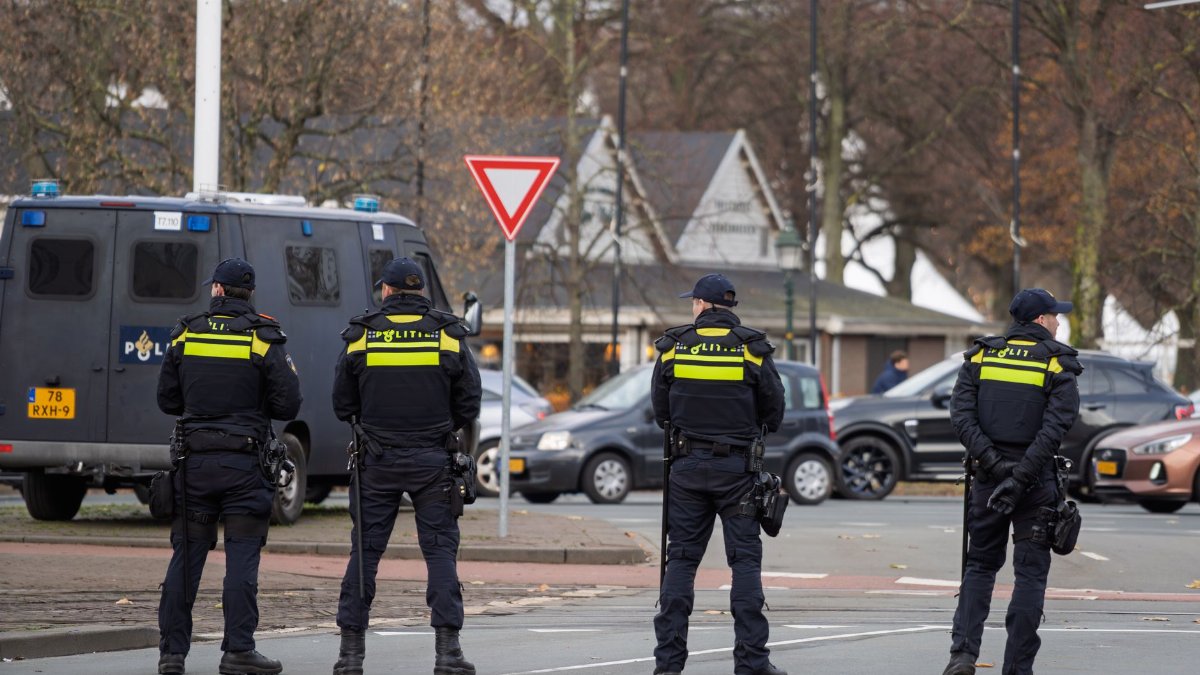
On a weeknight when the hedges were still and the summer cars had not yet filled the lanes, a small village board on the East End of Long Island took a vote that will travel well beyond its shops and side streets. As Newsday reported, the village bans ICE cooperation in formal deals with its own police, choosing local control and community trust over a standing partnership with federal immigration agents. The decision is narrow on paper. It asks a larger question that many towns keep postponing. Who does a local badge serve when Washington wants a regular arrangement, and what does safety mean in a place built on quiet wealth, seasonal labor, and people who would rather not be noticed?
What the board put on the record

The reported action is not a declaration that federal law stops at the village line. It is a refusal to sign the kind of cooperation deal that would fold local officers into immigration work as a matter of routine. Officials framed the choice as a way to keep police focused on village crime, traffic, and the ordinary calls that fill a shift. In that telling, the department remains a local force, not an extension desk for Immigration and Customs Enforcement.
Readers outside Long Island should be careful about what such a vote does and does not do. A ban on deals is not the same thing as a promise to ignore a criminal warrant, shelter a fugitive, or look away from violence. It is a decision about partnership, training, data sharing, and whether immigration status becomes part of the daily job. The minutes matter more than the slogan. Residents who want the truth of this vote should read the resolution itself, not only the headline that carried it into the regional press. The account is here: Newsday on the Hamptons vote.
Why these deals became the fight

The partnership at the center of the argument has a name and a statute. Under section 287(g) of the Immigration and Nationality Act, ICE can enter agreements that train and authorize selected local officers to perform certain immigration functions. The agency describes that program on its own site, ICE and 287(g). Supporters call it force multiplication. Critics call it a blurring of roles that makes every traffic stop feel like an immigration interview.
That blur is the point of the local revolt. A village officer already has wide discretion: whom to stop, whom to question, whom to warn and release. Add a formal immigration role and the same discretion starts to sort neighbors by status as well as by conduct. In a Hamptons village, the people most exposed to that sorting are often the workers who clean houses, staff kitchens, tend gardens, and leave before the owners arrive for the weekend. They are not an abstraction in a cable news segment. They are the labor that makes the season run.
The trust case that usually wins these rooms

Police chiefs who oppose these deals tend to make a practical argument, not a theoretical one. If victims believe a call for help can become a question about papers, they stop calling. Domestic violence, wage theft, drunk driving, and witness intimidation all get harder to investigate when part of the community treats the station house as a risk. The village bans ICE cooperation, in this view, so that a person reporting a break in does not have to calculate the immigration consequences of being a good witness.
There is a second, quieter version of the same claim. Trust is not only about emergencies. It is about whether parents come to a school event, whether a tenant reports a dangerous landlord, whether a worker tells a health clinic the truth. A resort village lives on informal knowledge. The person who knows which house has a gas leak, which party has turned dangerous, which car does not belong on a dark road, may also be the person with the most to lose from a federal partnership. Local officials who ban these deals are betting that information flows toward police when fear flows away from them.
A summer economy that depends on people off the brochure

The Hamptons sell an image of hedges, ocean light, and rooms that cost more for a weekend than many families spend on rent for a month. Behind that image is a service economy that cannot function on year round residents alone. Landscapers, housekeepers, cooks, dishwashers, nannies, and construction crews commute in from other Long Island towns or live in crowded rentals that rarely appear in real estate ads. Some are citizens. Some are permanent residents. Some are undocumented. A police policy that treats status as a routine investigative tool lands hardest on the last group, and it lands on their citizen children and spouses as well.
That mix is why a small board vote feels larger than its population. The village is not sealing a border. It is deciding how much of the federal immigration system will be performed by the officers who also direct traffic after a holiday party. Wealthy seasonal residents may barely notice. The workers who keep those houses standing will notice immediately. Policy, in a place like this, is often a story about who is allowed to be visible.
The legal line between help and duty

Federal immigration power is real, and local governments do not get to nullify it. They also do not exist as unpaid deputies unless they agree to be. The Supreme Court has long treated the federal government as unable to commandeer state and local officers into administering federal programs. That principle does not answer every operational question, but it explains why so many towns believe they may decline a standing deal. Much of interior immigration enforcement is a federal responsibility. Unlawful presence is often handled as a civil matter, even though some immigration offenses are criminal. The categories are easy to mash together in a speech and hard to mash together in a lawful arrest.
When a town bans ICE cooperation, it is usually drawing a line around formal agreements, detainers, and status inquiries, not around ordinary criminal policing. A judicial warrant for a violent crime is a different instrument from a civil immigration request to hold someone after local charges are resolved. Departments that conflate those instruments have lost cases and paid settlements. Departments that pretend a vote erases federal authority create a different kind of risk, a political one, in which the resolution sounds braver than the law allows. The honest position is narrower: we will police crime; we will not sign up as immigration officers.
The criticism that deserves a straight answer

Opponents of the vote have a case that should not be waved away as mere cruelty. They argue that limited cooperation shelters people who have committed serious crimes, that gangs and repeat offenders exploit gaps between agencies, and that a wealthy village is outsourcing risk to neighboring towns. They also argue that voters never asked their police to take a side in a national immigration fight. If a person is arrested for a local offense and ICE has a lawful interest, why should a village board stand in the way of a phone call?
The fair reply is not that immigration enforcement is illegitimate. It is that the method matters. A formal deal changes incentives inside a department. It can turn minor contact into status screening. It can consume training hours that a small force does not have. It can make the village a symbol in a national campaign it did not volunteer to join. Past administrations have threatened funding consequences for jurisdictions that limit cooperation, and future ones may try the same leverage. Local officials who take this vote should expect lawsuits, oversight requests, and campaign ads. Courage that has not priced in those costs is only a press release.
How similar towns have drawn the boundary

This Hamptons vote sits in a long line of local experiments. Some cities limit what booking information they share. Some honor detainers only when backed by a judicial warrant. Some cooperate freely and advertise that fact. The pattern is not a simple map of liberal and conservative places. It is a map of police capacity, immigrant population, crime politics, and how much a community trusts its own officers to use new power with restraint. A resort village and a large city can reach the same written policy for opposite reasons: one fears losing workers and witnesses, the other fears losing control of a huge jail system.
What travels from place to place is the implementation problem. A resolution can ban a signature on an agreement and still leave individual officers unsure what they may ask, what they may tell a federal agent, and what they must record. Ambiguity is where policy goes to die. If the village means the ban, it will need written procedures, a short training, and a public explanation in plain language. If it means only to survive a news cycle, the next incident will write the policy instead.
Conscience, neighbor, and the use of a badge

I keep returning to a moral question that the legal briefs never quite settle. A badge is a public trust, and trust has a direction. It runs toward the people who can be harmed by its misuse as much as toward the people who feel protected by its display. Religious and civic traditions on Long Island, from parish halls to synagogue basements to Quaker meetings farther west, have spent years arguing about the stranger, the worker, and the duty not to make another person invisible. That argument is not a substitute for law. It is a reason the law feels personal when the person affected cleans the house next door.
None of this requires romanticizing unauthorized immigration or pretending that borders are a superstition. It requires refusing the easy move in which a complicated neighbor becomes a category. A village board cannot fix Congress. It can decide whether its own officers will spend their authority on the peace of the village or on the paperwork of a federal system that has been gridlocked for decades. That is a spiritual question only in the old sense: it asks what a community is willing to do with the power it already holds.
What residents should watch after the vote

The useful test will not be the language of the resolution. It will be the next six months of practice. Do officers receive clear rules, or a vague warning to use judgment? Does the department still honor criminal warrants and investigate serious offenses without hesitation? Do immigrant residents actually report crime, or does fear remain because the vote was poorly explained? Do critics document a real public safety cost, or only a symbolic one? Whether the village bans ICE cooperation in daily work, rather than only in a headline, will depend on training, supervision, and the willingness of officials to publish what they are doing.
Other East End boards will be asked the same question, especially if a high profile arrest puts the issue back on television. They can copy the vote, reject it, or design a narrower policy that separates violent crime from civil immigration status with more precision than either national camp prefers. The Hamptons have always been good at privacy. This time the private choice is public, and it belongs in the minutes where neighbors can read it, argue with it, and live with what it requires of them.