
On a gray afternoon in the industrial counties of northern Ohio, loudspeakers carried a cadence voters have heard for a decade, while hundreds of miles south a different crowd waited under Georgia pines for a voice many had not heard in person for years. The split screen of American politics rarely looks this literal. With early voting already underway and Election Day close enough to feel, two of the most recognizable figures in public life are spending their last open hours in places that can still move. The season now summed up as Trump Obama midterms is less a reunion tour than a test of whether familiarity can still change who bothers to vote.
Two stages, one calendar
Donald Trump in Ohio and Barack Obama in Georgia are not sharing a strategy so much as sharing a deadline. Campaigns treat the final days as a compression of everything that came before: the ads, the court fights over ballot rules, the arguments about prices and borders and the tone of national life. What remains is presence. A former president and a former president, one still the center of his party and one now its most requested closer, appear where organizers believe a crowd can become a turnout machine.
The geography is not accidental. Ohio has become a proving ground for Republican confidence and for the question of whether Trump enthusiasm travels down the ballot when his own name is not at the top. Georgia remains a state where margins are thin enough that a well timed visit can matter, and where Obama still draws voters who may admire Democratic candidates without feeling any urgency to stand in line for them. Each stop is a wager that charisma can finish what field offices start.
What Ohio is being asked to hear
In Ohio the message from Trump is built for a coalition that already knows the chorus. Economic resentment, cultural grievance, and a promise that Washington can be bent by will rather than by patience: these are not new themes, but the midterm frame gives them a practical edge. House and Senate hopefuls want the energy without the distraction. They stand nearby, clap on cue, and hope the cameras catch their names.
Local Republicans describe the visit as insurance. In a state that has shifted firmly toward their party in recent presidential years, complacency is the real opponent. A rally can remind infrequent voters that a governor, a senator, or a member of Congress is part of the same fight. It can also remind skeptics inside the party that distance from Trump is still a risky pose. The Trump Obama midterms dynamic is uneven here. Obama is not the foil on the Ohio stage so much as the memory of a political order Trump supporters believe they already replaced.
Georgia and the argument for showing up
Obama’s task in Georgia is different in tone and similar in purpose. He is not asking a crowd to rediscover him. He is asking them to treat a midterm as if it carried the weight of a presidential year. That is a hard sell in any cycle. Voters who thrilled to his campaigns often sit out the elections that decide statehouses, secretaries of state, and the committees that write the next rules.
His appeals tend to translate national anxiety into a civic duty. Democracy, he suggests, is not a mood. It is a habit of participation that frays when people assume someone else will protect it. In Georgia that argument meets a specific history: rapid demographic change, fierce organizing on both sides, and elections decided by numbers small enough to fit in a high school gym. Democrats want his presence to reach Black voters, younger voters, and suburban moderates who may be exhausted by constant alarm. Exhaustion is a quiet form of opposition. A familiar voice is one of the few tools left to answer it.
Parties selling different kinds of urgency
Strip away the personalities and the closing arguments still diverge. Republicans in this cycle lean on cost of living, crime, and a claim that Democratic governance in Washington has drifted from daily life. Democrats lean on health care, abortion access where it remains contested, and warnings that a Congress aligned with Trump would accelerate a harder turn in national policy. Neither script is subtle. Subtlety is a luxury of spring, not of late October.
What the rallies add is emotional permission. Trump offers supporters the feeling that winning is a kind of revenge against elites who never accepted him. Obama offers supporters the feeling that losing would be a failure of nerve, not merely of messaging. Both feelings can produce a ballot. Both can also curdle into certainty that the other side is not merely wrong but illegitimate. Campaign professionals know the risk and often accept it, because fear and pride move more people than white papers do.
The voters who have not decided, and the ones who have not planned
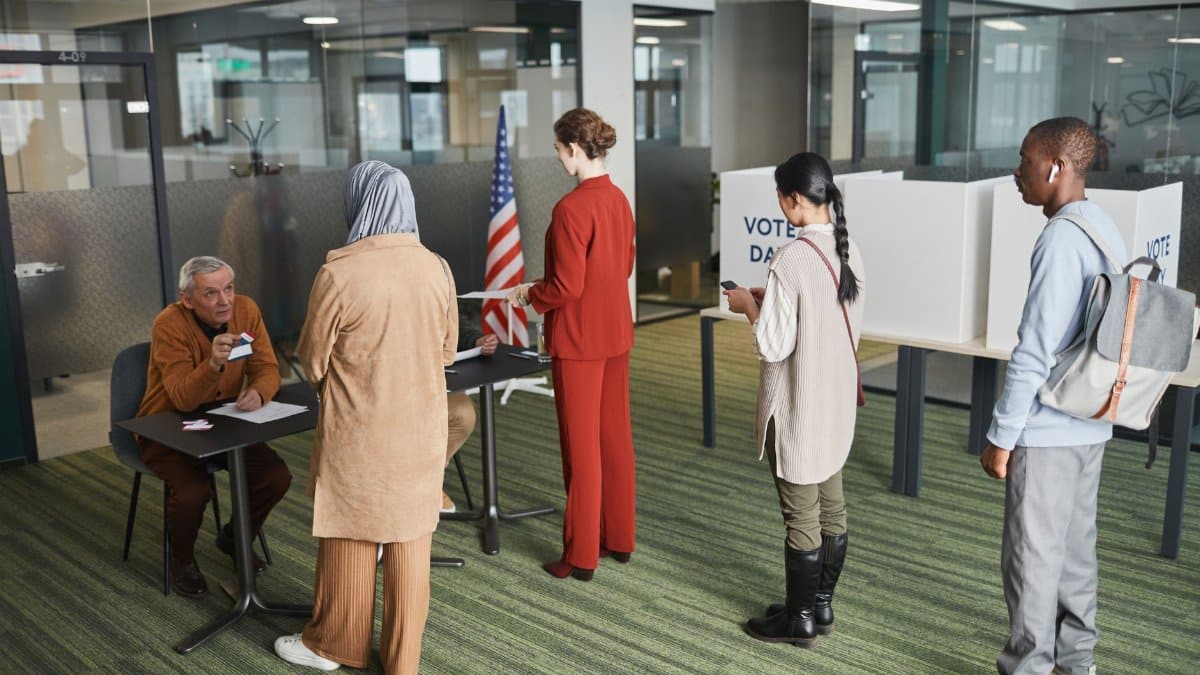
Most of the electorate is not waiting for a speech to choose a party. The real audience is narrower: people who lean one way but have not requested a mail ballot, parents who intend to vote after work and may not, and independents who dislike both national brands and still live in a district that matters. For them, a visit is less persuasion than reminder. The candidate they half support becomes briefly unavoidable.
That is why schedulers obsess over airports and arenas rather than over undecided diners in the classic sense. A Saturday crowd is a media event that spills into Monday conversations. Clips travel farther than the motorcade. In the Trump Obama midterms week, the clips are designed to do opposite kinds of work. One set says the old energy is back and the other side should worry. The other set says the old energy was never only about one man, and sitting home is a choice with consequences.
Maps, money, and the limits of a headliner
National figures do not redraw congressional lines. They do not print the ballots or staff every polling place. Money still decides how many doors get knocked and how many times a voter in a competitive district hears a name that is not Trump or Obama. Super PACs and party committees have already spent at a scale that would have seemed extravagant a generation ago. The rallies sit on top of that machinery. They do not replace it.
There is a recurring disappointment in American politics when a star arrives and the local race still slips away. Charisma cannot fix a weak candidate, a badly drawn district, or a scandal that voters have already priced in. It also cannot fully overcome a year when the party in power, or the party associated with the loudest figure in the country, carries an unpopular record on prices or on conduct. Ohio and Georgia can both host perfect events and still produce mixed maps by Wednesday morning. Organizers know this and book the planes anyway, because the alternative is to leave a proven draw on the shelf.
Down the ballot, where the glare is borrowed
Senate campaigns borrow the glare most easily. A statewide race can absorb a national surrogate without looking small beside him. House candidates have a harder fit. They need the photograph, then they need the surrogate to leave before the story becomes only about the surrogate. State legislative candidates often get a shout from the stage and a line in the local paper, which is more than they would have had and less than they need.
Judges, school boards, and secretaries of state sit even farther from the spotlight, yet they shape the rules the headliners invoke. Obama has often tried to pull those offices into the moral frame of his speeches. Trump more often treats them as extensions of loyalty. Voters who came for the spectacle may leave with one extra name in mind. That is the modest definition of success that professionals will accept even if the television coverage suggests something grander.
Television, phones, and the crowd that is not in the room
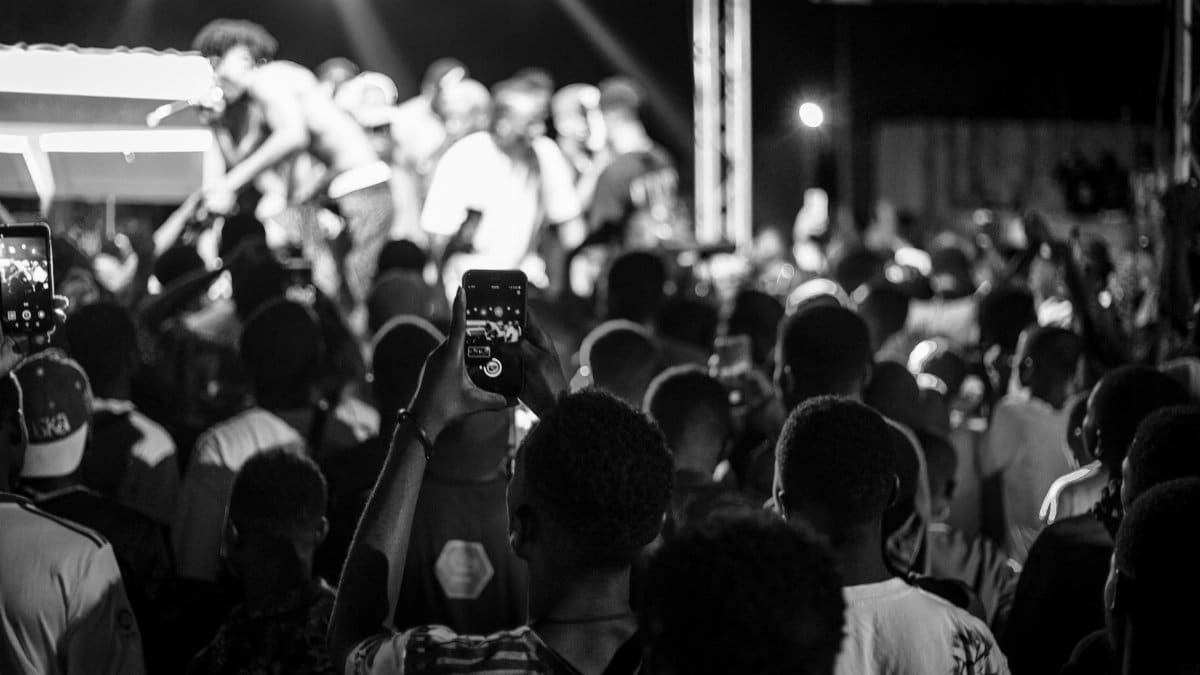
The people inside the arena are not the whole audience, and sometimes not the main one. Producers cut the remarks into clips sized for a phone. Opponents cut the same remarks into warnings. A sentence about prices becomes a shareable boast or a shareable gaffe depending on who posts it. In that environment, the physical rally is a studio with bad sightlines and excellent symbolism.
Older voters, the broad middle of the electorate that still decides many midterms, may catch the event on an evening newscast rather than on a livestream. They are less impressed by crowd size than by whether the speaker sounds in control of himself. Trump’s supporters hear control as combativeness. Obama’s supporters hear control as fluency. The rest of the country hears two familiar styles and decides, again, which one feels like adult supervision and which one feels like a demand. Campaigns cannot win that argument universally. They can only win it among the people who still might act on it.
History as a campaign prop
Both men arrive carrying archives. Trump’s is recent, noisy, and still litigated in public memory: elections challenged, institutions strained, a movement that treats him as proof that norms were optional. Obama’s is smoother in tone and contested in result: a presidency that expanded health coverage, managed a slow recovery, and left many supporters believing the coalition would outlast him more easily than it did. Each archive is useful. Each is also a liability with voters who want the next two years, not a seminar on the last fifteen.
The Trump Obama midterms pairing invites a lazy contrast, as if the country were choosing between two pasts. The candidates on the ballot are not those pasts. They are senators and representatives and governors who will cast votes the headliners will not cast. Remembering that distinction is the adult work of the week, and it is the work rallies are least designed to encourage. A roar does not itemize a legislative agenda. It substitutes for one, at least until the session begins.
What neither speech can settle
No closing appeal can tell a family whether rent will ease or whether a clinic will remain open. Those outcomes depend on majorities, on courts, and on economic forces that do not attend rallies. What the speeches can do is assign blame in advance and claim credit in advance. That assignment shapes how voters interpret the news they already feel in their own kitchens. If prices are the story, Trump wants Ohio to hear a verdict on his rivals. If rights and stability are the story, Obama wants Georgia to hear a verdict on what a passive electorate permits.
Journalists will count the decibels and the airport arrivals. The more useful count is quieter: ballots returned, precincts that usually sleep through midterms, and whether the people who cheered on a weeknight are the same people who appear on a Tuesday. The country has learned, sometimes bitterly, that a full arena is not a full electorate.
A week that reveals the parties to themselves
There is a private audience as well. Donors watch to see whether the stars still fill rooms. Candidates watch to see whether they are embraced or used. Party officials watch the clips for signs of discipline. A rambling attack can dominate a news cycle that was supposed to belong to a Senate ad about prescription drugs. A soaring lecture can miss the voters who wanted a plain sentence about wages. The art, if it is an art, is to give the crowd what it came for without handing the opposition a cleaner ad than it could have written alone.
In that sense the Trump Obama midterms stops are also internal exams. Republicans learn again how completely their energy still orbits one man. Democrats learn again how much of their energy still needs a voice from 2008 to feel fully awake. Neither lesson is especially comfortable. Both are more honest than the slogans painted on the buses outside.
After the motorcades leave
When the planes depart, Ohio and Georgia return to the slower work of elections: poll workers training in church basements, lawyers reviewing challenge procedures, neighbors arguing without a soundtrack. The visits will be remembered as symbols of a nationalized politics in which local choice is filtered through national fame. That nationalization is not going away. It is the condition under which this midterm, like the last several, will be decided.
Voters can still refuse the filter. They can learn the names on the lower half of the ballot, compare records rather than atmospheres, and treat a roaring arena as entertainment rather than as evidence. The men on the stages would not phrase the invitation that way. Their job is to make the choice feel enormous and immediate. The country’s job, older and less televised, is to decide how much of that enormity is real, and then to mark a ballot that outlasts the echo.