
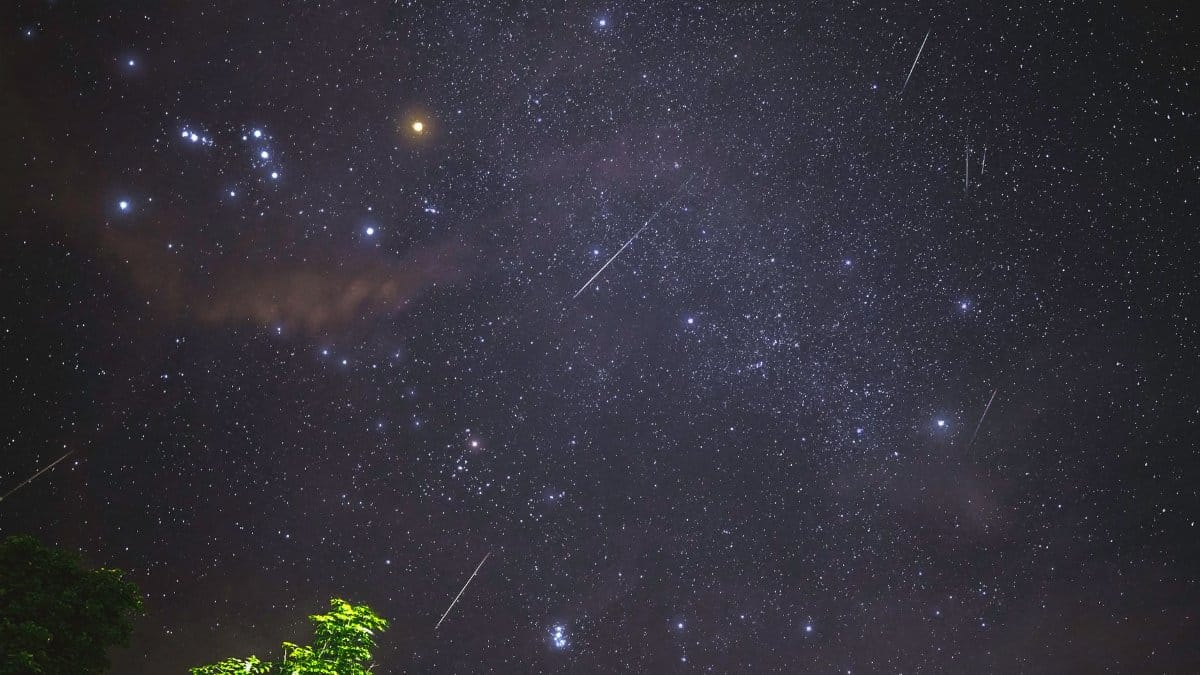
Before the freeways fill and the heat climbs back into the day, Houston has a short stretch of hours when the sky still feels larger than the city. In October 2026 that stretch brings a familiar visitor. The Orionid meteor shower Houston residents can try to see peaks overnight into Thursday, with the strongest chance after midnight and before dawn on October 22. Under a truly dark sky, patient watchers sometimes count 10 to 20 meteors an hour. City glow will lower that number, but the shower is steady rather than spectacular, and a clear night can still repay the effort of stepping outside.
A shower built from an old comet

The Orionids are not a single object racing past Earth. They are a stream of dust and grit left by Halley’s Comet, the same famous visitor that returns to the inner solar system about every 76 years. Earth crosses that debris trail each October. Specks no larger than a grain of sand hit the atmosphere at tremendous speed, heat the air around them, and vanish in a brief streak of light. NASA describes the Orionids as one of the two annual showers produced by Halley debris, alongside the Eta Aquariids of spring. The American Meteor Society lists the Orionids among the year’s reliable showers and notes that rates near the peak often fall in that modest range of roughly 10 to 20 meteors an hour when skies are dark and the radiant is well placed.
That modesty is part of the story. A meteor storm can empty a parking lot. A meteor shower like this one asks for a lawn chair, a jacket, and the willingness to let twenty minutes pass without a guarantee. In a city as large as Houston, the bargain is even plainer. You are not buying a show. You are accepting a chance.
Why the name points to Orion
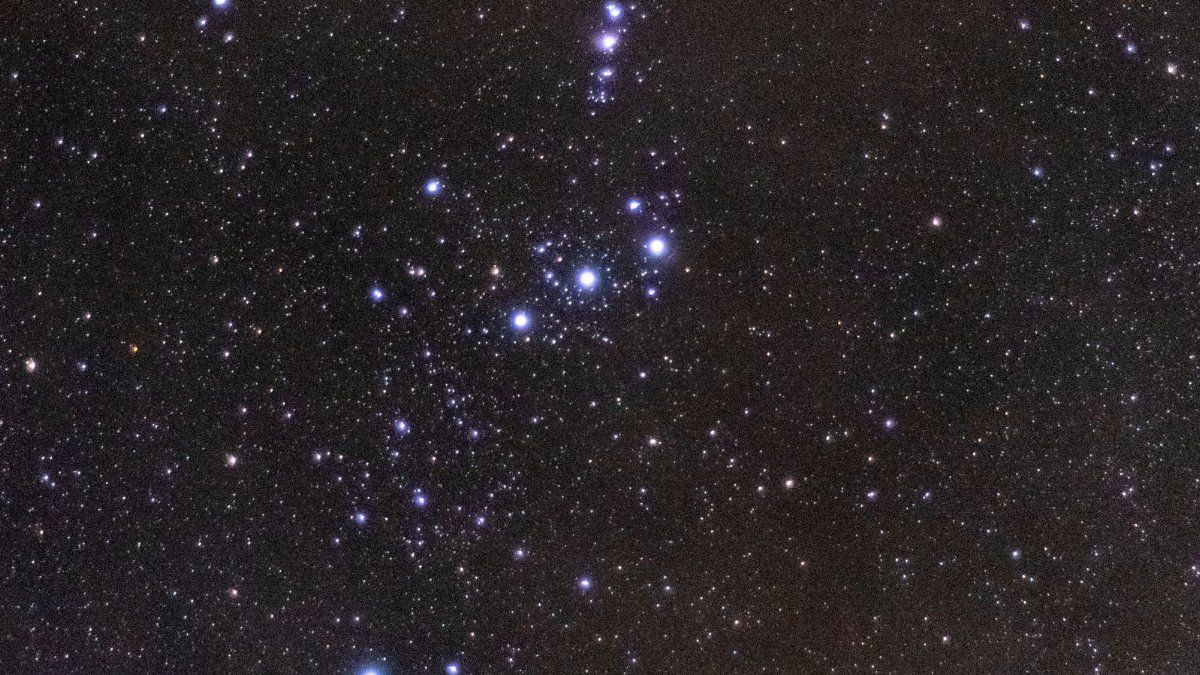
The streaks do not begin in Orion, even though the shower takes its name from that constellation. Meteoroids arrive on parallel paths. From the ground those paths appear to fan outward from a point in the sky called the radiant, which for this shower lies near the club of Orion, close to the bright star Betelgeuse. If you trace a bright streak backward and it seems to come from that region, you are likely looking at an Orionid rather than a random meteor.
You do not need to stare at the radiant itself. Meteors can appear anywhere overhead, and the longer trails are often farther from the point of origin. A wide view of the sky, with Orion somewhere in the frame after it has risen, is more useful than a fixed gaze at one star. In late October, Orion climbs in the east during the hours after midnight and stands higher before dawn. That geometry is why the small hours matter more than the early evening.
The hours that matter in Houston

For the Orionid meteor shower Houston timing is less about a single minute than about a window. Activity builds for several nights around the peak, so a cloudy Thursday morning is not the end of the chance. Still, the night of October 21 into the morning of October 22 is the period most watchers will circle. Evening hours are the weakest. The radiant is low or still below the horizon, and many meteors occur on the far side of the sky where you cannot see them.
After midnight the geometry improves. By 2 a.m. or 3 a.m., and on toward the first gray of dawn, Orion is higher and the side of Earth you are standing on is facing into the debris stream. If you can give the sky only one hour, give it the hour before dawn rather than the hour after dinner. Bring a reclining chair. Standing with your neck craned is a good way to quit early.
What city light does to the count
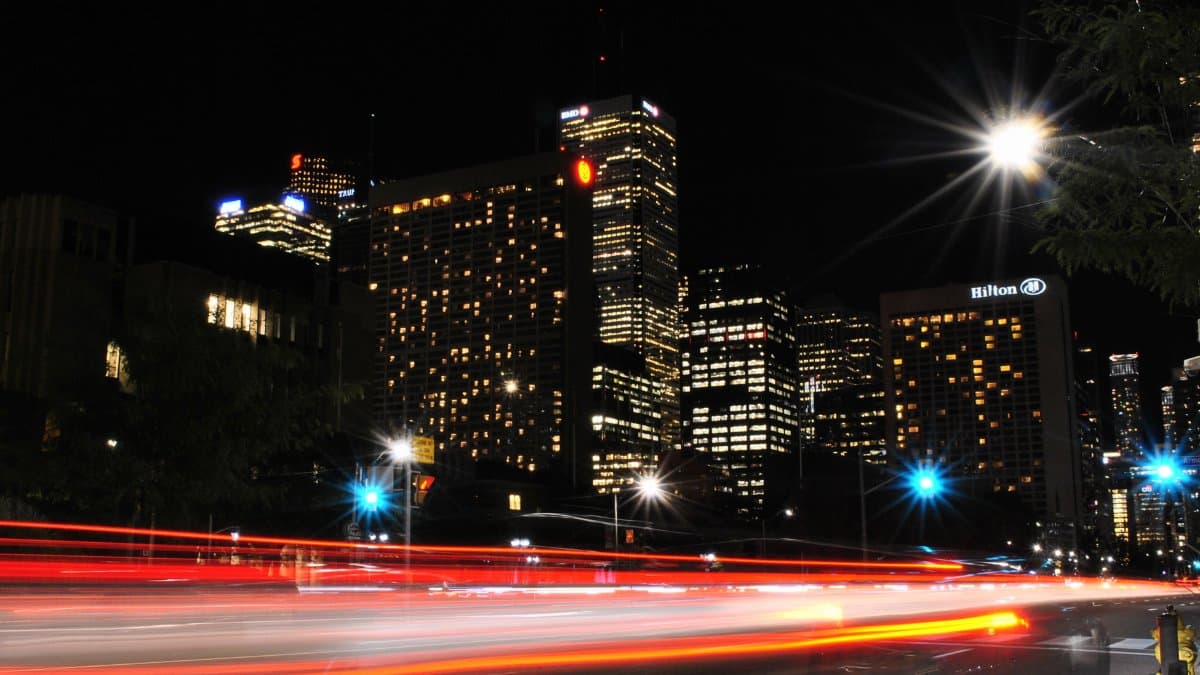
Houston is not a dark sky preserve, and pretending otherwise helps no one. Light from highways, refineries, stadiums, and porch lamps scatters in humid air and washes out faint meteors. The published rate of 10 to 20 an hour assumes a rural site, a moon that is not blazing, and a radiant high overhead. Inside the Loop, or along a bright commercial corridor, you may see only a few of the brighter ones, or none at all in a short session.
That does not make the attempt pointless. Brighter Orionids can cut through moderate glow, and the shower has a reputation for producing the occasional fast, persistent streak. The practical response is to reduce the light in your own view. Face away from the brightest horizon. Shield a streetlamp with a tree, a wall, or the body of a car. Give your eyes at least fifteen minutes away from phone screens. Humidity and haze, common on the Gulf Coast even in October, can matter as much as the moon. A forecast that promises clear skies and lower dew is worth more than a perfect calendar date under a milky ceiling.
Places that improve the odds

You do not need a telescope, and you do not need to leave Harris County if the sky is clear and you can find a darker pocket. Parks and open fields on the outer edges of the metro, away from shopping centers, usually beat a backyard boxed in by security lights. The farther you drive from the urban core, toward the west and northwest or into quieter rural stretches, the more faint meteors you are likely to keep. State parks and wildlife areas outside the brightest sprawl are the classic choice, provided they are open at the hour you plan to arrive and you follow their rules.
Safety is not a footnote. A dark pull off on a farm road is not automatically a good idea. Tell someone where you are going. Park legally. Stay off private land. If you remain in the city, a familiar park with other people nearby can be wiser than an isolated lot. The sky does not require heroics. It requires a clear line of sight and enough patience to let your eyes adjust.
The moon and the weather, the two real editors
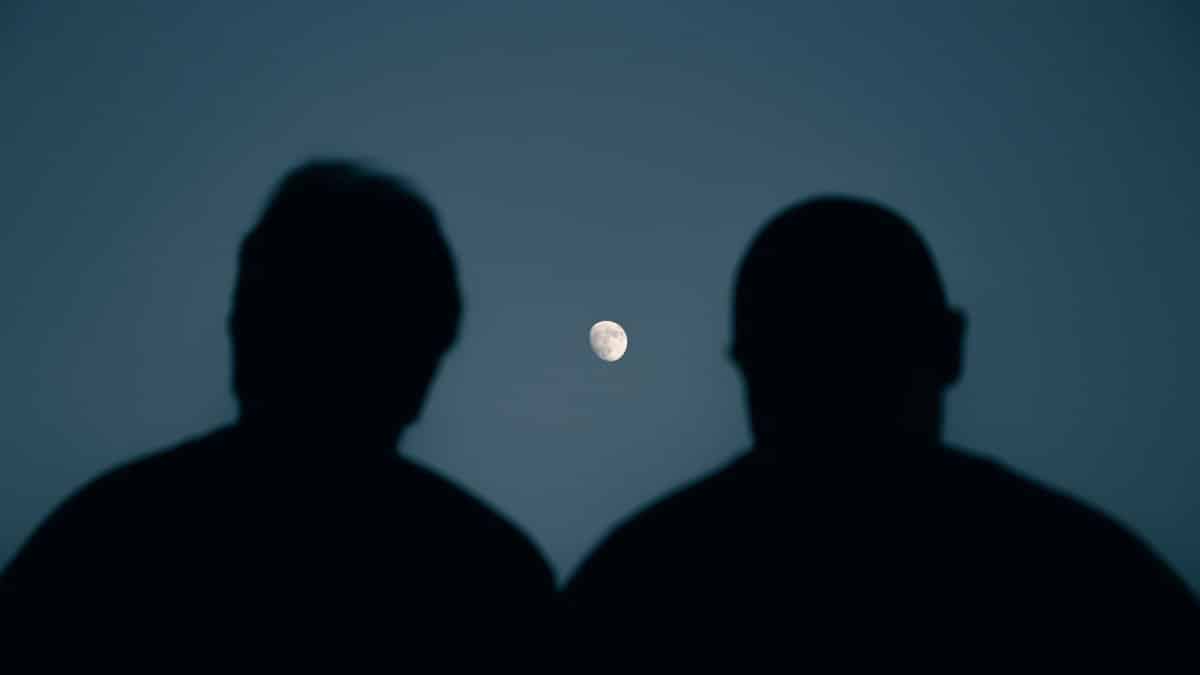
Two factors will edit the show more ruthlessly than any viewing tip. The first is the moon. A bright moon near the radiant, or high in the sky during the prime hours, acts like a second city. It does not erase every meteor, but it removes the faint majority and leaves the brighter survivors. Check the moonrise and moonset for October 21 and 22 before you set an alarm. If the moon is low or absent during the last hours of night, your odds rise. If it is high and near full, lower your expectations and look anyway only if the night is otherwise clear.
The second editor is Gulf weather. October can bring clean cool fronts that sweep haze out to sea, and it can also bring clouds, fog, and sticky air that scatters every light source. A front that arrives with north winds and a drop in humidity is a gift to anyone trying to see the Orionid meteor shower Houston style, which is to say from a bright, moist, sprawling city. Watch the forecast the day before, not a week before. Clear skies at 9 p.m. do not guarantee clear skies at 4 a.m., so glance outside before you drive.
How to watch without turning it into a project

Equipment is the easy part, which is why people overcomplicate it. Binoculars and telescopes narrow the field and make you miss streaks. The naked eye is the right instrument. A reclining chair or a blanket, a light jacket, and a red flashlight or a phone screen dimmed to the lowest setting are enough. Insect repellent still earns its place on the coast in October. If you want a record, a camera on a tripod with a long exposure can catch trails, but photography is a separate hobby. It is not required for seeing.
Sit so that a large portion of the sky is visible, not a slot between roofs. Look about halfway up the dome rather than at the horizon, where haze and light are worst. If you watch with children or with friends who have never tried this, agree on a quiet stretch of time. Conversation is fine. Constant phone checks are not. Meteors do not announce themselves, and the ones you miss while reading a message are simply gone.
What a streak is, and what it is not
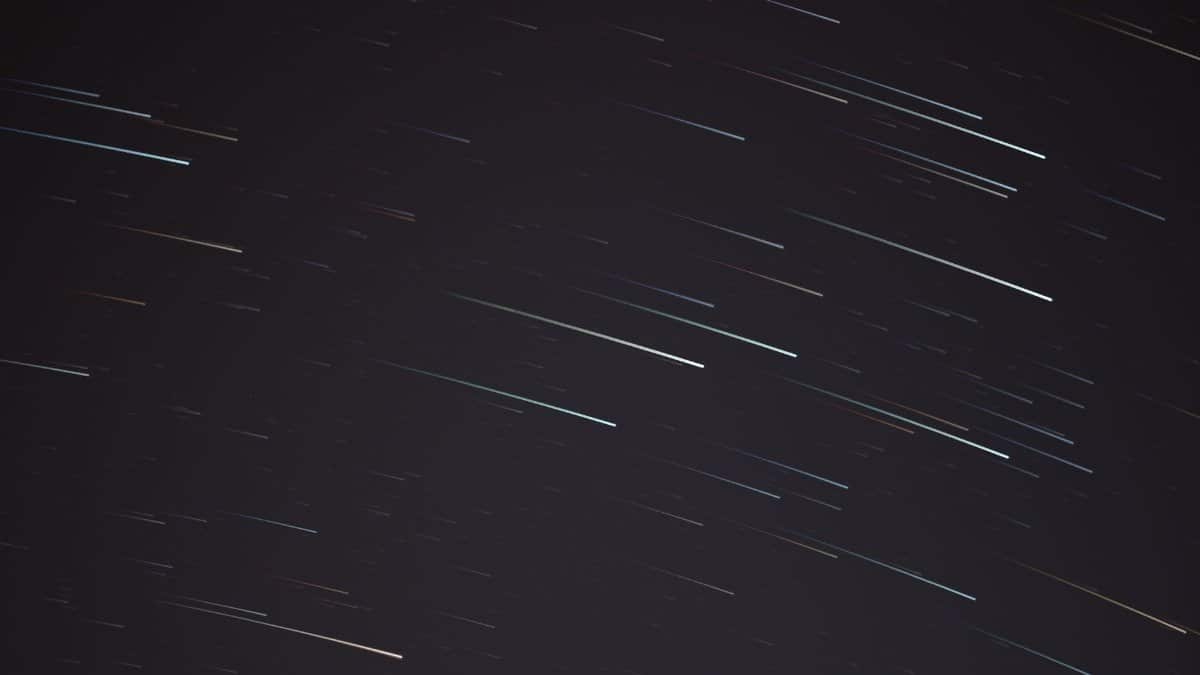
A meteor is a brief event in the air, not a star falling out of the sky and not a rock that will reach your yard. The particle burns up many miles overhead. What you see is the glowing trail of heated gas. Orionids are known for speed. They enter the atmosphere at roughly 41 miles per second, which is why the streaks can look sharp and sudden rather than slow and floating. Some leave a short glowing train that lingers for a second or two. Most do not.
Satellites, planes, and the occasional bright flare from a tumbling spacecraft can fool a new watcher. Planes blink and move with purpose. Satellites glide steadily and do not flare out in a second unless they are the rare tumbling kind. A meteor starts and ends. If you are unsure, wait for the next one. The pattern becomes obvious after a few genuine streaks.
Halley, still writing on the sky
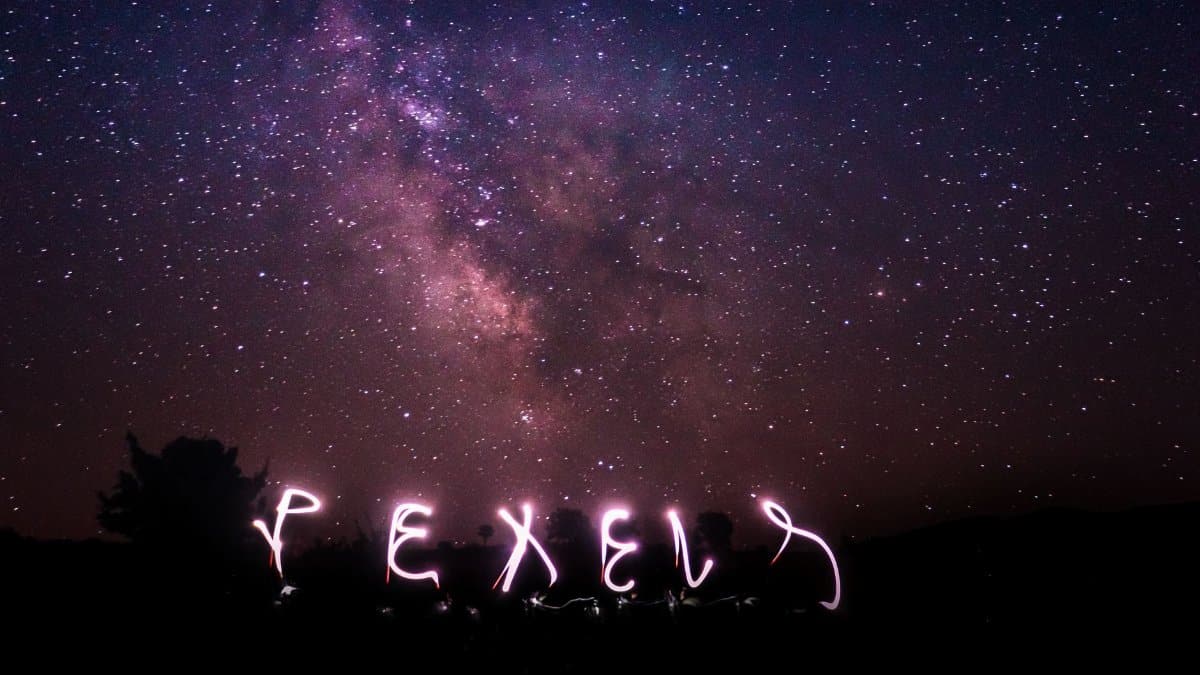
Halley’s Comet itself will not grace this October. Its last appearance was in 1986, and the next is expected in 2061. The dust it has shed over many passages remains. Each year Earth plows through a different part of that old trail, which is why some Octobers feel a little richer than others and why no honest forecast promises a storm. The American Meteor Society and NASA both treat the Orionids as a regular, moderate shower rather than a rare event. That regularity is the point. You can plan for it the way you plan for a cold front: with a date, a margin for weather, and no illusion of control.
I have stood in brighter cities than I would have chosen, waiting for a shower that the almanac made sound certain, and seen nothing but aircraft. I have also seen three fast streaks in ten minutes from a driveway that should have been hopeless. The difference was not devotion. It was cloud cover, moonlight, and whether I stayed long enough for luck to have a chance.
A quiet kind of attention

People sometimes reach for grand language when the sky does something visible. A meteor shower does not need that. For many Houstonians the appeal is simpler. Work, traffic, and screens shrink the day to a corridor. An hour outside, with the phone down and the horizon imperfect, restores a sense of scale that daily life edits out. You do not have to treat the night as sacred to feel the shift. You only have to notice that the city is not the whole of what is overhead.
That is as close to a spiritual claim as the science supports. The particles are indifferent. The comet does not schedule itself for human calendars. The meaning, if there is any, is in the act of looking: a small refusal to let the bright grid of the metro be the only light you acknowledge. Families who make a small ritual of it, coffee in a thermos and a blanket in the trunk, are not performing astronomy so much as keeping an appointment with the dark.
A simple plan for the peak

If you want a plan rather than a mood, here is one. Check the forecast on Wednesday, October 21. If clouds look likely before dawn on Thursday, consider the nights on either side, when the shower is still active. Note the moon. Pick a spot you already know, with a wide view and as little direct light as you can manage. Set an alarm for a time after 2 a.m. if you can bear it. Dress for air that may feel cooler than the evening suggested, especially if a front has passed. Lie back, face generally toward the east and overhead once Orion is up, and give the sky at least half an hour.
Count what you see, or do not count at all. Either way, you will have done the only thing the Orionid meteor shower Houston can honestly offer: a chance, not a promise, to watch ancient dust from Halley’s Comet burn out above a modern city. If the sky stays shut, the debris stream will still be there next October. The comet has been patient for centuries. One cloudy morning does not exhaust it.