

On a Tuesday morning in a Los Angeles classroom, a child who turned four in the spring sat cross legged on a rug and pointed to the first letter of her name. The moment looked ordinary. The research behind it does not. A University of California, Berkeley study, reported by the Los Angeles Times, found that children who attended preschool or California transitional kindergarten scored about 11 months ahead in reading and about 8 months ahead in math compared with peers who did not have those early programs. For families weighing a first public school year, those months are not an abstraction. They are the difference between guessing at a word and reading it.
What the numbers are actually saying
Eleven months in reading is close to a full school year of skill. Eight months in math is most of a year as well. The Los Angeles Times account of the Berkeley work frames those gaps as evidence that early public programs are doing heavy academic lifting, not merely offering childcare with crayons. The newspaper story is here: transitional kindergarten and academic success in math and reading.
I read that finding as a reminder that the first classroom is not a waiting room for real school. When a program is staffed, scheduled, and expected to teach, children accumulate language and number sense faster than children left to catch up later. The size of the reported advantage is large enough that districts should treat it as a serious result, not a press release flourish.
A program California built on purpose

California transitional kindergarten sits inside the public school system for children who are old enough for an early kindergarten year but not yet old enough for traditional kindergarten. Over recent years the state has widened eligibility so that more four year olds can enroll, with the explicit aim of making an early grade available to families who cannot pay private preschool tuition. That political choice is easy to describe and hard to deliver. Buildings, credentials, ratios, and bus routes all have to move together.
Preschool and the early public grade are not identical. Preschool often lives in community agencies or district early learning wings. The public early grade lives on elementary campuses, with the rhythms of bells, specialists, and a principal who also runs fifth grade. The Berkeley results, as described in the Times, group children who had preschool or the early public program and still find a large academic edge. That suggests the benefit is not confined to one logo on the door.
Why reading moved farther than math

The reading advantage outran the math advantage by a few months. That pattern fits what many teachers already notice. Early classrooms are soaked in talk: names on cubbies, songs, questions at the carpet, books read aloud twice because someone asked. Print is everywhere. Number work is present too, but it is easier to underdose. Counting snacks is not the same as a daily block in which children compare quantities, notice patterns, and explain how they know.
None of this means math is a side dish. Eight months is a substantial lead. It does mean that schools celebrating the reading result should ask whether math minutes are as protected as story time. A strong early program can do both. A rushed one often protects the skill that visitors can hear from the hallway.
Play is not the opposite of skill
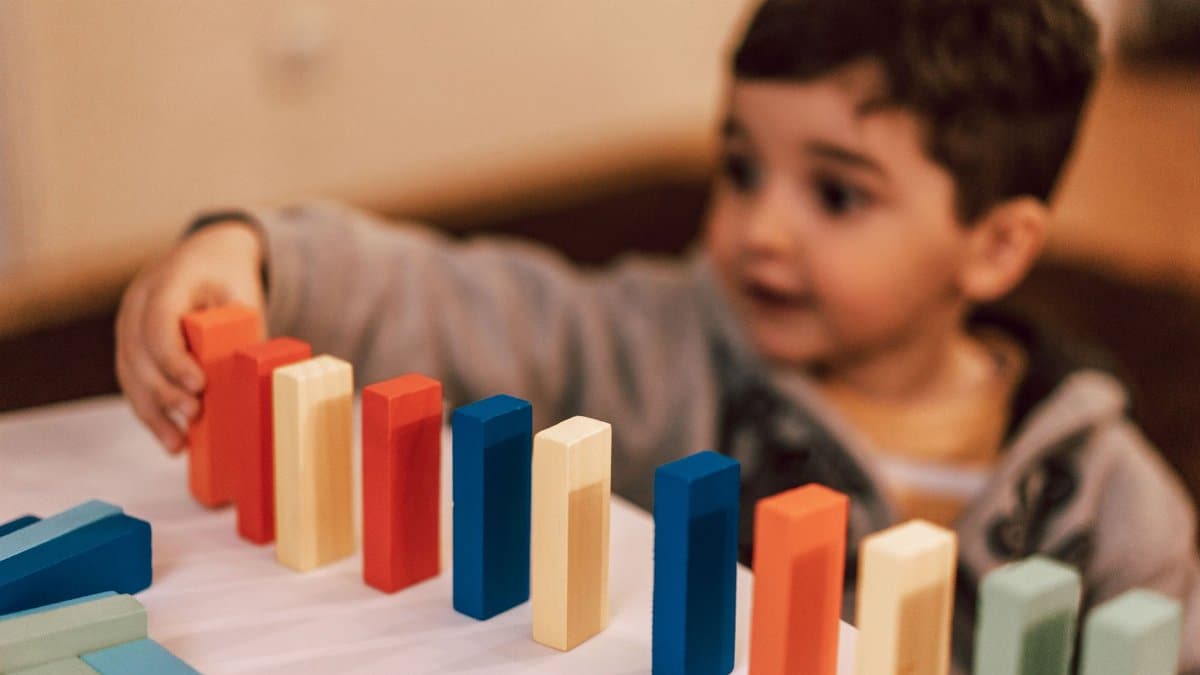
Parents sometimes hear two sermons. One says early grades should look like first grade, with worksheets and silence. The other says any academic goal will steal childhood. The classrooms that match the spirit of these findings usually refuse that duel. Children build letters with blocks, argue gently about whose tower is taller, and then sit for a short lesson on the sound at the start of a familiar word. The play is structured. The teaching is brief, repeated, and kind.
I have watched that balance fail in both directions. A room that is only free choice can leave some children, especially those with less book talk at home, without enough guided practice. A room that is only drill can produce compliance without understanding. The reported gains are most plausible in programs that treat language and number as daily habits, not as tests to survive.
Teachers are the scarce resource
A finding this large will be used in budget hearings. It should also be used in hiring conversations. Early grades demand adults who can manage a room of four year olds and still teach phonemic awareness without turning the morning into a lecture. That combination is a profession, not a personality type. Pay, preparation, and class size decide whether the profession shows up.
California has spent years trying to expand the early public grade while the state, like much of the country, struggles to keep early educators. If classrooms open faster than qualified teachers can be found, the average result in a study will not automatically appear in every zip code. Expansion without staffing is a press conference. Expansion with coaching, planning time, and reasonable ratios is an education policy.
What families actually encounter

For a middle aged parent sending a first child, the research is one conversation among many. The others are about naps, separation, a campus that feels built for older kids, and whether a younger sibling will get a seat next year. Academic months ahead matter most to families who have been told, wrongly, that school begins at five and that anything earlier is optional enrichment.
Enrollment is also a logistics problem. Shift workers cannot always use a program that ends at noon. A full day seat, a late bus, or a partnership with after school care can decide whether a child gets the year the study describes. When access depends on a parent who can leave work at 2 p.m., the benefits concentrate among families who already had advantages. That is not what universal language promises.
Equity is the unfinished sentence

The most important question is not whether an average child in these programs scores higher. It is whether children who start with less print, less stable housing, or a home language other than English get the same months. A statewide average can hide a canyon. If the strongest programs cluster in districts that already post high test scores, the early grade becomes another sorter.
California transitional kindergarten was sold in part as a fairness project: a public on ramp that does not require a private tuition check. Fairness is measured in who is in the room in October, who is still there in May, and who has a teacher trained for dual language learners. Attendance matters. A child who is enrolled on paper and absent two days a week does not receive eleven months of instruction. Districts that want the Berkeley pattern should track participation with the same seriousness they track third grade scores.
What one study cannot settle

Journalism owes readers the limit of a result as well as the thrill of it. A single university study, even one covered prominently, does not map every campus in the state. Children who attend early programs can differ from children who do not, in family income, parent education, or simple proximity to a seat. Careful research tries to account for those differences. Readers should still ask how the comparison group was built, how skills were tested, and whether the edge holds a year or two later.
That caution is not a dismissal. Months of reading and math at age four are hard to fake with a sloppy measure. The honest stance is to treat the finding as strong evidence that early public learning can move academic trajectories, and as a reason to demand follow up rather than as a permission slip to stop asking questions. Policy that cites the Los Angeles Times report should also fund the next round of evaluation, including results for students with disabilities and for children learning English.
The cost of waiting until kindergarten
Schools have long practiced a quiet theory: start formal teaching at five or six, then remediate whoever falls behind. Remediation is expensive, stigmatizing, and often late. A child who reaches kindergarten already comfortable with sounds, print, and quantities spends less of the next year surviving the basics and more of it learning. The Berkeley months, if they persist, are a down payment against later intervention.
Waiting also has a cultural cost. It tells families that curiosity before the official start date is a private hobby. Public systems that open the door earlier send a different message: the state expects to meet children when learning accelerates, not after gaps have hardened. That message only works if the door is truly open, not merely announced.
How districts can respond without theater

Superintendents do not need a new slogan. They need a short list. Protect a daily block for oral language and a daily block for math talk. Train aides as well as lead teachers, because aides often carry the small group work where gains are made. Visit classrooms for the quality of questions, not for the neatness of anchor charts. Publish enrollment by neighborhood so the public can see who is missing.
They should also resist the temptation to push the curriculum up until four year olds are doing first grade packets in the name of rigor. The finding rewards teaching, not acceleration for its own sake. Children can be a year ahead in skill and still need to move, pretend, and rest. A program that forgets the body will not keep the academic result for long.
A measured kind of hope

Education arguments in this state often swing between triumph and indictment. This result deserves a quieter register. If preschool and the early public grade can place children many months ahead in reading and a substantial stretch ahead in math, then the argument for universal access is no longer only moral. It is empirical. The moral part remains: a public system should not reserve a strong start for families who can pay.
I keep returning to the child on the rug, sounding out a name she already knew by heart. Research cannot sanctify a Tuesday morning, and it should not. What it can do is tell adults that those mornings add up. California transitional kindergarten, offered alongside preschool and staffed as real teaching, appears capable of adding up to something large. The next responsibility is ordinary and demanding: seats in every community, teachers who stay, math that is not an afterthought, and a willingness to check whether the months ahead belong to all children or only to the ones already closest to the door.