
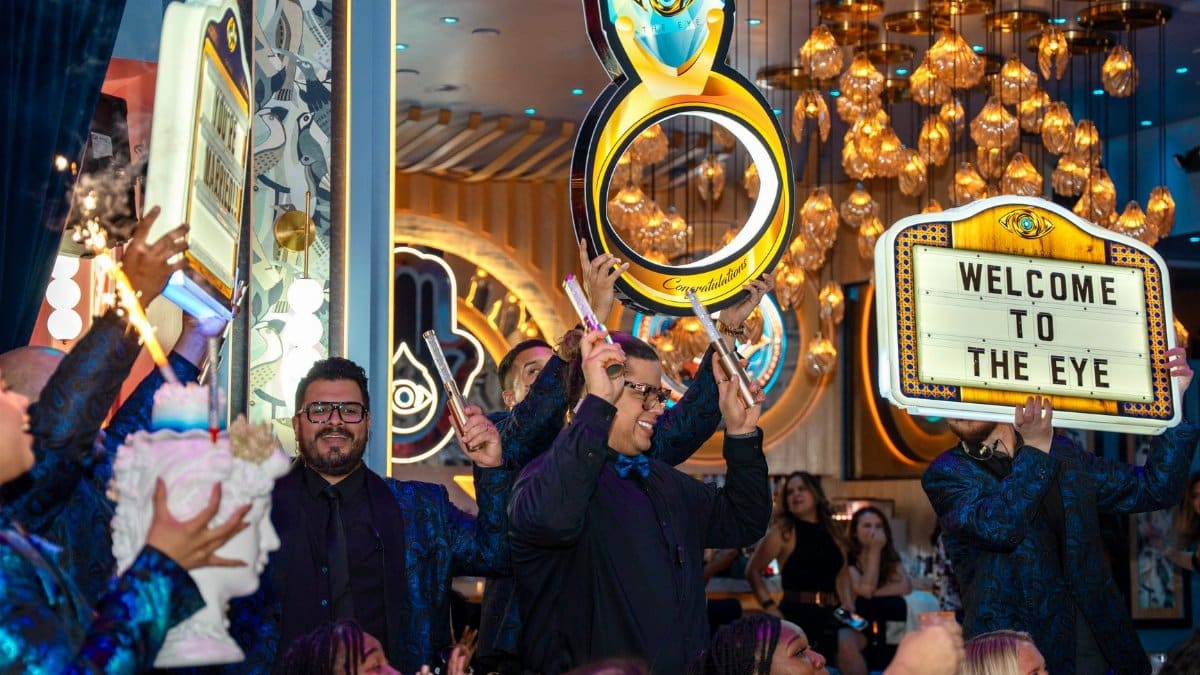
On a warm Brickell night, the cameras did what cameras in this city always do. They turned a private table into a public announcement. Plates arrived, a room leaned in, and a new chapter of Miami basketball acquired a setting as glossy as the skyline outside the glass. For readers searching Giannis Antetokounmpo Gekko Miami, the scene was simple and loaded at once: a superstar, a steakhouse, and a franchise hoping that dinner can feel like destiny. Arrival here is rarely quiet. It is staged, photographed, and then argued over by morning.
A city that treats dinner as a debut
Miami has a long habit of reading restaurants as press conferences. A reservation can say more than a statement from a front office, because a statement can be walked back and a photograph cannot. When a newly minted Heat star sits down in a room known to visiting actors, athletes, and the people who book them, the meal becomes a kind of civic notice. The notice is not subtle. It says the player is here, the circle has opened, and the city intends to claim him before the season even asks him to prove anything on the floor.
That habit is not unique to basketball. Politicians, musicians, and executives have used the same rooms for decades. What changes is the temperature of the audience. Basketball fans do not merely want to know where a man ate. They want to know whether the meal means he belongs, whether the smile was genuine, and whether the organization that courted him understands the difference between hospitality and theater. In Miami those questions arrive with the bread.
What the Brickell room actually sells

Gekko sits in the part of the city that prefers polish to nostalgia. Brickell is towers, valet lines, and conversations conducted at a volume designed to be overheard by the right people. A steakhouse in that grid is not a hideout. It is a stage with better lighting and a wine list. The appeal for a celebrity is obvious. The staff knows how to manage attention. The other tables know how to pretend they are not staring. The photograph, when it leaves the room, looks expensive without looking desperate.
For a player whose career has been built on force, length, and an almost pastoral public image, the contrast is part of the fascination. Giannis Antetokounmpo has spent years as the athlete who still seemed slightly amazed by American fame, the man who talked about family, work, and the long road from Athens street markets to a championship parade. Placing that figure inside a gleaming Miami dining room does not erase the older story. It complicates it. Wealth and wonder can occupy the same evening. Fans understand that better than marketing departments sometimes admit.
The Heat and the burden of a new face

Miami does not acquire stars so much as it auditions them for a role the city has already written. The role requires competitiveness, a tolerance for noise, and a willingness to let nightlife stand in for narrative until the games begin. Pat Riley’s franchise has always sold toughness with a side of glamour. The glamour is not a distraction from the toughness. It is the packaging. A dinner at a celebrity address fits that packaging so cleanly that skeptics can be forgiven for wondering how much of the evening was appetite and how much was messaging.
The fair answer is that both can be true. Athletes eat. They also understand lenses. A man who has lived inside highlight packages since he was a teenager does not wander into a known room by accident and then act shocked when a phone rises. The more interesting question is what the organization hopes the image will do. It can soothe a fan base that wants proof of commitment. It can signal to free agents and sponsors that the franchise still knows how to host. It can also set a bar the player did not ask to clear before he has taken a single meaningful charge in a Heat uniform.
Searching for Giannis Antetokounmpo Gekko Miami
By the next morning the proper nouns had fused. Giannis Antetokounmpo Gekko Miami was no longer a set of facts. It was a query, a caption, a small piece of internet weather. That fusion tells you how sports news now travels. A franchise transaction is abstract until it grows a location. A location is forgettable until a famous body occupies a chair. Together they become something people can forward to a group chat with a single line of commentary, usually a joke, sometimes a prayer.
There is a loss in that compression. The labor of a trade, the salary math, the delicate politics of a locker room, none of that fits inside a steakhouse photo. What remains is mood. Mood is not nothing. Mood is how cities decide whether they are falling in love. But mood is a poor substitute for the slower evidence that actually builds a contender: practices that do not leak, roles that make sense, and a coach who can tell a proud scorer to wait his turn without starting a war.
Celebrity rooms and ordinary hunger

It is worth pausing on the meal itself, not as gossip but as a human fact. Professional athletes spend half their lives in arenas that smell like cleaning solution and the other half in hotels that all serve the same salmon. A serious dinner, ordered slowly, shared with people who are not asking for tickets, can be a small restoration. Miami’s luxury dining scene understands restoration as a product. The chairs are comfortable. The lighting forgives. The staff has seen enough famous faces to keep the performance of awe within professional bounds.
Still, the ordinary hunger gets rewritten the moment it is witnessed. A ribeye becomes a symbol. A laugh becomes a referendum on chemistry. This is the tax Miami charges its visitors and, eventually, its own. The city is brilliant at welcome and relentless at interpretation. A player who wants a private life here must either accept the interpretation or build a quieter map of the place, the kind that does not trend. Many stars try the first approach for a month and the second for a career. The successful ones learn which nights are for the room and which nights are for the back door.
How a franchise borrows a city’s mythology
South Florida sells a particular promise to people who have already succeeded somewhere else. The promise is that success can look like pleasure without looking soft. Palm trees do some of that work. So do late dinners, open collars, and the rumor that important people are always one table away. The Heat has borrowed that mythology with unusual discipline. Other franchises talk about culture as if it were a slogan on a weight room wall. Miami talks about culture as if it were a dress code, a standard of suffering, and a night out that still ends with ice baths.
A new star has to decide how much of that mythology he is willing to wear. Wear too little and he looks like a tourist in his own uniform. Wear too much and he looks like a man who came for the photograph. The dinner at Gekko, viewed generously, is a first fitting. Viewed harshly, it is a costume. The season will decide which reading survives. Games have a way of sanding gloss off a story until only habits remain.
Faith, loyalty, and the ritual of showing up
There is a spiritual dimension to all of this, if one is willing to use the word without embarrassment. Sports cities practice a civic faith. They gather, they chant, they forgive and they exile. They look for signs. A traded player walking into a famous room is received the way some congregations receive a visiting preacher: with hope, suspicion, and a hunger for proof that the spirit is real. The proof they want is not theological. It is effort, availability, and the willingness to be booed without flinching.
Giannis has always spoken in the language of gratitude more fluently than the language of menace. That may matter in a town that performs menace as entertainment. Gratitude can look like softness until it is paired with the kind of defensive possession that ends an opponent’s night. Fans here have loved graceful players and they have loved grim ones. What they struggle to love is absence. Showing up at a restaurant is a small obedience. Showing up in May, when the building is cruel and the legs are heavy, is the obedience that turns a guest into a parishioner.
The photograph and the morning after
Every viral sports image has a half life. For a few hours it feels like the only story. Then a practice clip appears, or an injury note, or a rival’s quote, and the steakhouse recedes into the archive of arrival. That recession is healthy. It returns the player to the work. It also returns the restaurant to what it actually is, a business that served a famous customer and will serve another one next week. Confusing the two, the man and the backdrop, is how fans end up disappointed by images they themselves inflated.
Journalists share the blame. We reach for the scene because the scene is available and the practice gym is not. We describe the cut of a jacket because we cannot yet describe the cut of a new offense. The responsible move is to label the scene as scene. Giannis Antetokounmpo Gekko Miami is a beginning, not a verdict. It tells you where a man was willing to be seen. It does not tell you whether he will set screens, guard the opponent’s best scorer, or stay when the record turns ugly.
What teammates are quietly measuring

Inside a locker room, a celebrity dinner barely registers beside older questions. Can he pass out of a double team without pouting. Will he speak in film sessions or only in postgame platitudes. Does his presence shrink the shots of men who were here before him. Those questions do not photograph well, which is why they matter more. Miami’s recent teams have been built on players who accepted strange roles and then made those roles look like destiny. A superstar arrival tests that ethic. The ethic either stretches or it snaps.
Veterans tend to judge the small courtesies first. Who arrives early. Who learns names. Who treats the equipment staff as colleagues rather than scenery. A night at Gekko neither proves nor disproves those courtesies. It merely reminds everyone that the new man can command a room that is not a basketball court. The men who share his locker will care more about whether he can command attention and then give it away at the right moment. That is a rarer skill than finishing at the rim, and it cannot be ordered off a menu.
Money, image, and the quiet sponsors in the corner

No account of a night like this is complete if it ignores commerce. A star in a Heat jersey is a walking storefront, and Miami is a city that knows how to rent storefronts. Apparel brands, watch companies, and local developers all understand that a single widely shared dinner can do the work of a purchased campaign, provided it looks unpurchased. The player’s representatives understand it too. So do the people who own the restaurant. Alignment of interests is not a conspiracy. It is the ordinary weather of modern sports.
The danger is not that money is present. The danger is that money becomes the only legible story, and the athlete shrinks into a mascot for a lifestyle he may not even particularly like. Readers should keep a little skepticism handy when every frame looks like an advertisement and nobody will say who called whom. Skepticism is not cynicism. It is a way of leaving room for the possibility that a hungry man also wanted a good meal, and that a city sometimes mistakes its own reflection for a covenant.
What fans are really asking
Strip away the marble and the flash, and the question underneath Giannis Antetokounmpo Gekko Miami is old and plain. Will he be ours. Not ours as property, though fan culture often talks that way, but ours as a companion in the long, irrational project of caring about a team. People want a reason to rearrange their evenings. They want a name to shout that does not embarrass them in June. They want to believe that the front office still knows the difference between a splash and a pillar.
A dinner cannot answer that. It can only start the clock. In the weeks ahead, the useful evidence will be boring on purpose. Watch who he talks to on the bench. Watch whether the offense bends toward him or whether he bends toward it. Watch the nights when the shot is not falling and the crowd, faithful and fickle in the same breath, begins to test him. Those nights are the real Gekko. They are brightly lit, impossible to hide in, and more revealing than any steak.
A welcome that still has to be earned

Miami is good at hello. It has practiced the word in a dozen languages and on a hundred red carpets. Hello is not the same as stay. The player who hears welcome to Miami on a Brickell sidewalk should hear the second sentence that the city does not always say out loud. Stay interesting. Stay available. Stay harder to play against than you are fun to photograph. If he can do that, the dinner will become a charming footnote, the kind of story people tell when they are already sure of the ending.
If he cannot, the same photograph will be used as evidence that the courtship was costume. That is unfair, and it is also how memory works in a sports town. Images are kept or discarded according to the final score of a larger argument. For now the argument is open. A man ate in a famous room. A franchise smiled. A search term stitched four ideas into one restless phrase, Giannis Antetokounmpo Gekko Miami, and sent it out into the night. The night, as usual, was happy to carry it. The season will decide whether it was worth keeping.