
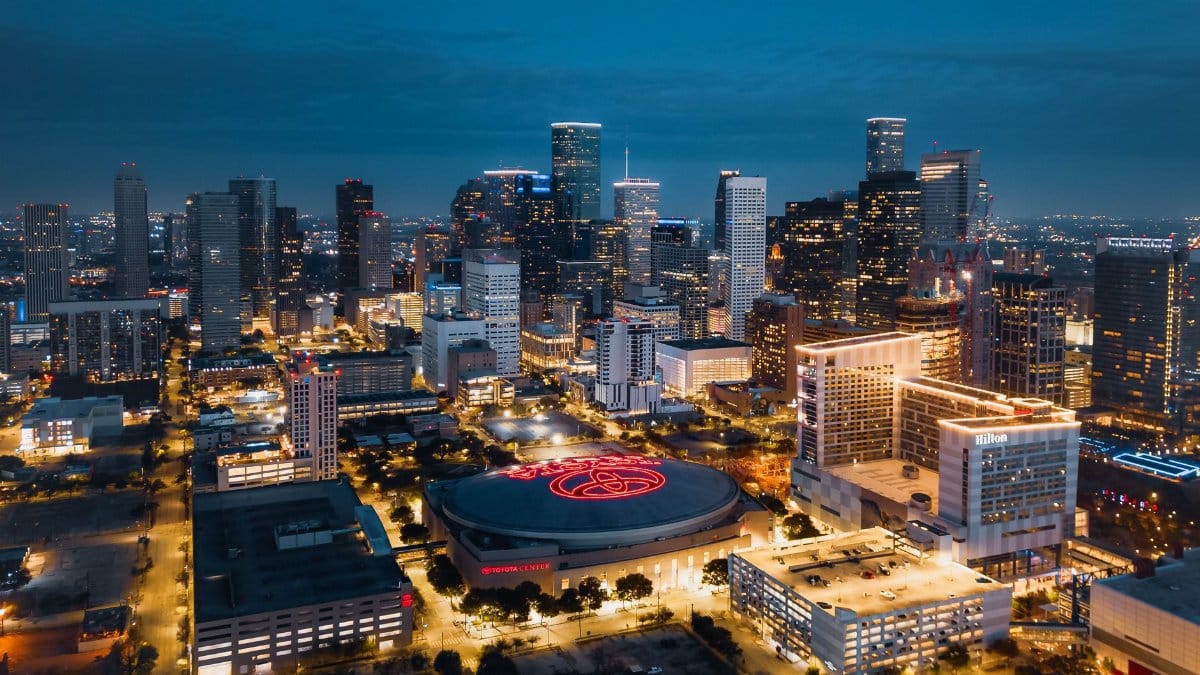
On a weeknight in southeast Houston, the political math that was supposed to be finished is being argued over again in living rooms, union halls, and church parking lots. Republican mapmakers redrew the 9th Congressional District to favor their party and to quiet a seat long held by Democrats. A new University of Houston survey now suggests the contest is far from settled. In the Houston CD-9 race, Republican Alex Mealer leads Democrat Leticia Gutierrez by six points, a margin narrow enough to put a district designed as a safe hold back among the races that consume money, time, and nerve.
A map drawn for certainty meets a restless year

Redistricting is an exercise in confidence. Parties that control state government draw lines they believe will hold through bad headlines, weak nominees, and shifts in turnout. Texas Republicans did that work with the 9th in mind, folding in voters they expected to behave like a governing majority and thinning the urban Democratic core that once made the seat a foregone conclusion. The bet was not subtle. A redrawn district is supposed to absorb national trouble and still deliver the preferred candidate.
That bet looks less comfortable now. The same national mood that has weighed on Donald Trump is reaching districts that mapmakers treated as inventory. Voters do not experience a congressional map as a chart. They experience rent, insurance bills, school closures, flood risk, and a president whose troubles dominate the evening news. When those pressures stack up, a six point lead is not a coronation. It is a warning that the engineered advantage is thinner than the architects advertised.
Houston has seen this pattern before. Lines that look decisive in a committee room can soften once campaigns start knocking on doors. The 9th was rebuilt to be predictable. Predictable is not the same as safe, and the early evidence says Republicans will have to earn a seat they thought they had already banked.
What the University of Houston survey is really saying
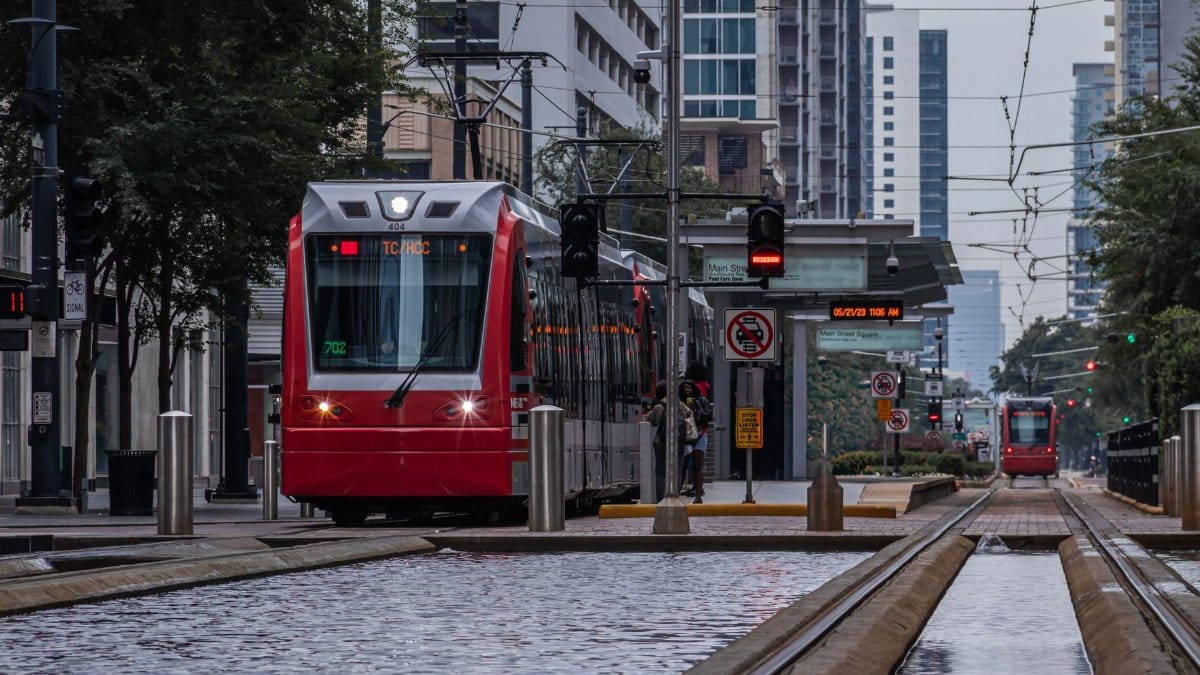
The poll, reported by the Houston Chronicle, puts Mealer ahead of Gutierrez by six points in the redrawn district. In a blowout design, that is a modest lead. Six points can survive a quiet campaign. It can also vanish if one side consolidates late, if turnout skews younger or more urban than the model assumed, or if the national environment keeps deteriorating for Republicans.
Polls are snapshots, not verdicts. A single university survey cannot tell you who will win, and anyone treating it as prophecy is misreading the instrument. What it can do is challenge a premise. The premise here was that redistricting had removed this district from the competitive map. The Houston CD-9 race is back in the conversation precisely because the numbers refuse that premise. A lead inside the range of ordinary campaign effects is not the lead of a party that has finished its work.
Readers should also watch the undecided share, the demographic crosstabs, and whether later surveys move in the same direction. One finding can be noise. A pattern would be a story. For now, the honest reading is narrower and still important: the Republican advantage is real, and it is not large enough to ignore.
Alex Mealer and the case for the new lines

Mealer enters the contest with a profile already familiar to Harris County voters. She has run countywide, speaks the language of public safety and fiscal restraint, and can present herself as a Republican who knows the bureaucracy of a huge metro region rather than as a visitor from a distant primary. In a redrawn district, that local fluency matters. New lines create new neighbors. A candidate who can talk about drainage, prosecutors, and county budgets without sounding imported has a head start.
Her advantage is also structural. The district was drawn to include voters more open to a Republican message than the old 9th. If those voters show up, and if they treat the race as a choice about local management rather than a referendum on Trump, Mealer can convert a paper majority into a seat. Campaigns in engineered districts often try to keep the conversation small: crime, taxes, schools, competence. The theory is that national drama is a tax on the party in power, and the way around the tax is to sound like a county official.
That theory has limits. Voters who were added to a district do not always adopt the identity the map assumed. Some moved, some never liked the party that courted them, and some will punish Republicans for the president even while nodding at a local platform. Mealer can run a disciplined race and still inherit a national problem she did not create.
Leticia Gutierrez and the argument that the map overreached

Gutierrez has the more difficult map and the more useful narrative. Democrats can say the district was rearranged to dilute communities that had spent years building political power, and that a six point deficit is evidence the rearrangement did not fully work. In a year when Trump is a drag, a challenger does not need to pretend the lines are fair. She needs to persuade enough of the new electorate that the Republican design was arrogant, and that arrogance has a cost.
Her task is coalition work of a very specific kind. She must hold the Democratic voters who remain inside the lines, reach independents who dislike both parties, and find Republicans who are tired of being asked to defend the president. That is not a romantic strategy. It is arithmetic. Every point she closes comes from a different room: a precinct that was supposed to be safe, a household that split its ticket last time, a voter who planned to sit out a race that looked finished.
Name recognition is the quiet variable. Mealer has already been on a countywide ballot. Gutierrez has to become known fast enough that the poll lead does not harden into a brand. In Houston, that usually means Spanish language media, Black civic networks, neighborhood associations, and the congregations that still function as message boards. None of that is mystical. It is how this city actually moves information.
Why a presidents troubles travel into a local district
Congressional candidates like to say they are running their own races. They are, until the president becomes the subject every interviewer wants to discuss. Trump remains the central fact of Republican politics. When he is mired in controversy, legal exposure, or simple unpopularity, candidates down the ballot spend time they wanted to spend on their own records. The Houston CD-9 race is a clean example. The district was drawn under the assumption that Republican loyalty would be sticky. Loyalty is stickier when the party leader is an asset. It frays when he is a daily argument.
The mechanism is not mysterious. Some voters who accepted a Republican label in a presidential year look for an off ramp in a congressional year. Others stay home. A smaller group crosses over. Any of those behaviors, in a district won by design rather than by landslide habit, can shrink a six point lead. Mapmakers can choose voters. They cannot choose the news those voters will have absorbed by Election Day.
There is a counterargument Republicans will make, and it deserves a hearing. Trump has defied political obituaries before, and some of his supporters become more motivated, not less, when he is under attack. A district redrawn to include those supporters could see a surge that a university poll taken in a quieter week would miss. The honest position is that both stories are possible. The point of the survey is that Republicans no longer get to assume only one of them is real.
The voters the lines were meant to settle

A redrawn district is a collection of compromises. Some precincts were kept because they were reliable. Others were added because they looked promising on a spreadsheet. The people inside those precincts are less tidy. Houstonians move. They commute across district lines for work. They worship, shop, and send their children to school in places the map does not recognize. A voter added to the 9th to strengthen Republicans may still get her news from a station, a pastor, or a family group chat that does not share the mapmakers priorities.
That is why early polls in new districts are especially unstable. Many respondents are meeting the candidates for the first time. Some are not sure which district they inhabit after the lines moved. Confusion is not apathy. It is a lag between cartography and daily life. Campaigns that treat that lag as an opportunity, rather than as a rounding error, are the ones that close or widen small leads.
Flood memory, property insurance, and the cost of staying in a house also cut across party design. Those issues do not belong to one color on a map. A candidate who can talk about them without reciting a national script will sound, to a lot of voters, like the adult in the race. Both campaigns know this. Only one of them currently holds the lead the poll describes.
Money, message, and the ground that still has to be walked

A six point race attracts money that a twenty point race does not. Outside groups notice. So do the campaign committees in Washington, which have finite dollars and a long list of seats they would rather not defend. If Republican strategists conclude that the 9th requires real spending, that is itself an admission. Seats you redrew so you would not have to worry about them are not supposed to compete with true tossups for advertising time.
Message discipline will matter as much as cash. Mealer will try to localize. Gutierrez will try to nationalize just enough to harvest dissatisfaction with Trump without letting the race become a pure culture war she might lose in the new precincts. The winner is likely to be the candidate who can do both in the same week: sound specific about Harris County on Tuesday and answer for the president on Wednesday without looking evasive.
Turnout operations will decide the rest. In a district this close, the difference between a win and a loss can be a few thousand voters who needed a ride, a reminder, or a reason to believe the outcome was not already written. That work is unglamorous. It is also the part of politics that redistricting cannot automate.
What a close contest would mean beyond one seat

If the lead holds and Mealer wins by a modest margin, Republicans can still claim the map worked. A win is a win, and a designed district that delivers is a success even if it sweats. The cost of that sweat is the story. Every dollar and every weekend spent saving a seat that was supposed to be safe is a dollar and a weekend not spent expanding the map elsewhere.
If Gutierrez wins, or if the margin collapses into a recount, the embarrassment is larger than one district. It would suggest that mid decade confidence outran the electorate, and that Trump era headwinds can overwhelm even a friendly set of lines. Democrats would treat that result as proof that aggressive maps create brittle majorities. Republicans would treat it as a failure of candidate, message, or turnout, not of the map. Both interpretations could contain some truth. The Houston CD-9 race will be cited either way, because it was built to be the example that did not need citing.
Courts, legislatures, and the next round of line drawing will be watching too. A map that produces surprise is a map that invites another fight. Texas has no shortage of those fights. What it has, in this district, is a live test of whether political engineering can outlast the mood of the country.
The limits of one survey, and what comes next
None of this is a prediction dressed up as analysis. A six point lead can grow as voters learn Mealer and as Republicans consolidate. It can shrink as Gutierrez becomes better known and as national dissatisfaction hardens. Later polls may contradict the University of Houston finding. Campaigns may implode for reasons that have nothing to do with Trump or with the map. Journalism that pretends otherwise is selling certainty it does not have.
What reporters and voters can do is watch the indicators that usually arrive before a result. Watch whether Republican advertising starts treating the seat as contested. Watch whether Democratic money follows. Watch which candidate can fill a room in a precinct that was added, not inherited. Watch whether Trump schedules, or avoids, appearances that force every down ballot Republican to answer for him again.
The Houston CD-9 race was supposed to be a footnote in a larger Republican design. A six point lead in a university poll does not rewrite the design. It does something more modest and more interesting. It puts the footnote back on the page, in a city where voters have a habit of ignoring the ending that was written for them.