
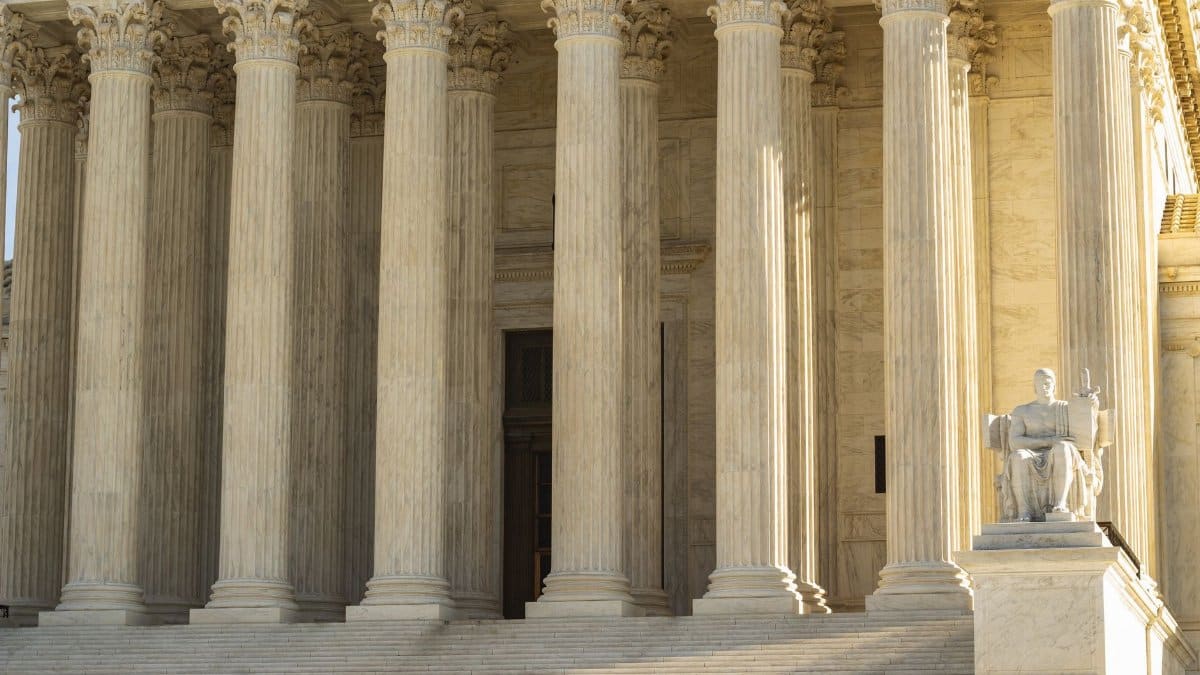
The marble steps outside the Texas Supreme Court were quiet on the day the justices declined to take up a fight that city leaders have treated as existential. There was no oral argument and no opinion setting out a fresh theory of home rule, only a refusal that left the Death Star law standing. For mayors who have spent years arguing that the statute drains power from city hall, the silence functioned as a verdict. Business groups called the outcome overdue clarity. Democratic lawmakers, already drafting their next move, treated it as a summons to January.
A refusal that functions as a ruling

Declining to hear a case is not the same thing as writing a constitutional treatise. It does, however, leave the lower court result in place and signal that the justices see no urgent reason to intervene. In practical terms, cities that hoped the high court would restore a wider field for local ordinance writing now have to govern inside the lines the statute draws. The political reading is just as plain. A law passed by a Republican majority, signed by Gov. Greg Abbott, and defended by the attorney general has survived the last judicial door opponents expected to open before the next regular gathering of the Legislature.
Court refusals often look technical to people outside the building. This one does not feel technical in Houston, San Antonio, Austin, or Dallas, where council members have spent the last several sessions asking lawyers whether a proposed rule on wages, housing, or workplace heat will survive a preemption challenge. A denial of review does not answer every hypothetical. It does tell local officials that waiting for a rescue from the high court is no longer a strategy.
What the statute actually does

The Death Star law, enacted in 2023 as House Bill 2127, is a broad preemption measure. It tells cities and counties that they may not regulate in fields already occupied by named state codes, including those covering labor, property, business and commerce, finance, insurance, occupations, agriculture, and natural resources, unless a statute specifically allows the local rule. Supporters describe that design as a brake on a patchwork. Critics describe it as a blanket that is wide enough to smother ordinances the Legislature never debated one by one.
Texas has preempted cities before, often on a single topic. Plastic bag rules, certain oil and gas restrictions, and local mandates on paid sick leave each produced their own statutes or lawsuits. House Bill 2127 tried to replace that serial approach with a general rule. The nickname opponents gave the bill was meant to capture that scale. A single instrument, in their telling, could wipe out a whole sky of local experiments.
The long argument over home rule

Texas cities above a modest population threshold have long written home rule charters under the state constitution. That tradition is real, and it is also conditional. Home rule has always lived inside a hierarchy. The Legislature can occupy a field, and when it does, a city ordinance must yield. The modern dispute is less about whether the state sits above the city than about how explicitly the state must speak before a local rule falls.
For much of the last century, that line was drawn statute by statute. A city might ban an activity until lawmakers decided the ban had become a problem for industry or for uniform enforcement. The newer model assumes that if a state code already touches a subject, silence in that code is not an invitation for city hall. It is a closed door. That shift matters most in large cities, where councils respond to constituents who want rules the statewide majority has declined to enact.
Why opponents reached for a movie nickname

The phrase attached to the bill did not come from its sponsors. It came from local officials, labor groups, and Democratic critics who wanted a picture ordinary voters could hold in mind. A death star, in the films, is a single weapon with a wide radius. The comparison is rhetorical, and it is also politically useful. It turns a bill number into a story about power taken from neighborhoods and handed to Austin.
Sponsors rejected the drama. They argued that companies operating in more than one city should not have to track a different rule on scheduling, hiring, or building use every time a delivery truck crosses a municipal line. In their view, the state codes already express the public policy of Texas, and cities were using gaps in those codes to build a second, more liberal regulatory state. Both descriptions can be true at once. The statute is broad. The local rules it threatens were often conscious departures from the Capitol consensus.
The case the justices would not hear
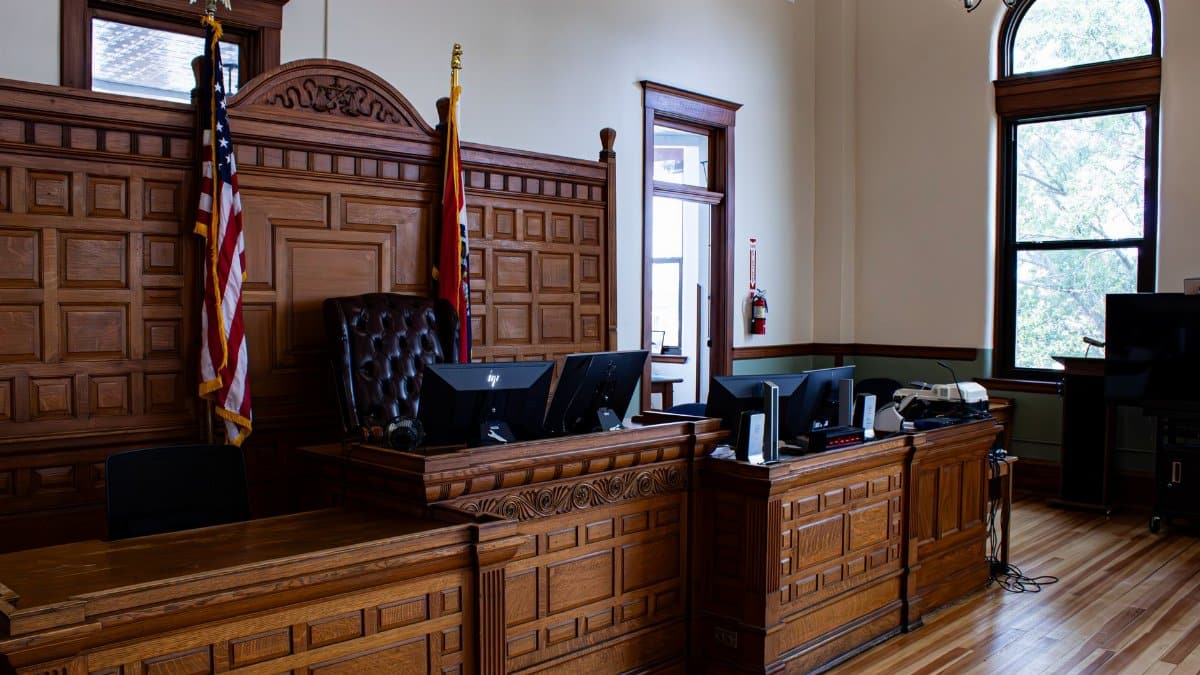
Houston led the legal challenge, with other local governments watching closely and, in various postures, supporting the claim that the statute was too vague to enforce and too sweeping to square with constitutional limits on how the Legislature may cabin home rule. A trial court in Travis County initially sided with the cities on important points. An intermediate appellate court later sided with the state. The request that the Texas Supreme Court take the next step is what the justices have now declined.
That procedural ending leaves advocates without a new opinion to parse, which is its own frustration. A written decision might have narrowed the statute, marked certain ordinances as still valid, or told cities exactly which phrases in House Bill 2127 do the real work. A refusal supplies none of those maps. Lawyers will keep arguing at the edges, in enforcement actions and in fresh lawsuits about particular ordinances. They will do so without a high court gloss on the central question.
Ordinances caught in the wide net

The practical stakes sit in the kinds of rules cities adopted when they believed state law left them room. Local paid sick leave mandates in several Texas cities were already tied up in court before 2023. Fair chance hiring rules, predictive scheduling proposals, and heat protections for outdoor workers have all been discussed as vulnerable under a broad reading of the statute. So have some housing measures, local controls on certain business practices, and environmental rules that touch natural resources or property in ways a state code already addresses.
Not every city idea dies. Ordinances that a specific statute still authorizes can proceed. Rules that fall outside the listed codes may survive. The difficulty is the uncertainty. A council that wants to require water breaks on construction sites, or to set a local standard for apartment conditions beyond the state floor, must now ask whether a court will treat the subject as occupied. Many will not take that risk. The law works even when no one files a suit, because the threat of a suit changes what gets a first reading.
The case businesses make for one rulebook

Trade associations and the governor have been consistent. A firm with locations in several cities, they say, cannot reasonably comply with conflicting local mandates on wages, leave, scheduling, or the paperwork of hiring. They also argue that local rules function as a tax on growth, pushing investment toward places with simpler requirements. From that vantage, the Death Star law is not an attack on democracy. It is a choice about which democracy counts, the one seated in the Legislature or the one seated on a city council.
That argument lands differently depending on the reader. A restaurant group hears relief. A construction worker in a Texas summer hears the loss of a local heat rule that the Capitol has not replaced with a strong statewide standard. Uniformity is a value. It is not a neutral one. It freezes policy at the level of government most able to pass it, which in Texas today is a Legislature skeptical of the urban regulatory agenda.
Democrats and the January repeal push

Democratic lawmakers have said they will try to repeal the statute when the Legislature meets in January. The plan is straightforward in outline and difficult in practice. A repeal bill would restore the older, topic by topic approach to preemption and invite cities to revive ordinances that lawyers have shelved. Sponsors will describe the effort as a restoration of home rule and as a response to a court that declined to do what they believe the constitution required.
They will also have to explain the bill to voters who never heard the courtroom argument. The movie nickname may help. So may concrete examples, a water break, a sick day, a housing inspection, rather than abstract talk about occupied fields. Republicans who passed the law will describe repeal as an invitation for every large city to rebuild the patchwork. That message tested well enough in 2023 to carry the original bill. Nothing in the court refusal weakens it inside a chamber the same party still controls.
The math of a legislature that passed the bill

Repeal is not a legal strategy. It is a vote count. The statute passed because a majority in both chambers wanted a hard limit on city power, and because the governor was eager to sign it. Unless that majority has shifted, or unless a faction of Republicans decides that some local rules are worth saving, a Democratic bill will be a message more than a statute. Message bills still matter. They force hearings, put members on record, and give city officials a place to testify about ordinances they can no longer enforce with confidence.
There is a narrower path that does not require full repeal. Lawmakers could amend House Bill 2127 to exempt stated subjects, heat safety, for example, or certain housing standards, while leaving the general preemption intact. That kind of carveout is how Texas has often made peace between industry and cities. It requires sponsors willing to admit that the original net caught fish they meant to leave in the water. Whether January produces that conversation depends less on the court than on whether rural and suburban Republicans feel any pressure from the workers and tenants who live in their districts and commute into the cities.
What cities can still do

Even under a broad reading, city government does not vanish. Police powers over nuisances, traditional land use in areas the statute does not clearly occupy, budgets, and many health rules tied to specific grants of authority remain part of the daily work. Cities can also lobby. They can ask the Legislature for express permission to regulate a subject, which is slower than passing an ordinance and more honest about where power now sits. They can use procurement, setting standards for contractors who want city business, though that tool has limits and its own legal risks.
The deeper constraint is cultural. A generation of urban officials in Texas came of age treating the council dais as a place to solve problems the Capitol would not touch. That habit produced innovation and, at times, overreach that courts and lawmakers were always likely to challenge. The new habit will be caution. City attorneys will write longer memos. Ordinances will arrive with severability clauses and with citations to whatever narrow permission a state statute still offers. Some ideas will move to the private sphere, union contracts, employer pledges, nonprofit programs, where preemption does not reach as easily.
A fight that has left the courthouse
The Texas Supreme Court has had its chance to redraw this map and has declined. That does not end litigation over individual rules, and it does not end the argument about whether House Bill 2127 is wiser policy than the home rule practice it displaced. It does move the center of gravity back to the Capitol, which is where the Death Star law was born and where Democrats now say they will try to end it.
Between now and January, city halls will govern in the shadow of a statute they failed to topple in court. Business groups will treat the refusal as confirmation that one rulebook is the rule of Texas. Voters who care about sick leave, housing conditions, or a water break in August will have to decide whether those questions belong on a council agenda or only on a legislative one. The justices have chosen not to answer. The session that opens in January will be asked to answer instead, in the only language that still changes this law, a majority of votes.