
By eight in the morning the sidewalk outside a county branch already held a loose ribbon of people, many of them well past school age, comparing phone photos of a white cat with a red bow. They had come for Hello Kitty library cards LA County residents could request only while supplies lasted, a limited run that turned an ordinary civic errand into something closer to a premiere. The bow, the pink, the familiar face: none of it was new. The setting was. A public library, usually associated with quiet stacks and tax forms, had become the place where adults waited in line for a piece of plastic that felt, to them, like a small celebration.
A queue that did not look like a library queue
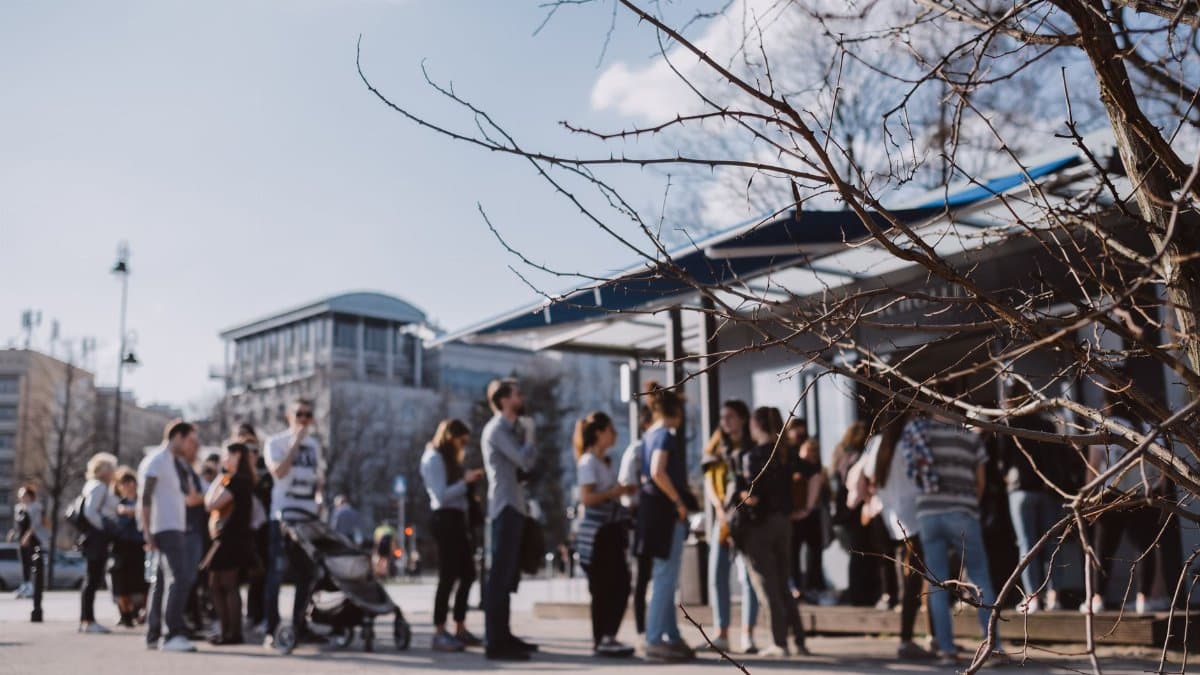
Library lines are usually short and practical. Someone needs a printer. Someone is returning a stack of novels. Someone is asking where the tax forms went. The line for these cards looked different. People dressed as if they were meeting friends. They carried tote bags printed with the same cat. They talked across strangers about which branch might still have stock, the way concertgoers trade rumors about a side door.
Staff who have worked opening shifts for years said the mood was closer to a book sale or a summer reading kickoff than to a routine card replacement. The difference was scale. Interest was not confined to children tagging along with a parent. Adults came alone, in pairs, and in small groups that had planned the morning the way other people plan a brunch. Phones came out not for navigation but for proof: a photo of the card, once obtained, sent immediately to a group chat.
That shift matters for how a public building is read. A library can be a warehouse of information and still be a stage. On this morning it was both. The catalog did not change. The floors did not change. The desire walking through the door did.
What the cards actually were
The object itself was modest. A library card is a thin rectangle that unlocks borrowing, computer time, and a record of what a person has taken home. In this case the rectangle carried official Sanrio artwork built around Hello Kitty, the character Sanrio introduced in 1974 and has kept in circulation ever since. The county system offered the design as a limited edition, not as a permanent replacement for every card on file.
Limited is the word that did the work. When a public agency pairs a familiar character with a hard stop on supply, it borrows a logic more common to product drops than to municipal services. People who might have renewed a plain card any Tuesday decided that this Tuesday, or whichever morning the design appeared, was the one that counted. Hello Kitty library cards LA County branches placed at service desks became, for a short window, the reason to cross town.
Nothing about the underlying privilege changed. A decorated card checks out the same books as a plain one. The decoration changed the feeling of asking for it. That is a small distinction and, judging by the sidewalks, a powerful one.
Adults who arrived before the doors
The most remarked upon fact of the rollout was not that children wanted the card. Children have wanted Hello Kitty for half a century. The fact that traveled was that thousands of adults wanted it too, enough to empty several branches on the first day. Some were parents picking up a card for a household and a second for themselves. Some had no child in tow at all.
There is a lazy way to tell that story, and it treats adult enthusiasm for a cute design as a joke. The lines did not support the joke. People in them could explain themselves without embarrassment. They liked the character. They liked the idea of a public institution bothering to make something pleasing. They liked having a reason to walk into a building they already funded with taxes and had not visited in months.
Age did not sort the crowd cleanly. Teenagers stood beside office workers on a late start. Retirees compared notes with college students. The common thread was not nostalgia alone, though nostalgia was present. It was the decision that a library card could be an object worth wanting, not merely an object worth having.
Branches that ran out before noon
Supply was never meant to match a countywide population. A limited run, spread across a large system, will always favor the early and the nearby. Several branches reported that their allotment was gone before the day had properly started. Patrons who arrived after a work shift, or after a school drop off, found a polite explanation and an empty tray.
Running out is an ordinary retail problem. Inside a library it carries a different charge. The institution’s usual promise is abundance of a certain kind: if the book you want is out, another copy can be requested, another title suggested. A finite stack of decorated cards cannot be requested from a neighboring branch once that stack is gone. Staff had to say no in a building built for yes.
Some people left disappointed and said they would try another location. Some signed up for a standard card anyway, which is the outcome a library can live with. The design was the lure. The account was the point. Hello Kitty library cards LA County locations could not reprint on demand without breaking the premise that made people line up.
The phrase everyone kept using
Ask what the card looked like and the answer came back in the same two words: super cute. The phrase is informal, almost dismissive if you are hunting for a theory of design. It was also precise. Cute, in the Sanrio sense, is not a failure of seriousness. It is a style with rules: a round face, a small bow, a refusal of menace, a palette that reads as friendly from across a room.
Public agencies rarely aim for cute. They aim for clear, durable, and hard to mock. A seal, a sans serif name, a barcode placed where a scanner expects it. Those choices are defensible. They also produce objects nobody photographs. The Hello Kitty card was built to be photographed, and people treated it that way, holding it beside a stack of books or against the glass of the front door.
There is a risk in that choice. A library that chases a trend can look like it is renting relevance. A library that ignores delight can look like it has forgotten the people who pay for the lights. The first day suggested that a narrow, clearly bounded dose of delight did not cheapen the building. It filled it.
Why a character from 1974 still pulls a crowd
Hello Kitty has outlived countless campaigns that were supposed to replace her. She has no mouth, a fact designers and fans have argued over for decades, and that absence lets people project calm, or shyness, or simply a clean graphic onto the face. Sanrio has licensed the character onto nearly every surface a household can hold. A library card is, in that long list, a late arrival rather than a shock.
What felt fresh was the landlord. When a company puts a character on a notebook, the transaction is private. When a county library puts the same character on a card, the transaction is civic. You are not only buying a feeling. You are being recognized as a member of a system that lends things for free. The bow sits on top of a privilege that predates the bow.
That layering helps explain the adult turnout. Many of the people in line grew up with the character on pencils and pajamas and never fully retired her. Others met her through their own children and stayed. A 1974 design can function as a shared reference across generations without requiring anyone to pass a test. You do not need to have read a particular novel to know the cat. You only need to have lived in the culture that kept printing her.
Membership as a small public ritual
A library card is one of the few documents a person can acquire that asks for almost nothing and returns a standing invitation. Name, address, a signature. In exchange, rooms full of books, films, language classes, and quiet. The ritual is easy to overlook because it is free and repeatable. Dress it in a character people love, and the ritual becomes visible again.
Visibility is not the same as faith, and a library is not a church. Still, the morning had a ceremonial shape. People waited. They approached a desk. They received a token that said they belonged. They left carrying proof. For some, that sequence was the closest thing to a communal rite they would attend all month. Joy, in public, on a weekday, without a ticket price, is rarer than planners like to admit.
The spiritual temperature of the event, if that word fits at all, was low and ordinary. Nobody was converted. Nobody was asked to believe anything about the cat. What people seemed to believe was smaller: that a shared institution can still surprise them, and that surprise can be gentle rather than alarming.
Staff, supplies, and the limits of cute
Behind the desk the morning was labor. Cards had to be accounted for. Identities had to be checked with the same care as any other issuance. Questions about lost cards, about children’ s accounts, about whether a design could be mailed to a branch across the county, all arrived at once. Cute does not shorten a queue. It lengthens one.
Workers described a crowd that was, in the main, patient, and a few patrons who were not. Scarcity brings out both manners. A limited object inside a public building creates a tension the building is not designed to police. There is no velvet rope in a branch lobby. There is a staff member with a tray and a closing time.
The honest limit is this: a character cannot fix understaffing, short hours, or a branch that needs a new roof. Hello Kitty library cards LA County readers chased for a morning do not replace a budget. They can, at best, remind a distracted public that the building is alive and worth funding when the tray is empty again. Treating the crowd as a solution would be a mistake. Treating it as a signal is fair.
Collectors beside first time borrowers

Not everyone in line intended to borrow a book that week. Collectors have their own logic, and a library card with licensed art is, for them, a cousin of a transit pass or a postage stamp: official, dated by circumstance, unlikely to be reprinted in the same way. Some will keep the card in a sleeve and never run it through a scanner. That use is easy to scold and hard to prevent.
Beside them stood people who had not held a library card in years, or ever. A spouse had sent them. A coworker had posted a photo. The design did the recruiting that a brochure had not. If even a fraction of those accounts stay active after the novelty fades, the morning will have done quieter work than the photos suggest. Borrowing is a habit. Habits start with a reason to show up once.
The two motives can share a line without ruining each other. A collector and a new borrower both leave with the same rectangle. One files it. One uses it. The library’s interest is obviously in the second. Its interest is not injured by the first, so long as the account behind the plastic remains a real account and not a souvenir detached from the system.
What the rush does not settle
A single crowded morning cannot answer the larger questions facing county libraries: how to keep hours reliable, how to serve people who cannot reach a branch before noon, how to make digital cards feel as tangible as a bow on a piece of plastic. Those questions were present in the building before the design arrived, and they remained when the tray was bare.
What the rush does settle is a narrower claim. Adults will cross a city for a public service when that service is allowed to be pleasing. They will talk to strangers in a lobby. They will accept a rule about supplies if the rule is clear. They will use the word cute without apology. None of that requires a library to become a gift shop. It requires a library to remember that members are also audiences, and that an audience responds to care made visible.
By afternoon the sidewalks had thinned. The cat with the red bow was in wallets, in photos, and, at several branches, nowhere left to hand out. The stacks were where they had been at dawn. People who came for a design walked past them on the way out, and a few stopped. That pause, unplanned and unbranded, may be the part of the story worth keeping after the limited run is only a memory people show one another on their phones.