
The call came the way these calls often do, after a rash had already appeared and a clinician had already asked the questions that matter. Minnesota health officials confirmed that an unvaccinated adult in Fillmore County has measles, the 18th person with the infection recorded in the state in 2026. For nearly six months the case count had not moved. That quiet is over. The report, carried by the Star Tribune, places a rural county in southeastern Minnesota back inside a national conversation that many residents hoped had moved on. In briefing language the cluster of words is plain: Minnesota measles Fillmore. Behind the phrase is a person, a household, and a virus that still finds the unvaccinated with ruthless efficiency.
What the state confirmed
State health officials have confirmed an 18th measles case in Minnesota for 2026. The patient is an unvaccinated adult who lives in Fillmore County, a region of bluffs, dairy farms, and small towns near the Iowa line. Officials have not, in the public account available so far, released a name, an age, or a town. That restraint is standard. Measles investigations protect privacy while they trace who shared air with the patient during the infectious window.
Search interest will gather around Minnesota measles Fillmore, but the investigation will gather around dates and rooms. The confirmation matters less as a solitary headline than as a break in a pattern. After cases earlier in the year, Minnesota had gone nearly six months without a new confirmation. A lull is not elimination. The virus does not negotiate with calendars. It waits for a susceptible person and a room with enough shared breath.
A county that had stayed quiet

Fillmore County is not a place most Minnesotans picture when they imagine an outbreak map. The population is modest. Distances between clinics can be real, especially in winter, when a fever that seems manageable at dusk can look different by morning. Many residents know the pharmacist, the school nurse, and the pastor by first name. That intimacy can speed a warning. It can also delay a visit if the first symptoms feel like an ordinary seasonal illness.
When reporters and health departments speak of Minnesota measles Fillmore, they are naming a geography as much as a diagnosis. Rural counties often have fewer same day vaccine slots and fewer specialists who see rash illnesses every week. They also have deep habits of looking after neighbors. Both facts will shape the next two weeks, the period when any secondary cases are most likely to show themselves. A missed appointment in a small county is not an abstraction. It is a specific chair in a specific waiting room.
The lull that did not last

Nearly six months without a new case is both an achievement and a trap. Families return to routines. School nurses exhale. The story slips down the page. Then one laboratory result arrives, and the old questions return with it. Who was exposed? Were they immune? Did anyone travel? Did anyone sit too long where the air was shared?
The Star Tribune account frames this illness as the end of that lull. Readers should treat the number 18 as a floor rather than a ceiling. Confirmations lag symptoms. A person can spread measles for days before the rash makes the disease obvious to a parent or a clinician. Health departments often learn of a case only after the most contagious days have already passed. That lag is why a single announcement can feel late even when the laboratory work was prompt.
How the virus travels

Measles is among the most contagious infections in clinical medicine. It spreads through respiratory droplets and through finer particles that can remain in a room after a sick person has left. The Centers for Disease Control and Prevention describes a disease able to move through a household, a clinic, or a place of worship when immunity is thin. A clear federal overview is here: https://www.cdc.gov/measles/about/index.html.
Two doses of measles, mumps, and rubella vaccine protect about 97 percent of people who receive them, according to that federal guidance. One dose is strongly protective, though less complete. The adult in Fillmore County was unvaccinated. That fact is not a verdict on character. It is an explanation of risk. Without vaccine immunity, or immunity from a prior infection, exposure is often enough to produce disease.
The contagiousness also explains why partial protection in a community is not the same as safety. A county can have high overall coverage and still hold a circle of friends, a congregation, or a workplace where too many adults lack records. The virus finds the circle, not the average.
Vaccination and the adult case
Adult cases disturb people who remember measles only as a childhood illness in old family stories. Adults remain unvaccinated for many reasons. Some grew up where the vaccine was distrusted. Some missed doses during moves, illness, or gaps in coverage. Some believed a childhood fever had already protected them when it had not. A small number have medical reasons that make a live vaccine inappropriate. Those reasons are uncommon, and a clinician, not a rumor, should be the one to name them.
Minnesota has spent years trying to close these gaps, especially after earlier outbreaks in communities with lower uptake. The state health department keeps public guidance at https://www.health.state.mn.us/diseases/measles/index.html. The lesson from those years is plain. An outbreak does not require most residents to be unprotected. It requires a cluster of susceptible people and one introduction of the virus. An adult case is a reminder that the schedule does not end at kindergarten if records were never completed.
Clinics, schools, and gathering places

The next question is about rooms. Waiting rooms, church basements, school gyms, daycare nap rooms, and break areas at work are the ordinary architecture of spread. Fillmore County has all of them, scaled to rural life rather than a city grid.
School leaders and clinic managers will ask who is current on measles vaccine and who needs a dose now. In an outbreak, public health agencies sometimes recommend an earlier dose for young children or a dose for adults with incomplete records. Those are local decisions made with state epidemiologists. Parents should expect calls that feel intrusive. The calls are how a county limits harm without closing every door.
Faith communities need a clear word, because this story is about gathering as well as medicine. Congregations are among the few rooms where several generations share air for an hour or more. That is a strength in ordinary weeks and a vulnerability when measles is moving. Leaders can help by urging sick members to stay home, by posting exposure notices without shame, and by treating vaccination as care for the infant or the immunocompromised neighbor in the next pew.
Symptoms families should recognize
The common course begins with fever, cough, a runny nose, and red, watery eyes. Days later a rash starts near the hairline and moves down the body. Small white spots inside the mouth, called Koplik spots, can appear before the rash, though many patients never have them written into a chart. People are typically contagious from four days before the rash through four days after it starts.
Complications are more common than folklore allows. Pneumonia, ear infection, diarrhea, and hospital care occur often enough that clinicians do not treat measles as a mild passage. Brain inflammation is uncommon and severe. Pregnant people face added risk. Infants too young for the routine first dose, usually given from 12 to 15 months of age, depend on the immunity of everyone around them. Anyone with these symptoms who may have been exposed should call a clinic before walking in. That courtesy can keep a waiting room from becoming the next exposure site.
Wisconsin and the wider map
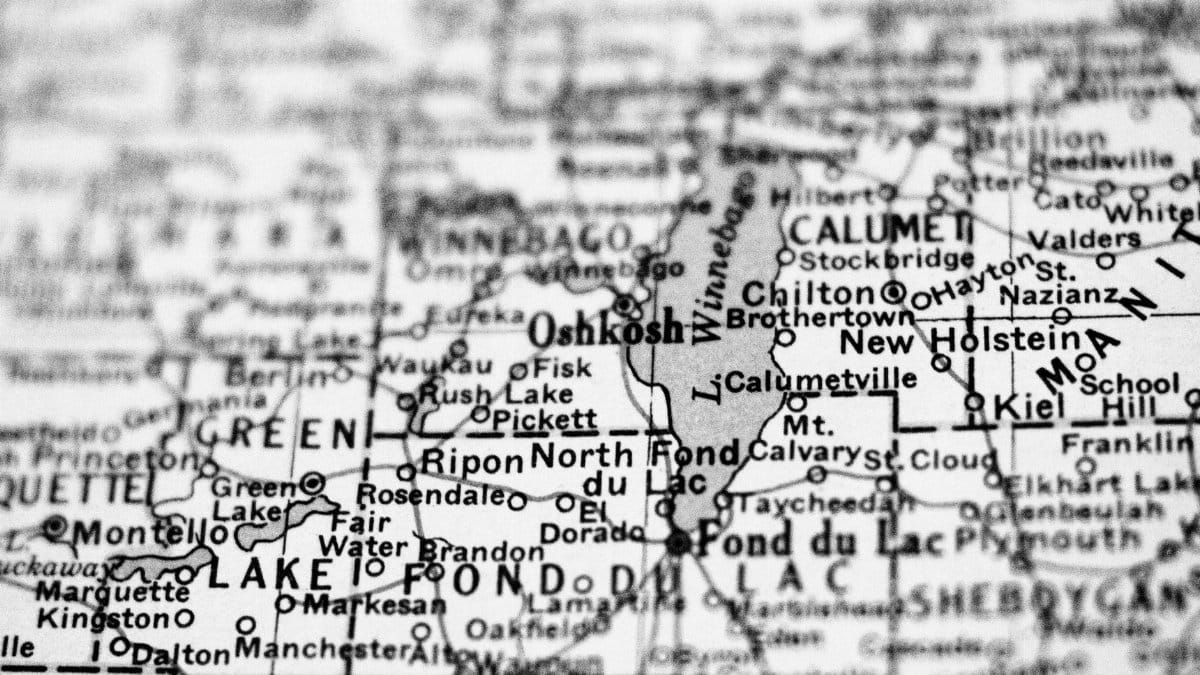
Public reporting around this case points toward Wisconsin as well as Minnesota. County lines do not contain a respiratory virus. I will not invent a precise exposure from a summary alone. What can be said is enough. The Upper Midwest shares clinics, relatives, jobs, and weekend roads. A case on one side of a state line is a question for the other side by the next morning.
Health agencies often cite roughly 95 percent coverage with two doses as the level that keeps introductions from becoming outbreaks. That figure comes from the biology of contagion, not from a campaign slogan. A county can clear the line on paper and still hold a pocket well below it. Those pockets are where a single introduction becomes a list of names.
After the announcement
Contact tracing is slow, personal work. Investigators rebuild a calendar of fever, rash, places visited, people who shared those places, and immune status. They may offer vaccine, or in narrow cases immune globulin, to some exposed people if time remains. Help after exposure works best when it is prompt. Delay shrinks the options to watching and waiting.
Residents should trust notices that name a place, a date, and a span of hours. A credible notice does not name a villain. If you were in a listed place and your records are unclear, a clinic can often check or offer a dose. For most people already vaccinated, an extra dose is not the danger. Waiting out a fever that is actually measles is.
The number and the warning

Eighteen cases in a state of millions is not a return to the era before routine vaccination. It is also not nothing. Each case consumes investigator hours, hospital precautions, and family fear. Each case tests whether the systems built after earlier scares still function when the news cycle has moved on.
The phrase Minnesota measles Fillmore will fade from search alerts if no secondary cases appear. That would be the best outcome, and it is still possible. It would not erase the warning. A quiet stretch of nearly six months can be broken by one unprotected adult. The same arithmetic will hold in the next county that believes itself too small, too healthy, or too remote to be on the list. The response that follows this confirmation will say more about Minnesota than the case count itself.