

The message from the governor’s office arrived late on a Friday, the hour when Sacramento usually prefers its controversies to cool. A bill meant to narrow last year’s shortcut for certain factories was finished. The Newsom CEQA manufacturing veto left those rules standing, and it told two camps that have spent years talking past each other that speed, for now, still outranks a second round of review. Neighbors who fear trucks and fumes heard a door close. Companies that have been waiting on permits heard a door stay open. Neither side is likely to stop knocking.
What the veto actually preserved

California’s environmental review law, known as CEQA, has shaped building in the state for more than half a century. It does not itself ban a project. It requires public agencies to study likely harms, to listen to objections, and often to mitigate what they can. Lawsuits can stretch that process for years. Last year, lawmakers carved a faster path for a defined class of advanced manufacturing, the plants that make batteries, semiconductors, clean energy equipment, and similar goods the state says it wants on its own soil. The vetoed bill would have pulled some of that privilege back. By rejecting it, Governor Gavin Newsom kept the broader exemption in force.
That choice is easy to miss if a reader only sees the headline. A veto is a negative act. In practice it is also an affirmative one. The existing statute remains the operating manual for agencies, developers, and the lawyers who sue them. Counties that had begun to plan around the faster rules do not have to rewrite their checklists. Investors who priced a project on the assumption of a shorter review do not have to reprice it tomorrow morning.
The bill lawmakers sent to his desk

The measure did not propose to repeal CEQA. Its authors argued for a narrower gate. They wanted fewer project types to qualify, clearer tests for what counts as advanced manufacturing, and a stronger chance for local governments and residents to demand a full study when a plant looked more like heavy industry than a quiet laboratory. Supporters described the change as a correction, not a reversal. They said last year’s language had been written in a hurry and had swept in facilities that bring diesel traffic, chemical storage, and round the clock shifts to neighborhoods that already carry a heavy environmental load.
Opponents called the bill a quiet undoing of a bargain. They said the Legislature had decided, after years of speeches about domestic production, that some factories should not sit in procedural limbo while other states waved them through. Sending a narrowing bill to the governor, in their view, signaled that the bargain was already fraying.
Why advanced manufacturing got a faster lane
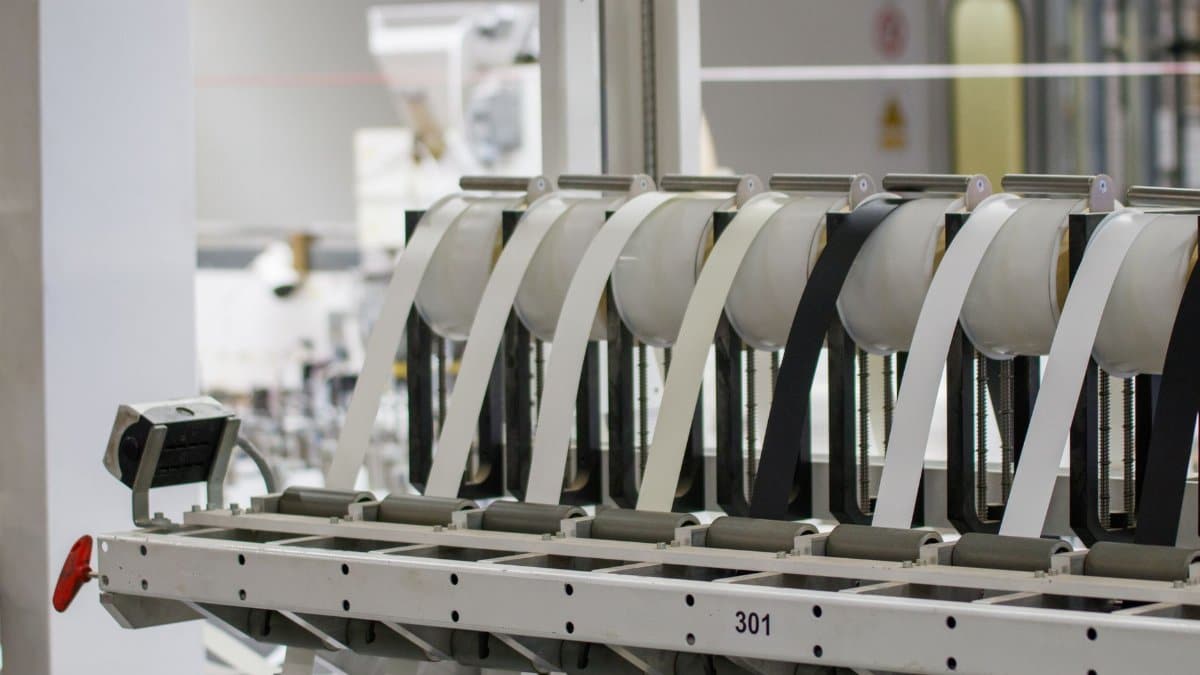
The case for speed is not only about corporate patience. State leaders have spent a decade urging battery makers, chip firms, and clean technology suppliers to build here rather than in Texas, Arizona, or overseas. They have offered tax credits, workforce grants, and public land. A long environmental review sat awkwardly beside those invitations. A company can like California’s engineers and still dislike a calendar that slips by a year because a lawsuit survives a motion to dismiss.
Advanced manufacturing is also a political phrase with elastic edges. A research line that assembles prototype cells is not the same thing as a vast plant that receives chemical tankers at dawn. Last year’s statute tried to draw that line with definitions, size limits, and location rules. Critics say the line was drawn too loosely. Defenders say any line tight enough to satisfy every neighbor would have defeated the point. The Newsom CEQA manufacturing veto effectively endorsed the looser line, at least until a future Legislature writes a different one.
The communities that wanted the bill

In the Inland Empire, the Central Valley, and pockets of the Bay Area, residents have learned to read environmental documents the way other people read sports pages. They know which intersections already fail at rush hour. They know which census tracts the state itself has flagged for pollution burden. For them, a CEQA exemption is not an abstract efficiency reform. It is a decision about whether a new source of emissions gets a shorter public hearing.
Environmental justice groups argued that the exemption landed hardest on places with less political power. They did not claim that every battery plant is a refinery. They claimed that process matters when the harm is cumulative. A single project may look modest on paper. Added to warehouses, freeways, and older industry, it can tip a neighborhood past what doctors consider acceptable. Those advocates wanted the bill because it would have restored a tool they know how to use: the full study, the comment letter, the possibility of a court date.
The employers who wanted the veto

Trade associations and some unions answered with a different map. They pointed to empty industrial parcels and to young workers who leave California for jobs in states that build faster. They argued that a plant which meets air district permits, hazardous materials rules, and labor standards should not also survive a second, open ended lawsuit war. In their telling, the exemption was never a free pass. It was a decision to rely on the specialized permits that already govern smokestacks, solvents, and worker safety.
That argument has force when the alternative is a factory in another jurisdiction with weaker rules. It has less force when the alternative is no factory at all, and when the local question is simply whether this street should absorb the traffic. The veto did not settle that moral tension. It chose a side for this session.
How the governor framed the choice

Newsom has spent his time in office treating CEQA as both a legacy to protect and a bottleneck to loosen. He has signed housing exemptions, backed infrastructure streamlining, and scolded lawsuits he views as opportunistic. The manufacturing fight fits that pattern. A veto message in this vein typically says the state cannot meet its climate and economic goals if every preferred project must clear the same thicket as a project the state hopes to discourage.
Readers should be careful with that framing. Climate goals and factory goals are not identical. A plant that builds electric vehicle parts can still pollute the block where it stands. A governor can believe both that the planet needs more clean technology and that a particular neighborhood needs more process. The Newsom CEQA manufacturing veto suggests he believes the statewide need comes first when the two collide, at least under the statute as written.
Housing reform and the factory parallel
The politics of this veto rhyme with the politics of housing. For years, lawmakers have carved CEQA exceptions for apartments near transit, for student dorms, for certain infill projects. Each exception arrives with a promise that the public will still be protected by zoning, by building codes, and by other environmental statutes. Each exception also arrives with a warning from opponents that the state is teaching developers to seek the Legislature instead of the planning commission.
Manufacturing is harder to romanticize than housing. Few voters picture a semiconductor line the way they picture a starter home. Yet the institutional move is similar. Sacramento identifies a shortage, decides that local review is part of the shortage, and substitutes a statewide rule. People who liked that move for apartments are not always comfortable with it for factories. People who disliked it for apartments may suddenly discover its uses when a supplier promises payroll.
What agencies must still do

An exemption from CEQA is not an exemption from law. Air districts still issue permits. Water boards still watch discharges. Fire marshals still inspect chemical storage. Cities still apply zoning, design rules, and, where they have them, community benefit agreements. Workers still fall under wage and safety statutes. A company that treats the manufacturing shortcut as a blank check is misreading the statute and inviting a different kind of lawsuit.
The practical change is timing and venue. Without a full environmental impact report, opponents lose a familiar document to attack and a familiar set of procedural hooks. They can still sue under other laws. Those cases are often narrower, more technical, and less useful as a tool for delay. That is precisely why business groups value the exemption and why community lawyers fear it.
The evidence both sides lean on

California does not suffer from a shortage of anecdotes. Every camp can name a project that died in review and a project that should have died and did not. What the state lacks is a shared count of how many advanced manufacturing proposals actually used last year’s path, how long those reviews would have taken otherwise, and what pollution or payroll followed. Until those numbers are public and boring enough to trust, the debate will stay theological.
I have sat through enough hearings to know how this substitution works. A single horror story stands in for a trend. A single ribbon cutting stands in for a strategy. Journalism ought to resist both. The honest sentence is that the exemption is young, the veto froze an experiment in place, and the results are not yet clear enough to justify triumph or panic.
Labor’s divided interest

Unions are not a single character in this story. Building trades often want the project, because a plant is years of construction work before it is a factory. Industrial unions may want the permanent jobs, especially if the employer signs a project agreement. Environmental justice allies inside the labor movement worry that speed will be purchased by siting the dirtiest steps in the poorest ZIP codes, then calling the result a green job.
The veto does not dictate wages. It does change leverage. A community that can slow a project can sometimes trade that delay for local hire rules, air filters in nearby schools, or a binding truck route. Take away the delay and the trade gets harder. Employers say they will still bargain, because they need workers. Residents say bargaining without a clock is charity.
A national race the state keeps invoking

Federal incentives have turned factory recruitment into a sport. States advertise power prices, land, and permitting clocks the way they once advertised stadium deals. California enters that sport with high wages, high land costs, and a regulatory reputation that is partly myth and partly earned. Leaders in Sacramento argue that if the state wants the supply chain for its own climate laws, it cannot export every furnace and every clean room.
There is a counterargument that gets less airtime. A state can lead on climate policy without winning every plant. It can buy the products, set the standards, and accept that some production will sit where electricity is cheaper and lawsuits are rarer. That is an economically coherent position. It is a politically difficult one for a governor who has promised both climate leadership and a broader middle class. The veto reads as a refusal to accept that trade in public.
What opponents can still do

A lost bill is not a lost argument. City councils can tighten zoning where state law allows. Air districts can write stricter permits. Legislators can return with a narrower fix that targets a specific abuse rather than the whole exemption. Courts can still hear cases brought under statutes that the manufacturing shortcut did not touch. None of those paths is as simple as the bill that just died. All of them are open.
Residents who feel unheard should not be told to wait politely for the next session and nothing else. They should be told, accurately, which permits still require notice, which hearings still exist, and which claims a lawyer can still file. Speed in Sacramento does not erase the clipboard at the local planning counter.
The session that will follow

Bill authors rarely accept a veto as a final philosophy. They redraft. They peel off the provisions a governor flagged. They look for a vehicle in the budget, where policy sometimes hides inside dollar figures. Business lobbyists will spend the interim collecting examples of projects that moved because the exemption held. Environmental groups will collect examples of projects that moved into places they consider unfit. Both folders will appear in committee in the spring.
The Newsom CEQA manufacturing veto will be cited in those rooms as proof of intent. Supporters will say the governor has drawn a line and that lawmakers should color inside it. Critics will say a veto is a moment, not a constitution, and that last year’s language deserves the revision any rushed statute eventually receives. The phrase will outlast the press release.
A standard worth applying to the next fight

California can want factories and still insist on honesty about what those factories do to the block next door. The useful test is not whether a project wears the label advanced. The useful test is what it emits, whom it employs, how the trucks arrive, and whether the people who live there had a real chance to object before the concrete set. A faster lane can meet that test if the other permits are strict and public. It fails the test if advanced becomes a costume for ordinary heavy industry.
The governor has chosen to keep the lane open. That is a legitimate governing choice, and it is also a choice with a cost that will not be paid in the Capitol. The cost will show up as traffic counts, as asthma rates, as paychecks, and as empty parcels that either fill or stay weeds. The Newsom CEQA manufacturing veto settles the statute for now. It does not settle the argument about what kind of industrial state California is willing to be.