
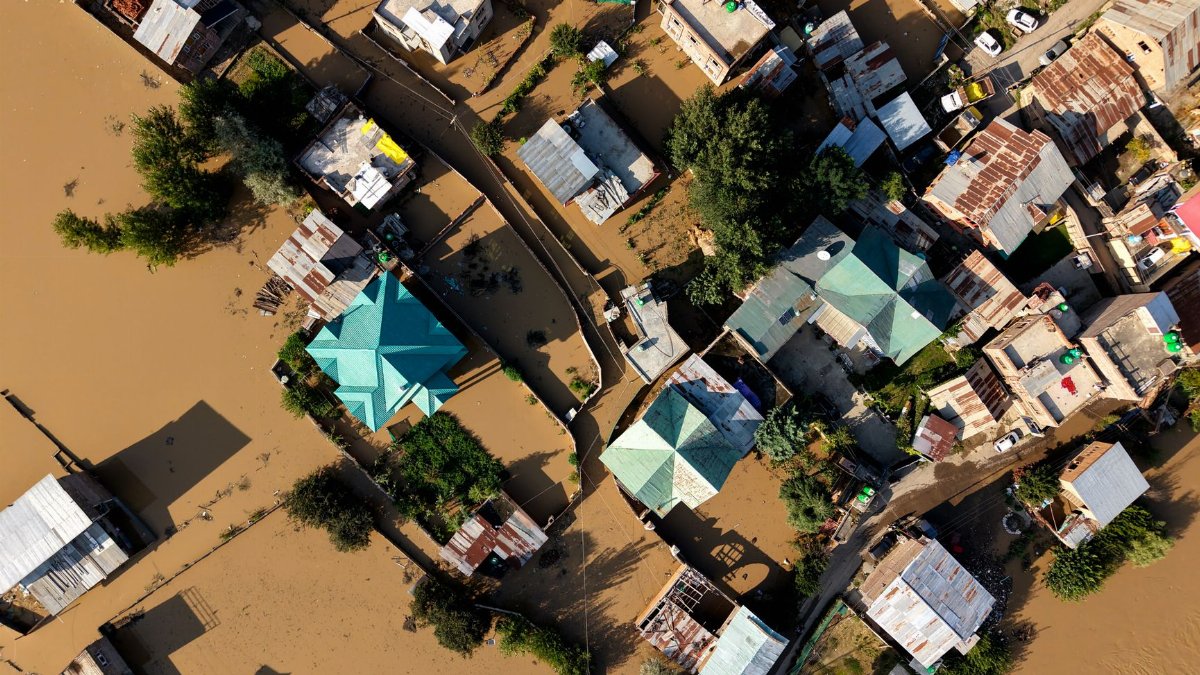
Before sunrise in Farmington, the San Juan still sounded wrong. It was not the steady murmur residents know from ordinary spring runoff. It was a hard, continuous rush, brown with silt, pressing against banks that had already given way in places. Sirens had faded. What remained was the quieter fact of absence: darkened houses, taped doors, and families sleeping on gym floors while more rain sat over the high desert. Four Corners flooding had not ended with the first crest. It had settled in.
A region used to drought, not this kind of water
The Four Corners is a landscape people describe in terms of scarcity. Juniper, sandstone, and irrigation ditches tell a long story of careful water use. That story does not prepare a town for rivers that climb in a matter of hours. In Farmington and nearby communities, the shock was not only the volume. It was the speed. Streets that were passable at dusk were under water by morning. Yards became channels. Basements filled before anyone could move a box.
Residents who have lived through flash floods on smaller washes said this felt different. The water did not spike and vanish. It stayed. It kept arriving from upstream canyons and from storms that refused to leave the plateau.
Hundreds of homes still empty
Hundreds of homes around Farmington remained under evacuation orders after days of heavy rain pushed rivers to record highs. Officials did not treat the orders as a formality. They asked people to stay out even when the street in front of a house looked only wet rather than deep. Saturated ground, undermined pavement, and contaminated water make a quick return more dangerous than it appears from a doorway.
Some families left with a change of clothes and a pet carrier. Others had minutes, not hours. A few refused at first, then changed their minds when neighbors knocked a second time. The count of evacuated homes is not a neat statistic. It is a map of who could reach higher ground and who is still waiting for a phone call that says the block is clear.
What the rivers did overnight

Local emergency managers described a stacked problem. Rain fell on ground that was already full. Tributaries that usually shrink to a thread in late summer ran bank to bank. The San Juan and smaller streams rose together, so there was no quiet interval in which crews could reset sandbags and reopen a bridge.
Gauges climbed through the night. Crests arrived, held, and in some stretches rose again as another band of storms crossed the basin. Record highs are not abstractions on a chart. They mean water where the flood maps said it should not be, and debris where a road used to be. National Weather Service updates, posted through regional forecast offices, remained the reference point for when a river might fall enough to matter.
Evacuations that do not lift with the first drop
An evacuation order is easy to announce and hard to end. Inspectors have to walk blocks, check gas lines, look at foundations, and decide whether a street is safe for ordinary cars or only for high clearance trucks. Until that work is done, the order stays. Families hear rumors that a neighborhood is open and then hear the opposite an hour later. The gap between rumor and confirmation is where people make bad decisions.
Shelter managers in San Juan County described a second problem that arrives after the water: fatigue. Children miss school. Workers miss shifts. Medications run out. A cot in a church hall is a mercy on night one. By night three it is a test of patience, privacy, and whether anyone remembered the dog food.
The roads that still decide who gets home

Flooding in this country is also a transportation story. Low crossings disappear first. Then culverts plug with cottonwood limbs and fence wire. A bridge can look intact and still be unsafe if the soil around an abutment has washed out. Crews from city, county, and state agencies have been marking closures faster than they can repair them.
For people trying to reach livestock or check on an older parent, a closed road is not an inconvenience. It is the whole day. Detours that look short on a map can add an hour when every alternate route crosses another wash. Officials have asked residents not to drive around barricades. The request sounds obvious until you are the person whose house is on the other side.
Neighbors, congregations, and the work no agency can fully staff
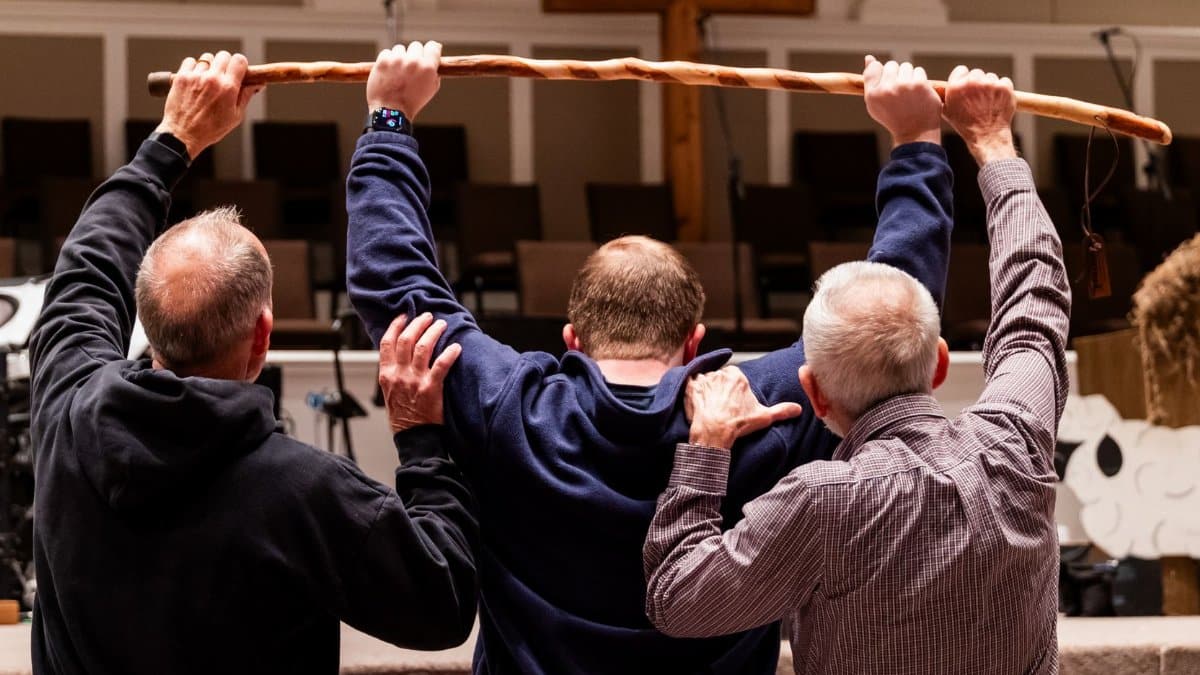
In a region where churches still function as town halls, the response has looked familiar to anyone who has watched a rural disaster up close. Congregations opened fellowship halls. Volunteers sorted donations that arrived faster than anyone could inventory them. A retired nurse set up a folding table and started a list of who needed insulin. None of that replaces professional rescue. It fills the hours when professional rescue is somewhere else.
Faith, in these rooms, has been less a slogan than a schedule. Someone prays. Someone makes coffee. Someone drives a truck to a house that is still dry and loads mattresses. The spiritual habit of showing up has a practical edge when the Red Cross cots are full and the next storm is already on the radar.
More rain on a basin that cannot take it

Forecasters expected additional rain even as rivers remained high. That is the detail that keeps evacuations in place. A falling river can reverse if another inch falls on the headwaters. Desert soils, once saturated, shed water the way pavement does. Arroyos that were empty at noon can be dangerous by late afternoon.
Meteorologists have urged people to treat every new shower as a reason to stay off low roads, not as a minor delay. Four Corners flooding of this duration is unusual enough that old rules of thumb fail. Waiting it out in a low spot is not a strategy. It is a gamble with a river that has already proved it can move.
Farmington as the center, not the whole map

Farmington has drawn the largest share of attention because of its size and because so many homes sit near the river corridor. The water does not stop at the city limit. Smaller towns and rural stretches along the San Juan and its tributaries have faced the same choice: leave early or risk a night with no way out. Tribal communities and county residents outside the spotlight have been moving livestock, checking on elders, and watching ditches that were built to carry irrigation, not a flood.
A regional disaster is easy to misread as a single city story. The crest in town is only the visible end of rain that fell across a wide basin. What happens upstream decides what happens on Main Street.
Health risks that arrive after the drama

Once the cameras leave a flooded block, the slower hazards remain. Standing water can hide open manholes, downed lines, and chemical residue from garages and fields. Sewage backups turn a wet house into a health problem. Mold starts its work within days if drywall stays damp. Public health officials have warned against wading, against using well water until it is tested, and against running generators indoors.
These are not dramatic warnings. They are the ones that prevent a flood from becoming a second emergency of illness and carbon monoxide. Cleanup, when it is finally allowed, will be slow, dirty, and easy to underestimate.
Insurance, ditches, and arguments that will outlast the crest

Even before the water recedes, people are asking who pays. Flood insurance is uneven in communities that spent years talking about drought. Some homeowners have policies. Many do not, because the last memorable threat was a dry riverbed, not a record crest. Agricultural ditches, which knit this landscape together, will need repair before the next irrigation season can proceed as usual. That work is technical and political at once. Water here is never only water.
City and county leaders will also face questions about warnings, sirens, and whether development along low ground has outrun the maps. Those arguments belong in public meetings, not in the middle of a rescue. They will not wait long once people are back in their kitchens.
How to read the next forecast without guessing

The useful habit in a flood is narrow and repeatable. Check the local forecast office. Believe road closures. Do not treat a neighbor’s text as an all clear. If an order is still in place, the house can wait. Possessions can be replaced more easily than a person who drives into water that looks shallow and is not.
Four Corners flooding has already shown how quickly a familiar river can become unrecognizable. The next useful update is not a rumor from a parking lot. It is a measured report on stage, rainfall, and which streets are actually open.
What remains when the river finally falls
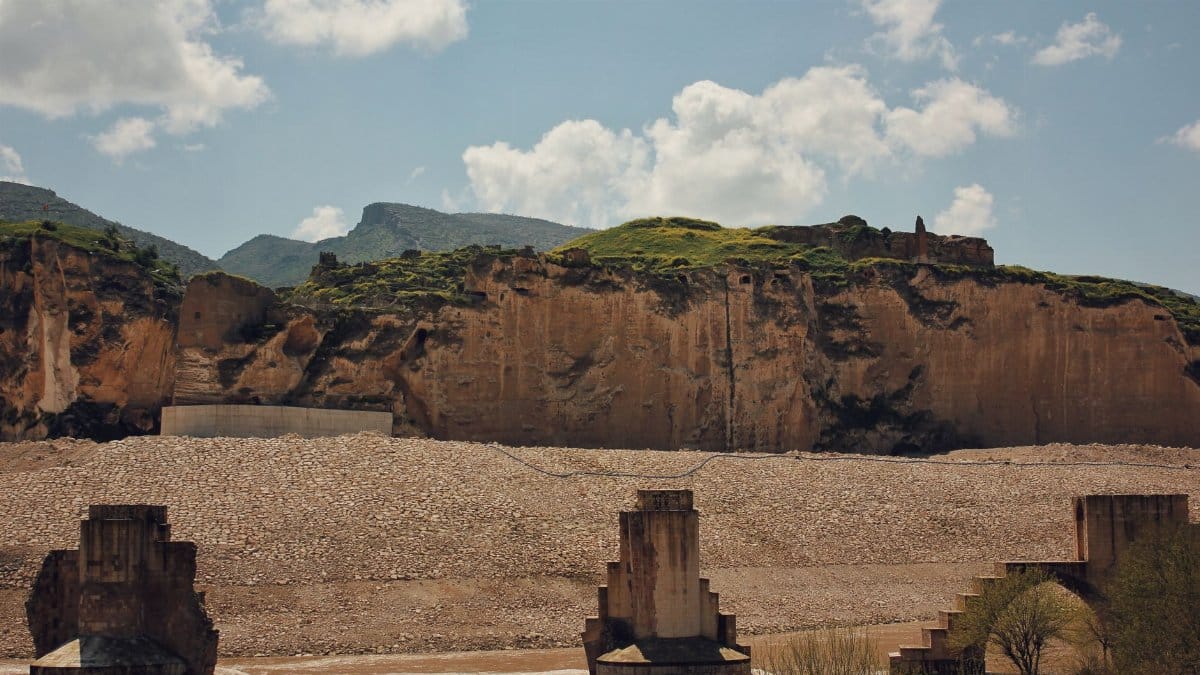
There will be a morning when the sound changes again and the San Juan looks closer to itself. Yards will be caked in mud. Fences will be downstream. People will stand in driveways and try to decide what can be saved. That morning is not here yet. More rain is still in the forecast, and evacuation orders remain because the basin has not finished giving up its water.
Until then, the story is not heroism in the abstract. It is the unglamorous sequence of closed roads, open church halls, and families who would rather be home. Four Corners flooding has made that sequence the only news that matters in Farmington this week, and it will keep mattering until the last order is lifted and the last wet wall is torn out.