

On a quiet week when Florida politics usually argues about insurance bills and classroom rules, one transfer of money changed the temperature of the 2026 attorney general contest. The Rodríguez AG race donation, a $5 million commitment from the Democratic Attorneys General Association to José Javier Rodríguez, landed over a state that national Democrats have often treated as difficult ground. A sum of that size is not a courtesy. It is a decision that a race is worth a national fight, and that the office at stake can shape courts, consumers, and the daily use of state power.
A check that redraws the contest

Five million dollars does not buy an election in Florida. Television in Miami, Tampa, Orlando, and Jacksonville is expensive, and a statewide contest can swallow large sums before a single undecided voter has made up a mind. Still, the figure is large enough to force every other player to adjust. It tells donors that the Democratic side intends to be present. It tells Republicans that the seat will not be defended on autopilot. And it tells local party workers that national allies are no longer treating the attorney general race as a footnote to the governor contest or the fight for Congress.
The Miami Herald reported the commitment, and the number itself has become the story. In a cycle crowded with presidential noise and legislative fights, campaign money is a blunt instrument of attention. Once that attention arrives, it is hard to send away. Staff get hired. Polls get commissioned. Opposition files get thicker. A candidate who might have spent the spring introducing himself in church halls and union meetings can suddenly afford a message that reaches people who never attend those rooms.
Who is writing the check

The Democratic Attorneys General Association exists to elect and defend Democratic attorneys general. It is not a neighborhood club. It is a national political organization with a narrow job: keep or win the offices that file the lawsuits, defend the statutes, and set the tone of state legal power. When that group moves $5 million toward one Florida candidate, it is making a portfolio choice. Money sent to Miami is money not sent to some other capital.
Associations of this kind rarely pretend to be neutral civic charities. They pick sides, and they say so. What matters for readers is the scale and the timing. A Rodríguez AG race donation of this size, early enough to shape the structure of a campaign, is different from a late check meant only to answer an opponent advertisement. Early money builds a machine. Late money often only rents one.
National groups also bring a language that local campaigns sometimes resist. They talk about maps, chambers, and the balance of legal power across the country. Florida voters talk about homeowners insurance, condominium repairs, nursing home inspections, and whether the state will stand with them when a company fails. The art of the campaign will be to translate a national investment into those nearer concerns without sounding like a visitor with a script.
The challenger from Miami
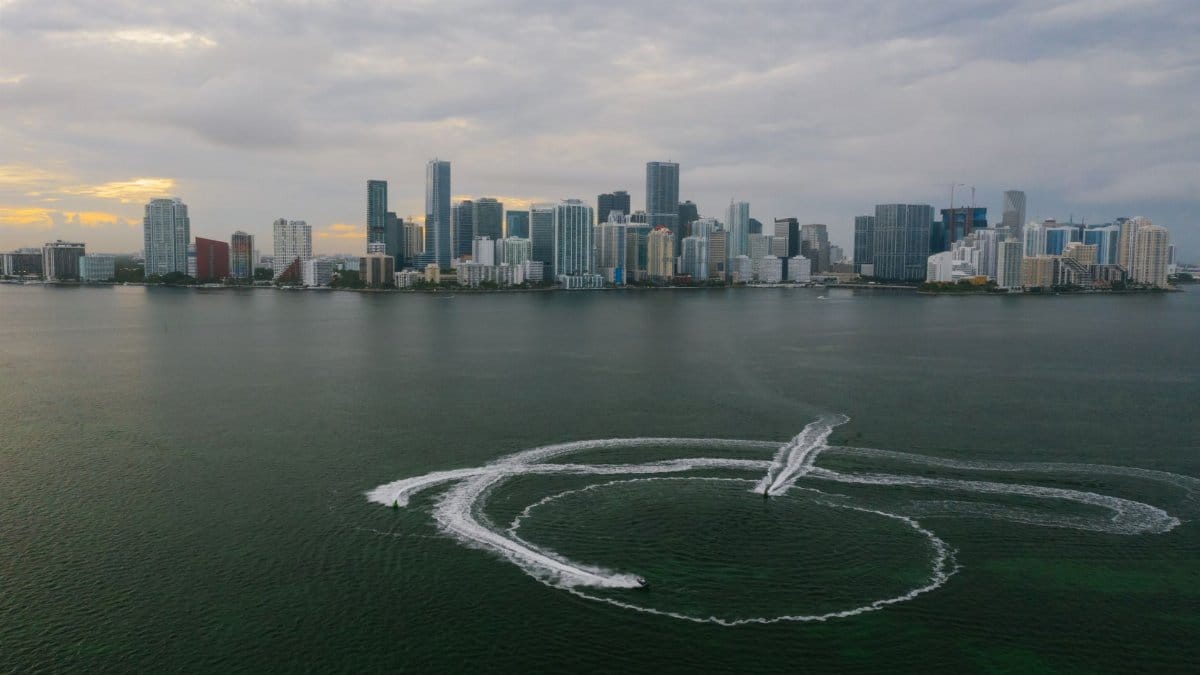
José Javier Rodríguez is not a new name in South Florida politics. He served in the Florida House and later in the state Senate, representing a Miami district where elections are close and every absentee ballot can become a controversy. He later served in the Biden administration at the Department of Labor, work that put him in the machinery of workforce programs rather than in the daily combat of the state capitol. That résumé gives him two stories to tell. One is local: a Miami Democrat who knows how Tallahassee actually moves a bill. The other is national: a former federal official who can speak the language of Washington allies now writing large checks.
Neither story is automatically an advantage. Florida has moved sharply toward Republicans in recent statewide results. A candidate with federal service on the résumé can be painted as distant from the state he wants to represent. A candidate rooted in Miami can be painted as unfamiliar to voters in the Panhandle and along the Nature Coast. The money helps him travel that distance. It does not erase it.
Rodríguez will also have to explain why this office, and why now. Attorney general is not a consolation prize for a politician who wants a bigger stage. It is a law office with a political edge. Voters who are tired of spectacle may reward a candidate who can describe the job in plain terms: consumer cases, public records fights, defense of state statutes, and the choice of which fights are worth the taxpayer dime.
The incumbent and the governor orbit

James Uthmeier came to the attorney general post from the inner circle of Governor Ron DeSantis, after Ashley Moody left the office for the United States Senate. Appointment is not the same as election, but it is a powerful head start. The incumbent has the title, the letterhead, the press staff, and the ability to announce actions that look like the work of the office rather than the work of a campaign. In politics, that distinction is real and also constantly blurred.
Republican strength in Florida is not a rumor. It is the recent record of statewide wins, legislative supermajorities, and a donor network that does not need to be taught the map. Uthmeier can expect substantial help from that network, and from a governor who remains a defining figure in state politics even when he is not on the ballot. The Democratic investment is best read as a response to that structure, not as proof that the structure has collapsed.
Incumbency also creates a target. Every brief, every settlement, every public statement can be pulled into a commercial. A challenger with millions to spend will look for cases where the office appeared to serve a political patron more than a consumer, a patient, or a homeowner. The incumbent will answer that the same record shows a lawyer willing to fight for the state against federal overreach, corporate abuse, or both, depending on the audience. Florida viewers should expect both arguments, repeated until they feel like weather.
What the office actually controls
It is easy to treat an attorney general race as a proxy war and forget the desk. The Florida attorney general leads a large legal department. The office issues opinions, handles appeals, participates in multistate lawsuits, and oversees units that deal with consumer complaints and certain criminal appeals. The person in the job does not write the state budget and does not command the legislature. The person does decide, within the law and the politics of the moment, where the prestige of the state will be spent in court.
That discretion is why national groups care. Attorneys general have become central players in fights over immigration enforcement, environmental rules, technology companies, abortion access after the fall of Roe, and the scope of federal agencies. A single state can join a lawsuit that changes the practical meaning of a national policy. Voters who think they are choosing a state lawyer are often also choosing a participant in a countrywide legal strategy.
There is a quieter docket that matters just as much. Price gouging after storms. Medicaid fraud. The fine print in a timeshare contract. A charity that solicits and does not deliver. These cases rarely trend, and they rarely decide a primary. They decide whether people believe the state has a lawyer who works for them on an ordinary Tuesday. A campaign funded at national scale will be tempted to talk only about the famous fights. The better campaign will show it can do both.
Why national money is moving south
Democratic strategists have spent several cycles hearing that Florida is no longer a battleground in the old sense. Registration trends, election results, and the migration of new residents have all been cited as reasons to spend elsewhere. A $5 million commitment cuts against that resignation. It suggests that at least one national Democratic institution believes an attorney general race can be competitive even if the top of the ticket is not, or that the office is important enough to contest at a loss if the loss is not a rout.
There is a hard arithmetic behind that belief. Attorneys general sit for years. A win in 2026 would shape legal strategy into the next decade. A loss that is narrower than expected can still build a list, a donor file, and a bench of candidates for later races. Political organizations think in those terms even when they speak in the language of a single election night.
Republicans will read the same check as an invitation. Outside Democratic money is a familiar theme in Florida campaigns, and it often works as a rallying cry. The Rodríguez AG race donation will be described by opponents as proof of coastal influence, national party direction, and a candidate who answers to donors far from the counties he hopes to win. That attack does not require the check to be improper. It only requires the check to be large, visible, and easy to put on a screen.
Disclosure, limits, and the public record

Campaign finance law is a thicket, and readers are right to be impatient with it. The useful questions are simpler than the statutes. Who gave the money. Who controls how it is spent. Will the spending appear in advertisements that name a candidate. Will voters be able to see the trail before they vote, or only after the election in a report that few people read.
Florida has its own reporting rules, and national committees have theirs. A transfer of this size should not be a rumor. It should be a line in a public filing, with dates and names. Journalism earns its keep by matching the press release to the filing and by asking what the legal vehicle actually is. A gift to a candidate, a gift to a party, and spending by an outside group are not the same thing, even when all three are described in headlines as support.
Readers do not need to become accountants. They do need a habit. When a campaign boasts of a haul, ask what share is available for the candidate to direct and what share is an independent blast that the candidate cannot legally coordinate. When an opponent denounces outside money, ask whether that opponent is refusing similar help or only objecting to the other side having it. The Rodríguez AG race donation will be cleaner in the public mind if both campaigns accept that standard.
How a giant gift sounds to voters

Money has a moral echo, even in a profession that pretends to be numb to it. Many middle aged voters in this state have watched premiums rise, have argued with insurers, and have concluded that institutions speak loudly only when someone pays them to speak. A multimillion dollar political gift can confirm that suspicion. It can also, for other voters, signal seriousness. People disagree about which reading is fair. Campaigns ignore that disagreement at their peril.
There is a spiritual dimension to the argument that has little to do with party. Public trust is a kind of shared faith that the rules will be applied without a secret price. When voters sense that legal power is for sale to the loudest patron, they do not only switch candidates. They withdraw. They stop calling the fraud hotline. They stop believing a settlement is more than a press release. An attorney general who wants authority in court needs that thinner faith still intact on the street.
I do not think a large donation is itself a corruption. It is legal political speech in the American system as the courts have defined it, and both parties use it. The danger is the story people tell themselves afterward. If every brief looks bought, the office shrinks. Candidates who take national money owe the public a plainer account of what they will not do for it.
The message money can and cannot buy

With millions in view, the Rodríguez campaign can test themes, cut advertisements, and stay on television long enough to become a known quantity outside Miami Dade. Name recognition is not charisma, but it is a prerequisite. Uthmeier starts with the office. Rodríguez starts with a bank account that can imitate some of the advantages of office, at least on a screen.
What the money cannot buy is a convincing answer to a hostile question at a town hall in a county the candidate has not visited enough. It cannot buy a biography that matches the mood of the electorate. It cannot make a Democratic label popular in precincts where that label has been a losing one for years. Field work, local endorsements, and a message about prices, fraud, and fair dealing still have to be earned in person.
The risk for the challenger is dependence. A campaign built on one national infusion can look formidable in April and thin in September if the next check is slower. The risk for the incumbent is complacency. A title and a friendly governor do not answer a well funded argument repeated in every media market. Florida has seen favored candidates discover that fact late.
What to watch before election day
The next chapters are practical. Watch the filings, not only the announcements. Watch whether the $5 million is followed by more national money or stands as a single flare. Watch how Uthmeier uses the powers of the office in the months before voting, and whether those actions read as law or as campaign literature. Watch whether Rodríguez can speak about Florida cases in the same breath as national lawsuits, without letting one erase the other.
Watch the Republican response in dollars as well as in words. If the GOP side matches or exceeds the Democratic commitment, the race becomes an air war. If it does not, the incumbent is betting that the map and the office are enough. Either bet can be rational. Neither should be confused with destiny.
Also watch the smaller signals. Who shows up at a Rodríguez event in Jacksonville or Pensacola. Whether local prosecutors, consumer lawyers, and former officials are willing to attach their names. Whether the campaign talks about the attorney general as a guardian of ordinary people or only as a counterweight to Washington and to the governor. The Rodríguez AG race donation has opened the story. It has not written the ending.
A race larger than one transfer

Florida will elect an attorney general in a climate of high distrust and expensive living. The winner will inherit lawsuits already in motion and will file new ones that most voters will never read. That winner will also inherit a public that has heard too many promises about who is on their side. Against that background, a national $5 million commitment is both a jolt and a test.
The jolt is obvious. A Democrat with a Miami résumé and federal service behind him has been handed the means to run a real statewide race against a Republican incumbent tied closely to the governor. The test is harder. Can that money be turned into a case for the office that sounds like Florida, not like a donor memo. Can the incumbent defend a record without hiding behind the title. Can voters tell the difference between a legal strategy and a commercial.
Those questions will outlast the news cycle that greeted the check. They are the reason the Rodríguez AG race donation matters beyond the accounting. The office is a public trust with a political edge. Whoever holds it will spend other people power, in court and in the name of the state. The least the rest of us can do is follow the money far enough to see what kind of lawyer it is trying to elect.