

In a Miami federal courtroom, private messages that once lived on phone screens have become public evidence, and the question is whether ugly words were theater or something closer to a plan. The FIU group chats trial has drawn attention because it sits at the collision of campus life, digital intimacy, and criminal law. Students connected to Florida International University have described racist and violent language in private chats as jokes, according to reporting on the case, rather than as sincere threats. Jurors are asked to do what friends in a thread rarely do: decide what the sender meant, and whether a reasonable person would have reason to fear.
What a federal courtroom is being asked to weigh

Federal trials are built for documents, timelines, and intent. A group chat supplies all three, but none of them arrive with a label that settles the case. A screenshot can show who typed a line and when it landed. It cannot, by itself, show whether the writer expected laughter, agreement, or action. That gap is the whole dispute. Prosecutors in threat cases typically argue that words can do harm even when no one leaves a dorm room. Defense lawyers answer that context, sarcasm, and a closed circle of friends change the meaning of language that looks monstrous on a printed page.
The reporting frame around this matter is stark. Students have said the racist and violent messages were jokes. That claim is not a small rhetorical move. It asks the court to treat cruelty as performance and fear as a misreading. For readers outside the building, the claim also asks a civic question: how much vicious speech can a private circle absorb before the law, or the university, or the people named in the messages, are entitled to treat it as real.
How private chats became public evidence

College life now leaves a record that earlier generations did not. A cruel remark in a dorm hallway faded unless someone repeated it. A chat does not fade. It can be forwarded, archived, and read aloud years later by a stranger in a suit. The FIU group chats trial is a reminder that privacy among friends is social, not technical. The people in the thread may have felt sealed off from adults, employers, and police. The software did not promise that seal.
Once messages enter a case file, tone is the first casualty. Emoji, reply chains, and in jokes flatten into exhibits. A jury sees sentences in sequence, often without the hour of banter that came before or the shared history that the writers would call obvious. That loss of atmosphere is unfair to defendants if the government treats every vile line as a confession. It is also unfair to anyone who was the target of the language if the defense treats every vile line as comedy. The record is both more and less than the moment it captured.
The joke defense and its limits

Calling something a joke is a familiar American escape hatch. Comedians use it. Politicians use it. Teenagers use it when an adult walks into the room. In criminal court the phrase does real work. It is an argument about intent. If the speaker did not mean to threaten, and if the words were not the kind of statement the law treats as a true threat, punishment for the speech itself may be off the table. The Constitution protects a great deal of repulsive talk, including talk that wounds.
The limit is equally familiar. A speaker does not get to define the entire meaning of a message after the fact. Courts have long worried about people who hide a real threat inside a wink. The audience matters. So does repetition. So does whether anyone took steps that matched the words. A single grotesque punch line in a private thread is not the same thing as a pattern of messages that names people, places, or methods. Jurors are allowed to notice the difference. They are also allowed to notice when a defendant reaches for humor only after investigators arrive.
True threats and the First Amendment

American law draws a rough line between ugly opinion and a true threat. The Supreme Court has said the government may punish threats without turning the country into a ministry of polite speech. It has also said the state cannot treat every heated remark as a crime. In recent years the Court has stressed the speaker’s mental state. Recklessness can matter. A person who consciously disregards a substantial risk that listeners will take violent words as a threat is not automatically saved by a later claim of irony.
That doctrine is abstract until it meets a campus chat. Students live in a culture that rewards exaggeration. They also live in a country where racist violence is not hypothetical. A line that sounds like a meme to one reader can sound like a warning to another, especially if the reader is the person being degraded. The FIU group chats trial puts that tension in front of ordinary citizens who must apply a constitutional standard without a law professor in the box.
Race, violence, and the climate those words create
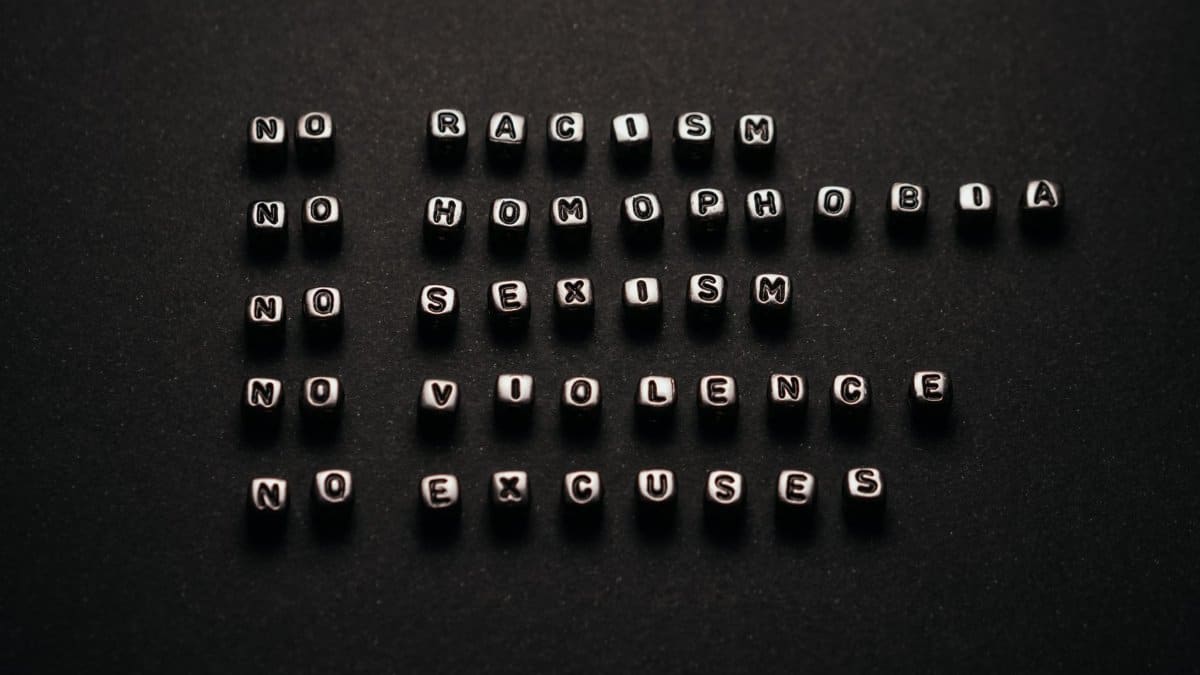
Racist jokes are not neutral noise. They train a group to see some classmates as less than full members of the community. Violent jokes do related work. They make harm imaginable, then laughable, then easier to repeat. Sociologists and campus counselors have described this climate for years, even when no prosecution follows. The harm is not only the fear that someone will act. It is the message that certain people are fair game.
None of that automatically converts a chat into a federal crime. It does explain why universities and prosecutors sometimes refuse to shrug. Florida International University, like other large public campuses, serves students who already navigate slurs in the city around them. When the slurs come from peers in a private channel, the betrayal can feel sharper. A trial does not heal that. It does force a public account of what was said.
What intent looks like in a thread

Intent is the word lawyers repeat because it is the word the statutes often require. In practice, juries infer it from scraps. Did the writers laugh and move on, or did they plan? Did anyone express fear inside the chat? Did anyone tell a friend to calm down because the talk had gone too far? Did the messages stay fantastical, or did they include details a person would need in order to hurt someone? These are ordinary questions. They do not require a special theory of internet culture. They require patience with a record that is messy on purpose.
Defendants who say they were joking ask the jury to credit their inner state over the outer text. That request is not absurd. People do say monstrous things they do not mean. It is also not automatic. A person can enjoy the shock of a violent fantasy and still create a risk that someone else will not treat it as fantasy. The law’s job is to mark the point where that risk becomes culpability. The jury’s job is to decide whether this record crossed it.
Youth, status, and the myth of a sealed circle

College students are old enough to vote, to sign leases, and to face adult charges. They are also young enough to confuse an audience of friends with a world that will indulge them. The myth of the sealed circle is powerful. It says that what we say among our own does not count. Digital life has made that myth expensive. Screenshots travel. Former friends cooperate. A joke that bonded a group in a group chat can read as a threat when it is stripped of nicknames and read by people who were never invited.
Status cuts both ways. Some defendants in campus cases come from families that can hire lawyers and coach a narrative of immaturity. Some targets of racist speech have fewer resources and less reason to trust that institutions will care. A fair trial has to resist both kinds of shortcut: the assumption that privileged students are only being dramatic, and the assumption that every ugly message is a plot. The FIU group chats trial will be judged, in part, by whether it kept those temptations in check.
Free speech on campus is not a single slogan

Campus free speech debates usually imagine a speaker on a quad, a protest, a disinvitation. Private chats scramble that picture. The speakers did not seek a public forum. They sought secrecy. The First Amendment still has something to say about punishing them for words. It has less to say about whether a university may discipline students under its own conduct rules, which are not identical to criminal statutes. Readers often blend those systems. Courts should not.
A public university cannot punish students for unpopular politics. It also cannot ignore harassment that denies other students an education. Racist and violent banter can fall into a gray zone between those poles, especially when it stays in a private channel and never becomes a direct message to the target. Gray zones are where slogans fail. They are also where careful fact finding matters more than a viral summary.
What reporting can and cannot settle

Local coverage, including reporting in the Miami Herald, has framed the testimony around the joke defense. That framing is useful. It tells the public what the fight is about. It is not a verdict. Trials produce partial pictures on any single day. A witness emphasizes context. A prosecutor emphasizes the words themselves. A headline cannot carry the pauses, the objections, or the instruction a judge will eventually give.
Journalists owe readers the distinction between allegation, testimony, and proof. Students saying the chats were jokes is testimony about motive. It may be truthful. It may be strategic. It may be both, in the way human memory often is. The FIU group chats trial deserves coverage that holds that ambiguity instead of rushing to a morality play. Ambiguity is not neutrality about racism. It is honesty about what a courtroom has actually established.
The question that remains after the exhibits

I keep returning to a simpler discomfort. Even if every legal element of a threat case fails, the messages still happened. Someone chose those words. Someone else laughed, or did not object, or saved the thread. A community then has to decide what kind of private speech it will quietly absorb. Law is a blunt instrument for that decision. Conscience is not a substitute for law, but law is not a substitute for conscience either.
The students at the center of this case are entitled to a defense, including the defense that they were not serious. The people demeaned in the chats are entitled to be believed when they say the language was not harmless. A federal jury can answer only the questions the indictment asks. The rest of us have a wider job: to stop pretending that a joke is innocent merely because the teller needed it to be.