
On a bright September morning in Cockeysville, the gymnasium at a Baltimore County high school filled with students who had traded ordinary class bells for a visit from a neighbor who now holds one of the rarest jobs on Earth. Reid Wiseman Dulaney High became, for a few hours, more than an alumni line on a public biography. The astronaut who will command Artemis II stood where teenagers usually sit through assemblies, answering questions about fear, teamwork, and the long patience required to leave the planet. Teachers watched the room lean forward. Parents later said the quiet felt unusual, as if everyone understood that a local story had grown into a national one.
A familiar name in an unfamiliar role
Reid Wiseman is not a distant celebrity to this campus. He is a graduate, a name that still surfaces when counselors talk about what a determined student can do with a solid public education and a taste for hard problems. That familiarity changed the temperature of the morning. Students were not merely meeting a man from television. They were meeting someone who had walked the same halls, sat through the same kind of exams, and left for a life that most of them had only seen in documentaries.
The school treated the visit with care rather than spectacle. Banners went up. A few teachers wore mission patches pinned beside ordinary lanyards. The effect was proud without being frantic. In a county where Friday night sports can dominate the local conversation, the center of attention was a pilot and engineer whose next workplace will be a capsule aimed at the Moon.
What the students came to hear
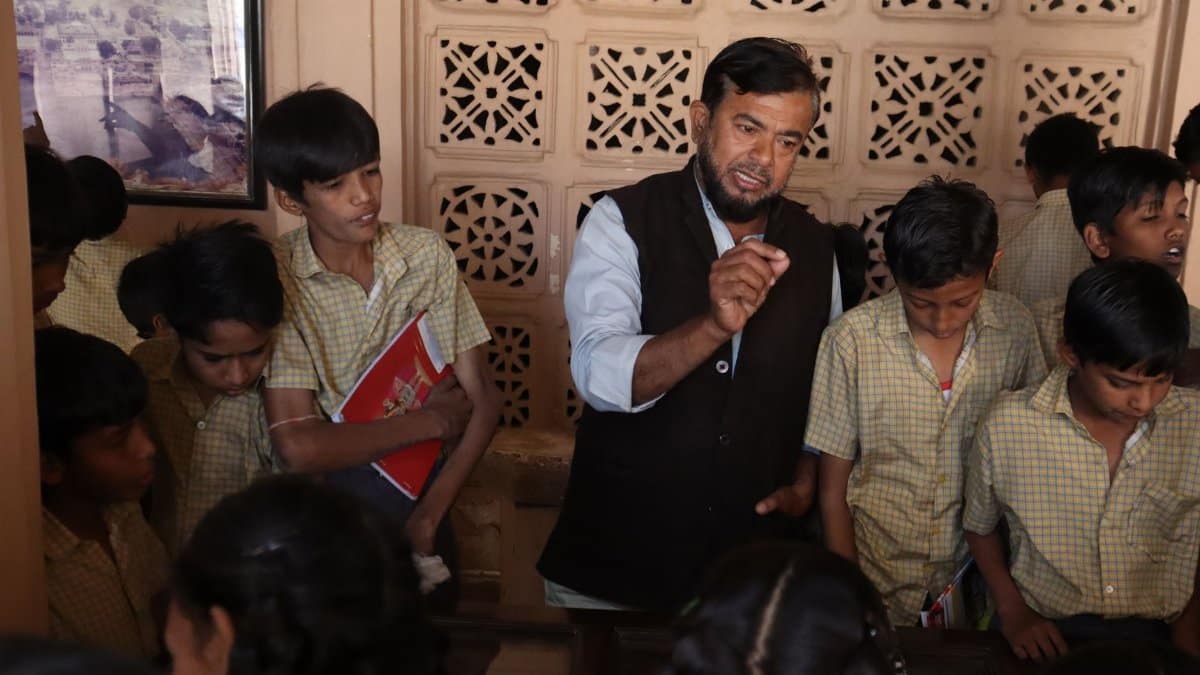
The questions were better than the usual assembly script. One student asked how a person knows when a risk is worth taking. Another wanted to know whether loneliness is part of the job or only a story adults tell to make courage sound cleaner. Wiseman answered in the plain language of someone who has spent years explaining complex machines to people who will never fly them. He spoke about checklists, about trusting a crew, and about the discipline of preparing for a day that may never look like the simulation.
He also talked about failure in a way that landed. Not the dramatic failure of a movie, but the smaller kind: a test that goes wrong, a skill that takes longer than expected, a plan that has to be rebuilt. Several students said afterward that this was the part they would remember. The glamour of spaceflight is easy to admire from a distance. The repetition is harder to romanticize, and more useful to a sixteen year old who is deciding whether a difficult class is worth finishing.
The school that still claims him
Dulaney High has sent graduates into medicine, law, teaching, the military, and the ordinary essential work that keeps a suburb running. An Artemis commander is a rarer export. Administrators were careful not to turn one alumnus into a measuring stick for everyone else. The point, they suggested, was not that every student should aim for orbit. The point was that serious preparation, begun in a public classroom, can travel farther than a teenager expects.
Reid Wiseman Dulaney High is an awkward phrase if you say it quickly, yet it captures something true about how communities hold on to their own. The school does not own his career. NASA does not erase the years he spent here. Both facts can be true at once. When he walked back onto campus, the institution got to see its own influence in a form that cameras understand. The quieter influence, the daily work of teachers who will never be photographed beside a rocket, remained in the background, which is where most good teaching lives.
From the classroom to the capsule
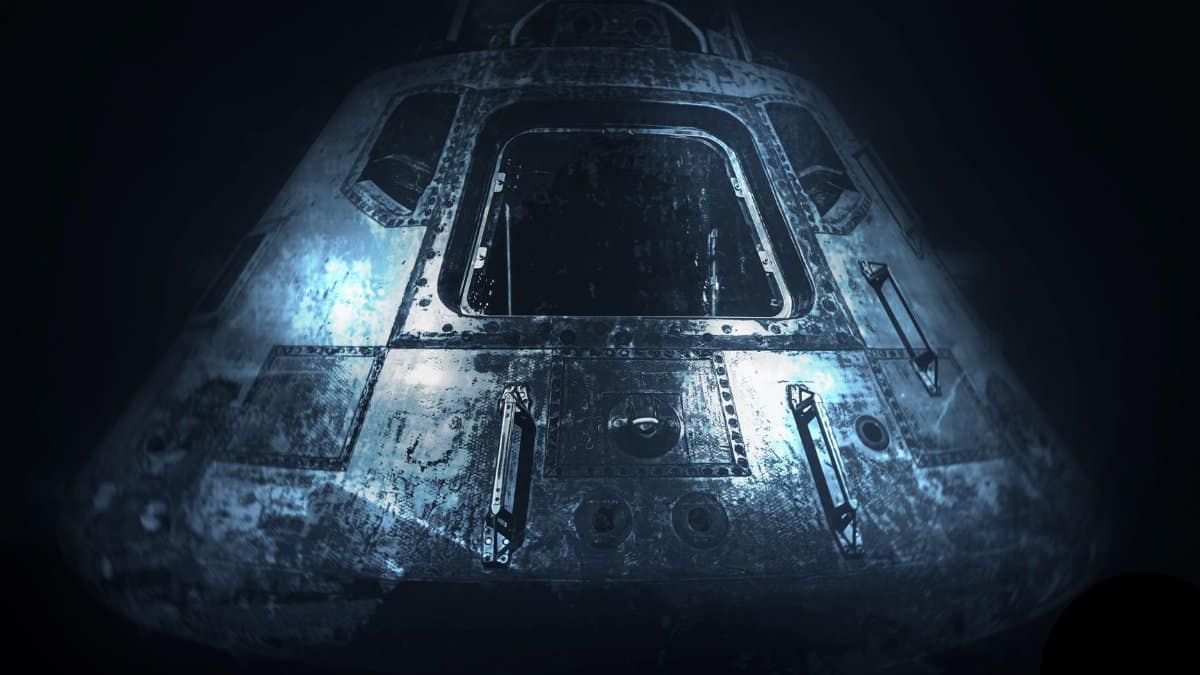
The path from a Baltimore County classroom to a lunar flyby is not a straight line, and Wiseman did not pretend otherwise. Naval aviation, test pilot training, a previous stay aboard the International Space Station, and years of technical preparation sit between a high school diploma and the commander’s seat on Artemis II. Students who imagine a single inspiring speech as the turning point tend to be disappointed by real biographies. This one is a stack of ordinary decisions made over decades.
That stack is worth describing without myth. He studied. He flew. He accepted assignments that were unglamorous. He learned to work inside institutions that move slowly and punish carelessness. None of that diminishes the achievement. It makes the achievement legible. A student who hears only the highlight reel may conclude that extraordinary lives belong to extraordinary people from the start. A student who hears the middle chapters may conclude something more demanding and more hopeful: that competence is built.
Questions that were not only about space

Some of the most revealing exchanges had little to do with engines or trajectories. Students asked how he talks to his family when a mission consumes the calendar. They asked what he tells younger people who love science but doubt they belong in it. They asked whether fear goes away. The answers, according to teachers who stayed for the full session, were modest. Fear does not vanish. It is managed. Belonging is not granted by a patch on a flight suit. It is practiced until it feels less fragile.
There is a spiritual hunger in those questions, even in a room that was not convened for worship. Adolescents want to know whether a life can be aimed at something larger than comfort, and whether that aim requires them to become someone unrecognizable. Wiseman’s presence suggested a different picture. The person who leaves can still be the person who returns. Ambition and rootedness do not have to cancel each other.
Teachers who remember the student
Faculty memories of a future astronaut are easy to inflate after the fact. The more credible recollections are smaller. A teacher who recalls a pupil who asked precise questions. A coach or sponsor who remembers reliability more than brilliance. Dulaney’s staff, speaking in the cautious way of people who have watched many promising teenagers become ordinary adults, resisted the urge to rewrite the past as prophecy.
That restraint is a gift to current students. If every successful graduate is described as destined, the rest of the class is left with a story in which effort does not matter. If the graduate is described as a kid who worked, listened, and stayed curious, the door stays open. Reid Wiseman Dulaney High, spoken by people who knew him before the titles accumulated, sounds less like a headline and more like a reminder that institutions outlast any single famous afternoon.
Why a visit like this still matters
School assemblies are often dismissed as interruptions. This one argued otherwise. A well timed visit can do what a poster in a hallway cannot. It puts a human scale on a national project. Artemis II is a flight around the Moon, a test of hardware and crew before later landings. In Washington and Houston it is a budget line, a schedule, a set of engineering risks. In Cockeysville it became a man answering a question from a student who might become an engineer, a nurse, a writer, or none of those things.
Public schools need these moments, not as marketing, but as proof that the building is connected to the wider country. Too many teenagers experience national life only as something that happens on a screen, usually as conflict. A commander standing in their gymnasium offers a different civic picture: competence in public service, patience with difficult goals, and a willingness to come home and explain the work.
The mission waiting beyond the gym
Artemis II will not be decided by an assembly in Baltimore County. The crew will fly a demanding profile, testing systems that must work far from help. Wiseman’s job is to lead that crew, to keep attention on the next correct action when the view outside the window is doing its best to overwhelm everyone aboard. Students do not need the full technical brief to grasp the stakes. They need to know that the person in charge trained for the unspectacular hours as seriously as for the historic ones.
The visit also arrived at a time when spaceflight is easier to misunderstand. Private launches, viral videos, and arguments about cost have made the enterprise look either inevitable or frivolous. Neither view is accurate. Returning crews to the vicinity of the Moon is expensive, risky, and slow. It is also a choice about what a country is willing to practice: precision, cooperation, and the habit of attempting things that do not pay off by the next election. A high school gym is not a bad place to say that out loud.
What parents noticed
Parents who attended described a tone that surprised them. They expected inspiration, and they got some. They also got a talk that treated teenagers as capable of hearing about limits. Wiseman did not sell space as an escape from ordinary difficulty. He described it as a concentration of ordinary difficulty: schedules, teamwork, mechanical trouble, the need to admit what you do not know. For adults who worry that their children are being trained to expect instant results, that message was quietly reassuring.
Several said they planned to use the visit at the dinner table, not as a lecture about becoming an astronaut, but as a way to talk about finishing hard things. That may be the most realistic legacy of the morning. Very few people in the bleachers will fly. Many of them will face a class, a job, or a family obligation that asks for the same unfashionable virtues.
A community measuring its pride

Local pride can curdle into boastfulness. Cockeysville and the wider Baltimore County community have reason to be pleased, and reason to keep the pleasure in proportion. Wiseman’s success reflects personal work, military and NASA training, and the support of people far from this campus. It also reflects a school system that, on its better days, gives students teachers, labs, and the expectation that they can handle difficult material. Celebrating one graduate should not become an excuse to ignore the students who need more help than a famous visitor can provide.
The healthiest version of this pride is specific. It says: we know this man, we taught him, we are glad he came back, and we will keep teaching the students who are here now. Reid Wiseman Dulaney High, repeated in conversations after the assembly, worked as a kind of local shorthand for that balance. The name and the school belong in the same sentence without either one swallowing the other.
After the banners come down
By the next week the gymnasium will be a gymnasium again. The banners will be stored. The patch on a teacher’s lanyard will look slightly out of place beside a stack of ungraded papers. That return to routine is not a disappointment. It is the point. A visit matters because it interrupts, and then because it ends. Students go back to algebra, literature, and the social weather of a high school day. If the morning did its work, a few of them will carry a slightly altered sense of what patience can produce.
Wiseman will go back to a calendar measured in simulations, medical checks, and the narrowing path toward launch. The distance between those two schedules is vast. The connection is real anyway. A commander once sat in classrooms like these. A school once decided that science, discipline, and curiosity were worth teaching even when nobody could predict the headline. Reid Wiseman Dulaney High is a small phrase for a large exchange: a community lending a child its attention, and a grown man returning that attention when the country is watching.
The standard worth keeping

There will be more coverage when Artemis II flies, and Dulaney will rightly claim a share of the reflected light. The standard worth keeping is the one visible on an ordinary Tuesday, when no astronaut is in the building. Are students being asked to think clearly? Are teachers supported enough to stay? Are curious kids, including those without family stories of flight or engineering, given a credible path forward? A famous graduate cannot answer those questions. He can only make them harder to ignore.
For one morning in Cockeysville, a lunar commander stood in a school gym and let teenagers see the person behind the mission patch. They saw someone formed in part by their own institution, honest about fear, serious about preparation, and willing to come home before the historic day arrives. That is a good use of an assembly. The rest of the work, as it always does, belongs to the people who will be there after the visitor has gone.