
On a humid weeknight in Miami, the kind of evening when kitchen televisions stay on through dinner, a political commercial cut through the noise of sports and weather. Neighbors who rarely agree on much found themselves watching the same spot and arguing about what it meant for their families, their jobs, and the man they had sent back to the White House. The Trump Salazar immigration ad did not arrive as an abstract Washington fight. It arrived as a local argument, spoken in the cadence of a city that has spent generations measuring American power by who gets to stay and who is told to leave.
A message that landed in living rooms

Representative Maria Elvira Salazar has built a career talking to voters who know exile, paperwork, and the fear that a government form can rearrange a life. Her district stretches across communities where immigration is not a seminar topic. It is the reason a grandparent is in the room, or the reason someone is missing from it. When she chose to criticize the pace and the tone of the enforcement push associated with President Donald Trump, she was speaking to people who can recite both the promise of order and the cost of a knock at the door.
Commercials of this kind are short by design. They compress years of statute, court rulings, and agency memos into a feeling. Supporters of tougher enforcement heard a Republican breaking ranks at the worst possible moment. Critics of sweeping removals heard a rare voice from inside the president’s party saying that legality and humanity are not enemies. The ad did not settle that argument. It made it impossible to pretend the argument was only happening on cable panels far from Florida.
What the congresswoman put on the air

Salazar’s criticism, as reported by the Miami Herald, focused on the human and political consequences of a crackdown that her constituents experience up close. She has long described herself as a supporter of border control who also wants a workable path for people already woven into the local economy. That combination is easy to mock from a distance and hard to abandon if you represent Hialeah, Coral Gables, and the neighborhoods between them.
The spot did not read like a Democratic attack ad borrowed for convenience. It sounded like an incumbent trying to keep faith with voters who backed Trump and still flinch when enforcement language treats long settled families as a single category of threat. In Miami, those voters are not a fringe. They are small business owners, church ushers, nurses, and contractors who can hold two ideas at once: the border should mean something, and a parent who has paid taxes for a decade is not the same problem as a cartel courier.
The president answers in his own way
Trump’s reply was personal and transactional, which is how he often answers dissent from Republicans who owe him part of their rise. He said Salazar got elected because of him. The line does several things at once. It claims ownership of her seat. It warns other members that criticism will be met with a public subtraction of their political independence. And it invites primary voters to treat gratitude as a test of loyalty.
Presidents have always believed they lift down ballot candidates. What is distinct here is the speed and the bluntness. There was no lengthy policy rebuttal about visas, asylum standards, or workplace raids. The answer was authorship. In Trump’s telling, the victory was his, and the criticism was a kind of ingratitude. That framing turns a disagreement about immigration enforcement into a question of who is allowed to speak.
A district that does not vote as one bloc
Florida’s 27th Congressional District is not a cartoon of one ideology. It includes affluent coastal precincts, dense working class blocks, and Cuban American households whose family stories still shape how they hear the word socialism, the word amnesty, and the word law. Many of those voters moved toward Republicans over the past decade, and Trump accelerated that shift. Salazar won and held the seat in that current. She also won it by sounding like someone who could translate national rhetoric into neighborhood English and neighborhood Spanish.
To say she exists only because of the president is to flatten a map that took years to draw. Local media, Spanish language radio, small donor habits, and her own record on housing costs and small business all sit inside that victory. Trump was a powerful wind. He was not the only weather.
Loyalty and the price of dissent

Republican politics in this moment often treats public disagreement as a brand risk rather than a legislative tool. Members are expected to negotiate in private and applaud in public. Salazar chose a more visible route, and the response suggests the party center of gravity still sits with the president, not with committee rooms or district offices.
There is a practical logic to that expectation. Trump remains the figure who can fill a rally, move small dollar money, and define a primary. A member who criticizes him on immigration, even from the right of the old party consensus, risks being cast as soft. In a state where enforcement polls well among many Republican voters, softness is not a nuance. It is a label that can end a career.
Yet the same logic can blind a party to local information. If every dissent is read as betrayal, leaders stop hearing the difference between a donor in another state and a pastor in Kendall whose congregation includes mixed status families. Campaigns that cannot hear that difference eventually misread turnout.
Enforcement, mercy, and the words voters hear

The national debate likes clean pairs of words: open or closed, strong or weak, legal or illegal. Miami voters often use a messier set. They talk about order at the border and about a niece whose paperwork has been pending for years. They talk about wages undercut by off the books labor and about a neighbor who has never taken a public benefit and still cannot get a durable status. They talk about crime, and they talk about children who did not choose their parents’ decisions.
Salazar’s ad tried to live inside that messier vocabulary. Trump’s reply pulled the conversation back to hierarchy. Who made whom. Who owes whom. For readers who follow politics as sport, that exchange is familiar. For readers who follow it as a moral problem, it is incomplete. A policy that moves people, separates households, or grants relief is not only a branding exercise. It is a decision about strangers who are not strangers to the people casting ballots.
Why Miami hears immigration differently
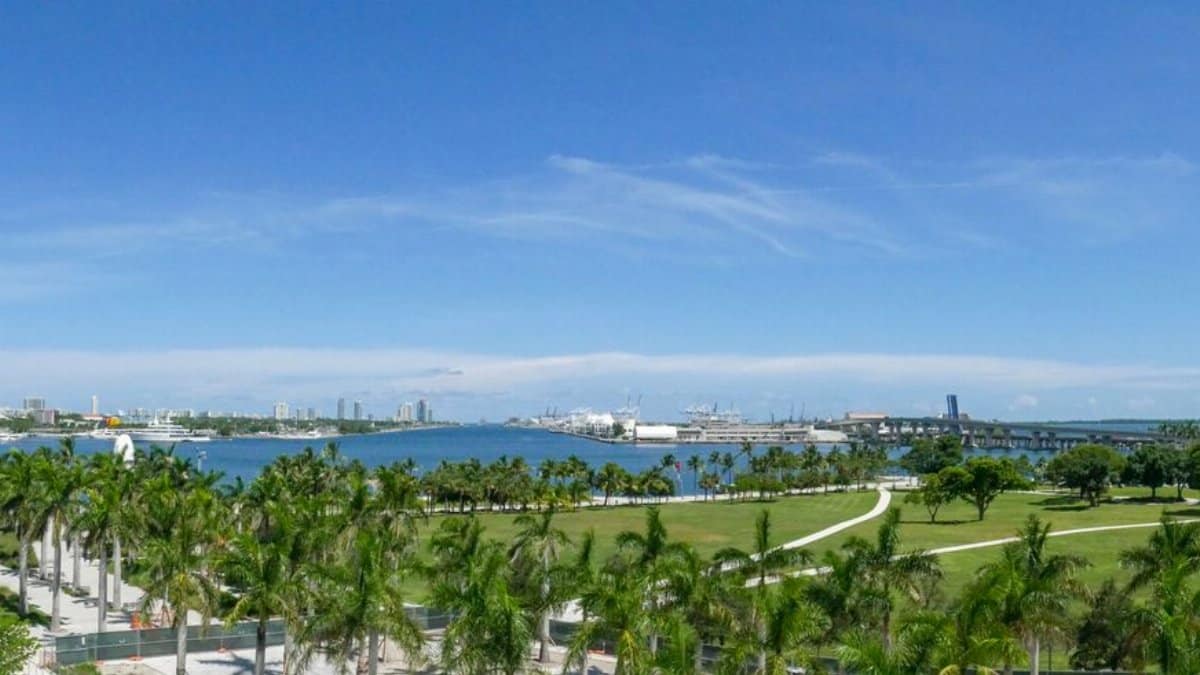
South Florida’s memory is crowded. Cuban exiles, Venezuelan arrivals, Haitian communities, Nicaraguan families, and longtime Colombian and Argentine residents do not share one story, but they share a skepticism of governments that treat papers as optional and of governments that treat people as disposable. That double skepticism makes simple national slogans unstable.
A crackdown can sound, to one household, like the restoration of a rule that was mocked for too long. To the household next door, it can sound like the old country arriving in a new uniform. Politicians who ignore either hearing lose the room. The Trump Salazar immigration ad mattered because it forced both hearings into the same thirty seconds, then left the president to answer in a sentence about credit rather than in a paragraph about criteria.
The claim that he made her victory

There is a factual core inside the boast. Salazar’s elections unfolded in an era when Trump redefined the Republican coalition in Florida, especially among Hispanic voters who rejected the left’s cultural and economic message. His endorsement, his volunteers, and his dominance of conservative media were assets. Candidates who ran against that tide often lost. Candidates who ran with it often won.
There is also an exaggeration that experienced politicians recognize immediately. No modern House member is a pure creation of a president. Districts have their own donors, their own grudges, their own local scandals. Salazar had a profile before this feud, including a willingness to talk about immigration in terms that national Republican messaging sometimes avoids. If voters in her district wanted only an echo, they had other choices over the years. They kept her.
Still, the political effect of the claim does not depend on its precision. It tells activists where to aim. It tells donors which criticism is expensive. It tells Salazar that the next ad will not be answered with a white paper.
Allies who stayed quiet

In fights like this, silence is a strategy. Some Florida Republicans agree with parts of Salazar’s caution and will not say so while cameras are near. Some agree with the president entirely and see no reason to soften his point. Others are counting votes for their own bills and do not want a feud tax on unrelated work, from flood insurance to port funding.
That quiet has a cost. When only the loudest version of immigration politics is spoken aloud, the public learns that the party has no internal range. Range is not the same as weakness. A conference that can argue about enforcement priorities, detention capacity, asylum standards, and temporary status without threatening one another’s legitimacy is a conference that can legislate. A conference that cannot is left with executive action, court fights, and campaign ads.
Faith leaders and the moral frame

In a city dense with churches, the immigration argument rarely stays inside campaign offices. Priests, pastors, and lay ministers hear confession and also hear deportation dates. Some preach law as a form of love for the vulnerable who are harmed by disorder. Some preach welcome as a form of obedience. Many do both in the same homily and then stand in a parking lot unsure which family to call first.
I have sat through enough of those conversations, as a reporter rather than a congregant, to know that spiritual language does not produce a single vote. It does produce a demand that politicians name the person, not only the category. The Trump Salazar immigration ad brushed against that demand. The presidential reply brushed it aside in favor of political genealogy. Voters who pray over this issue will notice which move felt closer to the lives they actually tend.
What the clash reveals about the party

The episode is a small window on a larger Republican tension. One faction wants immigration politics to remain a bright line: enforcement first, relief later if ever, and no public daylight between candidates and the president. Another faction, stronger in some immigrant heavy districts than in national media, wants enforcement paired with a credible offer to people who have built lives in plain sight. Salazar planted herself nearer the second faction without leaving the party. Trump treated that planting as a forgetfulness of debt.
Parties survive these tensions when they can rank priorities. Border capacity, interior enforcement, legal immigration levels, and humanitarian protection are different tools. Mixing them into one loyalty test makes for a clear ad and a clumsy statute. The country has tried the clumsy statute for decades. Miami lives with the results every morning at school drop off and at job sites before dawn.
How voters may sort the credit

Credit in politics is never distributed by an accountant. Trump will keep a share of it in this district for as long as his coalition holds, and that share is large. Salazar will keep a share for as long as voters believe she can quarrel with him without becoming his opponent. The ad tested that belief. His answer tested whether quarrel is still permitted.
If primary challengers emerge, they will replay his sentence until it sounds like a fact of nature. If general election opponents emerge, they will replay her ad until it sounds like a confession that the majority cannot govern its own house. Both uses will be selective. That is what campaigns do. The more interesting question is whether residents who are not professionals in this trade will remember the policy underneath the ownership fight: who is targeted, under what standard, with what chance to be heard.
The next vote and the next ad
House members rarely get to choose a clean subject. They vote on funding, on oversight, on amendments that hide a fight inside a paragraph. Salazar will face those votes while the president’s remark hangs over her name. Trump will face a state he expects to keep, and a media market that translates his words before breakfast. Neither can fully control the other, which is precisely why the boast matters. It is an attempt to reassert control.
Readers outside Florida should resist the temptation to file this as celebrity friction. The Trump Salazar immigration ad is a local document about a national power, and the reply is a national document about a local seat. Together they describe a party deciding whether disagreement on the most personal policy in American life is a defect or a duty. Miami, which has buried too many simple stories, will keep the more complicated one on the table, between the rice and the evening news, until someone offers a policy that can survive both the rally and the parish hall.