
On trading floors from New York to Seattle, the mood tightened within minutes of the morning inflation release. Screens that had opened in a dull green turned red as traders recalculated the path of interest rates and the price investors were willing to pay for growth. The Stock market drop October 14 2026 was not a crash in the old sense of a single violent hour, but it was broad, orderly, and persistent enough to erase a week of cautious gains. By the close the S&P 500 was down 1.1 percent, and the selling had spread from the largest technology names into banks, industrials, and parts of the consumer complex. Volume rose into the final hour as portfolio managers chose to trim rather than wait for Thursday.
How the major indexes finished the session
The damage was shared, which is often more telling than a spectacular drop in one benchmark. The S&P 500, the widest snapshot of large American companies, gave back 1.1 percent and closed near the low of the day rather than recovering in the last minutes. That pattern usually means buyers were not waiting with fresh cash. They were stepping aside.
The Dow industrials also finished lower, pulled by economically sensitive names that had rallied whenever traders imagined an easier Federal Reserve. The Nasdaq composite, heavy with software, chip, and internet companies, lagged the broader list. Small companies, which borrow more and feel rate expectations faster, struggled as well. Taken together, the tape looked like a repricing of the cost of money, not a sudden loss of faith in corporate America.
Advancers were scarce. Defensive pockets such as utilities and some consumer staples held up better, but they did not rally hard enough to offset the weight of the growth complex. For anyone watching a retirement statement refresh after the bell, the Stock market drop October 14 2026 showed up as a single red day that still left indexes well above the panic lows of earlier cycles, and well below the complacent highs of the prior month.
The inflation report that reset the day
The catalyst was a government inflation reading that came in hotter than economists had penciled in. The details mattered more than the headline. Price pressures did not look like a one month fluke confined to a volatile category. Shelter costs remained sticky. Services tied to wages stayed firm. Goods prices, which had been the friendly part of the story for two years, stopped helping as much as hoped.
Markets do not trade the past. They trade what the past implies for the next several meetings of the Federal Reserve. A report that keeps inflation above the comfort zone tells bond traders that policymakers have less room to declare victory. Equity traders then mark down the present value of future profits, especially profits that are expected far out in time. That is why a number released before lunch can reprice an entire afternoon.
Seattle area readers know the local version of this arithmetic. A software firm whose revenue arrives in multi year contracts is valued on a long stream of cash. Raise the discount rate even modestly and the spreadsheet changes. Wednesday was that spreadsheet, applied across the index.
Why rate hike expectations moved higher
Before the open, futures markets had been leaning toward a Federal Reserve that could stay on hold and perhaps ease later if the labor market cooled cleanly. The inflation print challenged that lean. Traders added odds that officials would have to tighten again, or at least keep policy restrictive for longer than the optimistic case assumed.
Language matters here. A higher probability of another increase is not the same thing as a promise of one. The Fed still watches employment, credit conditions, and incoming price data. But markets move on probabilities, not on speeches that have not yet been given. When those probabilities shift in a single morning, bond yields tend to rise and stock multiples tend to compress. Wednesday delivered both.
Short term yields, which track expected policy most closely, led the move. Longer yields rose as well, though less dramatically, a sign that investors were debating the peak of rates more than a lasting surge in inflation decades out. That distinction is cold comfort to a homeowner watching mortgage quotes, and it is directly relevant to anyone pricing a stock on earnings five and ten years ahead.
How artificial intelligence shares weighed on the tape

The heaviest individual weights in the modern index sit in companies tied to artificial intelligence spending: chip designers, cloud platforms, and the software firms selling tools that promise productivity. Those shares had carried the market for much of the year. On Wednesday they carried it lower.
The logic was not that the technology suddenly failed. Spending on data centers, power, and specialized chips remains a real industrial story. The logic was valuation. When the discount rate rises, the shares that embed the most future growth give back the most, even if the business case is intact. Several of the largest AI linked names fell more than the index. Because they are so large, their declines did mechanical damage to capitalization weighted benchmarks.
There was a second, quieter worry. If borrowing costs stay higher, the customers funding those data centers may slow orders. Utilities and equipment makers have already warned that power and construction timelines are tight. A market that had been willing to look past those frictions became less patient once inflation refused to cooperate. In that sense the Stock market drop October 14 2026 was also a referendum on how much good news had already been priced into the AI trade.
Sectors that held and sectors that did not
Energy shares were mixed, caught between a firmer dollar and the usual sensitivity to global growth. Banks faced a split message. Higher yields can help net interest margins, but a sudden rise also threatens bond portfolios and can cool loan demand. The session treated that split as a reason for caution rather than a reason to buy.
Industrials and transports, often read as a comment on the real economy, slipped with the rest of the cyclicals. Retail names were uneven. Companies that had already warned about a choosier consumer found little new sponsorship. Health care, sometimes a shelter in rate scares, was only a partial refuge because several large constituents had their own earnings questions heading into the next two weeks.
The winners, such as they were, clustered in businesses with nearer cash flows and less dependence on a falling discount rate. Even there, gains were modest. A down day with few hiding places tells you the shock was macro, not a scandal at a single firm.
Bonds, the dollar, and the price of waiting

The bond market confirmed the equity story. Yields on Treasury notes climbed as prices fell, the ordinary inverse relationship that still surprises people who only watch stocks. A higher yield is the market’s way of saying that money in the future is worth less today, and that the government, and everyone else, must pay more to borrow.
The dollar firmed against major currencies, a typical companion to rising American yields. A stronger dollar helps travelers and can ease some import prices, but it pinches multinational earnings when foreign revenue is translated home. Analysts will spend the next several sessions adjusting models for that translation effect. It is rarely the whole story. On a day like Wednesday it was one more weight on the scale.
Gold, often bought when investors fear either inflation or instability, did not deliver a clean signal. Some buyers stepped in. Others sold to raise cash. Commodities rarely speak with one voice when the dominant question is the policy rate rather than a supply shock.
What the move means for retirement accounts
For a broad audience, index points matter less than the account that funds a mortgage payoff or a child’s tuition. A 1.1 percent decline in the S&P 500 is noticeable on a large balance and ordinary on a long chart. The risk is not one Wednesday. The risk is a sequence of inflation surprises that keeps rates high while earnings fail to grow into the prices investors already paid.
Target date funds and balanced portfolios felt the day in both sleeves. Stocks fell. Bonds fell. That combination is uncomfortable precisely because the usual offset did not appear. It has appeared before, notably in periods when inflation, not recession, was the market’s main fear. Diversification still works over years. It does not guarantee a green day when the shock hits both asset classes at once.
Advisers who spoke in general terms after the close urged clients to match withdrawals to time horizon rather than to the color of a single session. That is sound household finance. It is also a reminder that the Stock market drop October 14 2026 will be forgotten by many professionals within a month, and remembered by households only if it becomes the first of several.
Earnings season waiting in the wings

The calendar does not pause for a bad inflation print. Companies are entering a reporting stretch in which executives must defend margins, discuss pricing power, and answer whether customers are delaying projects. Technology leaders will be asked about capital spending on artificial intelligence and about when that spending turns into profit rather than into depreciation and power bills.
Banks will be asked about credit quality. Retailers will be asked about inventories heading toward the holidays. Industrial firms will be asked whether higher financing costs are showing up in order books. A market that just repriced rates will listen for any sentence that confirms or contradicts the inflation report. Guidance, more than the backward looking quarter, is likely to move shares.
Options markets priced a bit more movement around those reports than they had on Tuesday. That is the mechanical response to uncertainty. It is not a forecast of disaster. It is a forecast that words from chief financial officers now carry extra weight.
How this session compares with other inflation scares

Veterans of the trading desk have a catalog of days when a price index rearranged the board. Some of those days marked turning points. Most marked pauses. The difference usually showed up in the next two or three data releases, not in the rhetoric of the first afternoon.
What distinguished Wednesday was the starting point. Valuations in the largest growth shares were already rich by the standards of the past decade, even if they looked less extreme than the peaks of the prior mania. When a market is priced for smooth disinflation, a single firm report can do outsized work. When a market is priced cheaply, the same report is often absorbed. The Stock market drop October 14 2026 belongs in the first category: a valuation adjustment triggered by data, not a liquidity crisis or a broken market structure.
Circuit breakers were never close to relevant. Spreads in the most liquid names stayed reasonable. This was a repricing, conducted in public, at a speed that modern electronic markets make look dramatic and that older floor traders might have called a tough but ordinary afternoon.
The Federal Reserve’s next narrow path

Officials do not set policy from one table of numbers, and they do not comment on every tick of the S&P 500. Still, they read the same report the market read. If subsequent measures of wages and services prices echo Wednesday’s message, the case for patience weakens. If those measures cool, Wednesday becomes a false alarm that nonetheless cost investors a percent and change.
The political calendar adds noise without adding clarity. Inflation is felt at the grocery store and the gas pump long before it is debated in a hearing room. Markets, for their part, care less about speeches than about whether the next print confirms the last one. Between now and the following policy meeting, every labor report and every price index will be treated as a vote.
Businesses planning capital projects face the practical version of that vote. A factory, a data hall, or a housing development penciled at one interest rate may not pencil at another. Some projects will be delayed. Some will proceed because the strategic need outweighs the financing math. Those decisions, aggregated, become the economy the Fed is trying to steer.
Global markets and the American lead

Overseas sessions that were still open, and those that would open next, took their cue from New York. When American yields rise, capital tends to favor dollar assets, and foreign equity markets often sag in sympathy, especially where local central banks have less room to diverge. Export heavy indexes can suffer twice, once from the growth scare and once from the currency.
None of that makes the United States a closed system. A slower China, a tense energy market, or a surprise from Europe can still hit American shares on a quiet domestic day. Wednesday simply was not quiet, and the impulse ran from Washington’s data release outward. Global investors who had been using American technology shares as the world’s growth proxy had to mark those proxies down together.
What serious investors will watch next
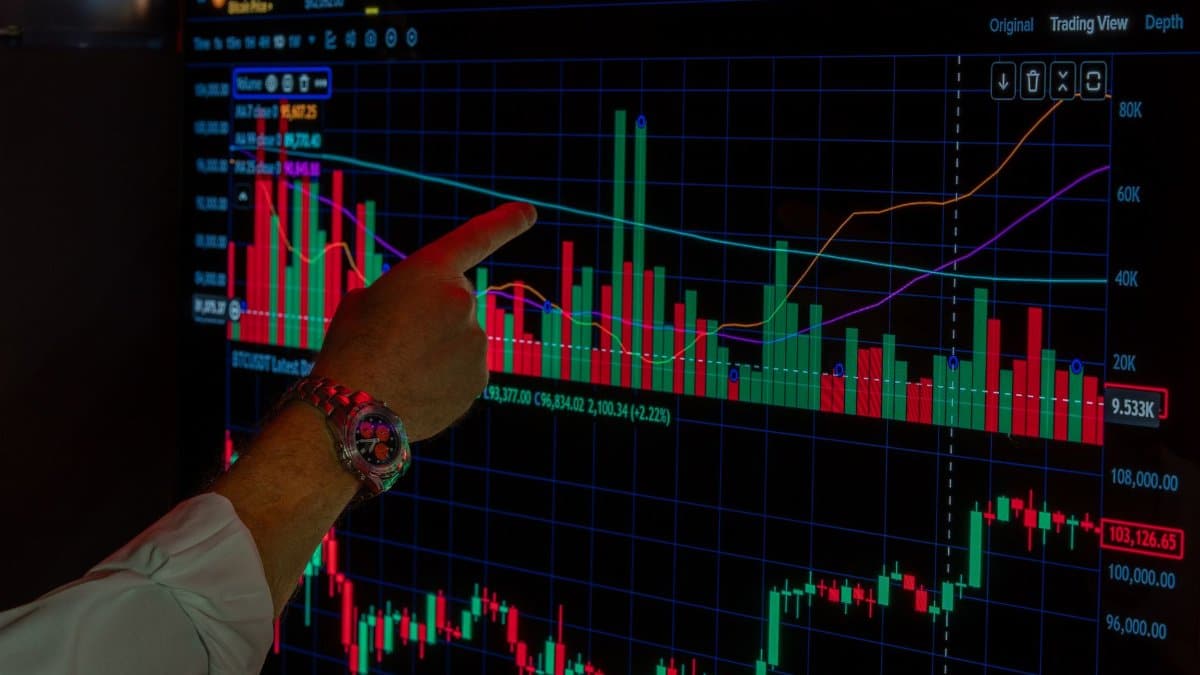
The useful questions are narrow. Does the next inflation reading confirm the heat, or fade it? Do yields keep climbing, or settle once the initial repositioning is done? Do company executives, speaking under earnings rules that punish spin, describe customers who are still spending? And do the largest AI linked firms show that revenue is arriving fast enough to justify the capital already committed?
Breadth matters as much as the index level. If the next rally is again confined to a handful of mega cap names, the market remains fragile to any single macro surprise. If more sectors join, Wednesday will look like a shakeout that cleared weak hands. Credit spreads, the extra yield investors demand to lend to companies rather than to the Treasury, deserve a glance too. They stayed contained, which argues against panic. A widening there would argue for something more serious than a valuation reset.
Households do not need a trading terminal to follow this. A monthly statement, a mortgage quote, and a pay stub already contain the plot. The Stock market drop October 14 2026 was the market’s blunt summary of an inflation report that raised rate hike expectations, with artificial intelligence shares doing much of the index’s heavy lifting on the way down. The next chapters will be written in data, not in the color of a single close.