

On a damp morning in the East Midlands, the words Harry Meghan Nottingham charity visit moved from a scheduling note into the conversations of people who measure royal attention by whether it changes a waiting list, a training place, or a quiet hour with a counselor. For Prince Harry and Meghan, the Duchess of Sussex, the plan is modest on paper and large in implication. They are expected to appear together at three local charities, their first joint public appearances since returning to England, in a city that has long treated celebrity as less important than whether a promise is kept after the cameras leave.
A return measured in small rooms rather than palaces
The couple stepped away from senior royal duties in 2020 and built a life largely in California, with occasional trips back to Britain that have often been private, separate, or tightly managed. A joint outing changes the temperature. It suggests that whatever distance remains between them and the institution they left, they are willing to stand side by side in public on British ground again. That choice will be read in London, in Los Angeles, and in living rooms that have followed every chapter of their departure with a mix of sympathy, irritation, and fatigue.
Nottingham is an interesting stage for that reading. It is not a ceremonial capital. It is a working city with universities, a proud manufacturing past, and neighborhoods where charity is not an abstraction. Lace, coal, and bicycles once defined parts of its economy. Today the pressures look more like housing costs, youth mental health, and the long shadow of military service on families who do not live near a palace gate. A visit here asks a blunt question. Can two of the most photographed people in the world spend a morning in rooms where the work is slow, local, and easy to ignore?
Why this city carries a particular weight

Royal itineraries often favor places that photograph well or that sit inside a familiar circuit of hospitals, gardens, and reception lines. Nottingham has received its share of those visits over the decades, yet it also has a civic personality that resists being treated as backdrop. Residents tend to notice whether a guest has done the reading. They notice whether a prince asks about apprenticeships or only about the ribbon. They notice whether a duchess listens to a caseworker who has already explained the same funding gap to three ministers.
The Harry Meghan Nottingham charity visit lands in that skeptical climate. Supporters will see proof that the couple still wants a British public role rooted in service rather than spectacle. Critics will see a brand exercise, timed for maximum coverage and minimum institutional friction. Both readings can be true at once, which is why the details matter more than the motorcade. Who greets them at the door. How long they stay. Whether staff are allowed to speak in their own words. Whether the organizations gain anything durable once the morning is over.
Three charities and the work that rarely leads the news

The reported plan centers on three Nottingham organizations, a scale small enough to suggest intention rather than a state progress. Charity work at that size is rarely glamorous. It is grant applications, volunteer rotas, and the awkward arithmetic of helping one family without pretending the system is fixed. For Harry, whose public causes have long included veterans, wounded service members, and the mental strain of military life, a Midlands stop fits a pattern he has defended even when other parts of his public life grew contentious. For Meghan, whose projects have emphasized women, girls, and community storytelling, the same morning offers a chance to be seen doing unshowy work in a country that has often judged her by tone rather than task.
None of that erases the asymmetry. A charity can spend years building trust with people who have been disappointed by institutions. A famous visitor can compress that trust into a photograph. The responsible version of the day treats the organizations as hosts, not props. It lets practitioners explain what they need, which is seldom another speech about hope and often something plainer, such as multi year funding, staff time, and political attention that lasts longer than a news cycle.
The distance between California and the East Midlands

Geography is part of the story, and not only because of the flight. Harry and Meghan now operate from a media culture that rewards personal narrative, direct address, and commercial partnerships. British charity culture, especially outside London, still prizes understatement. A successful visit has to translate between those habits without pretending they are the same. Too much polish and the morning looks imported. Too little preparation and it looks careless. The couple have had years to learn that British audiences punish both errors.
There is also the simple fact of absence. People who follow the royals closely can recite the grievances, the interviews, the lawsuits, and the family silences. People who run food projects and youth programs often cannot, and do not wish to. They want to know whether a visitor will amplify a funding shortfall or drown it out. In that sense the Harry Meghan Nottingham charity visit is a negotiation with attention itself. Attention is the currency they possess in abundance. Whether they spend it on the charities or on their own rehabilitation is the test residents will apply, even if they never say so on camera.
What joint appearances still mean

Separate appearances are easier to manage. Each spouse can choose a cause, a tone, and a risk level. Together, they revive the image that once made them the most watched couple in the royal family, and they also revive the arguments that followed that image out of the palace. Joint does not mean reconciled with the institution. It means coordinated with each other. For readers who have treated their marriage as a proxy war over race, class, duty, and the press, even a quiet charity morning will be recruited into that war.
A more useful frame is narrower. Joint appearances tell us that they are willing to share a public hour in Britain again, and that they have chosen service as the setting. That does not settle questions about titles, security, or future roles. It does tell charities something practical. If the couple arrive as a pair, coverage multiplies. Multiplication can be a gift or a burden. Extra donations are welcome. Extra scrutiny of beneficiaries is not. Any organization that agrees to host them has already weighed that trade, often with more care than commentators assume.
Volunteers who keep the lights on

The people most likely to remember the day accurately are not the commentators. They are the volunteers who unlock the building, the managers who rewrite the schedule twice, and the clients who decide whether to attend or to stay home because privacy matters more than a glimpse of a prince. British charity depends on that unglamorous layer. National Health Service pressures, council budget cuts, and the rising cost of living have pushed more need onto organizations that were never designed to replace the state. A royal visit does not repair that structure. At best it makes the strain visible to people who can move money or policy.
Nottingham knows this pattern. Community groups across the city have spent recent years stretching donations across food, advice, mentoring, and mental health support. When a famous guest arrives, the temptation is to perform gratitude. The better outcome is specificity. A volunteer who can say, in a sentence a donor will remember, what a single afternoon of counseling costs has done more for the cause than any curtsey. If the visit creates room for that sentence, it has earned its place on the calendar.
Public curiosity and private caution

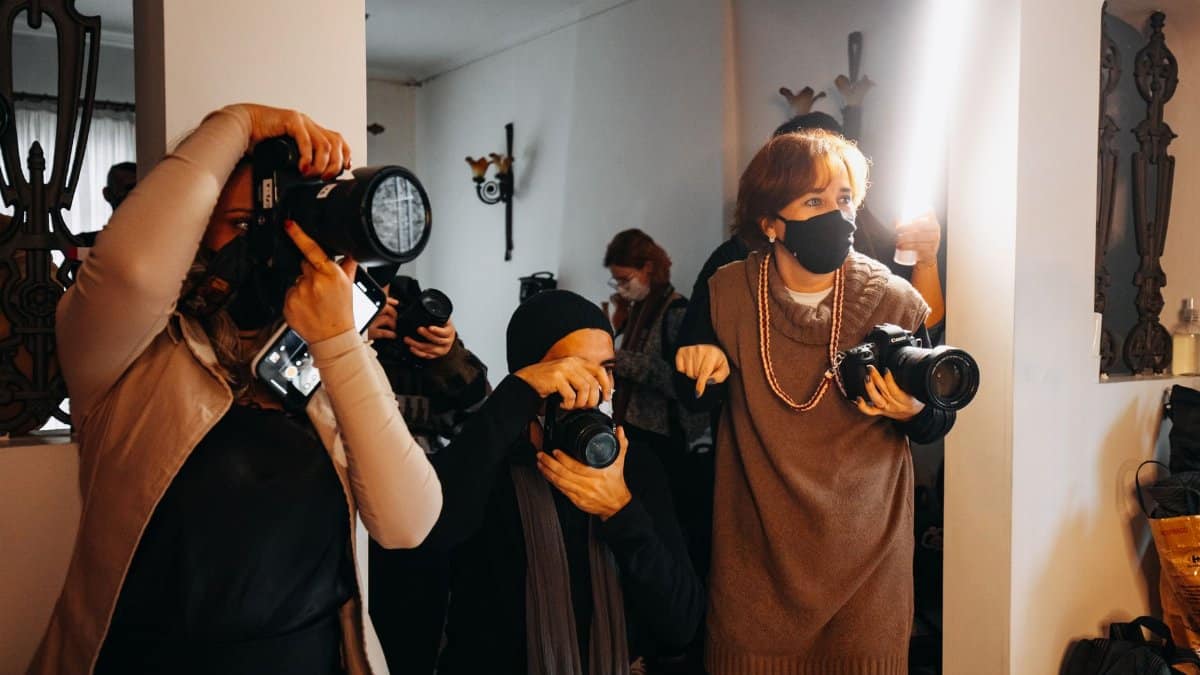
British tabloid culture will not treat the morning as a seminar on civic life. Photographers will look for expressions, wardrobe, and any hint of tension or warmth between the couple. Palace watchers will parse who was invited, who was not, and whether senior royals acknowledged the trip. American audiences, including readers who meet this story through entertainment pages, will look for signs of a comeback narrative. All of that attention is predictable. It is also beside the point for the three hosts, who cannot control the caption under a photograph taken on their doorstep.
Caution is therefore not coldness. It is competence. Charities that have survived scandal, short funding, and well meaning disruption tend to write ground rules before they write welcome signs. They decide which rooms are open, which stories are shareable, and which people must not be identified. Harry and Meghan, having spent years arguing that media intrusion causes real harm, have reason to respect those rules rather than treat them as obstacles to a warmer picture. Consistency on that point would matter more than any statement issued afterward.
Symbolism and the practical good it can still do

Skeptics are right that symbolism is not a budget line. They are wrong if they conclude that symbolism never moves budgets. A well aimed visit can unlock a meeting with a funder, steady a nervous board, or persuade a local employer to take a second look at a hiring program for veterans or young people leaving care. Those effects are small, uneven, and easy to exaggerate. They are also real, which is why serious organizations still say yes, even when they know the risks.
The Harry Meghan Nottingham charity visit will be judged, in the end, by whether any of those small effects appear. Not by the volume of coverage. Not by whether commentators declare a thaw. A city does not need another myth about Robin Hood redistributing attention. It needs guests who understand that generosity is a practice, repeated on ordinary Tuesdays, mostly by people whose names will never trend.
The week after the cameras leave
The revealing moment is rarely the arrival. It is the week after, when inboxes fill with praise, criticism, and the occasional serious offer of help. Organizations that have hosted high profile guests before often appoint one person to sort those messages, because opportunity and noise arrive together. If the couple and their staff stay engaged at that stage, the visit becomes a relationship. If they do not, it becomes a clipping.
Readers can hold two ideas without forcing a verdict. Harry and Meghan remain polarizing figures whose choices have consequences for a family and an institution that still occupies a strange place in British public life. They are also two people with unusual power to point a spotlight at work that Nottingham already knows how to do. The first joint appearances of this return will not settle their story. They can, if handled with restraint, leave three charities slightly better equipped for the months when no one famous is coming. That is a limited ambition. For the people who keep those doors open, it is the only ambition that counts.