
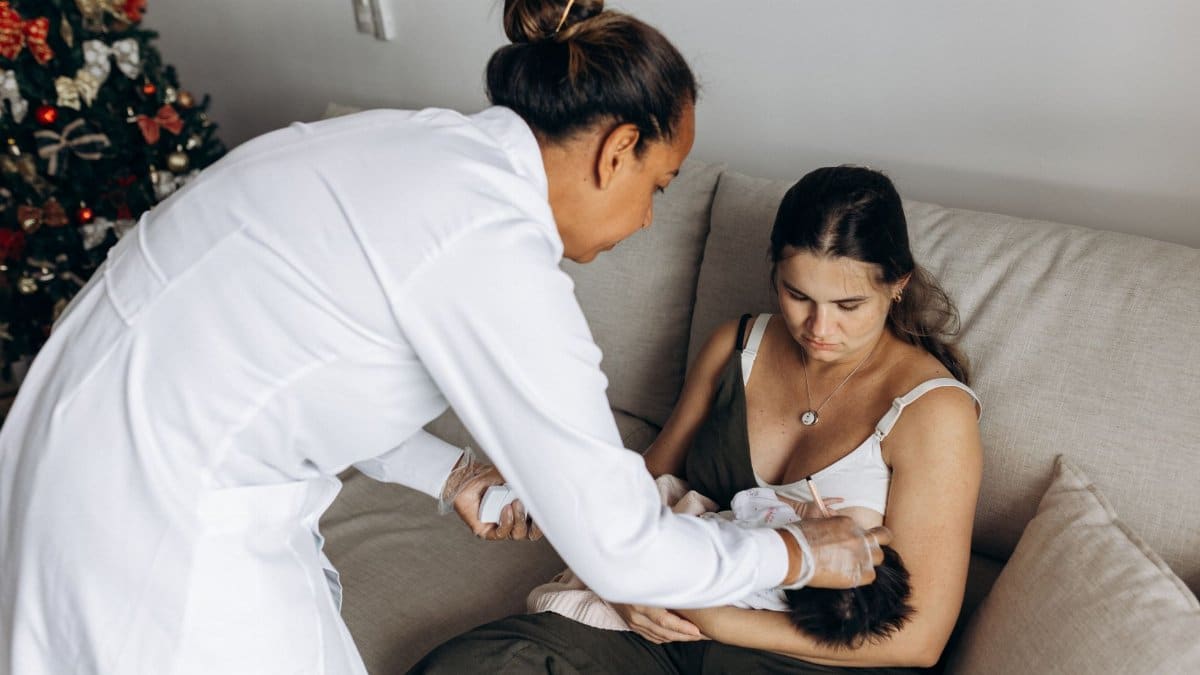
On a Tuesday morning in a triple decker outside Worcester, a public health nurse climbs a narrow stairwell with a scale in one hand and a folder in the other. The baby is eleven days old. The mother has not slept in any stretch longer than ninety minutes. No one from the hospital has seen the pair since discharge. Into that quiet gap comes a proposal now moving through Beacon Hill, and the phrase Healey postpartum funding has started to appear in budget memos, clergy newsletters, and group texts among new parents who are trying to understand what the state is actually offering.
A modest line in a large budget

Governor Maura Healey is seeking 2 million dollars to support Welcome Family, a nurse home visit program for families in the first weeks after birth. In a state budget measured in the tens of billions, the sum is small enough to vanish in a spreadsheet and large enough to determine whether a nurse can keep a caseload in a given county. Supporters describe it as a down payment on care that hospitals cannot finish and that pediatric offices, booked weeks out, cannot start in time. Critics ask whether a pilot energy program, or a mental health line already on the books, should take priority in a year when revenues are watched with unusual care.
The request does not invent a new bureaucracy from scratch. Welcome Family already exists inside the state public health apparatus. What Healey postpartum funding would change is the reliability of the money behind visits that are easy to praise in principle and easy to cut when a fiscal year turns tight. Nurses, not apps, do the work. They weigh infants, ask about bleeding and feeding, and sit long enough to hear an answer that does not come in the first polite minute.
The weeks the system tends to skip

American maternity care is intense at the moment of birth and thin immediately afterward. A family may leave the hospital with discharge papers, a car seat check, and a follow up appointment that sits on a calendar rather than in a living room. For parents with paid leave, a nearby relative, and a primary clinician who answers the phone, that thinness is inconvenient. For parents without those buffers, it is the period when feeding fails, blood pressure climbs, or sadness hardens into something that needs a clinician and not a pamphlet.
Home visits are an old idea wearing a modern name. Generations of families expected someone, a midwife or a neighbor or a parish visitor, to cross the threshold. The contemporary version adds clinical training, documentation, and a public purse. It also adds a political question: is the visit a medical service, a social service, or a moral habit the state has decided to fund because private life will not reliably supply it?
What a nurse actually does at the kitchen table
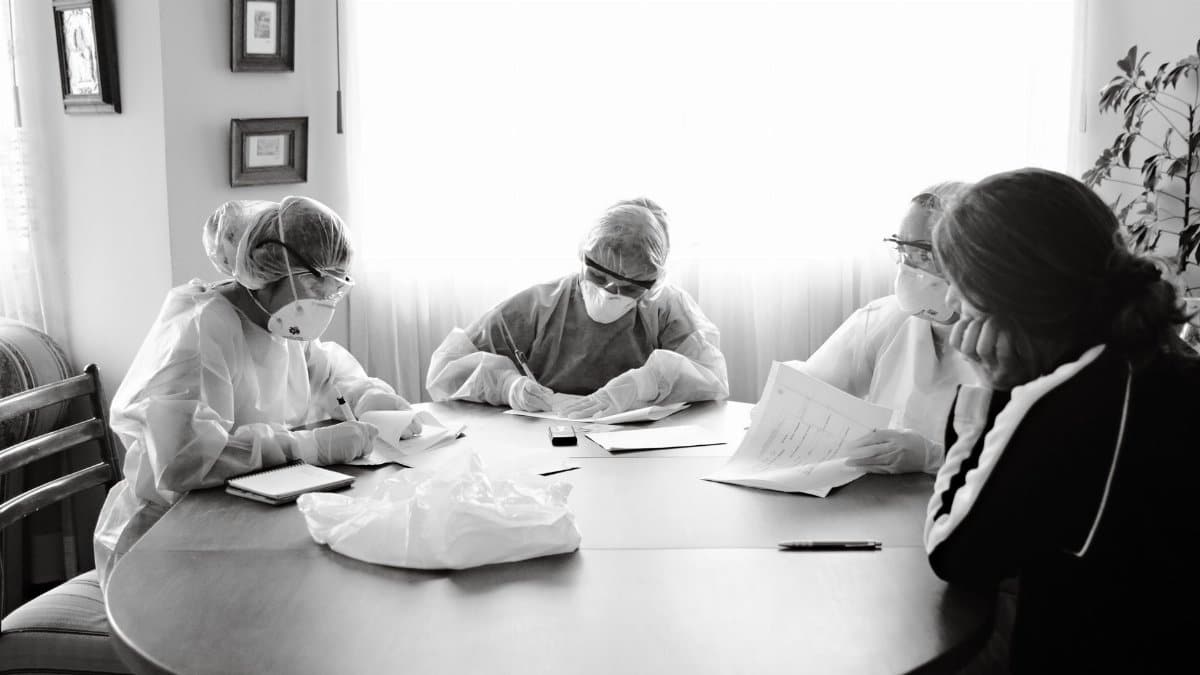
A Welcome Family visit is not a wellness influencer drop in. The nurse looks at the baby and at the adult who is supposed to be recovering. Jaundice, weight loss, incision pain, and signs of infection are clinical facts. So are exhaustion, panic, and the flat affect that families sometimes mistake for ordinary new parent fatigue. The visit can end with a referral, a same week call to a clinician, or simply a plan for sleep and feeding that a tired person can remember.
That last item is easy to mock and hard to replace. Written instructions assume a reader who is not shaking from lack of sleep. A person in the room can notice when the instructions do not match the apartment, the shift schedule, or the absence of a second adult. Healey postpartum funding, if enacted as described, is meant to buy more of those rooms, not more brochures.
Mental health after birth is ordinary and still neglected
Depressive and anxious symptoms after childbirth are common enough that public health agencies treat them as a standard part of maternal care, not a rare emergency. They are also still missed. Screening in a pediatric office helps, and many practices now ask the brief questions. A screen on a clipboard does not feed a baby at 3 a.m. or arrange a therapy appointment that accepts the insurance card in the drawer.
Home visiting does not replace psychiatry. It can shorten the distance between a parent who is struggling and a system that already has slots, groups, and medication management if someone makes the connection. Faith communities often see the same parents first, in a baptism class or a meal train, and many clergy now keep a short list of clinicians rather than offering only prayer and casseroles. The state program and the congregation are not rivals. They fail in the same way when nobody follows the parent past the first polite answer of fine.
A national argument with a Massachusetts accent

Other states have expanded nurse visits, Medicaid coverage in the postpartum year, and paid leave, each with different price tags and different proof of effect. The national debate is less about whether new parents deserve attention and more about which door the money should enter: insurance reimbursement, a public health grant, a hospital bundle, or a universal benefit untethered from income tests. Massachusetts, with a relatively generous Medicaid postpartum window compared with some states, still has families who fall between coverage, language access, and geography.
Rural and gateway city hospitals have closed maternity units over the past decade, lengthening the drive for birth and for the checkup that follows. A home visit cannot reopen a labor floor. It can mean that distance does not also mean invisibility in week two. That is the practical case legislators will hear, stripped of slogan and tied to mileage, staffing, and whether a nurse position survives past June.
Who would feel the money first

Program managers say demand already exceeds the visits they can schedule. First time parents, parents without a local family network, and parents recovering from complicated deliveries tend to be prioritized when slots are scarce. Language access matters in a state where Portuguese, Spanish, Haitian Creole, and Mandarin are not edge cases. A funding bump that hires nurses but not interpreters will look larger on paper than it feels in an apartment where the clinical questions never quite land.
Income tests are a design choice with spiritual and civic stakes as well as fiscal ones. A universal offer signals that the early weeks are a common vulnerability, not a charity category. A targeted offer stretches dollars toward families with the fewest private supports. Healey postpartum funding, at 2 million dollars, is unlikely to purchase universality. It can purchase a clearer promise in the communities already on the program map, which is a narrower good and still a real one.
The budget hearing behind the headline

Supplemental and annual budget requests live or die in committee language that almost nobody outside the building reads. A line can be reduced, delayed into a later fiscal year, or folded into a larger public health account with fewer strings and less visibility. Advocates who want the visits protected will ask for a named amount and a reporting requirement: how many families were offered a visit, how many accepted, how many were connected to mental health care, and where the refusals clustered.
Opponents, or simply skeptics, will ask for evidence that this model changes outcomes rather than only changing the feeling of being cared for. Feeling is not nothing. Isolation after birth is itself a harm. Still, a legislature can reasonably demand more than anecdotes. The honest answer from program staff is usually mixed: some measures, such as completed referrals and identified medical problems, move quickly; others, such as long run maternal health, need years of data the current appropriation will not by itself produce.
Faith, neighborliness, and the limit of the state

Because this debate is landing in congregations as well as in committee rooms, it is worth saying what public money cannot do. A nurse is not a godparent. A visit does not restore a marriage, undo a stillbirth, or supply the village that social media keeps promising. Many religious traditions already hold that the days after birth are a time of watchfulness, impurity and purification in some teachings, blessing and communal meals in others. Those practices predate Medicaid. They also fail when the community is scattered, the parent is new in town, or shame keeps people from saying they are not well.
State funding is a civic tool aimed at a human season that religions have always noticed. It does not baptize a budget. It does ask whether a wealthy commonwealth will treat the fourth trimester as someone else’s private problem. Readers who come to this story from a parish, a mosque, or a meditation group may recognize the same question they hear in their own halls: who sits with the person who cannot yet sit up straight?
What families tend to remember

Ask parents years later what helped, and the answers are rarely about a press release. They remember a person who noticed the bassinet was in a cold room, who took a blood pressure reading that sent them back to care, who said the intrusive thoughts were a reason to call a clinician and not a reason to stay silent. They also remember visits that felt rushed, culturally off, or like surveillance. Trust is the whole technology. Without it, the scale and the folder are just objects on a stairwell.
That is why implementation will matter more than the round number. Hiring, training, and supervision determine whether Healey postpartum funding becomes a series of competent encounters or a line that looks funded and feels absent. Families can tell the difference in a single afternoon.
The case for keeping the promise small and specific

There is a temptation, in a season of national argument about parenthood, to load 2 million dollars with every hope: closing maternal health gaps, ending postpartum depression, repairing the birth system after unit closures. The money cannot do those things. It can pay for nurses to reach families in a defined window, in defined communities, with a defined set of clinical and referral tasks. Held to that scale, the request is legible. Inflated beyond it, the request becomes a symbol, and symbols are easy to applaud and easier to defund when the symbol fails to remake society.
Legislators can still say no. They can argue that hospitals, insurers, or philanthropy should carry the cost, or that existing maternal health accounts are sufficient if managed differently. Those are legitimate budget arguments. They should be made in the open, with the families who would lose a visit sitting in the same frame as the balance sheet.
A door, a stairwell, a decision

Back on that Worcester stairwell, the policy question is painfully concrete. Either someone is paid to climb it, or the parent and the eleven day old infant wait for a system that usually starts later than their crisis. Healey postpartum funding will not settle the national fight over how a country cares for people who have just given birth. It will settle, for a set of Massachusetts families in the next fiscal year, whether the knock comes.
That is a small headline beside tax debates and housing fights. It is also the kind of government action people can describe without a chart: a trained stranger at the table, a baby weighed, a parent asked a real question, and an answer written down before the kettle boils. If the appropriation survives, the state will have chosen that scene over its absence. If it does not, the absence will not announce itself. It will simply be another week in which no one came.