
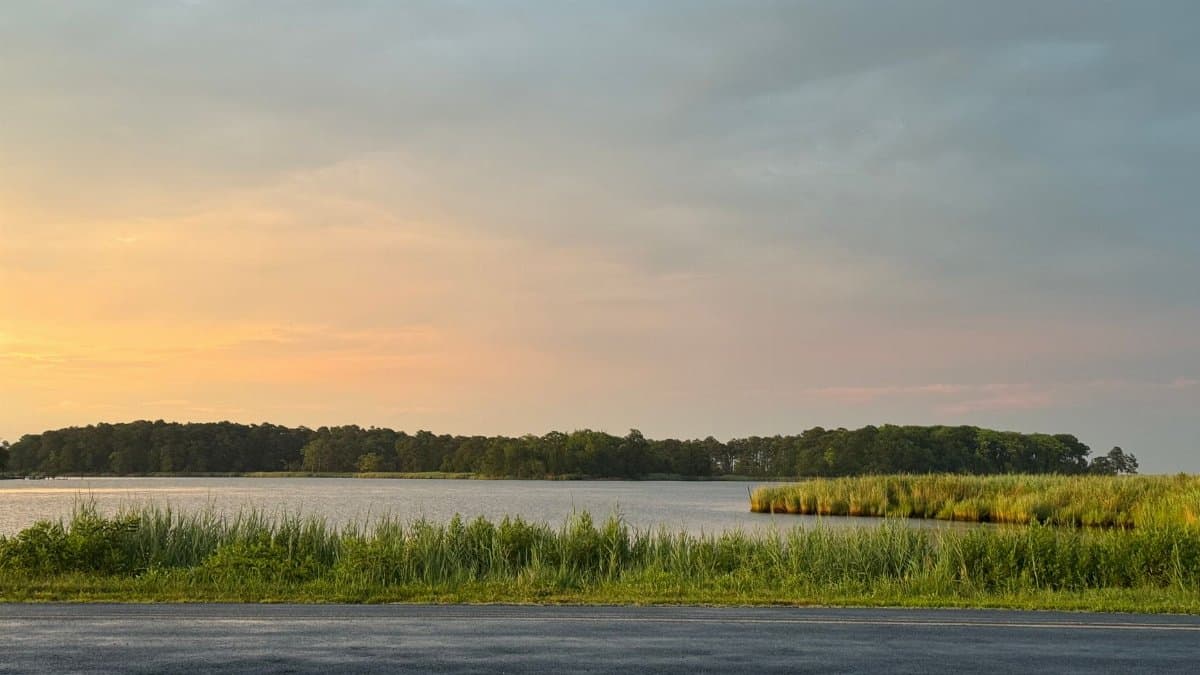
On a gray morning along the Patuxent, the water looks ordinary until a dark patch rolls and breaks, a brief shiver of silver that vanishes before a gull can commit. That flicker is menhaden, the small oily fish that feeds so much of what people come to the Chesapeake to see. This fall, 29 Maryland lawmakers asked fishery managers to tighten the Chesapeake menhaden harvest, arguing that the Bay should not absorb so large a share of a coastwide catch. Their letter is short on poetry and long on arithmetic. It asks that the Bay take no more than 13.6 percent of the total Atlantic harvest.
A letter that treats a percentage as policy

The request is bipartisan, which in Annapolis still means something when the subject is fish rather than taxes. Twenty nine members of the Maryland General Assembly want the Atlantic States Marine Fisheries Commission to hold the Chesapeake share of the menhaden catch to 13.6 percent of the coastwide total. The number is specific enough to sound technical and plain enough to argue in a hearing room. It is not a ban. It is a ceiling, and ceilings are how this fishery has been managed for years.
A cap does not decide who may fish, what gear they may use, or how a plant in Virginia turns millions of small fish into meal and oil. It decides how much of a coastwide allowance may come from one estuary. For the lawmakers who signed, that distinction is the point. They are not asking the commission to rewrite the entire Atlantic plan. They are asking it to treat the Bay as a place with its own limits.
Why this fish carries so much of the Bay
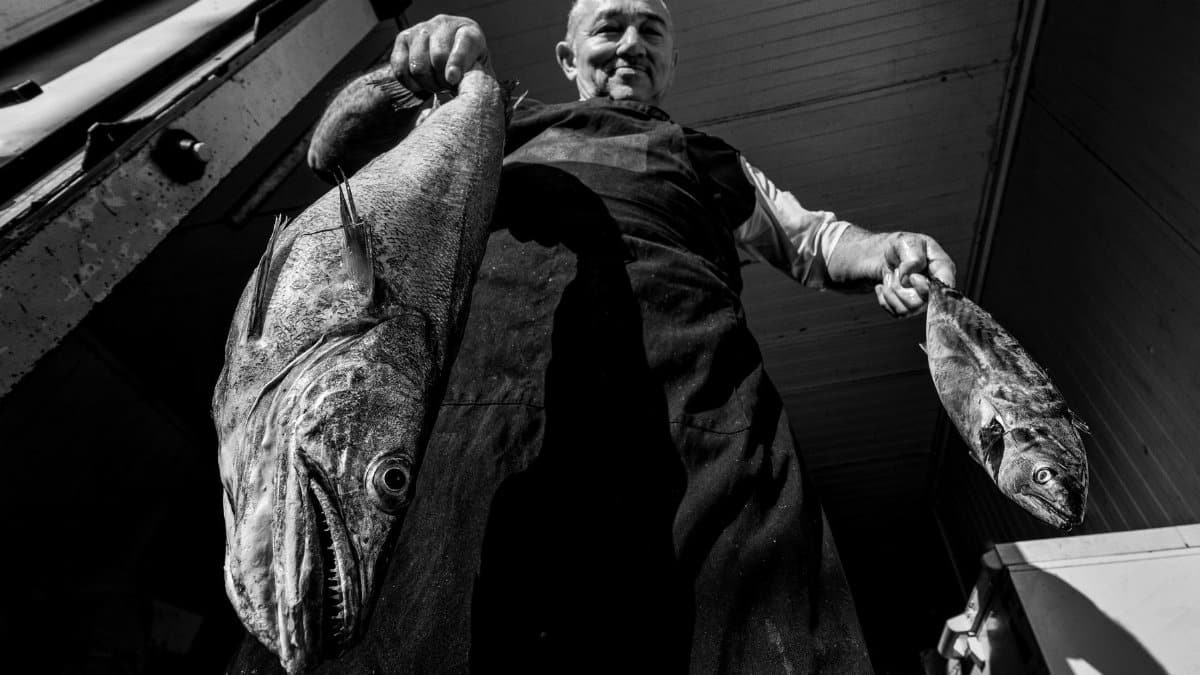
Menhaden are not a glamour species. Anglers do not mount them. Restaurants rarely list them. They are forage, the prey that striped bass, bluefish, weakfish, ospreys, and bald eagles convert into the wildlife people notice. They are also filter feeders, moving in dense schools and straining plankton from water that already carries the runoff of a vast watershed.
That double role, food and filter, is why a harvest argument quickly becomes an argument about the character of the estuary. When menhaden are abundant, the food web has slack. When they are scarce in the places predators hunt, the scarcity shows up as thin rockfish, failed osprey nests, and captains who burn fuel looking for bait that used to be routine. None of those signs proves a single cause. Together they explain why a technical cap has become a public fight.
The industrial catch and the local one

Most of the menhaden taken from the region are not caught by Maryland watermen fishing for bait. The large reduction fishery, centered for generations around Reedville on the Virginia western shore, uses purse seine vessels to surround schools and deliver them to a plant. That operation is legal, heavily capitalized, and tied to a coastwide quota set by interstate managers. Bait fisheries, smaller and more scattered, supply crabbers and anglers.
Maryland sits in an awkward spot. Its own waters are not the main stage for the reduction fleet, yet the Bay those vessels work is a shared body. Fish do not stop at the state line near the Potomac. A school that feeds ospreys on the Choptank in June may be available to a seiner farther south in summer. The Chesapeake menhaden harvest is therefore a regional fact with a Maryland political audience, even when the nets are not Maryland nets.
Predators make the argument visible

Striped bass remain the emotional center of the debate. The rockfish recovery of the late twentieth century is one of the conservation stories Marylanders still tell with pride. In recent years, concern about the stock, and about the prey those fish need, has returned the conversation to menhaden. Managers have already tightened striped bass rules. Conservation groups argue that prey policy has not kept pace with predator policy.
Ospreys have given the issue a face that does not require a fishing license. Nest cameras and colony counts along the Bay have shown seasons when adults struggled to feed young, and researchers have pointed to a diet that depends heavily on menhaden in some stretches of the estuary. A hungry raptor on a channel marker is easier to photograph than a quota table. Lawmakers know that. The letter is written in the language of percentages, but it travels because people have watched the birds.
What 13.6 percent would and would not do

A Bay share of 13.6 percent would lower the amount of the coastwide catch that can be taken inside the estuary, relative to recent practice as the lawmakers describe it. It would not, by itself, shrink the coastwide quota. Fish not taken in the Chesapeake could still be taken in ocean waters, if the fleet can find them and if the plan allows the shift. That is both the strength and the weakness of a geographic cap. It protects a place without pretending to settle the size of the whole fishery.
Supporters say place matters because the Bay is a nursery, a feeding ground, and a bottleneck. Critics of a tighter cap, including some in the industry, argue that menhaden are assessed on a coastwide basis and that a healthy coastwide stock should not be managed as if the Bay were a separate population. Both claims can be partly true. A stock can be sustainable in the aggregate while local predators still go hungry. That gap between a coastwide model and a local observation is where this letter lives.
Science that refuses a simple verdict

The commission relies on stock assessments that treat Atlantic menhaden as one population from Maine to Florida. Those assessments have, in recent cycles, described a stock that is not overfished and not experiencing overfishing under the reference points managers adopted. Ecological reference points, meant to account for the needs of predators, have made the math less purely commercial. They have not ended the argument.
Models are only as good as the data and the questions built into them. They are poor at telling a Tangier waterman why his bait nets came up light, or an osprey researcher why a colony had a bad year. They are also a defense against managing by anecdote. The honest position is uncomfortable: the coastwide numbers can look acceptable while the Chesapeake still feels short. A percentage cap is a political tool for that discomfort. It is not a substitute for better local science.
Politics without the usual map

Twenty nine signatures do not pass a law. The General Assembly does not set the Atlantic quota. The commission does, through state delegations that include fishery agency officials rather than legislators. The letter is pressure, aimed at Maryland’s representatives at the table and at the wider public record. Bipartisan stationery makes it harder to dismiss as a party project.
The coalitions around menhaden do not line up neatly. Charter captains who depend on rockfish may stand with bird groups. Bait fishermen may want menhaden left in the water and also want access to what remains. The reduction industry employs people in a part of Virginia with few comparable plants, and it sells products into feed and oil markets far from the Bay. A Maryland letter can sound, in Reedville, like one state asking another state’s workers to absorb the cost of a shared scenery. That tension is real, and pretending it is only about science does not make it smaller.
Stewardship without a sermon

There is a habit, in arguments about the Chesapeake, of reaching for language larger than the facts. The estuary is a commons. People who live on it inherit obligations they did not choose, including the obligation not to spend a living resource as if the next season were guaranteed. That is a civic idea more than a religious one, though it can sound like either.
I have stood on piers where the only evidence of menhaden was the smell of a school that had already moved on, and I have also read quota tables that made the worry seem overdrawn. Both experiences are incomplete. Stewardship here is not a mood. It is a willingness to accept a smaller, clearer claim on a place that cannot be enlarged. A cap of 13.6 percent is one such claim. It will disappoint people who want the reduction fishery gone from the Bay, and it will disappoint people who want no geographic limit at all.
What managers will have to answer

The commission will not be moved by eloquence. It will ask whether 13.6 percent is tied to a biological benchmark or to a political compromise, how a lower Bay share would be monitored, and what happens if the fleet cannot cleanly shift effort to the ocean. It will ask whether Maryland is prepared to accept similar geographic humility when a rule cuts against its own fleets. Those are fair questions. A letter that cannot survive them is only a press release.
Enforcement is the dull part that decides whether a cap is real. Menhaden vessels are large and visible, which helps, but the line between Bay and ocean is a regulatory boundary on a moving fish. Reporting, observers, and the willingness of states to treat violations as more than paperwork will matter as much as the percentage on the page. A tighter number with lax accounting is a looser fishery under another name.
The season after the letter

Nothing in the request changes the next set of nets by itself. The coastwide quota, the Bay cap now in force, and the permits already issued will govern until managers adopt something else. What the letter changes is the record. It puts 29 Maryland lawmakers on the side of a lower Chesapeake menhaden harvest and gives advocates a figure, 13.6 percent, that is easy to repeat and hard to fuzz.
The Bay will keep producing mornings when a school breaks the surface and mornings when it does not. Predators will keep voting with their bodies, which is a kind of data even when it is not a model. The adults in the hearing rooms will decide whether a shared estuary deserves a smaller slice of a legal catch. That decision will not restore the Chesapeake. It will say, in the only language this system trusts, how much of the fish the Bay is still allowed to keep.