
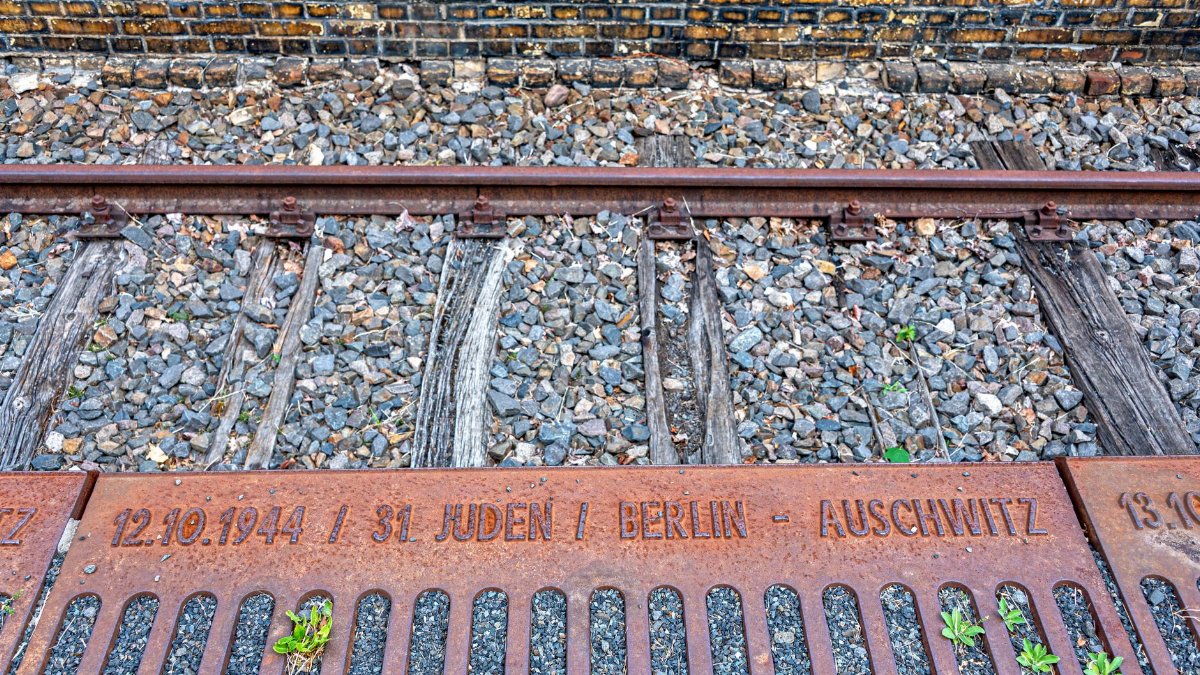
On a narrow street in Lüdenscheid, brass plates no bigger than a hand are set flush with the pavement, so that anyone walking there has to look down. In the weeks before a birthday that will close a full century, that small civic act has become a Holocaust survivor honor for Fred Behrend, the Voorhees, New Jersey resident whose early life began in the German town and whose later years were built in South Jersey after flight and loss.
A hometown that still has his name
Lüdenscheid sits in the hills of North Rhine Westphalia, a manufacturing city whose streets once held the addresses of Jewish families who thought of themselves as German before the state decided otherwise. Behrend left that world as a child. The town he left did not vanish from the map, and neither did the record of who had lived there. Local organizers, working in the tradition of the Stolpersteine project, plan to place plaques at sites tied to his family. The gesture is modest in size and large in meaning. It says the city knows the name, and that knowing is not the same as forgetting.
For readers in the United States, the geography can feel remote. Voorhees is a suburb of lawns, school calendars, and synagogue life, not a place people associate with German paving stones. The distance is the point. Exile does not erase the first address. It only moves the person who once used it.
What a century of survival looks like from here
Turning one hundred is already rare. Turning one hundred after the destruction of European Jewish life is rarer still. The cohort of people who can speak from direct memory of arrests, hiding, trains, and the sudden emptying of neighborhoods grows smaller each year. When one of them reaches a round birthday, communities on both sides of the Atlantic tend to reach for ceremony. Some of that ceremony is private: cake, photographs, children and grandchildren in a living room. Some of it is civic, and that is what Lüdenscheid is attempting.
Behrend built an American life after the war. Neighbors in Voorhees know him as a local elder, not as a symbol. That ordinariness matters. Holocaust memory often arrives through museums and films. It also arrives through a man who shops, attends services, and answers the phone. The honor in Germany does not replace that daily life. It adds a public sentence to a private biography.
How stumbling stones work
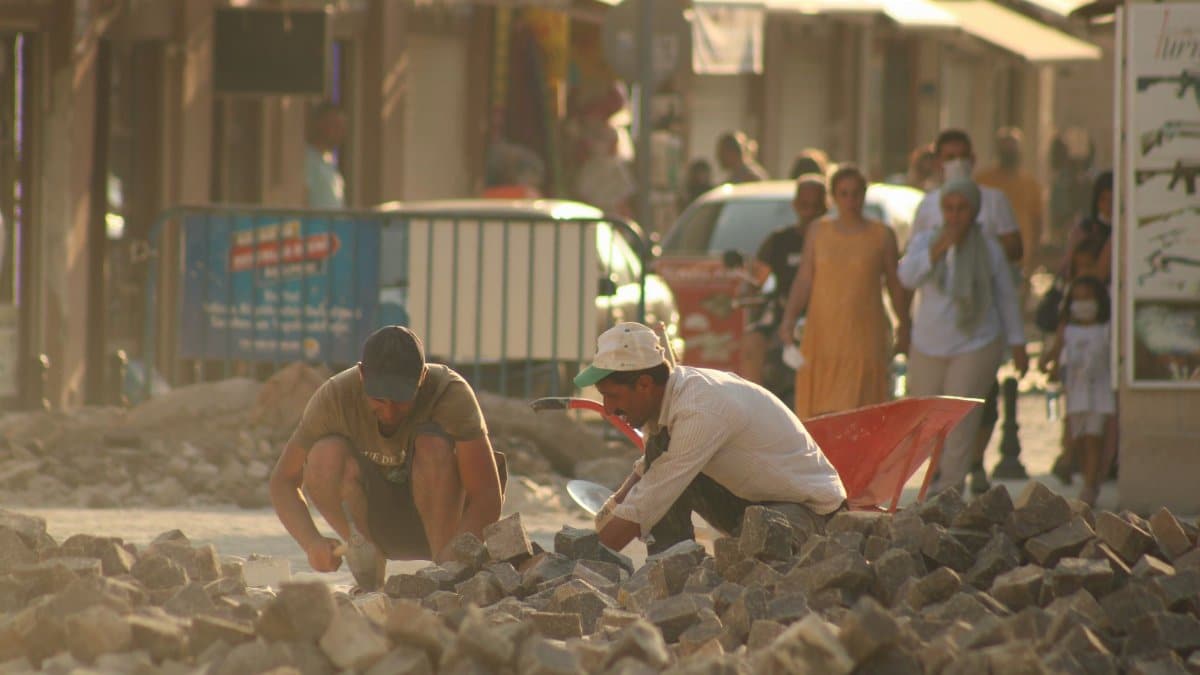
Stolpersteine, or stumbling stones, are the work of the German artist Günter Demnig, who began setting small brass memorials into sidewalks in the nineteen nineties. Each stone names a victim of Nazi persecution and marks a last chosen residence rather than a camp or a monument plaza. The design is deliberate. You do not climb steps to a statue. You nearly trip over a fact.
The stones are not gravestones in the legal sense, and they are not a full history. They are prompts. A name, a birth year, a fate, set where feet pass. Critics have argued about maintenance, about whether brass in a sidewalk can carry moral weight, and about who decides which names appear. Supporters answer that the alternative, a city with no trace at the door, is worse. For Behrend, the plaques function as a Holocaust survivor honor aimed at the living as much as at the dead, because he can still hear that his street remembers him.
Why place matters more than a stage
Large commemorations have their uses. They gather officials, choirs, and cameras. They also risk turning a person into a backdrop. A stone outside a former home does something narrower and, in some ways, harder. It ties honor to an address. It forces the present city to admit that the violence was not abstract and not elsewhere. It happened on this block, to this family, before the child who would become a New Jersey centenarian was sent away from it.
That specificity is a form of respect. It refuses the blur in which all suffering becomes one sad paragraph. Lüdenscheid is not honoring a generic survivor. It is honoring Fred Behrend, whose childhood coordinates can still be found on a map.
Voorhees and the second life

South Jersey has long been a landing place for families who rebuilt after Europe. Synagogues, survivor speakers in classrooms, and quiet kitchen table stories formed a local culture of memory that rarely makes national headlines. Behrend belongs to that culture. People who have heard him speak describe not a performance but a duty: the sense that if you were spared, you owe the names of those who were not.
A Holocaust survivor honor that happens an ocean away can still land in a New Jersey dining room. Family members hear that the town of origin is willing to say the name in public. Friends at synagogue hear that age has not made the story obsolete. Younger relatives, who know the war only through lessons, get a date they can point to: a hundredth birthday, a set of plaques, a street that refused to stay blank.
The German decision to look down

Germany’s memorial landscape is crowded. There are national sites in Berlin, documentation centers, school curricula, and legal bans on denial. Stolpersteine sit at the other end of the scale, parish by parish, building by building. Towns adopt them when local researchers, clergy, students, or descendants push the files into the open. The process is slow because it is personal. Someone has to confirm the address. Someone has to ask whether relatives want the stone. Someone has to stand in the street when the brass is set.
For Lüdenscheid, honoring Behrend at one hundred is also a statement about timing. Waiting until every witness is gone would be easier and poorer. Doing it while he can still be told is a choice to treat memory as a relationship, not only as an archive.
What children will read under their shoes

The strongest argument for the stones is pedagogical and almost physical. A child walking to school does not need a ticket to a museum. The plaque is simply there, in the weather, until someone stops and reads. Teachers in German towns often use nearby stones as a first lesson: this person lived here, this person was taken, this person did not come back, or, in a case like Behrend’s, this person lived and grew old far away.
That last version matters. Survival is not a happy ending that cancels the crime. It is evidence that the crime did not finish every life it touched. When students learn that the man named on their pavement is approaching one hundred in Voorhees, the history stops being only a list of murders. It becomes a life that continued, with American decades attached to a German childhood.
Honor is not the same as repair

No plaque returns a home, a parent, or a citizenship that was stripped away. No birthday speech balances a ledger. People who work in remembrance sometimes worry that ceremony flatters the present, letting a town feel absolved because it ordered brass and invited a guest. The worry is fair. Honor that costs nothing but a press release is thin.
The better version is narrower and more honest. It says: we know what was done here, we will not pave over the name, and we will say it while the person can still receive the words. That is a Holocaust survivor honor with limits, and the limits are part of its integrity. It does not pretend to heal. It refuses to look away.
A birthday shared across an ocean

Centenary celebrations usually gather the people who can travel. Some of Behrend’s circle will be in New Jersey. Some attention will be in Lüdenscheid, where the stones make the absence and the survival visible at once. The split is fitting. His life was split. One country formed him and then cast his family out. Another country let him grow old.
Journalists sometimes reach for the word closure. It rarely fits. What families describe instead is recognition. They want the first town to say the name correctly, in public, without euphemism. A hundredth birthday gives that wish a date. It does not end the story. It marks that the story still has a living subject.
After the stones are set
Brass tarnishes. Rain darkens it. Volunteers sometimes polish the plates so the letters stay readable, a small maintenance that doubles as ritual. In the months after the installation, most passersby will step over the plaques without stopping. A few will pause. That uneven attention is how public memory actually works. It is not a constant flame. It is a chance, repeated daily, to notice.
In Voorhees, the birthday will pass into photographs and phone calls. The historical fact will remain: a man who survived the attempt to erase his family reached one hundred, and the town he was forced to leave chose to mark the ground where that family once stood. Between those two places, the honor is not a spectacle. It is a sentence set in metal, short enough to read while standing still, and stubborn enough to stay after the guests go home.