
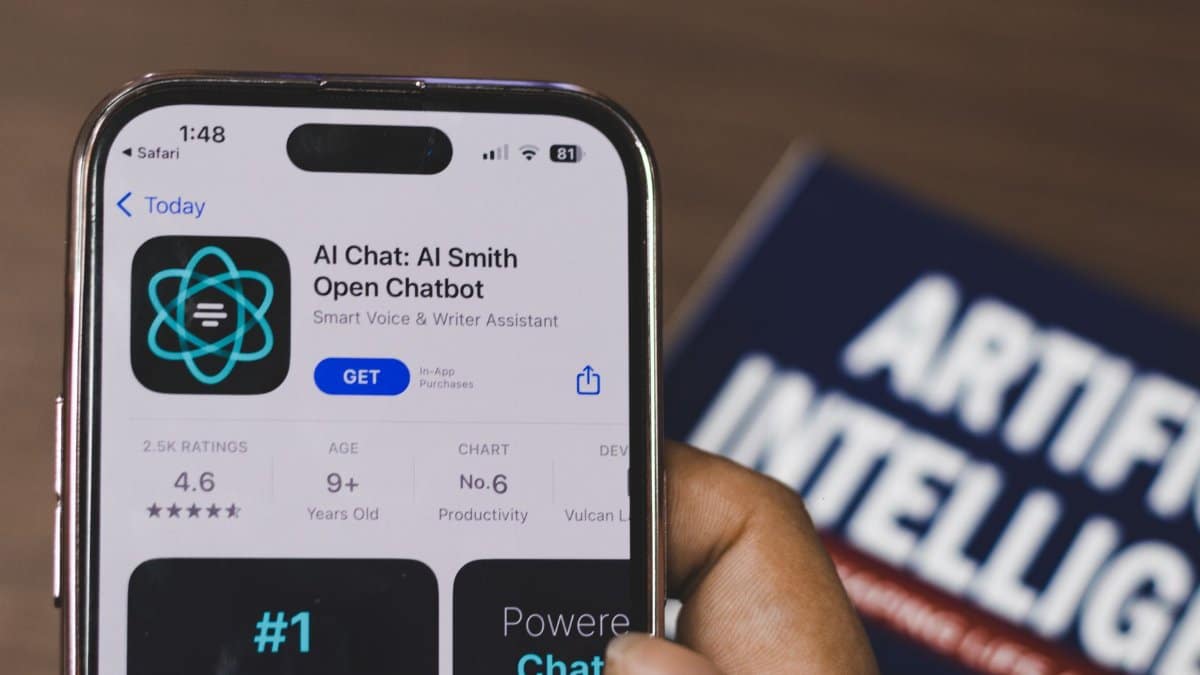
On a Tuesday afternoon in Berkeley, a teaching assistant watched half the room type the same prompt into a chat window before the professor had finished asking the question. The moment was ordinary, which is what made it unsettling. Across the University of California, that private habit is about to become official infrastructure. The UC OpenAI deal will put ChatGPT Edu and Codex in the hands of students and staff on all 10 campuses, at a reported cost of $1.2 million a year, even as faculty members ask the system to slow down and think harder about what it is buying.
What the agreement is said to cover

The outline is simple enough to fit on a single briefing slide. Students, faculty, and staff across the 10 campus system would gain access to education versions of OpenAI tools, including ChatGPT Edu and the coding assistant Codex. The price attached to that access, $1.2 million a year, is the figure now circulating in news accounts and campus conversations. For a public university system that educates hundreds of thousands of people, the number can look almost modest. That modesty is part of the political appeal. A tool already in widespread informal use would move inside an institutional account, with whatever protections, usage rules, and administrative controls the contract is supposed to provide.
University leaders tend to describe such arrangements as catching up with reality rather than inventing a new one. Students are not waiting for a committee to finish its white paper. They are already pasting problem sets, draft paragraphs, and lab notes into commercial chatbots on personal accounts. Bringing those practices onto a university platform is presented as a way to see them, govern them, and perhaps make them safer. Whether a contract can do that is the question faculty keep returning to, and it is not a small one.
A price that looks small until the context arrives

One point two million dollars is real money in a department that is cutting adjunct sections or delaying a lab renovation. It is also a rounding error beside the cost of running a research university, paying graduate instructors, or maintaining libraries that took a century to build. Both facts can be true at once. The danger is that a comparatively small line item gets treated as a minor administrative choice when the cultural effect may be large.
Public universities have learned this lesson with learning management systems, online proctoring, and textbook platforms. The first invoice is rarely the whole cost. Training, support, accessibility work, policy writing, and the staff time spent answering confused users all arrive later. So does the harder cost, the one that does not show up in a budget: a shift in what students believe a finished assignment is supposed to look like, and what instructors believe they can still ask them to do without a machine in the loop.
Supporters of the purchase will say the alternative is worse. If the university does not negotiate, students keep using consumer accounts with weaker privacy terms, and the institution has no standing to set rules. That argument has force. It does not, by itself, answer how the tool should be used in a writing seminar, a clinical rotation, or a first year calculus course where the struggle is the point of the exercise.
Why faculty are urging a pause

Faculty caution is easy to caricature as fear of the new. Some of it is that, and some of it is earned experience. Professors have watched previous waves of education technology promised as liberation and delivered as surveillance, busywork, or a vendor lock that outlasted the pedagogical fad. They have also watched their own students submit work that is fluent, confident, and empty of the reasoning the assignment was built to test.
The caution now being voiced is more specific than a general dislike of machines. It concerns authorship, assessment, and the quiet transfer of judgment from people to products. If a campus licenses a tool and then tells instructors to figure out integrity on their own, the institution has socialized the benefit and privatized the risk. Individual faculty members become the enforcement arm of a policy that was never really written. That is a familiar pattern, and it breeds resentment faster than any memo from a provost can repair.
There is also a research worry that does not get enough airtime in student facing announcements. Universities are not only classrooms. They are places where unpublished data, patient information, grant proposals, and early scientific ideas sit on laptops. A systemwide login does not magically make those materials safe to paste into a chatbot. Faculty who urge caution are often asking a plain question: who is responsible when someone treats a convenient box as a confidential colleague?
Students already live with these tools

Any honest account has to start from student practice, not from the fantasy of a campus that can opt out. For many undergraduates, a chatbot is already a tutor, a translator, a late night editor, and sometimes a shortcut that replaces the reading. Graduate students use similar tools to debug code, summarize papers, and draft the unloved parts of academic life, from email to literature tables. Staff use them to rewrite policy language and clean up spreadsheets. Pretending this is a future tense problem insults the people who have been doing it since the tools became free and fast.
That reality cuts in two directions. It weakens the case for prohibition, which students will route around with a personal phone. It also weakens the case for celebration. Widespread use is not the same as good use. A student who can produce a polished paragraph without being able to explain its claims has not been helped, even if the paragraph would have taken three more hours to write by hand. The university’s job is not to maximize output. It is to decide which kinds of struggle still belong to the student, and to say so in language clear enough to survive a Sunday night deadline.
What an education tier is supposed to change
Vendors sell education versions of consumer products by promising a cleaner bargain. Data from campus accounts, they say, will not train the public model. Administrators will see usage. Age and eligibility rules will be easier to enforce. The interface may look almost identical to the free product, which is both the selling point and the pedagogical trap. If the tool feels the same, users will treat it the same, including the habit of dropping sensitive text into the box because the box has always accepted it.
ChatGPT Edu, as described in the public conversation around this purchase, is meant to be that cleaner bargain for the University of California. Whether the contract language matches the marketing is something counsel, faculty senates, and privacy officers ought to read in full, not in a slide summary. Universities have signed software agreements before on the strength of a demo. The reading that matters is the one that specifies retention, subprocessors, breach notice, and what happens to campus content if the contract ends or the company changes its terms.
None of that is glamorous. It is also the part of the UC OpenAI deal that will matter most if something goes wrong. A low annual price does not buy the right to skip that reading.
Codex and the question of who writes the code
The inclusion of Codex, a coding assistant, deserves its own scrutiny. Computer science departments have been living with autocomplete that writes functions, not just variable names, for several years. Some instructors have redesigned courses so that students must explain, test, and modify generated code rather than pretend they typed every line. Others have narrowed assessments to in person work because take home problem sets became impossible to grade as evidence of skill.
A system license will intensify that split. Departments that have not yet rewritten their learning goals will feel pressure to do so quickly, and not only in computer science. Biology students write scripts. Economics students write scripts. Journalists in training scrape data. Once a coding assistant is an official campus tool, banning it in one class while requiring it in the next will look arbitrary unless the reasons are spelled out. Students are good at detecting arbitrary rules, and they are right to resent them.
The deeper issue is not cheating alone. It is whether graduates can still build, debug, and take responsibility for systems they did not wholly author. Employers will want that competence. So will the public, when the systems in question touch health records, benefits, or infrastructure. A university that licenses Codex without a serious conversation about responsibility is renting fluency and hoping competence comes along free.
Privacy is the quiet clause
Public universities hold a particular kind of trust. Students do not choose their campus software stack the way they choose an app. If the institution turns a tool on, many people will assume it has been vetted to a higher standard than a consumer download. That assumption is valuable, and it is easy to squander.
The questions are concrete. Will prompts be visible to instructors or administrators, and under what conditions? Will usage logs be retained long enough to investigate misconduct, and short enough to avoid becoming a permanent file on a student’s curiosity? Can a researcher opt out when a project involves human subjects? What happens to data if OpenAI is acquired, restructured, or pressed by a government for records? These are not hypothetical quibbles. They are the ordinary contents of a serious privacy review.
Faculty urging caution are not only protecting their own unpublished work. They are asking the university to keep a promise it makes every time a student fills out a form: that the institution will not be careless with what people disclose because a tool is convenient. Convenience has a strong lobby. Care usually has a committee. The committee needs time, and it needs the contract, not a press summary.
The race among campuses

The University of California is not deciding in a vacuum. Other universities have already announced partnerships with major model makers, sometimes with more fanfare than detail. State systems watch one another. If a rival campus offers official access and UC does not, students and parents hear a story about falling behind, whether or not that story is fair. Vendors understand this dynamic. Education sales often run on the fear of being the last prestigious name without a logo on the partnership page.
There is a counterpressure that gets less coverage. Faculty senates, unions, and student governments have begun to ask for sunset clauses, independent evaluation, and the right to walk away if the tool degrades teaching. A one year price can be a feature if it is truly a pilot, with criteria for renewal written down before the first login. It is a bug if it is a pilot in name only, renewed by inertia because unwinding accounts would be politically ugly.
I have sat in enough faculty meetings to know how that inertia works. A tool arrives as an experiment. A year later it is infrastructure. Nobody remembers voting for infrastructure. They remember a demonstration that looked impressive and a price that looked manageable. The UC OpenAI deal will be judged, in part, by whether anyone is willing to treat the first year as a real test rather than a soft launch of a permanent fact.
What caution can look like without a ban

Caution does not require a fantasy of prohibition. It requires choices that are specific enough to guide a Tuesday afternoon class. Instructors need permission, from their departments and from the center of the university, to define assignments where machine help is forbidden, required, or limited to named steps. Students need those rules before the work starts, not in an accusation after the grade is in. Disability services need a seat at the table, because some students use these tools as access, not as a shortcut, and a blunt ban can harm them.
Caution also means publishing what the university knows. How many people activated accounts. Which kinds of use are common. What privacy incidents, if any, occurred. What faculty tried in the classroom and what failed. A public university should be able to describe its own experiment in public language. If the only updates are vendor testimonials, the experiment has already been captured by its sponsor.
And caution means keeping a human standard for credit. A degree is a claim that a person can do certain things. If the claim becomes a claim about a person plus a subscription, the university should say that out loud and decide whether it still believes the claim. Most faculty, I suspect, still want the person in the sentence. They are not asking to smash the machines. They are asking not to be rushed into pretending the sentence has not changed.
The year this purchase will actually test

The next year will not settle the argument about artificial intelligence in higher education. It will settle a narrower and more useful question. Can a public system buy access for everyone, keep a measure of control over data and pedagogy, and still leave room for faculty and students to refuse the tool where refusal is the right lesson? If the answer is yes, the UC OpenAI deal may look, in retrospect, like a sober piece of administration. If the answer is no, the modest price will be remembered as the cost of skipping the argument.
Readers outside the academy should care about that result. The University of California trains teachers, nurses, engineers, lawyers, and public servants who will carry these habits into the rest of the state. What they learn about authorship and responsibility will not stay on campus. A contract can open an account. It cannot decide what the account is for. That decision still belongs to the people who teach, the people who study, and the public that pays for both, and it is not a decision a chatbot should be asked to draft.