
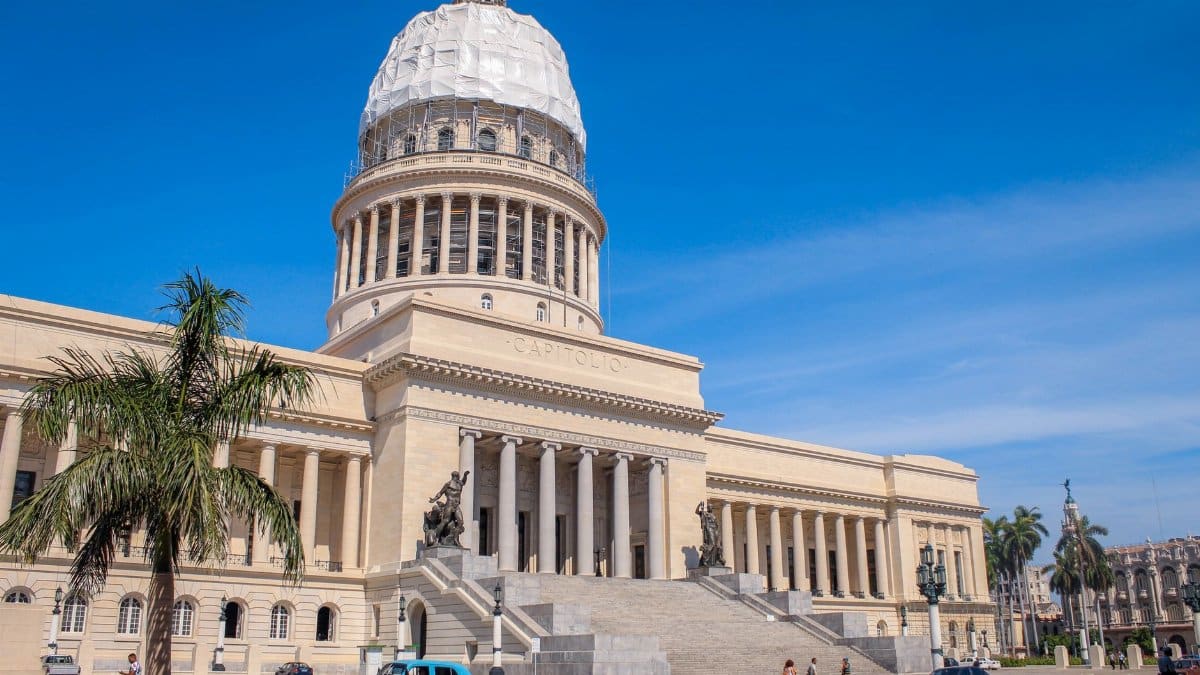
At a gate in Miami, a woman with a folder of conference papers watched the departure board and realized the flight she had booked months earlier no longer fit the rules she thought she understood. Friends in Havana had already rented a room and printed name tags. The change arrived not as a speech but as a Treasury notice, and it landed in the middle of ordinary plans. Cuba embargo travel limits have always sat inside a larger argument about pressure, engagement, and who pays the price when Washington shifts course.
What the September notice actually changed

The rules that took effect on September 30 redraw two lines that many Americans had treated as settled. Conference travel, once a recognized way for scholars, doctors, and business groups to meet counterparts on the island, is now barred under the tightened reading of the embargo. At the same time, Cuban entrepreneurs lose access to certain U.S. bank accounts that had let them receive payments, pay suppliers, and keep a toehold in the dollar economy.
Those two moves look technical. They are not. A conference is how a cardiologist compares notes, how an architect shows drawings, how a small importer finds a buyer. A bank account is how a private restaurant pays for imported parts or receives a wire from a relative who is also a customer. Close both doors and the embargo stops being an abstract statute and becomes a calendar cancellation and a frozen balance.
A policy with a long memory

The embargo is older than most of the people now arguing about it. Successive administrations have loosened and tightened the same statute, often within a single decade. Travel categories expanded under one president and contracted under the next. Banking permissions followed the same rhythm. What looks like a fresh crackdown is also a return to a familiar instrument: use licensing rules to shrink contact without passing a new law.
Supporters of the latest turn say the Cuban government has offered little reason for generosity. They point to political prisoners, a stalled private sector, and the way state firms still capture hard currency. Critics answer that punishing conferences and small accounts does not reach the officials who set policy. It reaches the people who were trying, however imperfectly, to operate outside the state payroll.
Why conference travel mattered more than tourism

Tourism to Cuba has long been restricted for Americans, with narrow exceptions that lawyers parse like tax code. Conference travel occupied a different moral shelf. It was not a beach week. It was a room with a projector, a translator, and a stack of papers. Universities used it. Medical societies used it. Faith groups used it when the topic was pastoral work rather than politics.
Barring that category does not stop every American from reaching the island. Family visits and other licensed paths remain part of the map, and those paths carry their own paperwork. What disappears is a channel that was public, scheduled, and easy to audit. Organizers could point to an agenda. Now they cannot point to a license that still exists. Cuba embargo travel limits, applied this way, trade a visible form of contact for a quieter one, or for none at all.
The banking door and the private stall

The account rule may prove more consequential than the travel rule. For several years, U.S. policy had tried to distinguish the Cuban state from Cubans trying to run small firms. Bank access was the practical expression of that distinction. Without it, an entrepreneur cannot easily invoice a U.S. client, hold dollars against inflation at home, or prove to a supplier that payment will clear.
Miami bankers who handled these accounts describe a narrow business, not a flood of capital. The sums were often modest. The symbolism was not. A policy that says private initiative is welcome, then closes the account that makes initiative possible, sends a mixed signal. Cuban officials can cite the closure as evidence that Washington was never serious. American officials can cite Havana’s own restrictions as the prior offense. The person in the middle still cannot cash the check.
Families, churches, and the people who are not on the agenda

Not every traveler is a conference delegate, and not every dollar is a business wire. Cuban Americans still move between the two shores with remittances, medicine, and the ordinary logistics of kinship. Churches in Florida and New Jersey sponsor visits that are pastoral rather than commercial. Those streams are not the direct target of the September rules, yet they feel the chill. When Washington tightens one category, airlines, banks, and church boards reread every category.
A pastor in Hialeah put it plainly in a conversation after the notice: people hear embargo and assume the whole relationship has been switched off. That is not what the text says. It is what fear does with a text. The result is fewer tickets bought, fewer invitations sent, and more families waiting to see whether the next notice will reach them too.
Havana’s read of the same paragraph
Cuban state media framed the Treasury action as confirmation of an old thesis: the United States wants isolation, not reform. That framing is convenient. It lets officials blame external rules for internal shortages and for the slow death of small workshops that never had reliable inputs to begin with. It also contains a grain that American policymakers should not ignore. If the stated goal is to weaken the state’s grip and widen space for independent work, measures that hit independent work first are hard to defend on their own logic.
Independent Cuban journalists, writing from the island and from exile, have been less interested in the thesis than in the practical effect. A canceled medical meeting means a protocol that is not shared. A closed account means a carpenter who cannot buy a blade. Those are small facts. Foreign policy is often judged by small facts accumulated over years.
Miami’s divided living room

South Florida does not speak with one voice on this, and any article that pretends otherwise is doing publicity, not reporting. Some Cuban American voters welcome tighter rules as moral clarity after years of what they see as indulgence. Others, including younger professionals with cousins still on the island, see the conference ban and the account closures as theater that leaves the regime intact and the cousin poorer.
That split is not new, but the September effective date gave it a fresh occasion. Radio hosts replayed the notice. Lawyers fielded calls from clients who had already paid deposits. The political class in both parties watched the reaction and filed it for later. Cuba remains one of the few foreign issues that can still move a precinct in Florida, which is why technical rules keep acquiring campaign meaning they were not written to carry.
What airlines and universities do next

Carriers do not lobby in press releases about embargo theology. They look at load factors. If conference groups vanish from manifests, routes that were already thin become thinner. Universities face a different calculation. A research office that once approved a Havana panel now has to tell faculty the category is closed. Some will reroute collaboration through third countries. Some will stop. Neither outcome is what a licensing lawyer would call a loophole so much as a relocation of effort, with more cost and less transparency.
Third country meetings are not a scandal. They are a predictable response to Cuba embargo travel limits that close a direct door. The scholarly conversation continues in Mexico City or Madrid, minus the Cuban participants who cannot get visas or cannot afford the ticket. The Americans who can still travel feel the absence in the empty chairs, not in the statute.
Banks, compliance, and the fear of a fine

Even before the new text, many U.S. banks wanted nothing to do with Cuba. Compliance departments price risk in fines and headlines, not in the hopes of a restaurant owner in Trinidad. The September rules give those departments a clearer no. A clearer no is efficient. It is also blunt. It does not distinguish a state trading company from a person selling jam out of a home kitchen, because the operational instruction is simply to stop.
European and Canadian banks have their own caution, shaped by U.S. secondary pressure over many years. When American accounts close, foreign accounts do not automatically open. The entrepreneur is left with cash, relatives, and informal channels that are harder to tax, harder to police, and easier for the state to portray as suspect. A policy aimed at transparency can, by accident, produce the opposite.
The argument over leverage

Embargo defenders describe leverage. They say limited contact denies the government tourists, fees, and the legitimacy of American presence. They say banking access, even for private firms, leaks into state coffers through taxes, forced partnerships, and currency rules written in Havana. On that view, the September tightening is a correction, not a cruelty.
The opposing argument is about targets. If leverage only works when it changes elite incentives, then measures that mainly inconvenience academics and stall owners are misaimed. They generate speeches in Havana and applause in some parts of Miami, and they leave the security services, the military conglomerates, and the political prisons where they were. Both arguments have been made, with variations, since the 1990s. The new rules do not settle them. They reopen them with fresh paperwork.
How to read a Federal Register page

Readers who want the primary text should go to the Treasury Department’s Office of Foreign Assets Control and read the Cuba sanctions materials rather than rely on a headline. The notice is dry. It defines categories, effective dates, and prohibited services. It does not narrate a family or a clinic. Journalism has to supply that narration without inventing numbers the notice does not contain.
What the page does establish is sequence. A permission existed. A permission was withdrawn. The withdrawal covers conference travel and certain financial services tied to Cuban entrepreneurship. Everything else in the public debate is interpretation: whether the withdrawal serves democracy, whether it serves Florida politics, whether it serves anyone on the island who is not in government. Interpretation is allowed. Pretending the page says more than it says is not.
Faith communities and a category that does not fit
Because this subject keeps arriving in congregations as well as in committee rooms, it is worth saying what the rules are not. They are not a sermon. They do not instruct a church on charity, and they do not settle the moral question of whether contact is complicity. Pastors who have led groups for years now sit with lawyers and ask which remaining category, if any, covers a visit to a sister parish. Some visits will continue under family or other authorizations. Some will not.
The spiritual language around Cuba has always been thick: exodus, promised return, the duty to the neighbor who stayed. Policy language is thin on purpose. When the two meet, people feel whiplash. A notice about bank accounts does not answer a prayer, and it should not be asked to. It does answer a practical question, and the answer, as of September 30, is narrower than it was in August.
What comes after the effective date

Administrations change, and Cuba rules have changed with them. Nothing in the current text promises permanence. Nothing in recent history promises stability either. Advocates on both sides are already preparing the next memo: restore conference travel, restore accounts, tighten further, or shift pressure toward targeted sanctions on specific officials rather than on categories of contact.
Until that memo becomes a rule, the operative facts are the ones in force. Americans who planned to attend meetings in Cuba cannot treat those meetings as licensed. Cuban entrepreneurs who relied on U.S. accounts cannot treat those accounts as available. Families and congregations will keep testing the edges of what remains. Cuba embargo travel limits, in this latest form, are less a wall than a set of closed gates, and the people who feel them first are not the ones who write the notices.
A narrower gate, a familiar quarrel

The quarrel will outlast the news cycle. It always has. What the September rules add is specificity. They name conference travel. They name bank access for people Washington once called the private sector it hoped to grow. Readers can decide whether that specificity is strategy or habit. They should decide with the text in hand, and with a clear eye for who loses a ticket, who loses an account, and who loses nothing at all.
For now the departure board in Miami is a little quieter on certain days, and a workshop in Cuba is a little more dependent on cash that never quite becomes a formal payment. That is not the whole embargo. It is the part that changed at the end of September, and it is enough to reorder plans that had seemed, for a few years, almost ordinary.