

In the quiet machinery of federal budgeting, a cancellation can matter as much as an appropriation. Late in the fiscal year, the White House moved to cancel nearly one billion dollars that Congress had already approved for immigrant services and diversity related programs. The step, described across Washington as Trump pocket rescission cuts, did not arrive as a dramatic floor fight. It arrived as a timing decision, the kind of executive choice that can make money expire before agencies ever write the checks.
A power most voters never see

Pocket rescission is not a slogan invented for a rally. It is a budget practice with a long and contentious history. Under the framework Congress wrote after the Nixon years, a president who wants to cancel spending is supposed to send a special message and give lawmakers a chance to insist that the money be spent. A pocket rescission tries to shrink that chance by waiting until so little time remains in the fiscal year that the funds lapse even if Congress objects.
The appeal for any White House is obvious. Appropriated money is a promise agencies treat as binding. If that promise can be voided by the calendar, the executive branch gains a lever that does not require sixty votes in the Senate or a signature fight on the House floor. Critics call that an end run around the power of the purse. Supporters call it a last tool against spending they regard as wasteful or ideological.
What the White House says it canceled
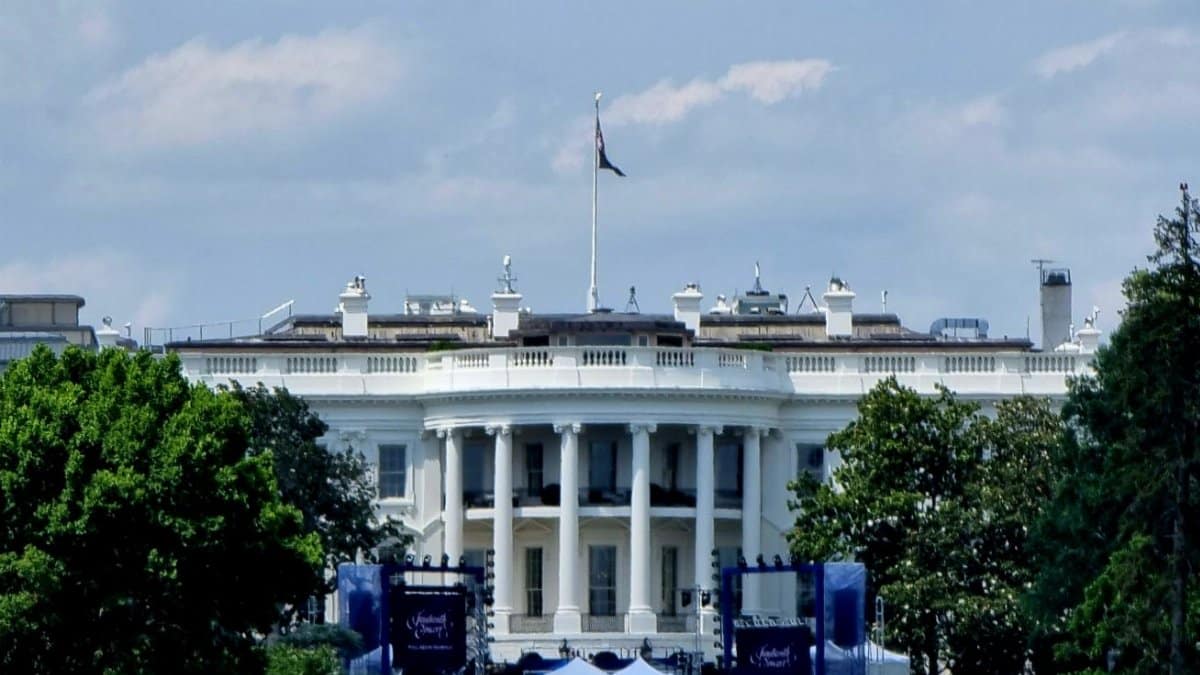
Reporting on the move, including an account in the Chicago Tribune, put the total near one billion dollars and tied the cancellations to immigrant programs and diversity efforts that had already cleared Congress. That framing matters. These were not proposed cuts in a future budget request. They were funds lawmakers had voted to provide, often after negotiations that traded one priority for another.
Immigrant related accounts can cover legal orientation, refugee resettlement support, and grants that help cities absorb new arrivals. Diversity related accounts are broader still, ranging from workplace equity programs inside agencies to community grants that advocates say expand access to federal services. Bundling them in one cancellation invites a single political story. The operational reality is a stack of separate line items, each with its own grantees, timelines, and statutory language.
Why the calendar does the real work

Federal fiscal years end on September 30. Money that is available only for that year generally cannot be spent after the clock runs out, unless Congress has written a longer period of availability into the law. A rescission message sent with days or weeks left does not need to win on the merits if delay itself is the strategy. Hearings take time. Staff memos take time. A conference between the chambers takes time. Expiration does not wait for any of them.
That is why budget lawyers obsess over dates the way campaign lawyers obsess over filing deadlines. A message transmitted in July leaves room for Congress to reject it and for agencies to obligate funds. A message transmitted in the final stretch can function as a veto that never has to survive a veto override. The phrase Trump pocket rescission cuts captures both the actor and the method: not a new statute, but a use of residual authority against money already on the books.
The statute that was meant to prevent this

After President Richard Nixon refused to spend money Congress had approved, lawmakers passed the Impoundment Control Act of 1974. The law distinguishes a deferral, a temporary delay, from a rescission, a proposed permanent cancellation. For rescissions, the president must send a special message. Funds may be withheld for a limited period while Congress considers the request. If Congress does not pass a rescission bill, the money is supposed to be released.
The Government Accountability Office has long treated late year withholding that is designed to let funds expire as inconsistent with that design. Its public explanations of the Impoundment Control Act, available through the GAO appropriations law pages at https://www.gao.gov/legal/appropriations-law/impoundment-control-act, describe the narrow path a president must walk. Presidents of both parties have tested the edges. None of those tests erased the basic claim Congress made in 1974: appropriation is a law, not a suggestion.
Who feels a cancellation first

A billion dollars is an abstraction until it hits a grant cycle. Nonprofit legal clinics plan hiring against expected federal support. School districts budget interpreters. Local health departments schedule outreach they cannot fund from property taxes alone. When an account is frozen and then lapses, the first people to notice are not members of Congress. They are program managers who must tell staff that a contract will not be signed.
Diversity programs inside agencies face a different kind of disruption. Training contracts, data collection, and small offices built to monitor fair access can be stood down quickly because they often lack a large constituency outside Washington. Immigrant services tend to have louder local advocates, which is why fights over those accounts spill into city halls and church basements as well as committee rooms. The political coalition defending the money is rarely the same coalition that appropriated it months earlier.
Congress and the habit of waiting

Lawmakers are not powerless on paper. They can pass a bill rejecting the rescission, add language in the next spending measure that restores the accounts, or dare the administration in court. In practice, the chamber that already struggled to pass the original bill may not reunite in time. Party leaders calculate whether a fight over these particular programs helps or hurts them with voters who never read an appropriations table.
There is also a structural temptation to look away. If the president cancels spending your party dislikes, silence is easy. If the same tool is later used against a program you cherish, the precedent is already set. That is the oldest bargain in separation of powers fights, and it rarely looks like a bargain while the other side is holding the pen. The Trump pocket rescission cuts will be cited, fairly or not, the next time any administration tries a late year cancellation.
Courts move slower than fiscal years

Litigation is the obvious reply, and it is a poor match for a lapsing account. A plaintiff must show standing, which means a concrete injury, not a general outrage at executive power. Grantees who lost expected funds have a clearer path than members of Congress, whom courts have often told to fight in the political arena rather than the courtroom. Even a strong case can take months. By then the fiscal year is over and the money is gone. A judge can scold an agency. A judge cannot usually reprint expired budget authority.
That mismatch is the quiet genius, or the quiet danger, of the tactic. The legal question may still be live when the practical question is already closed. Later opinions can discipline the next budget cycle. They cannot reopen the one that just ended. Advocates who care about these programs therefore spend as much energy on the next appropriation as on the last lawsuit.
The argument from waste and the argument from law

Defenders of the cancellation will say some of the programs were poorly measured, duplicative, or aimed at goals a new administration rejects. They will point to reports of slow obligation, unused balances, or grants whose outcomes are hard to defend in a town hall. Those critiques can be fair. Federal grant making is uneven, and diversity language has sometimes papered over thin evidence of results. Voters are entitled to ask what a dollar bought.
The legal argument does not depend on loving every grant. It depends on who gets to decide. If Congress funded a program after open debate, the remedy for a bad program is a new vote, not a clock. If presidents may pocket any account they dislike in the final weeks, appropriations become provisional. That is a larger change than any single diversity office or resettlement contract. It rewrites the deal between Article I and Article II without a constitutional amendment and without a clear new statute.
How the phrase travels outside Washington
Most readers will never memorize the Impoundment Control Act. They will hear a simpler version: the president took back money for immigrants and for diversity. That version is politically potent because it collapses procedure into purpose. Supporters hear discipline. Opponents hear targeting. Both can be talking past the mechanic who actually moved the funds, a career budget officer executing a policy choice made far above the agency.
Journalists have a duty to keep the mechanic visible. Trump pocket rescission cuts are not the same thing as a failed amendment, a government shutdown, or a regulation withdrawn after public comment. Each of those has its own rules and its own victims. Mixing them into one story of presidential will makes for a cleaner headline and a worse civics lesson. The nearly one billion dollars at issue here sits inside a specific legal box, and the box is the story as much as the dollars.
What the next spending bills will reveal

The sequel is already drafted in committee binders. If Congress restores the accounts with explicit language, multi year availability, and deadlines that force obligation, it will have answered the pocket tactic with drafting rather than speeches. If it lets the cancellations stand and trims the same programs in the next cycle, it will have ratified the outcome even while complaining about the method. Watch the footnotes. The fight often hides there, in a phrase about when funds remain available and who may transfer them.
Agencies, meanwhile, will behave as agencies always do after a scare. They will obligate earlier, write tighter grant calendars, and ask lawyers whether a pause is a deferral or something worse. Grantees will diversify funding, which is prudent and also a quiet privatization of work Congress once chose to fund. None of that requires a prediction about the next election. It follows from the incentive the calendar just taught everyone in the process.
A small word for a large shift

Pocket rescission sounds minor, almost clerical, like a note slipped into a jacket. The sums are not minor, and neither is the principle. Nearly one billion dollars in approved spending for immigrant and diversity programs can be debated on the merits in any honest legislature. Using the dying weeks of a fiscal year to make that debate irrelevant is a different claim about American government. It says the last actor to touch the money, not the branch that appropriated it, decides whether the promise holds.
Readers do not need to admire every canceled grant to see the stake. They need to see that Trump pocket rescission cuts, if they stick, will not stay attached to one president or one set of programs. Tools this effective get inherited. The question for Congress is whether it still means what it voted when it voted, or whether September can unwrite the rest of the year.