
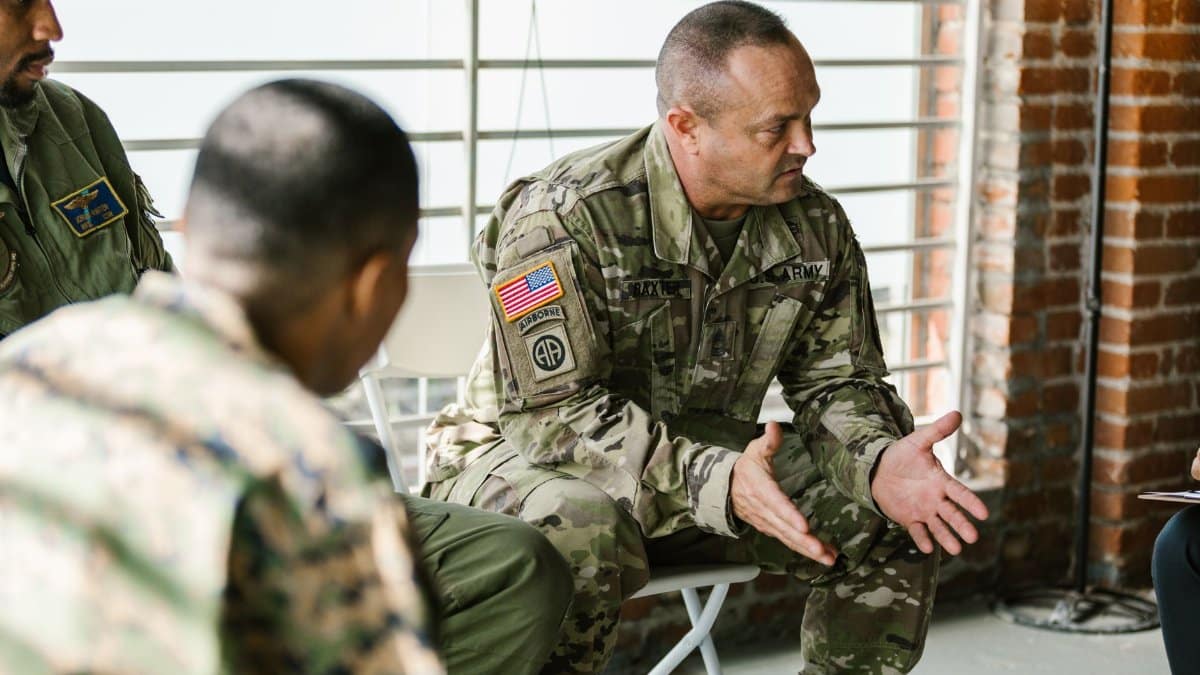
On a weeknight in a veterans hall in Nassau County, the conversation after the meeting was not about parades or benefits forms. It was about whether Washington should hurry a class of medicines that some former service members credit with pulling them out of years of despair, and that others regard as a gamble dressed up as compassion. The phrase moving through those rooms, and through clinics from Huntington to Riverhead, is psychedelic treatments veterans have asked federal agencies to judge with more speed and more care at the same time. An executive order associated with President Trump would press reviewers to move faster. On Long Island, that pressure has not produced a single answer.
What the order is pressing agencies to change

The order, as described by people who have read the directive and by advocates who have been briefed on it, tells health agencies to shorten the path from study to decision for certain psychedelic medicines aimed at severe mental distress, especially among people who served. It does not, by itself, put a drug on a pharmacy shelf. It tells reviewers to treat delay as a problem and to coordinate work that often sits in separate offices for months. Supporters hear urgency. Skeptics hear a political calendar leaning on a scientific one.
That distinction matters. A faster review can still end in a refusal. A slower review can still end in approval. What changes is the temperature around the file: more meetings, more public attention, more chance that incomplete data will be asked to carry a national promise. For families who have buried someone after a long fight with trauma, temperature is not an abstract word.
Why former service members are listening so closely

Standard care for post traumatic stress and treatment resistant depression has saved many lives and failed many others. Talk therapy, antidepressants, and residential programs remain the backbone of care inside and outside the Department of Veterans Affairs. They also leave a visible remainder: people who have tried the menu and still cannot sleep, work, or stay in a marriage. Into that remainder have come clinics, retreats, and research protocols using substances that were, for decades, almost entirely outside legitimate medicine.
The interest is not fashion alone. It is exhaustion. A former Marine in his fifties does not usually arrive at this subject because a podcast told him to. He arrives because the prescriptions made him numb and the nightmares stayed. When psychedelic treatments veterans describe in support groups sound like the first intervention that reached the memory itself, politicians notice. So do regulators, who are paid to notice risk as well as relief.
A split that does not follow party lines

Long Island is a useful map for the argument because it holds large veteran communities, dense medical systems, and a politics that does not sort neatly into coastal stereotype. In conversations with advocates, clinicians, and family members across the Island, the divide is less Republican against Democrat than hurried hope against disciplined caution. Some of the most impatient voices voted for Trump and want the order treated as a rescue. Some of the most cautious voices voted the same way and worry that a rushed blessing will stain a field that still needs ordinary proof.
Opponents of speed are not, in the main, opponents of research. They want trials that can survive a hard look: clear diagnoses, comparison groups, long follow up, and a plain account of bad outcomes. They have watched other promising psychiatric ideas crest and recede. They do not want their neighbors to become the uncontrolled experiment that fills the gap while papers are still being written.
Clinicians who see delay as its own harm

Physicians who favor a faster federal look argue that the status quo already experiments on people, only without consent forms that name the stakes. A veteran who cannot get into a trial may seek an unregulated guide, a foreign retreat, or a street product with no dose and no aftercare. In that telling, delay does not equal safety. It equals a shadow market. A supervised protocol, even one still under review, looks to them like the lesser danger.
Those clinicians also describe something quieter than miracle language. A session is not a pill in a bottle. It is preparation, a long monitored experience, and integration afterward, often with a therapist who stays in the room or on call. If agencies fast track a medicine without fast tracking the workforce that knows how to hold it, Long Island could end up with a headline approval and too few trained chairs. That is a practical objection, not a moral one, and it comes from people who want the treatments to exist.
Families who want the brakes left on

Other families hear the same stories and reach the opposite conclusion. They have sat with a son whose anxiety spiked after an unsupervised experience, or with a spouse whose brief lift collapsed into a darker month. They do not deny that some people improve. They deny that improvement in a small, carefully tended group predicts what happens when a national system scales the idea to every clinic willing to advertise it.
Their questions are specific. Who screens out psychosis risk. Who stays with the patient when the session ends and the ordinary week begins. Who pays when insurance balks. Who is liable if a fast review misses a harm that shows up only after thousands of exposures. These are not talking points borrowed from a culture war. They are the questions a spouse asks at a kitchen table in Massapequa or Shirley when the alternative is another year of waiting and another year of risk.
What a review can honestly promise

A federal review can promise process. It can demand manufacturing standards, adverse event reporting, and a label that says what is known and what is not. It cannot promise that every veteran who walks in broken will walk out repaired. Psychiatry has never been able to make that promise, and psychedelic medicine will not be the exception that marketing departments want.
The honest version of speed is narrower. Reviewers can refuse to let files sit unread. They can require sponsors to answer safety questions on a clock. They can coordinate with veterans health systems so that a decision, yes or no, reaches the people who would actually deliver care. That is different from declaring a cultural victory. It is also more useful.
The science without the halo

Public discussion often collapses several drugs into one mood. Psilocybin, MDMA, ketamine, and older compounds do not share a single mechanism, a single risk profile, or a single evidence base. Some already sit inside accepted medical use under tight rules. Others remain investigational. Treating them as a single salvation, or a single menace, is how both camps lose the plot.
What responsible clinicians tend to agree on is modest. Set and setting matter. Expectation matters. Trauma history matters. A substance that opens memory can open the wrong memory if no one is trained to stay with it. None of that requires mysticism, and none of it requires scorn. It requires the same boredom that good medicine has always required: protocols, consent, and the willingness to publish failures alongside wins.
Money, geography, and who gets the chair

If reviews move quickly and a product clears them, Long Island will still have to answer who is in the room. Private clinics in wealthier towns can hire staff and charge cash. A veteran in a farther reach of Suffolk County may face a drive, a wait list, and a copay that makes the approval theoretical. Equity is not a side essay. It is the test of whether psychedelic treatments veterans are promised in Washington survive contact with rent, transit, and staffing.
There is also the question of substitute care. A system that funds a high profile session and starves ordinary therapy, housing help, and addiction treatment will not have modernized mental health. It will have added a costly room to a building that still leaks. Advocates who want both the new tools and the old ones are asking budget writers to resist the temptation to treat one line item as a moral alibi for cutting another.
Politics will not sit quietly outside the clinic

An executive order with a president’s name on it will be read as a campaign document even when the text is procedural. That is unavoidable, and it is a risk to the patients. If support becomes a loyalty test, researchers who raise a safety flag will be cast as enemies. If opposition becomes a loyalty test, families who report real relief will be cast as dupes. Either posture makes the data harder to trust, because people stop saying what happened and start saying what their side needs.
Long Island has some practice with this kind of noise. Local debates over opioids, over hospital closures, over who gets a specialty bed, have already taught residents that a press conference is not a treatment plan. The useful politicians in this fight will be the ones willing to claim credit for a careful no as readily as for a careful yes.
A narrower hope than the slogan

I have sat in enough community meetings to distrust both the miracle story and the panic story. What I trust is the veteran who can describe, without theater, what changed and what did not. Some of those accounts are staggering. Some are disappointing. A policy worthy of them will make room for both, and will not launder either into a talking point.
The order can still do good if agencies treat speed as a duty to decide, not a duty to approve. Sponsors can still do good if they publish the messy results. Clinics can still do good if they refuse patients they cannot safely hold. None of that is as stirring as a promise to end an epidemic of suffering by decree. It is closer to how medicine actually moves.
What Long Island can watch for next

Residents who want a reality check rather than a rally can watch a few concrete signs. Do agencies publish timelines that name the evidence they still lack. Do veterans health systems say where, if anywhere, a protocol could be delivered on the Island. Do training standards appear before advertisements do. Do independent clinicians, not only sponsors, get a hearing when they describe harms.
Those signs will tell more than another round of absolutes. The people arguing in church basements and VFW halls are not divided because they care different amounts. They are divided because they have seen different failures. One group has watched bureaucracy outlast a life. The other has watched enthusiasm outrun a safeguard. A serious government can respect both memories without pretending they cancel out.
The decision that still belongs to patients

Whatever Washington clocks start running, the choice in front of a given veteran remains personal and medical, made with a clinician who knows the history and the alternatives. No op ed, and no executive order, can take that choice or make it safe by rhetoric. The fairest outcome of this fight is not a victory lap for either camp on Long Island. It is a record clear enough that a person in pain can see the benefit, the risk, and the gaps, and can decide without being drafted into someone else’s proof.
Until that record exists, the argument will keep its heat. Psychedelic treatments veterans are asking for deserve neither a shrug nor a coronation. They deserve the unglamorous work of review, the honesty to stop when the data say stop, and the courage to proceed when the data, not the slogan, say the wait has already cost enough.