
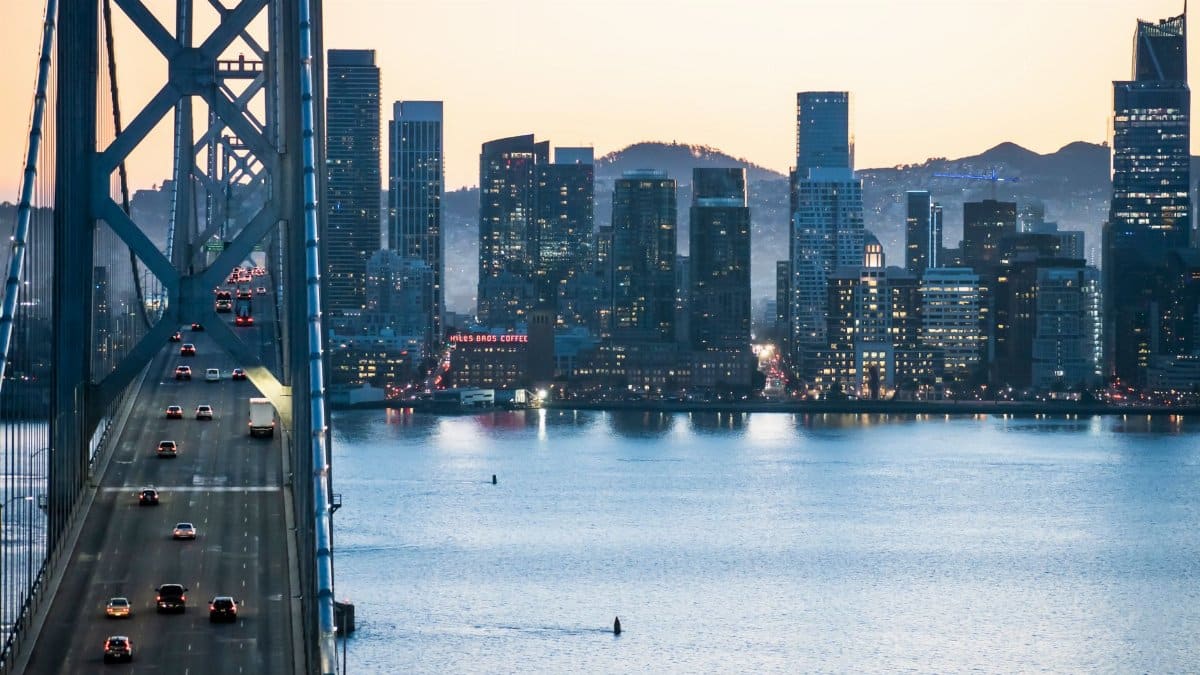
Before the sun clears the East Bay hills, the approach to the Bay Bridge is already a lesson in patience. Lanes compress, radios murmur, and the span ahead looks shorter than the time required to cross it. Commuters have learned to pad their mornings. Planners are now asking them to imagine something worse. In a warning reported by the San Francisco Chronicle, the research group SPUR says that if voters turn down November transit measures, peak trips on the bridge could run past an hour. That prospect has given new urgency to the debate over a Bay Bridge transit tax, a levy pitched as the price of keeping trains and buses frequent enough that driving does not become the only rational choice.
A familiar crossing with a sharper warning

The bridge has always been a bottleneck with a view. It carries office workers, hospital staff, students, and delivery drivers between cities that function as one labor market and two political worlds. On a good morning the delay is an annoyance. On a bad morning it rearranges childcare, clinic appointments, and the first meeting of the day. SPUR’s point, as described in the Chronicle account, is that the bad morning could become the normal one if transit service shrinks and former riders move into cars.
The phrase planners reach for is a death spiral, though the mechanics are plain enough without the drama. Cut frequency, and waiting feels longer. Longer waits push people toward driving. More driving slows the bridge. A slower bridge makes the remaining bus trip less reliable, which pushes still more people into cars. The model does not require a disaster. It requires a series of ordinary decisions, each of them defensible in a budget hearing, adding up to a crossing that takes more than twice as long.
What more than double actually means
An extra ten minutes can be absorbed. An extra half hour cannot, at least not without cost. If peak bridge trips stretch past an hour, the loss is not abstract congestion. It is a parent missing the school pickup window, a contractor arriving late to a job site in SoMa, a nurse starting a shift already spent. Employers along the peninsula and in downtown San Francisco have spent years trying to coax people back to offices. A bridge that routinely consumes a full hour at the peak works against that effort more effectively than any memo about hybrid schedules.
Freight feels it too, though less visibly. Vans timed to restaurant deliveries and hardware runs do not have the luxury of leaving at 5 a.m. forever. When the peak widens, the shoulder hours fill in. What looks like a commuter problem becomes a regional reliability problem, the kind that never makes a single headline and still shows up in prices.
Why November sits at the center

Transit agencies in the region are not imagining a surplus. Federal relief that carried them through the pandemic years is gone. Fare revenue has not returned to the old pattern, because the old pattern of five office days has not returned either. BART, Muni, AC Transit, and the ferry system each face their own arithmetic, but the bridge does not care which agency balance sheet fails first. It only registers the vehicles that show up when a train is cut or a bus no longer comes often enough to trust.
That is the context for a Bay Bridge transit tax. Supporters describe dedicated funding as the alternative to service cuts deep enough to change how people cross the bay. Opponents hear another regional ask in a state where housing, insurance, and groceries already dominate kitchen table talk. Both descriptions can be true at once. The November ballot is where those descriptions stop being arguments and become a count.
The riders who would leave first

Not every transit passenger is equally attached to the system. Some have no car and will endure worse service because they must. Others own a car and use the train because it is faster, cheaper, or less stressful than the bridge. That second group is the one the model worries about. They are also the group whose departure does the most damage to everyone else, including people who never board a bus.
A crowded train is a political problem. An empty train is a fiscal one. The dangerous zone is the middle, where service is just unreliable enough that choice riders defect and just frequent enough that agencies cannot yet claim they have nothing left to cut. Rejecting a Bay Bridge transit tax would not empty the platforms overnight. It would move the region toward that middle zone and then, if the spiral holds, past it.
Time as a quiet levy of its own

Taxes are visible. Delay is not, until you add it up. An hour on the bridge, if it becomes typical rather than exceptional, is a tax paid in minutes, fuel, and attention. It is regressive in a peculiar way. People who can shift their hours, work from home, or pay for a faster option slip out of the worst of it. People whose shifts are fixed, whose jobs require a body in a room, and whose pay does not cover a casual rideshare sit in it.
Economists like to convert delay into dollars, and those conversions are always a little theatrical. Still, the direction is not in dispute. Time stuck in a queue is time not spent on paid work, rest, or care. If SPUR is right that rejection of the November measures could more than double peak delays, the household bill does not arrive from a tax collector. It arrives as a later dinner and a shorter evening.
East Bay mornings, San Francisco evenings
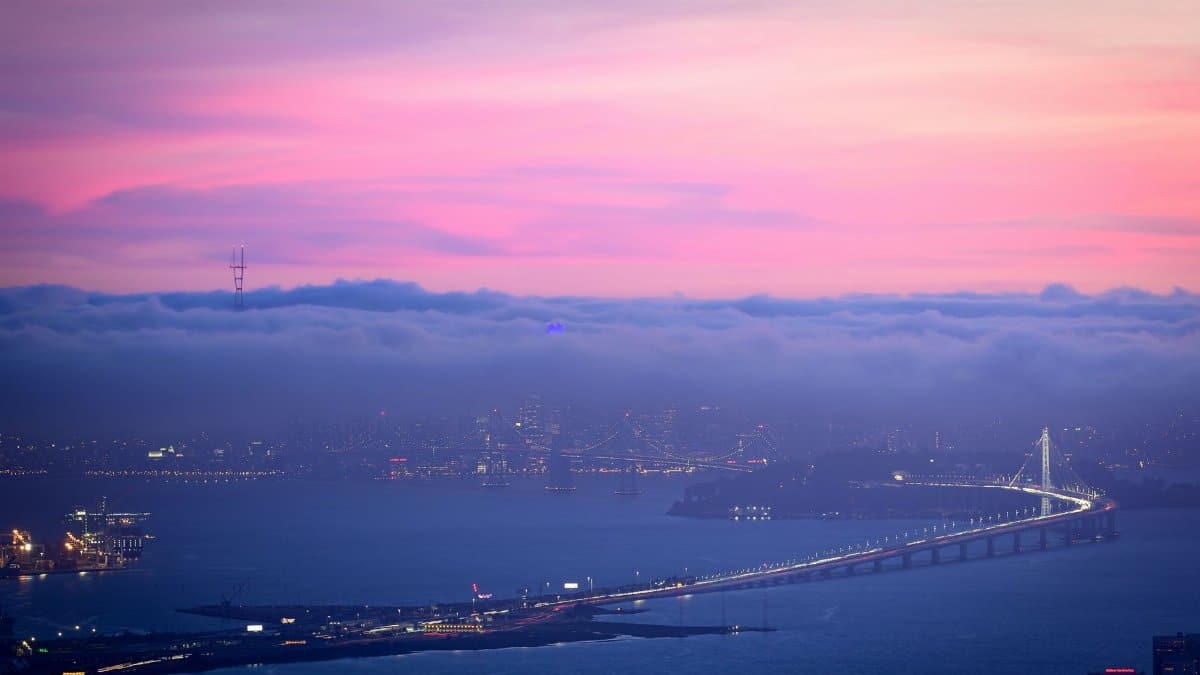
The burden is not evenly shared across the span. Morning traffic piles up on the Oakland side, in neighborhoods that already live with freeways, port trucks, and the long memory of planning decisions made somewhere else. Evening traffic reverses the insult. A funding debate framed only as a San Francisco rescue will miss why the bridge matters to Richmond, Alameda, and the hills above Hayward. Those commuters are not guests on someone else’s road. They are half the reason the road exists.
Any honest pitch for new transit money has to say that plainly. Keeping BART frequent is not a gift to downtown landlords alone. It is one of the few tools the region has for keeping the bridge from becoming a full time parking lot with a toll booth at one end. Voters who rarely ride still have a stake, because the alternative shows up in their rearview mirror.
Agencies that have already trimmed
It is tempting to treat transit budgets as soft, full of routes nobody rides and offices nobody needs. Some of that critique is fair. Agencies have not always explained themselves well, and riders remember dirty cars and skipped runs more vividly than they remember a balanced spreadsheet. But the cuts now under discussion are not confined to marginal lines. They reach the trunk service that makes the rest of the network intelligible.
Frequency is the product. A train every few minutes is a different service from a train every twenty, even if the map looks identical. When frequency falls, connections fail, and the failure is blamed on transit as a category rather than on a specific missing dollar. That blame then becomes the argument against the next funding measure. The spiral is political as well as physical.
The hard sell of a regional levy

Selling a Bay Bridge transit tax in this climate requires more than a scare chart, however solid the chart may be. Voters have watched projects run long and fares rise while trains ran emptier than the posters promised. Trust is the scarce resource, scarcer than concrete. A campaign that leads only with disaster will sound like every other campaign that led with disaster. A campaign that shows which lines stay frequent, which hours are protected, and how the money is fenced off from unrelated wishes has a better chance.
Opponents will ask why drivers should pay, through delay or through a levy, for a system some of them do not use. The SPUR warning is an answer, and it is an uncomfortable one. Drivers already pay when transit fails. They pay in the lane, not on a bill. Making that link concrete, without scolding people who need their cars, is the rhetorical task of the fall.
What would not fix the bridge by itself
New lanes are the reflex solution, and they are largely unavailable. The bridge is a finished object in a tight geography. Adding capacity in the traditional sense would take years, vast sums, and political fights that dwarf a transit election. Pricing the crossing more aggressively at the peak could ration space, and economists have favored that idea for decades. It is also a political third rail, especially for workers who cannot choose their hour.
Transit is not a magic substitute for either approach. It is the tool already built, already staffed, and already capable of moving large numbers of people in the same corridor without adding a vehicle to the deck. Letting that tool dull, and then expressing surprise when the deck clogs, would be a choice. It would not be an accident of weather or of population growth alone.
Questions worth asking before the vote

Readers do not need to become transportation analysts to follow this. A few questions cut through the slogans. Which routes lose trips if the measures fail, and at which hours? How soon would those cuts land, and are they reversible? What share of the proposed money is locked to operations rather than to studies and new offices? Who is exempt, and who is not? A Bay Bridge transit tax that cannot answer those questions in plain language deserves skepticism. A warning about hour long crossings that cannot point to a published method deserves the same.
The Chronicle report, drawing on SPUR, gives the region a number vivid enough to argue about: peak trips past an hour, delays that could more than double. Numbers like that should be checked, not chanted. They should also not be ignored because the ask is unpopular.
The span as a measure of the region
Bridges are engineering, and they are also metaphors that newspapers overuse. This one can be described without poetry. It is a constrained piece of road between two dense job centers, fed by highways and relieved, when the system works, by trains and buses. If those trains and buses thin out, the road will announce the result every weekday morning in a line of brake lights.
Between now and November, the argument will be about taxes, trust, and whether the agencies have earned another chance. Underneath that argument is a simpler test. Can the bay region keep enough people off the bridge deck that crossing it remains a commute rather than an ordeal? SPUR’s answer, if the funding fails, is no. Voters will get the last word. The bridge, indifferent as ever, will keep the time.