

On the kind of afternoon when Houston sidewalks throw heat back at the sky and office towers keep every floor sealed against the sun, the Texas grid crossed a line operators had been watching for months. Demand reached 91.1 gigawatts, and the system held. That Texas power demand record is less a trophy than a measurement of how many people, factories, and machines now expect electricity in the same hour. The figure arrived after a long string of days that already sat above the 2023 peak, which means the old ceiling is no longer a once a summer event. For households the test is simpler. The lights stayed on while the number climbed.
What 91.1 gigawatts actually describes
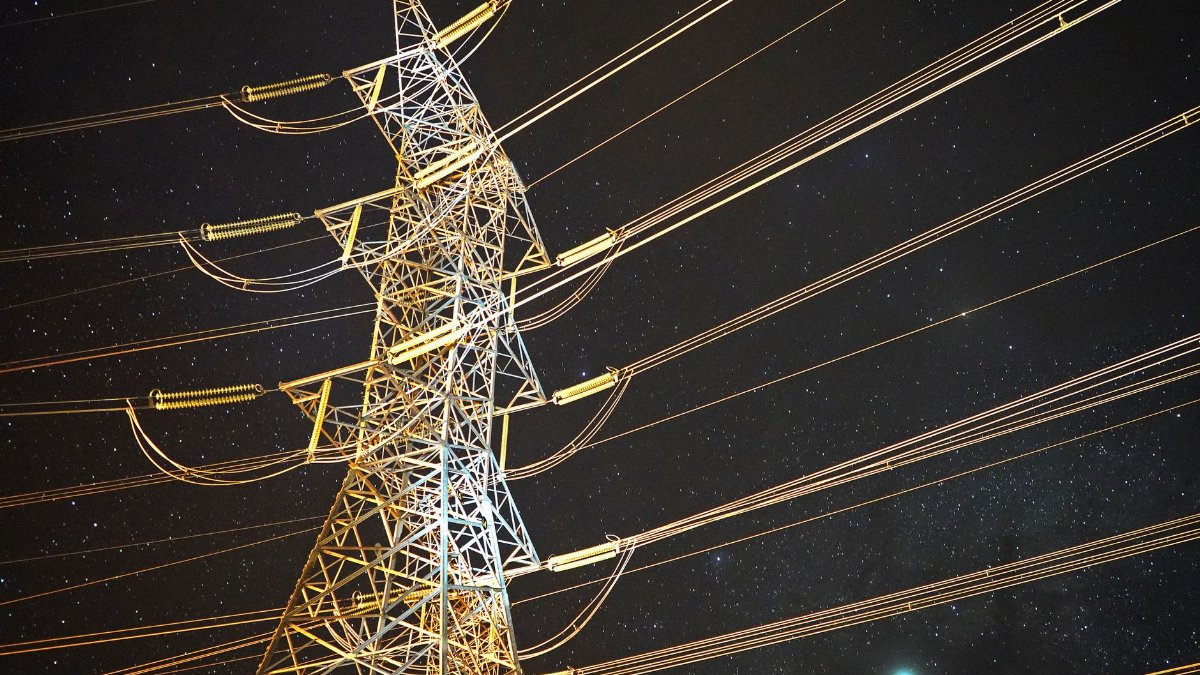
A gigawatt is a billion watts, a unit so large that it only makes sense at the scale of a state. Stack 91.1 of them and you are looking at the simultaneous appetite of air conditioners, refineries, hospitals, data halls, and kitchen lights across the territory served by the Electric Reliability Council of Texas. ERCOT does not cover every corner of the state. El Paso and parts of the Panhandle and East Texas sit on other grids. Even so, the council balances the great majority of Texas load, including the Houston region that so often sets the emotional temperature of a summer story.
A record of this kind is a snapshot, not a verdict. It says demand touched a new high and that available supply, imports where they exist, and emergency tools were enough to match it. It does not say the next afternoon will look the same, or that a plant outage, a cloud bank, or a stuck transmission line could not tighten the margin. Operators live in that gap between a successful hour and the hour that has not happened yet.
A peak that stopped being rare

According to reporting in the Houston Chronicle, ERCOT demand passed the 2023 peak on 45 separate days as solar and batteries helped cover Houston area load. That tally changes the meaning of a Texas power demand record. When a former summit falls dozens of times in a single season, the summit was a waypoint, not a wall. Planners who still talk about a single worst day are describing a grid that no longer exists.
Forty five days is also a political fact, whether anyone intends it to be. Residents hear about conservation appeals and price spikes and start to ask whether extreme demand is an exception or the new shape of summer. The honest answer is closer to the second. Population growth, hotter afternoons, and a flood of large electric loads have stretched the daily curve. The record is the visible tip of a thicker pattern.
Solar in the hardest hour

Midday is when Texas solar does its most obvious work. Panels across West Texas, the Hill Country, and suburban rooftops pour energy onto the system just as offices and factories are busy and just as the sun is driving air conditioning toward its cruelest settings. On the day demand hit 91.1 gigawatts, that flood of sunshine was not a side note. It was part of why the grid could meet a number that would have looked reckless a decade ago.
Solar has a personality, though, and operators have learned to respect it. Output rises and falls with clouds. It fades on a schedule that does not care about evening cooking, sports broadcasts, or the second wave of residential cooling after people come home. A resource that saves the afternoon can leave a hole at dusk unless something else is ready to fill it. That is the hour batteries were built to occupy.
Batteries after the sun drops

Storage on the Texas grid is still young compared with gas plants that have run for decades, but it is no longer a pilot project. Batteries charge when power is plentiful, often in the solar heavy middle of the day, and discharge when the net load rises. Net load is the demand that remains after variable renewable output is subtracted. It is the number that can spike even if raw consumption is merely high, because the sun is leaving while people are not.
In the Houston area, where humidity keeps air conditioners loyal long after sunset, that discharge matters. A battery does not replace a power plant in the romantic sense. It shifts energy across a few hours. On a day when the Texas power demand record is being set and then defended, those hours are exactly the ones that decide whether a new peak is a headline or an emergency. The Chronicle account of solar and batteries covering regional demand fits that logic. The machines did not erase risk. They moved supply to the clock time when risk was sharpest.
Houston as a stress test

Houston is not the whole of ERCOT, but it is a useful lens. The city combines petrochemical load, a vast housing stock built for air conditioning, a port economy, and a growing digital sector. When a high pressure dome sits on the Gulf Coast, Houston does not get a gentle evening. Indoor temperatures become a public health issue as much as a comfort issue. Elderly residents, shift workers, and anyone without reliable cooling are the people behind the gigawatt figure.
That human layer is easy to lose in control room language. A held record means hospitals kept imaging machines running and grocery freezers stayed cold. It also means the margin was tested in public. Texans have long memories of the 2021 winter failure, when a different kind of extreme exposed weak weatherization and left millions without power. Summer peaks are not the same failure mode. They still carry the same question. Does the market and the planning process treat reliability as a product customers can count on, or as a hope that weather and equipment will cooperate?
Why the ceiling keeps moving

Demand is not rising for one reason, which is why single cause arguments fall apart. More people live in Texas than did when the 2023 peak was set. Many of them occupy larger homes. Summers have produced more hours of dangerous heat. Industrial customers continue to expand. Data centers, crypto mines, and other large flexible or inflexible loads have asked the grid for blocks of power that used to belong only to heavy manufacturing.
Some of those customers can curtail when prices soar. Some cannot, or will not, without a contract that pays them to do so. The planning problem is matching the speed of interconnection with the speed of new consumption. Transmission lines take years. Gas turbines take years. Solar and batteries can arrive faster, which is one reason they showed up so clearly in this summer story. Faster is not the same as sufficient. A Texas power demand record that falls again next July would not surprise anyone who watches the queue of projects waiting for permission to plug in.
What holding the line does not promise

Success on a record day can breed a dangerous kind of calm. The grid held at 91.1 gigawatts. That sentence is true and incomplete. Reserves can look healthy at the peak hour and thin out two hours later. A single large generator trip can erase a comfortable margin. Transmission congestion can trap power in one zone while another zone is short, so that statewide totals conceal local pain. Price spikes can signal scarcity even when rotating outages never begin.
Consumers feel those signals in bills, especially if they are on plans indexed to wholesale prices. Most residential customers are shielded by fixed rates, but the shield is not free. Retail providers buy hedges, and the cost of those hedges rises when extreme days multiply. Forty five days above an old peak is the sort of pattern that reprices risk. The bill may arrive in autumn, long after the heat advisory has expired.
The tools operators still keep in reserve

ERCOT can call on more than plants and batteries. Demand response programs pay large users to drop load. Emergency alerts ask the public to ease off. In deeper trouble, the council has procedures for firm load shed, the bureaucratic name for controlled outages. None of that was the story of the 91.1 gigawatt hour, and that absence is the achievement. The point of building supply and flexibility is to keep those later tools on the shelf.
Public appeals still have a place. A modest reduction across millions of homes can equal a mid sized power plant. The trouble is fatigue. If every hot week brings a request to raise the thermostat, people stop hearing it as exceptional and start hearing it as a design flaw. Trust depends on using emergency language for emergencies, and on showing, afterward, what infrastructure changed so that next year asks less of private sacrifice.
Prices, planning, and the next summer

Texas runs an energy only market for much of its electricity, paying generators for power produced rather than for capacity kept in reserve. Supporters say the design invites efficiency and fast entry by new resources. Critics say it underpays the quiet plants that exist mainly for the worst afternoons. Recent years have added ancillary service products, reliability standards, and a surge of batteries that earn money by being fast. The debate is not settled by one successful peak. It is informed by it.
Lawmakers, regulators, and the council will spend the cooler months arguing about transmission routes, gas weatherization, the pace of renewable growth, and whether large new loads should bring their own generation. Those arguments are technical and they are also about fairness. Who pays for lines that serve a new data campus? Who bears outage risk if a plant delays? A Texas power demand record is a useful exhibit in that argument only if people resist treating it as proof that nothing further is required.
A number worth remembering without worshiping

I keep returning to the ordinary rooms behind the statistic. A rented apartment with one window unit. A control room where someone watches frequency like a pulse. A warehouse battery stack west of the city, charging in glare and emptying into the blue hour. The grid is a civic object even when the politics around it are loud. It fails or holds for everyone on the same wires.
The 91.1 gigawatt mark, and the 45 days above the 2023 peak described by the Houston Chronicle, belong in that civic record. Solar carried a heavy share of the hottest hour. Batteries helped Houston area demand through the drop off in sunshine. The system held. That is worth saying plainly, and worth refusing to inflate. Next summer will bring its own dome of heat, its own plant trips, and its own chance to learn whether this season was a ceiling or only the latest step. The reporting is here: Houston Chronicle on the demand record. ERCOT publishes system conditions at ercot.com. The numbers will move. The obligation to match them will not.