
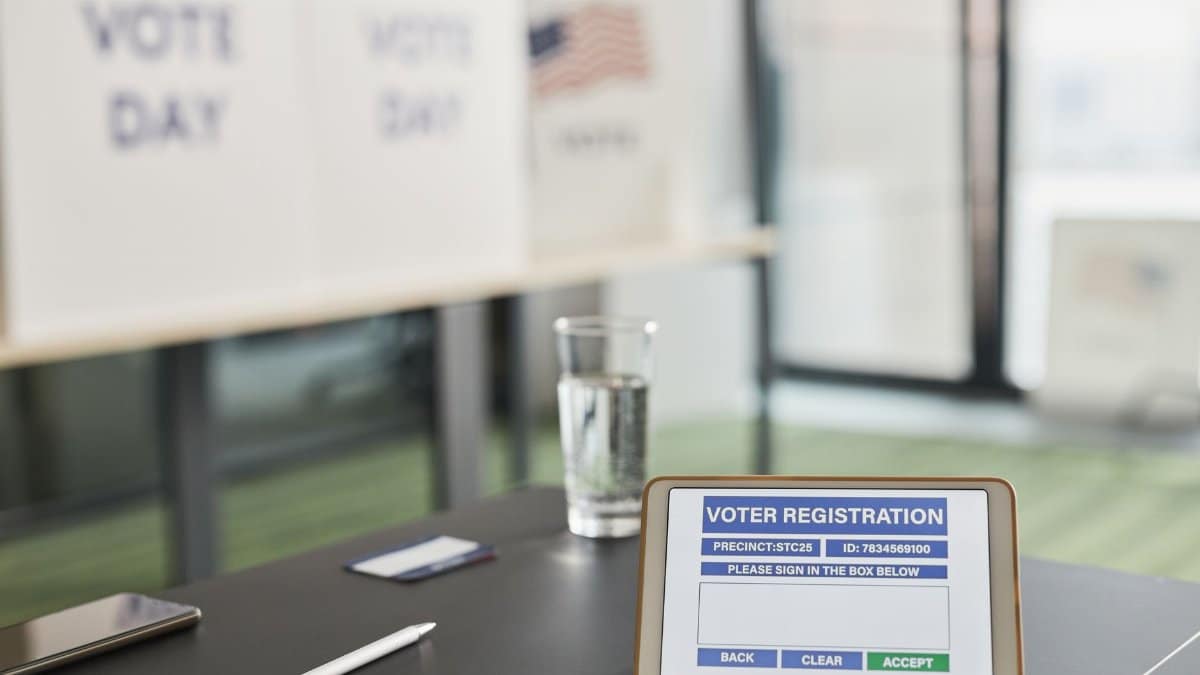
The lights in the Tarrant County elections office stay on long after the downtown streets go quiet. Clerks move stacks of paper from one tray to the next, checking names against state records while the calendar inches toward early voting. Supervisors talk in low voices about shifts that stretch past dinner and about a pile that should have been smaller by now. That pile is the Tarrant voter registration lag, a delay of roughly 74,000 forms that arrived through a state portal and then sat while local staff tried to catch up. For people who registered in good faith, the wait is not an abstraction. It is a question about whether a name will be on the roll when the polls open.
A backlog with a very human clock

Elections work is usually invisible until it is not. Most years, a registration form moves from a counter or a website into a database with little drama. This season in Tarrant County, the ordinary path jammed. Forms tied to the Texas Department of Public Safety portal reached the county in a surge, and the local office did not have enough hands, hours, or clean data to clear them on a normal schedule. The result is a processing lag measured in tens of thousands of applications, not dozens.
County leaders have described a sprint. Staff are working overtime. Temporary help has been pulled in where the budget and the training window allow. The goal is simple and unforgiving: finish the reviews before early voting for the midterm elections begins. A registration that is still sitting in a queue on the first day of early voting is a registration that may not yet confer a ballot.
What the Tarrant voter registration lag looks like on paper

A delayed form is not automatically a rejected form. In many cases the application is valid and the person is eligible. The lag is a matter of sequence. Someone has to confirm identity details, match addresses, resolve duplicates, and enter the record so that poll books and mail ballot systems can see it. When 74,000 items arrive faster than a county can review them, even a well run office falls behind.
Readers outside North Texas may picture a single missing envelope. The reality is closer to a warehouse problem. Each form can carry a small defect: a transposed digit, an old address, a name that does not match a driver record exactly. Those defects are routine. Multiplied across a backlog, they become days of phone calls and second looks. The Tarrant voter registration lag is therefore both a volume story and a quality story. Speed without care creates errors. Care without speed leaves voters in limbo.
How a state portal became the choke point

Texas lets many residents start or update a voter registration when they deal with driver license services. That design is meant to be convenient. A person already standing at a DPS counter, or already inside a state online system, should not have to hunt for a separate elections form. When the handoff works, counties receive clean electronic records and enter them with relative ease.
When the handoff surges, counties inherit the consequences. Tarrant is one of the largest counties in the state, with a diverse and mobile population. People move between Fort Worth, Arlington, and smaller cities inside the same county line. They change apartments. They renew licenses. Each of those ordinary acts can generate a registration record that must be checked locally. A portal built for convenience can still overwhelm the office that has to make the record official.
State officials and county officials do not always describe the same bottleneck in the same words. From the county side, the complaint is timing and volume. From the state side, the defense is often that the portal did what it was asked to do: collect applications and pass them along. Both descriptions can be true. The voter experiences only the gap between submitting a form and seeing a confirmation.
Who is sitting with the trays

Overtime is not a slogan in an elections office. It is a supervisor asking who can stay until nine, and a clerk deciding whether the extra hours are worth the commute home in the dark. Processing voter forms is skilled work. A new hire cannot be fully useful on the first afternoon. Training takes time that the calendar does not gladly give.
The people doing this labor are public employees, not campaign operatives. Their job is to apply the same rules to every application, regardless of neighborhood or party. That neutrality is easy to praise in a speech and harder to protect when the pile is huge and the public is impatient. Mistakes under pressure become headlines. Caution under pressure becomes delay. The staff in Fort Worth are living inside that tension right now.
Why this county feels the weight
Tarrant County sits at a political crossroads in Texas, large enough that statewide candidates treat it as essential and local enough that a single administrative failure can dominate neighborhood conversation. Growth has been steady. New residents arrive from other Texas counties and from other states. Each arrival is a potential registration, a potential address change, or both.
A lag of 74,000 forms would strain any office. In a county this size, it also lands in a media market that watches elections closely. Dallas newsrooms, Fort Worth newsrooms, and statewide outlets have reason to track whether the queue shrinks by the week. The Dallas Morning News has reported on the race to clear delayed voter forms before early voting, framing the overtime push and the DPS portal backlog as the central facts of the moment. That reporting is the public record voters can consult while they wait for a card or an online status update.
The link for that account is here: Tarrant County races through delayed voter forms.
Early voting does not pause for paperwork

Texas sets firm dates for voter registration deadlines and for the start of early voting. Those dates are not suggestions. A county cannot ask the calendar for mercy because a portal delivered a late wave of files. Once early voting begins, election workers split their attention. Some must staff vote centers. Some must handle mail ballots. Some must answer the phone. The same people who are clearing old forms may be needed for new duties.
That is why the current sprint matters more than a general promise to catch up eventually. A form processed the week after early voting starts helps a person who votes on Election Day, if the roll updates in time. It does not help a person who planned to vote on the first Saturday of early voting and found no record. The Tarrant voter registration lag is therefore a story about sequence as much as about totals. Clearing the oldest valid applications first is not only efficient. It is fairer to the people who have been waiting longest.
What a waiting voter can still do

Voters are not powerless while clerks work through trays. A person who submitted a registration through DPS or through a county form can check status with the county elections office and with the state voter lookup tools. If the record is missing, a phone call or an in person visit can surface a mismatch that a database scan missed. Bringing the same identification used at the driver license office can shorten that conversation.
People who believe they registered on time and still do not appear on the roll should ask about provisional voting rules before they give up on casting a ballot. Provisional ballots are not a cure for every problem, and they are not a substitute for a completed registration. They are a legal backstop when eligibility is in dispute. Knowing that option exists is better than learning it at the check in table under a time limit.
Community groups, churches, and neighborhood associations often become informal help desks in weeks like these. They cannot process a county form themselves. They can tell a neighbor which office to call and which documents to carry. In a backlog this large, that kind of practical guidance keeps panic from masquerading as information.
Trust is built in the boring details

Americans argue about election rules with heat. They argue less often about the clerical steps that make those rules real. A registration system earns trust when a form goes in and a confirmation comes out within a predictable window. It loses trust when silence stretches for weeks and no one can say whether the silence means rejection, delay, or a lost record.
The present lag does not, by itself, prove bad faith. It does prove that capacity and convenience fell out of balance. A portal that makes registration easier will increase volume. Counties need staffing models that assume surges, not only average months. They need data standards that reduce the small mismatches eating hours. They need public status tools that tell a voter, in plain language, that an application was received and is still in review.
None of that is glamorous. All of it is the difference between a right that exists on paper and a right a person can use on a Tuesday.
The politics around a clerical crisis

Any delay of this size will be read through a partisan lens. Campaigns will worry about which neighborhoods are stuck in the queue. Lawyers will ask whether similarly situated voters are being treated alike. County administrators will insist that the work is sequential, not selective. Those arguments can all be aired without pretending the underlying problem is mysterious. The underlying problem is a backlog.
Journalists should resist two temptations. One is to treat 74,000 as a scandal number without explaining how many of those forms are routine updates rather than first time registrations. The other is to treat the number as harmless because staff are working hard. Hard work and real risk can coexist. A voter who is eligible and on time deserves a processed record. Effort in the office does not erase the harm if that record is still unfinished on Election Day.
The healthier public question is forward looking. What volume can Tarrant County process in a week when fully staffed? What volume arrived in the worst week of the DPS transfer? Where did the two figures diverge, and who is responsible for closing that gap before the next statewide election? Those questions can be answered with logs, staffing charts, and dates. They do not require anyone to impute motives.
Other counties are watching the same pipe
Tarrant is not the only Texas county that receives records from state systems. Smaller offices may see smaller piles and still feel a comparable strain if they have two clerks instead of twenty. Larger urban counties may have more staff and still hit a wall if their own surges arrive in the same month. The portal is shared infrastructure. A flaw in timing or file quality does not stop at one county line.
That is a reason for the state and the counties to publish simple weekly counts during the run up to a midterm: applications received, applications processed, applications pending, applications rejected with a reason. Sunlight of that kind is not a partisan instrument. It lets voters see whether the Tarrant voter registration lag is shrinking, and it lets neighboring counties compare notes before their own queues become news.
The quiet cost of waiting

There is a personal cost that does not show up in a spreadsheet. A new citizen who registered at the first legal opportunity may spend the month wondering if the paperwork was enough. A student who moved into an apartment near campus may not know which address the state file captured. An older voter who renewed a license and assumed the registration would follow may not think to check until a campaign worker knocks on the door.
Those worries are reasonable. Registration is the gate to every other election argument. People can disagree about candidates, bond measures, and turnout strategies. They should not have to wonder whether the gate is locked because a file sat in a queue. When officials ask for patience, they should pair that request with a date, a phone number, and a plain account of what still remains.
What would count as catching up

Catching up is not a press release. It is a pending count that falls in public view, week after week, until the valid applications from the surge are either on the roll or formally rejected with notice to the applicant. It is a help line that answers. It is poll workers who are told, before the first early vote, how to handle a person whose form is still in process. It is a county judge or elections administrator willing to say, on the record, how many forms remain on a given morning.
Voters can hold that standard without assuming the worst about the people staying late. The clerks did not design the portal. They did not choose the midterm calendar. They are the ones who can still turn a delayed form into a finished record. Supporting that work means funding it, staffing it, and measuring it. It also means refusing to let a backlog become normal.
The weeks that decide the story
Between now and the start of early voting, Tarrant County will either shrink this queue or carry it into the election itself. There is no third option that feels honest. Overtime can close a gap if the remaining forms are mostly clean and the staffing holds. It cannot close a gap if new transfers keep arriving at the same rate as the old ones are cleared. Officials owe the public that distinction, updated often enough to be useful.
The Tarrant voter registration lag will be remembered less for the headline number than for what happened to the people inside it. If most of those 74,000 forms become timely, accurate registrations, the episode will stand as a warning about capacity. If thousands of eligible voters reach a polling place and find no record, the episode will stand as a failure of administration, whatever the good intentions in the room where the lights stayed on. The trays are still there. The calendar is not waiting.