
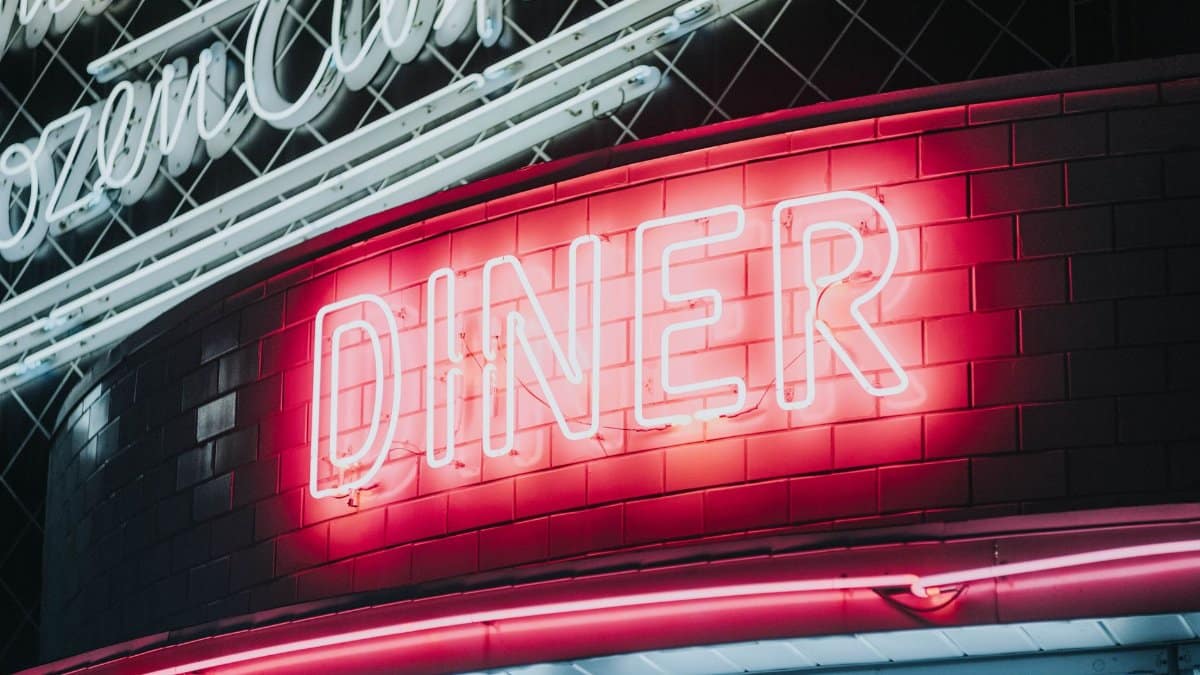
On a weekday morning in Center City, the ordinary clatter of plates can become a national picture. That is the strange power of a political breakfast, and it is why the phrase Shapiro Whitmer Philly diner already carries more weight than a casual meal should. Pennsylvania Gov. Josh Shapiro and Michigan Gov. Gretchen Whitmer, two Democrats often named when party activists look past the next calendar, sat down together before the midterms to lift their party in public. The setting was Sam’s Morning Glory Diner, a room small enough that every handshake is visible and every pause can be read as strategy. For voters who will never enter that booth, the stop still functions as a message: unity, ambition, and a claim on the industrial states that decide close elections.
The room was the message
Diners occupy a special place in American campaign lore because they look unplanned even when they are not. A marble lobby says donor. A union hall says organization. A booth with coffee rings says the candidate still eats where other people eat. The Shapiro Whitmer Philly diner stop borrowed that old grammar and updated it for a party that has spent years arguing with itself about tone, geography, and who is allowed to sound like a future nominee. Neither governor needed a diner to prove they can win at home. Both needed a picture that said the party’s most watched state executives can share a table without turning the morning into a contest.
Two records, one photograph
Shapiro and Whitmer arrive at any joint appearance with biographies that already do political work. He is the Pennsylvania executive who won a high profile governor race and has spent his term talking about competence, public safety, and the idea that Democrats can sound impatient with disorder without borrowing the opposition’s vocabulary. She is the Michigan executive who became a national figure during fights over abortion rights, pandemic rules, and a kidnapping plot that made her name familiar far beyond Lansing. Put them in one frame and the party gets a composite: a man associated with the suburbs of the Philadelphia region and a woman associated with the factories, campuses, and small cities of Michigan.
Pennsylvania still sets the price of admission
Any Democrat with national hopes has to answer a Pennsylvania question, even on a morning when the conversation is supposed to be about helping candidates down the ballot. The state is large, close, and internally divided: Philadelphia and its collar counties, the old industrial belt, the rural center, the growing corridors of logistics and medicine. Shapiro’s value to the party is not only his own popularity. It is his claim to know which arguments travel from Center City to towns that do not see themselves in coastal television. A breakfast in Philadelphia does not settle that claim. It displays it. Allies can say he is doing the unglamorous work of boosting Democrats where the map is hardest. Skeptics can say the unglamorous work looks a lot like a soft launch.
Michigan and the memory of narrow margins
Whitmer brings a different map and a different scar tissue. Michigan has taught a generation of Democrats that a few thousand votes can rewrite a presidency, a legislature, and a sense of who the country is. Her presence in Philadelphia tells donors and organizers that the Midwest is not a courtesy stop on the way to a coastal fundraiser. It is a governing record they want attached to the party’s fall message. Abortion politics, manufacturing announcements, and fights with a hostile legislature have given her a language that travels on cable and in union halls. Sitting with Shapiro lets her borrow Pennsylvania’s symbolic weight while reminding his circle that Michigan is not a junior partner in the Democratic imagination.
A party looking for a shared face

The midterms will be fought by House candidates, Senate candidates, governors, and state legislators whose names will never trend. National figures still matter because they raise money, move volunteers, and tell a story large enough to cover a hundred local races. Democrats have struggled, in recent cycles, to decide whether their story is about rights, prices, democracy, or simple managerial skill. A breakfast with two governors tries to hold several of those stories at once. Shapiro can talk about making government feel competent. Whitmer can talk about freedom and the consequences of losing it. Together they suggest that the party does not have to choose between a suburban competence message and a Midwest rights message.
Ambition does not take the morning off
It would be naive to treat the meeting as pure party service. Both governors are plausible answers to the question Democrats will ask after the next presidential cycle, and plausible answers do not share pancakes without calculating the caption. The Shapiro Whitmer Philly diner image can be read as alliance, as detente, or as a careful audition in which neither performer wants to look hungry. Staff cultures differ. Donor lists overlap and compete. Each has a theory of the electorate that flatters their own biography. If they appear warm, the warmth is not fake merely because it is useful. Politics is full of relationships that are sincere and strategic in the same hour. The honest reading is that they can help Democrats in the fall and still be measuring each other for a later race.
The voters outside the frame
There is a cost to this kind of clarity. The people who actually eat at Sam’s Morning Glory on an ordinary morning are not props, even if a political visit briefly treats the room as a set. Some will be glad to see governors. Some will be annoyed that a booth is blocked and a sidewalk is crowded. Most will go back to work with the same worries they had at dawn: rent, a parent’s health, a shift that starts too early, a child who needs a form signed. National politics flatters itself when it assumes a photograph changes those facts. The Shapiro Whitmer Philly diner moment matters in the argument among elites and activists. It matters less, at least today, to a cook who needs the lunch rush to stay on schedule. Good journalism keeps both scales in view.
Bread, coffee, and a civic ritual
A shared meal has a moral resonance that campaign consultants did not invent. Religious traditions and secular ones both treat the table as a place where hostility is supposed to pause. Breaking bread does not guarantee good faith, but it stages the hope that people who disagree can still sit within reach of one another. In a season when politics often feels like a spiritual crisis, a fight over who belongs and what the country owes the vulnerable, the diner photograph borrows that older language. It is not a worship service. It is not absolution. It is a small civic rite: two leaders of the same party performing reconciliation before they ask strangers to trust them with power. Readers can find that rite comforting or manipulative. They should notice that it is a rite either way.
Rivals who need each other first

The calendar is unforgiving. Before any 2028 conversation becomes official, there is an election that can strengthen or humiliate the party these two hope to lead. A bad midterm makes every national ambition look premature. A better one creates a bench and a story. That is why rivals can campaign as partners without lying about the partnership. Shapiro needs Michigan voices in the national chorus if he wants to look bigger than Pennsylvania. Whitmer needs Pennsylvania validation if she wants donors to see her as more than a regional champion. Their interests align until the moment a presidential field forms. Then the same footage will be repurposed, by allies and by opponents, as evidence of loyalty or as evidence of a deal.
The picture will outlast the meal
By evening the diner will belong again to regulars, and the governors will be in other rooms with other stakes. What remains is an image that party professionals will file under unity and that future rivals may file under complication. The Shapiro Whitmer Philly diner breakfast will not decide who leads Democrats into the next presidential election. It will, however, join the small set of scenes people remember when they try to explain how a nomination mood began: not in a debate hall, but in a place that sells eggs and coffee and lets power pretend, for an hour, that it is merely hungry. The pretense is part of the craft. So is the hunger. Voters can respect the craft and still demand something sturdier than a well lit booth before they hand anyone the future.