
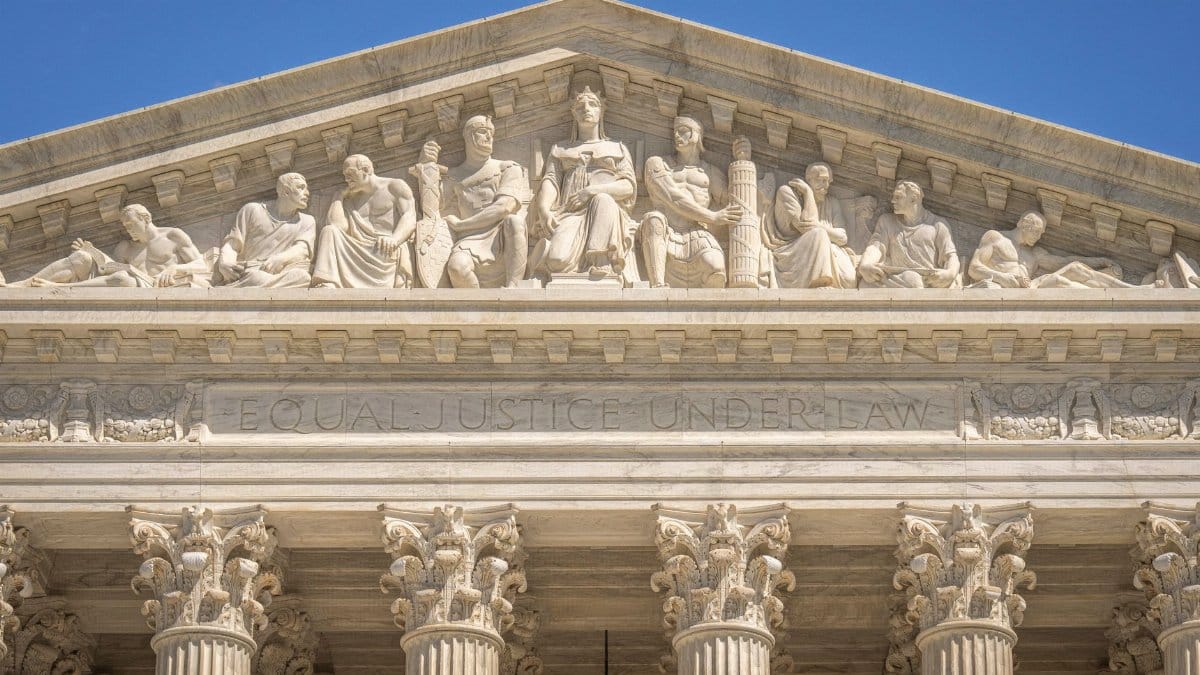
In county clerks offices across Missouri, stacks of absentee ballots were already leaving buildings when word arrived that the nations highest court would not disturb the lines voters are using this fall. The Missouri congressional map ruling arrived late in a season when campaigns have spent months introducing candidates to neighborhoods that may feel newly assembled or stubbornly familiar. For people who requested ballots weeks ago, the legal fight is no longer a diagram on a hearing room screen. It is the difference between a district that reaches into a distant suburb and one that stays inside a river city. The justices left the 2022 districts in place, and the practical consequence is plain: the map on the ballot is the map that will count.
A decision that meets an election already in motion
Timing is the fact that separates this dispute from the cleaner arguments lawyers prefer. Redistricting cases often unfold in a calendar that still has room for new lines, new petitions, and a fresh round of voter education. This one did not. Absentee voting had begun. Local officials had printed materials, trained poll workers, and answered calls from people trying to confirm which congressional race belonged on their form. A late change would have forced counties to reconcile two versions of the same election, one in the computer and one in the envelope.
Courts are not indifferent to that problem. Judges routinely weigh the harm of an unlawful map against the harm of confusion so close to voting. That balance can frustrate advocates who believe a flawed district should never be used, even once. It can also reassure administrators who have to run an election with finite staff and a fixed set of machines. The Supreme Court rejection of the Trump backed Missouri House map did not invent that tension. It simply refused to reopen it while ballots were moving.
What the justices left standing
Missouri elects eight members of the House. The districts now locked in for this cycle are the ones adopted after the last census, the product of a Republican legislature and a political map that Democrats and some civic groups have challenged as an unfair packing of urban votes and a stretching of communities that do not share daily life. Supporters have answered that the state constitution and federal law leave room for a legislature to pursue partisan advantage, so long as traditional rules on population and contiguity are met.
The Missouri congressional map ruling does not read, in the public account of it, as a grand treatise on those questions. It functions more like a door closed for the present election. The 2022 lines remain. Candidates who qualified under those lines remain. Voters who have already returned ballots will not be told that their congressional choice has migrated to another district overnight. In a closely divided national House, even a procedural refusal can shape which party counts a seat in January.
How Missouri arrived at another map fight

The path here is familiar to anyone who has watched statehouses redraw Congress after a census. Population shifts moved people toward suburbs and away from some older urban cores. Lawmakers, armed with precinct data and software that can test thousands of boundaries, drew lines that protected incumbents and maximized partisan yield. Lawsuits followed, in state court and in federal court, arguing about compactness, county splits, racial vote dilution, and the proper reading of Missouri law.
What made this round sharper was the political sponsorship around a revised House map associated with allies of former President Donald Trump. The effort was framed by supporters as a correction, a map more faithful to the states Republican majority and to a reading of fairness that treats statewide vote share as the measure that matters. Opponents described it as a mid cycle power grab, an attempt to revise districts after candidates and voters had already organized around the existing plan. The phrase mid cycle itself became a rallying point, because changing lines between censuses strikes many citizens as a break with the ordinary rhythm of representation.
The national House and a single states lines
It is easy to treat a state map case as local business. In a House majority that can turn on a handful of seats, local business is national business. Party committees watch Missouri not because every district is competitive, but because one or two seats can move from safe to contested if lines shift around Kansas City, St. Louis, or the fast growing counties between them. A map that cracks a city across several districts can dilute a Democratic concentration. A map that packs that city into one district can waste votes in a landslide and free surrounding seats for the other party.
Neither technique is unique to Missouri. Both appear in maps drawn by Democrats in states they control and by Republicans in states they control. The honest description is that self interest is bipartisan, and that the legal limits on that self interest remain unsettled. When the Supreme Court declines to intervene, it does not bless every line. It does tell the parties that, for this election, the fight moves from the courthouse to the precinct.
Voters who live on the edge of a district

The people most exposed to map litigation are not the consultants. They are residents of split counties, residents of neighborhoods divided by a boundary that follows no river and no school district, and residents who moved and discovered that a congressional office they once called no longer covers their address. A late ruling that keeps the current lines spares them a second shock. It does not spare them the first one. Many still do not know their members name. Many learn the district only when a mailer arrives or when a ballot question seems to concern a community an hour away.
Election administrators have been blunt, in hearings and in local interviews over several cycles, about the cost of uncertainty. Training materials, street files, and ballot styles are not abstract. A wrong district on a ballot is a due process problem, not a branding problem. Leaving the 2022 plan in place while voting is underway is, at minimum, a choice for administrative stability. Whether it is also a choice for fair representation is the argument that will outlast this autumn.
Partisan advantage and the limits of judicial appetite
Federal courts have grown cautious about policing partisan gerrymanders as partisan gerrymanders. That caution, set out in recent years by the Supreme Court, pushed many challenges into state constitutions, state courts, and narrower federal claims about race. Missouri has lived inside that shift. Challengers have tried to fit their objections into whatever legal box still opens. Defenders have argued that the remaining boxes are too small to hold a complaint that is, at bottom, about which party wins.
The Missouri congressional map ruling sits in that cautious posture. A rejection of a Trump backed revision does not require the justices to announce a new theory of fairness. It can rest on timing, on procedure, on the absence of a clear error that demands emergency relief, or on deference to a map already in use. For readers hoping for a moral verdict on gerrymandering, that kind of ruling will feel thin. For readers who fear judicial redraws in the final weeks of a campaign, it will feel like restraint. Both reactions can be true at once.
Campaigns recalibrate without new lines
Candidates do not get to pause while lawyers argue. Field programs, television buys, and church basement forums have been built around the districts as drawn in 2022. A Supreme Court decision that keeps those districts tells campaigns to stop gaming out a substitute map and to finish the race they have. That is a gift to incumbents who already know the donors and the county chairs. It is a constraint on challengers who hoped a new line might add a friendly suburb or subtract a hostile rural county.
Money follows certainty. Once it is clear that the map will not move, national groups decide which Missouri races are worth a late investment and which are not. Local candidates, especially those running with small staffs, can finally tell volunteers which doors belong to them. The civic cost is that voters in safe districts may see even less attention, because neither party has a reason to spend where the outcome looks settled. Stability and competition are not the same good.
Congregations, civic trust, and a strange category of news

Maps are not sermons, yet they land in the same rooms where people talk about neighbors. In Missouri, as elsewhere, churches, mosques, and synagogues often serve as polling places and as informal schools of citizenship. Parish halls host candidate nights. Pastors get asked, quietly, whether a new district is a trick. When a court fight drags into absentee season, the question people bring to those rooms is not only who should win. It is whether the process deserves trust.
I have sat in enough community meetings to know that trust erodes less from a single adverse ruling than from the sense that lines are a private language. People can accept losing an election. They struggle to accept a boundary that seems to exist so that losing is arranged in advance. A spiritual vocabulary is not required to name that injury. Fairness, neighborliness, and the duty to tell the truth about power are old civic words, and they travel well inside congregations that otherwise disagree about politics. The Missouri congressional map ruling will not heal that distrust. It can, if explained plainly, show that even high stakes fights sometimes yield to the calendar of voting.
Race, geography, and arguments still unfinished

Any serious account of Missouri districts has to hold two maps in mind: the partisan map and the racial map, which overlap and are not identical. Kansas City and St. Louis carry much of the states Black population and much of its Democratic vote. How those cities are divided, and how their suburbs are attached or detached, can raise claims under the Voting Rights Act as well as claims about partisan gain. Courts have spent decades trying to separate those inquiries. Parties have spent the same decades learning to speak in the vocabulary that courts still accept.
This latest rejection does not retire those claims. It postpones their practical effect. Civil rights groups can continue to build records, to gather precinct results, and to argue in the next regular cycle that certain configurations dilute minority voting strength. Legislative leaders can continue to argue that population equality and partisan preference explain the lines without a racial purpose. The public is left to notice that the same boundary can be described, with equal confidence, as a community of interest or as a surgical cut.
What county officials needed to hear

For clerks, the useful sentence in any election case is short. Which map. Which date. Which ballots remain valid. The Supreme Court answer, as it reaches local offices through this Missouri congressional map ruling, is that the 2022 districts govern, including for absentee ballots already issued. That clarity is worth more, in the next several weeks, than a lengthy opinion about the ideal legislature. Poll books, ballot styles, and results reporting can proceed on a single plan.
Clarity is not the same as consent. Voters who believe the map is skewed will still cast ballots under protest, or decline to cast them at all. Officials cannot cure that alienation with a press release. They can avoid making it worse by refusing to improvise. The worst outcome in a late map fight is a patchwork, one county on the old lines and another on the new, with lawsuits about which votes to count after election night. Leaving the existing districts in place avoids that particular disaster.
The legislature, the governor, and the next census
Political actors rarely treat a judicial stop as a final loss. A map rejected for this cycle can return as a bill, a constitutional amendment, or a fresh lawsuit after the votes are counted. Missouri lawmakers who favored the Trump backed revision still control the ordinary tools of redistricting policy, subject to vetoes, referendums, and whatever state courts will enforce. Opponents still have the ballot initiative and the next round of litigation. The census at the end of the decade will reset population numbers and reopen every district, whatever happens in the meantime.
Between now and then, the argument is about norms as much as statutes. Should a congressional map be stable for ten years absent a court order, or is it legitimate raw material for each new legislative majority? States have answered that question differently, and some have answered it twice. Missouri voters are entitled to a clearer rule than a sequence of emergency applications. They are also entitled to hear that rule before absentee envelopes are in the mail, not after.
How to read a ruling that declines to rule broadly

Journalists sometimes inflate a denial of emergency relief into a philosophy. Readers should resist that inflation here. A decision not to displace a map during voting is evidence about timing and about the courts appetite for disruption. It is weaker evidence about the merits of every line in Missouri. Lawyers on both sides will quote it for more than it holds. Campaigns will treat it as a win or a loss because campaigns must. The more accurate public reading is narrower: the election proceeds on the districts already in use.
That narrower reading still matters. It tells donors where to spend, clerks what to count, and voters which name belongs in the congressional box. It also tells the country something about the outer edge of judicial power in election season. The Court can stop a map. It can also refuse to stop one. Refusal, in this instance, keeps a Trump associated revision off the ballot and keeps the 2022 plan on it. People who wanted a different Missouri will have to seek it through votes, through legislation, or through a case that arrives early enough to be heard without wrecking the election calendar.
What citizens can do with the lines they have
None of this requires a law degree. A voter can look up the district, read the candidates, and decide whether the boundary that contains them makes sense as a community. A congregation can host a nonpartisan forum without pretending the map is neutral. A county party can register people who moved and do not know they have changed districts. Those acts do not erase a gerrymander. They do refuse the idea that a court calendar is the only place where representation is decided.
The Missouri congressional map ruling closes one door and leaves the larger argument in the hallway. Absentee ballots will be counted under the 2022 lines. The House seat those ballots help fill will be real. So will the resentment of voters who believe the lines were drawn to manage them rather than to represent them. A mature politics can hold both facts. It can administer the election in front of it, and it can keep arguing, in daylight and on time, about the map that should come next.