
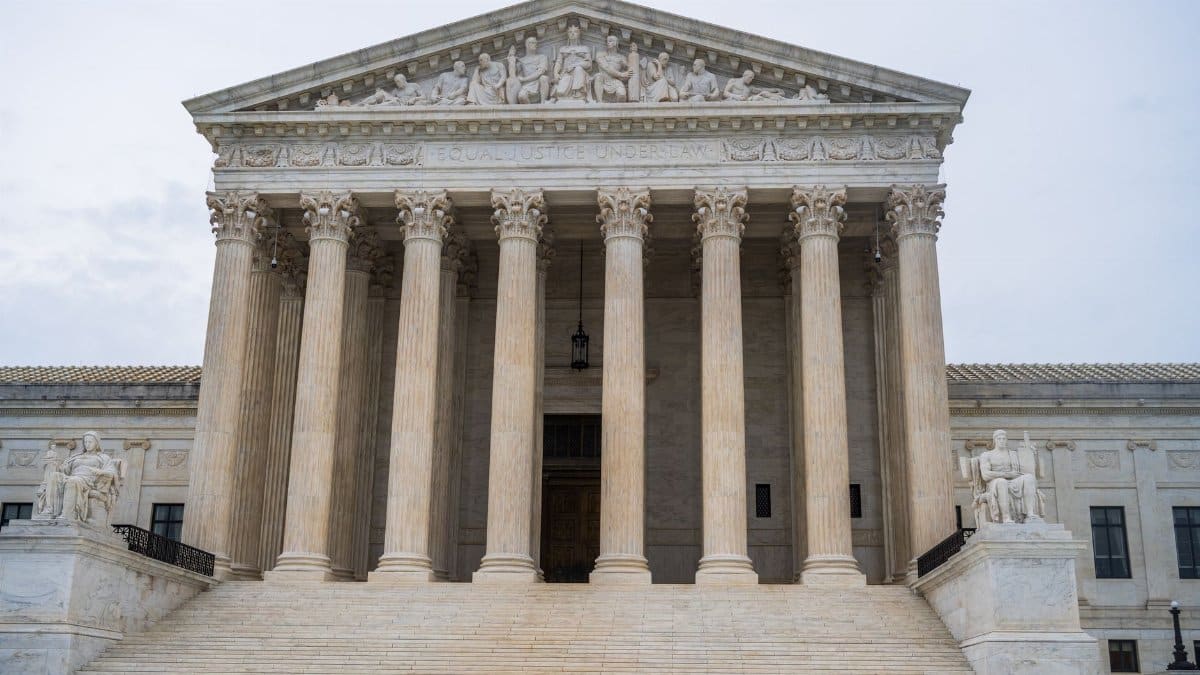
On a warm morning outside the marble steps, immigration lawyers checked their phones and pastors waited with families who had already packed bags twice. The order from Massachusetts had briefly slowed removals to places that are not a person’s home country. Then the justices stepped in. The Supreme Court third country fight is no longer a local injunction. It is a national pause that will shape who can be sent where, and under what promise of safety, until fuller arguments in December 2026.
What the pause actually changes

The immediate effect is practical, not theoretical. A federal trial judge in Massachusetts had constrained the government from sending people to a country that is neither the United States nor the country of their citizenship, at least without more process than the agencies had been using. The justices have now lifted that constraint while the appeal proceeds. Removals that were slowed can move again, subject to the rules the executive branch already says it follows. Advocates describe the moment as permission with a calendar attached. Officials may act. The underlying legal question is not finished, and neither are the lives caught inside it.
How a Massachusetts order reached the Court
The path from a district courtroom to the high court is familiar in immigration fights. A person, or a group of people, asks a judge to stop a removal that they say violates statute or the Constitution. If the judge agrees, the government can seek a stay from an appeals court and then from the justices. A stay is not a final win. It is a decision about who bears the burden of waiting. Here, the justices chose to let the government proceed and to hear the fuller dispute later. That choice favors speed for the agencies and uncertainty for the people whose flights may now be rescheduled.
What third country removal means in plain words

Most readers picture deportation as a return home. Third country removal is different. The government sends a person to some other nation that has agreed, or is said to have agreed, to receive them. Officials argue that this tool is necessary when a home country will not take someone back, or when a person has no clear nationality documents, or when diplomats cannot complete travel papers in time. Lawyers for migrants answer that a receiving country on a form is not the same thing as a place where a person can live without new danger, new detention, or simple abandonment at an airport.
The safety promise at the center

American law has long said the government should not deliver people into persecution or torture. The hard part is how that promise is checked when the destination is not the country the person fled. Does an officer have to ask specific questions about the third country? How much time does a person get to find a lawyer, gather proof, or name a fear that did not exist yesterday? The Massachusetts order treated those questions as urgent enough to halt removals. The stay treats them as questions that can wait for a fuller hearing. Between those two views sits the risk that a wrong flight cannot be undone.
Why December 2026 matters

Fuller arguments set for December 2026 give the Court time, and they also give the government a long window to operate under the stay. Briefs will narrow the issues. Friend of the court filings will arrive from states, former officials, faith groups, and foreign policy voices. By the time the justices sit for argument, the record may include not only legal theory but a stack of completed removals. That is why timing is not a clerical detail. A rule announced in a later opinion can vindicate a principle after the person it was meant to protect has already landed somewhere else.
Families living between two doors

I have sat in enough legal waiting rooms to know that a pause on paper feels different from a pause in a life. Parents weigh whether to tell children that a ticket might come this week. Workers decide whether to show up for a shift or to stay near a phone. Community groups try to track people after they leave federal custody, which is harder when the destination is unfamiliar and the local contacts are thin. None of that drama appears in an order that simply says the lower court injunction is stayed. It appears in kitchens, church basements, and bus stations, where the next instruction is often a time and a gate number.
Faith communities and a moral question

Because this fight now sits in pulpits as well as courtrooms, it belongs in any honest account of spiritual life in the country. Congregations that sponsor refugees, visit detention centers, or offer sanctuary are asking what accompaniment means when the state says a person may be sent to a nation they have never known. Some clergy frame the issue as a test of hospitality. Others warn against turning worship into a political rally. The more durable question is simpler. If a community claims to honor the stranger, what does it owe a neighbor whose legal protection has been paused rather than denied?
What lower courts still control
A stay from the justices does not erase every safeguard in every case. Individual hearings, statutory bars on torture, and challenges aimed at a particular country or a particular person can still matter. Lawyers will test whether the government is actually obtaining assurances, whether those assurances are meaningful, and whether people are being given a real chance to speak. Judges outside Massachusetts may disagree with one another until the high court speaks at length. The result, for now, is a map of uneven protection. Geography and the quality of counsel may decide outcomes that the Constitution is supposed to decide more evenly.
The government’s case for speed

Officials and their allies make a case that is easy to summarize. Immigration enforcement, they say, collapses if every new destination requires a fresh lawsuit and a fresh injunction. They point to people with serious criminal records, to countries that refuse to accept their own citizens, and to agreements they describe as careful and reciprocal. They argue that courts should not manage foreign negotiations from the bench. Those points will get a full airing in December 2026. Readers can weigh them without pretending that speed and safety are the same virtue. A system can be clogged and still be capable of a grave mistake.
The case for waiting

On the other side, the Supreme Court third country dispute is framed as a due process problem with irreversible facts. Once a person is abroad, American courts have little practical power to bring them back. Counsel argue that the Massachusetts judge did not invent a new right. They say the judge enforced existing duties to screen for danger and to avoid arbitrary exile to a place with no ties, no language, and sometimes no functioning protection system. They also warn that diplomatic assurances can be thin, especially when the receiving government wants favor, money, or quiet rather than a durable plan for the people who arrive.
Politics without a final ruling

Immigration remains a dividing line in campaigns, statehouses, and cable news. A stay lets each side claim a headline. Supporters of stricter enforcement can say the Court refused to let one judge halt a national practice. Critics can say the Court allowed removals before it explained the law. Both claims can be true at the level of spin and incomplete at the level of doctrine. The justices have not yet written the opinion that will bind lower courts for years. Until they do, political actors will fill the silence, and families will live inside that silence rather than inside a slogan.
What a later opinion could decide

When argument arrives, the Court could address several linked issues. It could say how much process is required before a third country removal. It could say how much deference judges owe to diplomatic assurances. It could limit or expand the power of a single district judge to pause a nationwide practice. It could also decide the case on a narrow ground that leaves the hardest questions for another day. Any of those paths will matter beyond one state. The phrase Supreme Court third country will keep appearing in briefs because the practice sits at the junction of immigration statutes, foreign affairs, and the basic rule against delivering people into harm.
How newsrooms and readers can follow it

The honest way to cover this is to separate the stay from the merits. The Court has allowed third country deportations to continue for now. It has not declared that every such removal is lawful, and it has not declared that the Massachusetts judge was wrong on the final law. Readers should watch for the questions the justices agree to decide, for the countries named in government filings, and for whether people are given a genuine chance to raise fear before a plane leaves. Those details will tell more than any victory lap issued on the afternoon of the stay.
A clock that is already running

December 2026 can sound distant from a newsroom desk. It does not sound distant to someone who may be transferred this month. The Supreme Court third country pause is therefore both a legal story and a human one. Institutions move by briefs and argument dates. People move by bus, by van, and by aircraft. Between those speeds, churches, lawyers, and relatives will keep doing the unglamorous work of showing up. The justices have chosen to let the government act while they think. The country will learn, case by case, what that choice costs before anyone writes the last opinion.