
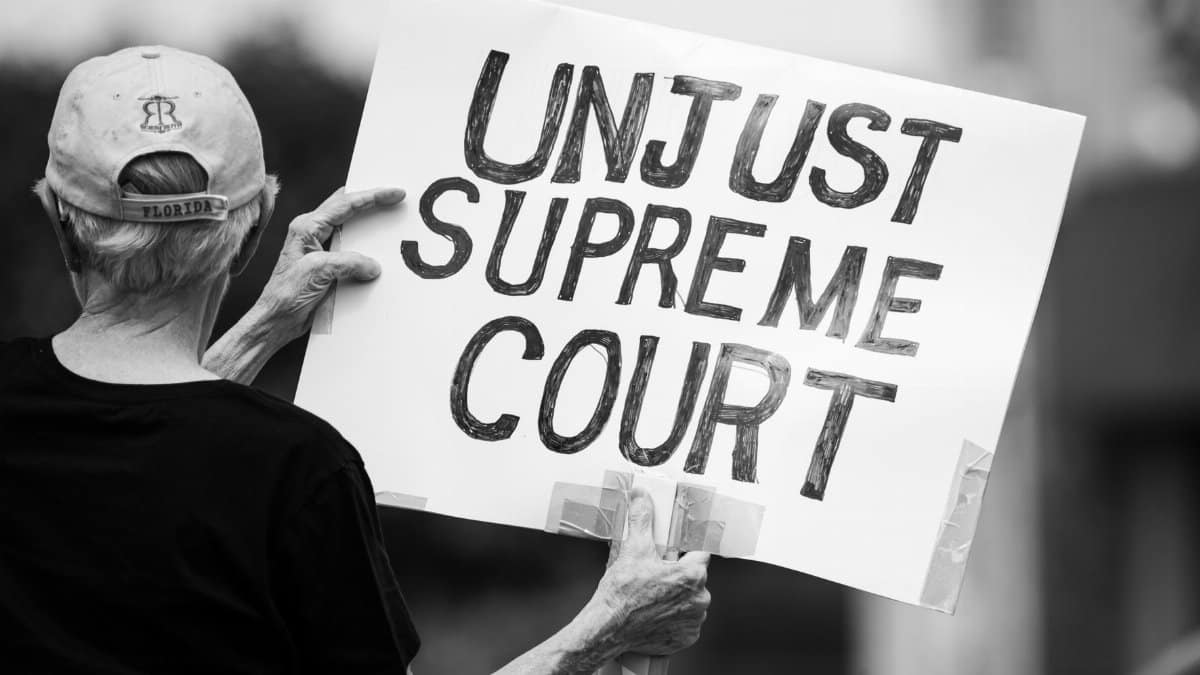
On a week when campaign offices were already arguing over yard signs and county clerks were locking in ballot proofs, the Supreme Court reached into Missouri politics and stopped a map in its tracks. The Missouri gerrymander ruling does not crown a winner in the larger war over representation. It does something more immediate. It tells the state to hold the contested congressional lines and wait, with the midterms close enough that every week of uncertainty has a price.
A stay that freezes the fight without ending it

Emergency orders are the Court’s blunt instrument. They are meant to prevent harm while judges sort out who is likely to prevail, not to write the final chapter of a constitutional dispute. In this instance the justices halted Missouri’s redrawn House map, the latest turn in a contest over how the state’s districts should look when voters choose their members of Congress.
A stay is easy to misread. Campaigns treat it as a verdict. Lawyers treat it as a timing decision. Both instincts contain a piece of the truth. The order keeps the challenged lines from governing the approaching election while the underlying case continues. It does not, by itself, declare that the map is illegal, nor does it bless the lines the state wanted to use. What it does is refuse to let a disputed map become the quiet default simply because the calendar is moving.
That distinction matters in a state where control of a handful of districts can shape a delegation for a decade. Missouri sends eight members to the House. Shift the boundaries of one or two of those seats and the political meaning of the map changes even if the statewide vote barely moves. An emergency halt forces everyone to plan as if the last word has not been spoken, because it has not.
Why the Missouri gerrymander ruling returned to the high court
Redistricting fights rarely die after a single ruling. Legislatures draw, challengers sue, trial courts take evidence, appeals courts trim or expand the remedy, and someone eventually asks the Supreme Court to pause the result before ballots are printed. Missouri’s dispute followed that familiar path, with an added edge: the map at issue was a redraw, not merely the lines adopted after the last census, and opponents argued that the new boundaries stacked the deck.
The phrase people reach for is gerrymander, a word that has outlived the salamander cartoon that gave it birth. In modern litigation it covers two arguments that courts do not treat as the same thing. One is partisan advantage, the claim that a party drew lines to win more seats than its share of the vote would suggest. The other is racial injury, the claim that race was used in a way the Constitution or the Voting Rights Act forbids, either by packing voters of color into fewer districts or by cracking their communities across many.
Federal doctrine treats those claims differently, which is why a case can look political in the newspaper and legal in the brief. The Missouri gerrymander ruling sits in that gap. Challengers describe a map built to entrench power. Defenders describe a legislature using authority the Constitution leaves largely to the states. The stay does not choose between those stories. It says the election should not run on the disputed version while the choice is still open.
What federal courts will and will not police
Since Rucho v. Common Cause in 2019, the Supreme Court has held that claims of partisan gerrymandering present political questions that federal judges are not equipped to answer with a workable standard. That decision did not erase every lawsuit about district lines. Claims that a map discriminates on the basis of race, or that it dilutes minority voting strength in violation of federal statute, remain inside the judicial lane.
The practical result is a strange bilingual argument. Politicians talk about fairness, competitiveness, and whether a state is being carved into safe seats. Lawyers talk about intent, traditional districting criteria, communities of interest, and whether race predominated over those criteria. A reader can finish a opinion and feel that the moral question was never the one the Court agreed to hear.
Missouri’s case is a reminder of that translation problem. Voters hear “gerrymander” and picture a party protecting itself. Justices, bound by precedent, ask whether the record shows a constitutional or statutory violation they are still willing to remedy. An emergency stay can look like a moral intervention when it is, more narrowly, a decision about irreparable harm and the likelihood of success on whatever claim is actually before the Court.
Clerks, candidates, and a calendar that does not negotiate

Law moves in briefs. Elections move in print deadlines. County clerks need to know which voters belong in which district before they design ballots, train poll workers, and program machines. Candidates need to know which doors are worth knocking. Donors need to know whether a seat is a reach, a hold, or a formality. A late change in lines scrambles all of that, which is precisely why courts are reluctant to rewrite maps on the eve of an election and also why they sometimes freeze a map that arrived too late or too tainted to trust.
The halt ahead of the midterms puts Missouri in that uncomfortable middle. Officials cannot treat the redrawn lines as settled. Campaigns cannot pretend the old argument is over. Voters, who rarely track docket entries, will mostly encounter the dispute as confusion: a district number that might change, a representative who might no longer live inside the lines that choose them, a race whose competitiveness is a moving target.
None of this is abstract administration. A misassigned precinct is a real ballot error. A candidate who spends August in the wrong neighborhood wastes the only resource that cannot be refunded, which is time. The Missouri gerrymander ruling is, among other things, a management order. It tells the machinery of the election to stop assuming the contested map is the one that will count.
How a redraw differs from the census map

Most Americans meet redistricting once a decade, after the census, when states adjust for population and sometimes for political opportunity. A redraw in the middle of that cycle is a different animal. It signals that someone with power decided the existing lines were no longer acceptable, whether because a court forced a repair, because lawmakers saw a chance to improve their position, or because both things happened in sequence.
Mid cycle maps draw sharper suspicion for a simple reason. The population data have not suddenly changed in a way that demands new boundaries. The political data have. Parties know, with uncomfortable precision, which precincts lean which way. When lines move without a new census, observers ask what problem the legislature was solving. If the answer is “our majority,” the map may still be lawful under current federal precedent on partisan advantage, and still look indefensible to people who think elections should be contests rather than cartography.
That is the tension the stay preserves rather than resolves. Missouri’s defenders of the redraw can argue that legislatures are allowed to act, that politics in districting is not a scandal, and that courts should not become a second mapmaking body. Opponents can argue that a redraw this close to an election, aimed at congressional power, is exactly the sort of self dealing that leaves voters as spectators. Both claims can be sincerely held. Only one set of lines can be used when polls open, and for now the contested set cannot.
The voters who live inside the argument
District lines are not only instruments of party strategy. They decide whether a neighborhood shares a representative with the city next door or with a rural county an hour away. They decide which issues a member of Congress must answer for, and which communities can be ignored without electoral cost. In Missouri, as elsewhere, the distance between a packed district and a cracked one is the distance between a voice that is concentrated and a voice that is diluted.
People who have lived through several maps describe a particular fatigue. They learn the name of a representative, show up at a town hall, and then discover that a new line has moved them into another seat where their history with that office does not travel. The civic relationship has to be rebuilt. If the new district was drawn to be safe, the incentive to rebuild it is weaker on both sides. The member owes less to the new arrivals. The new arrivals expect less in return.
A court order cannot repair that wear by itself. It can refuse to let a disputed map harden into habit before anyone has finished testing it. For voters who suspect the lines were drawn around them rather than for them, the Missouri gerrymander ruling is less a triumph than a delay they hope will be used well. Delay is not nothing. In election law, delay is often the only remedy that arrives before the damage is locked into a term of office.
What each side claims to be protecting

Republican mapmakers and their allies typically describe these fights as a defense of legislative authority. The Constitution gives states the leading role in drawing congressional districts, subject to federal limits. From that view, a court that blocks a map is not a neutral referee. It is an unelected body substituting its preferences for those of elected representatives, often at the urging of the party that lost the line drawing fight in the capitol.
Democrats and civil rights plaintiffs typically describe the same fights as a defense of the vote itself. A ballot is hollow, they argue, if the district has been engineered so that the outcome is known before the campaign begins. They point to irregular shapes, to splits of cities and counties that have no explanation except partisan math, and in some cases to evidence that race was used as a proxy for party in ways federal law still forbids.
The Supreme Court’s emergency posture does not require it to adopt either sermon. It requires a judgment about harm, timing, and the chance that the lower court got the law wrong or right. Readers who want a ringing endorsement of one civic theory will not find it in a stay. What they will find is a Court willing, at least for now, to keep Missouri’s redrawn House map off the field.
The shadow of precedent and the habit of emergency review

The modern Court decides a striking share of election disputes through emergency applications rather than full briefing and argument. Critics call that habit the shadow docket and warn that major rules for voting are being set without the deliberation the public associates with constitutional law. Defenders answer that elections do not wait for the ordinary calendar, and that a Court which refuses emergency relief is making a decision too, just a silent one in favor of whatever status quo the lower court left in place.
Missouri’s map is now part of that argument, whether the justices intended a broad statement or not. Each stay teaches legislatures and litigants something about what kind of record moves the Court and what kind of timing is too late. If lawmakers believe a redraw will stick unless a challenger can show racial injury with unusual clarity, they will draw accordingly. If challengers believe an emergency application is the real fight, they will build cases for speed rather than for the slow accumulation of fact.
Neither lesson is healthy for a system that asks citizens to trust both legislatures and courts. Precedent on partisan gerrymandering already tells federal judges to stand back from the purest political fights. Emergency practice then asks those same judges, and ultimately the justices, to decide in a hurry whether a particular map crosses a line they still recognize. The combination produces orders that feel enormous and explanations that feel thin.
Trust, fairness, and the moral language of maps

Americans argue about district lines in the vocabulary of cheating because the stakes feel moral, not technical. A map either respects the idea that voters choose their representatives or it reverses the arrow. That intuition is older than any docket and sturdier than any multifactor test. It is also incomplete, because every districting choice advantages someone. Compactness, county integrity, competitiveness, and minority opportunity can pull in different directions. A perfectly neutral map is a slogan, not a geometry.
Still, the moral intuition is doing real work in Missouri. People do not need a law degree to notice when a city is split so that its voters cannot combine, or when a district wanders across the state in search of friendly precincts. They experience that as a breach of good faith, a kind of civic bad faith that accumulates even when a court later says the breach is not one federal judges may repair under the partisan gerrymandering banner.
Institutions live on that residue of faith. Legislatures that treat maps as spoils teach voters that participation is ornamental. Courts that intervene only in emergencies, and only in a dialect of stays and standards, teach a different lesson: that the rules will be enforced late, narrowly, and without a story most people can retell. Neither lesson builds the patience a democracy needs when the count is close and the losing side is angry.
What the halt does not settle

The order leaves several questions explicitly open. It does not decide whether Missouri must revert to an earlier map, adopt a court drawn alternative, or eventually return to the redrawn lines if they survive review. It does not measure how many seats might change hands under one plan or another. It does not tell donors where to send money, though they will infer an answer anyway. And it does not quiet the political claim, made on both sides with equal heat, that the other side only believes in courts when courts are useful.
What it settles is narrower and, for the moment, sufficient. The contested congressional lines are not the ones Missouri may use while the stay is in effect. Election officials have a duty to administer a contest under lawful districts, not under a map that the Supreme Court has blocked. Campaigns have a duty, if they are serious, to stop describing the redrawn House map as a finished fact.
That is the unglamorous core of the Missouri gerrymander ruling. Power in a districting fight often belongs to whoever can make their map feel inevitable. A stay interrupts inevitability. It buys time for a merits decision, for a possible remand, for the ordinary grind of evidence. Time is not justice. In the weeks before a midterm election, time is the condition that makes a lawful election possible at all.
The longer argument waiting after November

Whatever map Missouri uses this cycle, the argument will outlast the returns. States with unified governments will keep testing how far a mid cycle redraw can go. Challengers will keep searching for the racial or statutory hook that federal courts still accept after Rucho. The Supreme Court will keep being asked to choose, on short notice, between letting a lower court order stand and letting a legislature’s lines take effect.
Missouri is not unique in that pattern, which is why this stay will be read far from Jefferson City. Mapmakers in other capitals will study the posture, not because a stay is a treatise, but because politicians learn from what survives contact with the Court. If redrawn House maps can be frozen when they arrive late and carry a heavy litigation record, some legislatures will move earlier and build cleaner files. If such maps are only paused in rare cases, others will treat litigation as a cost of doing business, payable in legal fees and public irritation.
Voters, meanwhile, will do what they usually do. They will cast ballots in whatever districts the law ultimately assigns them, and they will judge the system less by the elegance of the opinion than by whether the outcome felt arranged. The Court has blocked the arrangement Missouri’s leaders wanted to lock in. The harder work, of deciding what a fair congressional map owes the people who live under it, remains exactly where the justices left it: unfinished, urgent, and no longer something the state can settle by printing the disputed lines and calling them final.