

The notice arrived the way hard news often does in a large school system, buried in a board agenda that most families never open until a neighbor translates it. Miami Dade County Public Schools has cleared Success Academy, the New York charter network led by Eva Moskowitz, to open programs inside five district high schools. The vote rests on Florida’s Schools of Hope statute, which lets certain charter operators use space in district buildings. Planning documents tied to that arrangement contemplate as many as 133 job cuts. For teachers, aides, and office staff, the phrase Success Academy Miami co-location layoffs has stopped being a rumor. It is a number with paychecks behind it.
What the board put on the table

The approval does not hand Success Academy five empty campuses of its own. It authorizes the network to operate charter schools within existing high school buildings, sharing cafeterias, gyms, offices, and in some cases classrooms that the district says are underused. Supporters describe the move as a way to bring a nationally known model to neighborhoods where test scores have lagged and families have asked for more options. Critics hear something else: a private operator, publicly funded, planted inside schools the county already runs, with staffing cuts authorized in the same breath.
The ceiling of 133 layoffs is the figure that traveled fastest through group chats and union halls. It is an authorization, not a printed list of names, but authorizations have a way of becoming schedules. A district can say the cuts are contingent on enrollment, on which rooms are surrendered, and on how many district students remain. None of that comforts a veteran English teacher who has watched similar contingencies harden into pink slips.
How Schools of Hope rewrote the map

Florida’s Schools of Hope law was written to invite high performing charter operators into communities served by schools the state labels persistently low performing. The statute gives those operators unusual access to district facilities, sometimes at little or no rent, and it limits how firmly a local board can say no. Miami Dade’s vote sits inside that framework. Board members were not inventing a partnership from scratch. They were applying a state rule that treats certain charters as a remedy and treats empty seats as an invitation.
That legal design matters more than any single speech from the dais. When the state defines both the problem and the preferred cure, a local board can look like it is choosing when it is mostly complying. Parents who packed the meeting still had a right to be heard. The statute did not require the district to cheer. It did narrow the exits.
Sharing a building is not a small courtesy

Anyone who has worked in a crowded high school knows that space is curriculum. A lab taken over for another school’s science block is a lab the original students do not have during that period. A counseling office split in two is a longer wait for a transcript or a college form. Bell schedules, lunch waves, bus loops, and after school clubs all have to be renegotiated when two administrations share one address.
Charter advocates often answer that unused rooms should not sit dark while families want another program. That argument has force where enrollment has fallen and wings are genuinely idle. It weakens where “available” means available only if electives shrink, if teachers travel between rooms, or if the district school absorbs the friction while the newcomer arrives with a fresh brand. The Miami Herald’s account of the approval makes plain that the fight is about rooms and jobs at once, not about slogans.
The people inside the number 133

Layoffs in a school system rarely land only on the people whose titles appear in a headline. A cut in clerical staff slows enrollment. A cut among paraprofessionals leaves students with disabilities waiting longer for help that federal law still requires. A cut among campus security staff changes how safe a hallway feels at dismissal. Even if some of the 133 positions are vacancies that simply go unfilled, the work those vacancies represented does not vanish. It moves onto whoever remains.
Success Academy’s New York schools are famous for long days, strict routines, and strong results on state tests, and also for high teacher turnover and sharp debates about discipline. Importing the brand does not import a guarantee. It imports a management culture that will sit beside, and sometimes against, the culture already in the building. The staff who stay will be asked to make that coexistence look smooth to teenagers who can tell when adults are improvising.
Why this network, and why Miami
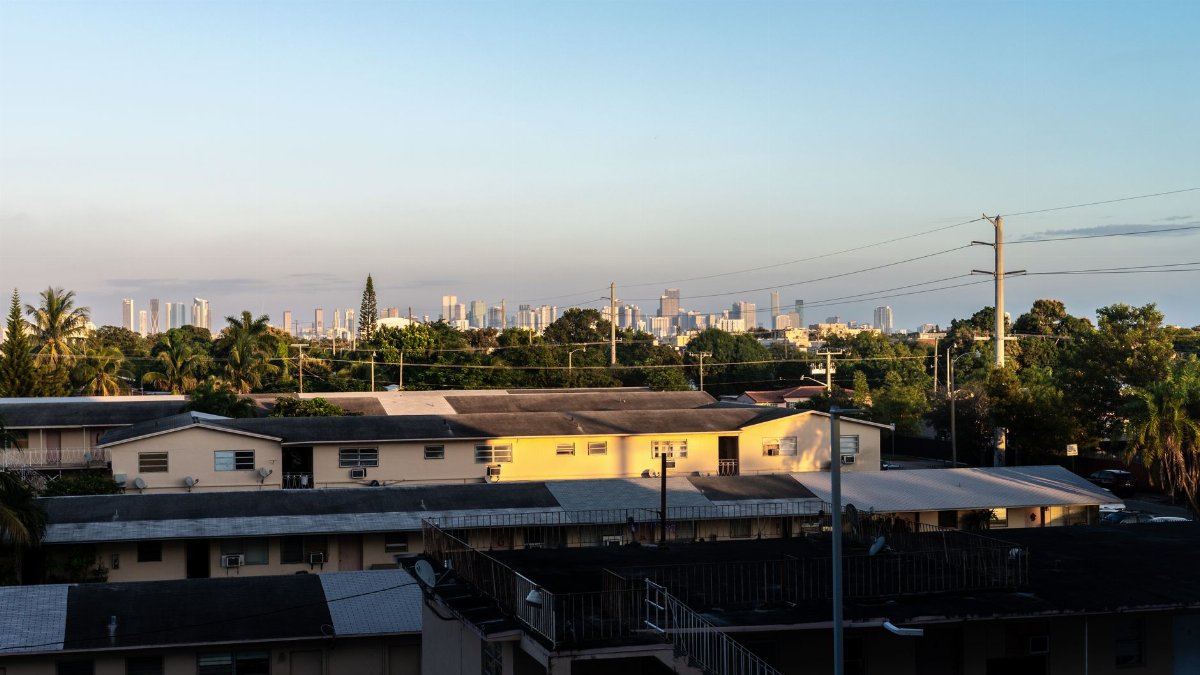
Success Academy has spent years seeking room to grow beyond New York, where political resistance and real estate costs have limited expansion. Florida, with a legislature friendly to charters and a statute that opens district doors, is an obvious destination. Miami offers scale, a large pool of students, and a political climate in which “choice” is a winning word even when the details are contested.
The network’s academic reputation is the credential it carries into every hearing. Families who have felt ignored by a struggling high school may welcome a program that promises order and college prep. That desire is not naive. It is often born of report cards, safety worries, and the sense that a zoned school has stopped expecting much. Any honest account has to hold that hope next to the disruption the same plan authorizes.
The argument for another door

Proponents say a monopoly on public education serves institutions better than children. If a charter can use empty space, draw students who want its model, and post stronger scores, they ask why a district should cling to every classroom out of habit. They note that charter students are public students, funded by public dollars, and that competition can push neighborhood schools to improve rather than coast.
There is a version of this argument that respects the people already employed. It would phase openings to match real vacancies, protect services for students who remain, and publish room by room inventories before anyone is told to clear a desk. The version now moving in Miami Dade is faster and blunter. Speed is part of the appeal for families who do not want to wait another decade. Speed is also how trust gets spent.
The argument that the cure repeats the injury

Opponents, including many district employees and their unions, say the state is starving traditional schools and then citing the resulting weakness as proof that charters must move in. They point to funding formulas, facility debt, and the cost of serving every student who walks in, including those a selective culture might counsel out. A charter that shares a building still chooses, in practice, through applications, discipline, and the daily demands it places on families.
They also ask a simpler question. If the district can identify 133 positions it can eliminate once another operator arrives, why was that staffing treated as essential last semester? Either the schools were overstaffed, which is its own scandal, or the cuts will thin services that students still need. Both answers indict the planning, just in different directions.
What students are likely to feel first
Teenagers will not experience this as a statute. They will experience it as a locked door that used to be open, a favorite coach reassigned, a class collapsed into a larger one, or a new group of students in matching polos eating lunch at the far end of the same cafeteria. Some will transfer into the charter because a parent believes the structure will help. Others will stay and wonder why their school was judged in need of a guest that gets the newer furniture.
Research on charter expansion is mixed, and this piece will not pretend a single study settles Miami. What local reporting already shows is a community arguing in real time about belonging. A building can house two schools. It cannot easily house two stories about which students count as the real student body.
Money, rent, and the quiet subsidies

Facility access is a subsidy even when no check is labeled that way. Rent forgiven, utilities shared, and security already on the district payroll all lower the cost of opening. Charter leaders call that efficient use of public assets. District leaders, when they are candid, call it a transfer. The Schools of Hope framework leans toward the first description. Budgets lean toward the second, because a dollar not collected in rent is a dollar that cannot hire a reading specialist.
Families deserve a plain accounting: which rooms, which costs, which positions, and what happens if charter enrollment misses its target. Without that ledger, the phrase Success Academy Miami co-location layoffs will keep circulating as a warning rather than as a plan people can test.
Politics that will not stay in the chamber

Education votes in Florida are no longer local in any clean sense. Governors, legislative leaders, and national charter donors all have a stake in whether a flagship network can plant itself in the state’s largest district. Board members know that resistance can be cast as hostility to poor families, and that acquiescence can be cast as surrender. Neither caricature captures a parent who wants both a safe zoned school and a real alternative.
I have watched enough of these fights to doubt that a louder rally settles them. What settles them, slowly, is whether the students who stay and the students who switch are both taught well a year from now. Politics can open the door. It cannot teach the class.
What families can still ask

Approval is not the last word on daily life inside those five high schools. Parents can demand published enrollment rules, discipline data, and a clear statement of which services remain guaranteed in the district program. Employees can insist that any reduction in force follow seniority and recall rights already in contract, and that special education staffing not be treated as flexible filler. Students can ask, with more authority than adults sometimes grant them, who is allowed in which hallway and why.
Civic pressure will not repeal Schools of Hope overnight. It can still shape schedules, grievance timelines, and whether the 133 figure stays a ceiling or becomes a quota. Silence is the only response that guarantees the most disruptive reading of the vote.
A test of whether choice includes the people already there

The moral core of this story is not a brand war between charter and district. It is whether a public system can widen options without treating existing workers and remaining students as residue. Success Academy will be judged on the students it enrolls. Miami Dade will be judged on the students it does not lose in the shuffle, and on whether the adults who taught them last year are discarded as the price of a headline about innovation.
If the experiment is as confident as its advocates claim, it can afford transparency. Name the five schools in every notice. Publish the room inventories. Tie any layoff to a documented drop in work, not to a hope that friction will sort itself out. Until then, Success Academy Miami co-location layoffs will read less like a policy detail and more like the bill for a decision made above the heads of the people who keep the lights on.
What the next school year will reveal

By the time bells ring again, theory will have to survive contact with bus delays, fire drills, and the ordinary pride of two staffs who did not choose each other. Some families will be glad they pushed for the charter. Some employees will have found other posts inside the district. Some will not. The honest measure is not the press release on opening day. It is whether achievement rises for the students who enter the new program and whether the district school beside it is still whole enough to serve the students who never left.
Miami has tried many reforms in the name of children. This one arrives with a famous name, a state mandate, and an authorized cut deep enough to scare a faculty lounge. Watching it closely is not cynicism. It is the minimum owed to every teenager who will walk those shared halls and wonder which school, exactly, is theirs.