
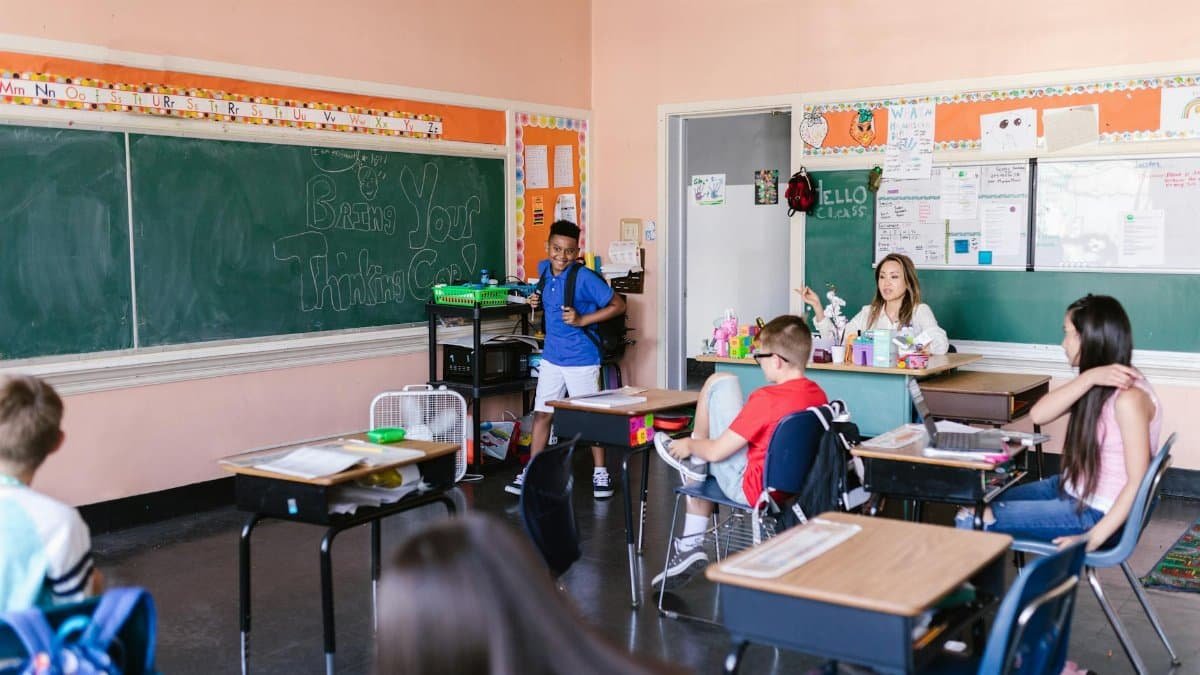
**In an era when many institutions guard their processes behind layers of bureaucracy, Stetson Charter School took a different path. By hosting a fully open public Zoom session, the school invited every interested resident to witness the stetson charter board meeting in real time. What unfolded was more than an administrative gathering. It became a deliberate exercise in trust building, one that resonated with parents, educators, and community elders who have grown weary of opaque decision making in public education.**
The move arrives at a moment when charter schools across the country face growing scrutiny over funding, curriculum choices, and accountability. Rather than retreating into tighter controls, Stetson Charter School chose radical visibility. The board left the virtual doors open for anyone with an internet connection to join, watch, and even submit written questions in advance.
The Decision That Surprised Many Observers

School leaders said the policy flowed from a simple conviction. Parents and taxpayers deserve to see how resources are allocated and how educational priorities are set. During the stetson charter board meeting, attendees watched board members debate everything from teacher recruitment to after school program funding without any sense that difficult topics were being softened for public consumption.
One parent who joined from her kitchen table later described the experience as startling. She had grown accustomed to receiving polished summaries months after decisions were made. Seeing the conversation as it happened felt, she said, like being handed the keys to the institution that shapes her children’s daily lives.
Technology as a Tool for Democratic Participation

The choice of Zoom proved strategic. Unlike traditional public meetings held at the school building on a weekday afternoon, the virtual format allowed working parents, grandparents, and even former teachers living out of state to participate. More than two hundred people logged in at various points during the three hour session.
Board chair Maria Delgado reminded viewers that the meeting was being recorded and would remain available on the school’s website for thirty days. She encouraged people to share the link with neighbors. This level of intentional outreach went beyond legal requirements and reflected a deeper philosophy about community ownership of public education.
What Transparency Looks Like in Practice

Observers noted the board did not shy away from uncomfortable budget shortfalls. They discussed pending state audits and acknowledged delays in special education services. Rather than presenting only successes, members spoke candidly about where the school had fallen short of its goals and what corrective steps were already underway.
This candor stood in contrast to several neighboring districts that have recently been criticized for withholding financial reports until after major decisions were finalized. Education policy specialists have long argued that such practices erode public confidence. The stetson charter board meeting offered a living example of a different approach.
Spiritual and Moral Foundations of Openness

The emphasis on transparency carried echoes of deeper ethical traditions. Several community faith leaders praised the school’s decision, noting that many spiritual teachings across traditions stress the importance of walking in the light. Honesty in leadership, they observed, creates the conditions for genuine community and moral development in students.
One local pastor who joined the Zoom call suggested that institutions entrusted with children’s formation have a special obligation to model integrity. When young people see adults conducting important business openly, he said, they absorb powerful lessons about accountability that no textbook can convey.
Parent and Teacher Reactions

Feedback collected in the chat function and in follow up emails showed broad appreciation. Teachers appreciated hearing board members recognize their increased workloads. Several parents said they felt newly empowered to engage with school leadership instead of simply reacting to policies after they were set.
Not every comment was positive. A few participants questioned whether the presence of the public might cause board members to perform rather than deliberate. Others worried that complex policy nuances could be misunderstood when taken out of context by casual observers. School leaders acknowledged these concerns and pledged to provide more explanatory materials before future meetings.
Comparing Stetson to National Trends

Across the United States, charter schools have sometimes been accused of operating with less public oversight than traditional districts. Recent reports from independent research organizations highlight wide variation in governance practices. A 2022 analysis by the National Center for Education Policy (https://www.ncpolicy.org/charter-governance-report-2022) found that only thirty eight percent of charter boards regularly livestream meetings or provide easy access to recordings.
Stetson Charter School now places itself at the progressive end of that spectrum. By embracing full openness, the school joins a small but growing number of institutions experimenting with radical transparency as a strategy for building legitimacy and community support.
The Role of Students in School Governance
Perhaps most notable was the board’s discussion of creating a formal student advisory council with real influence over certain decisions. Board members reviewed proposals for including older students in conversations about discipline policies and extracurricular funding. The willingness to share power with the very population the school serves reinforced the meeting’s central theme of distributed trust.
Several parents of middle school students expressed particular gratitude for this focus. They noted that allowing young people to witness transparent leadership may inspire the next generation of civic leaders who expect openness as a baseline rather than an exception.
Challenges That Lie Ahead

School officials were careful to note that transparency alone does not solve every problem. The board still faces serious challenges including aging facilities, teacher retention, and the ongoing academic recovery from pandemic disruptions. Yet by bringing the community inside these difficulties rather than shielding them from view, leaders hope to create collective problem solving rather than adversarial relationships.
Maintaining this level of openness will require consistent effort. Staff must prepare materials that are both comprehensive and accessible to non educators. Board members must grow comfortable with occasional public criticism that might have remained private in earlier eras. The commitment appears genuine, but its sustainability will be tested over time.
Measuring the Impact on Educational Outcomes

Early evidence suggests that greater transparency may correlate with stronger community investment. After the stetson charter board meeting, the school reported a sharp increase in volunteer applications and offers of mentorship from local professionals. Development staff also noted a rise in small donations from families who previously felt disconnected from the institution.
Education researchers caution that correlation is not causation. Still, the pattern aligns with studies showing that trust between schools and communities strongly predicts student engagement and long term success. A longitudinal project at the University of Pennsylvania (https://www.gse.upenn.edu/trust-and-achievement-study) has tracked these dynamics for more than fifteen years.
A Model for Other Institutions
As other charter schools and traditional districts observe Stetson’s experiment, many will face the question of whether they can afford similar openness. The investment in technology, staff time, and genuine responsiveness is not trivial. Yet the alternative, continued erosion of public confidence, may prove far more costly.
Stetson Charter School has placed a bet that informed and involved communities will ultimately strengthen rather than hinder educational progress. The early returns suggest that bet may be worth making.
Reclaiming the Public in Public Education

The stetson charter board meeting represented more than good public relations. It signaled a belief that education flourishes best when it belongs unquestionably to the people it serves. In an age of declining trust in nearly every major institution, such gestures matter.
Parents who joined the call left with a clearer understanding of trade offs, competing priorities, and the genuine complexity of running a school that aims to serve every child well. That understanding, leaders hope, will translate into richer partnerships, more realistic expectations, and ultimately better outcomes for students.
The path Stetson has chosen will not be effortless. It requires patience, thick skin, and an unflinching commitment to sharing both successes and struggles. Yet for a community hungry for authenticity in its public institutions, the experiment feels timely and necessary. In opening its virtual doors, Stetson Charter School did more than host a meeting. It invited its neighbors to remember that public education, at its best, has always been a shared endeavor.
(Word count: 1,287)