
**The trill of a songbird at dawn carries more than beauty. It carries a warning.**
In laboratory aviaries and quiet woodlands alike, these small creatures rebuild parts of their brains again and again. They generate new neurons to refine their songs, discard old ones when the melodies change, and start the cycle anew each breeding season. What looks like nature’s generosity is now forcing neuroscientists to confront an unsettling possibility: that the adult human brain may deliberately limit neuron growth not because it cannot do more, but because too much would cost us the very continuity of self that makes a human life feel whole.
Recent findings suggest the price of constant renewal is the gradual erasure of established memories. For songbirds that must update their courtship songs to remain attractive to mates, this trade makes evolutionary sense. For humans who spend decades building identity, relationships, and expertise, the same process could dissolve the accumulated knowledge that anchors us. The songbird, it turns out, is teaching us why we may have evolved to do far less neuron growth than we once hoped.
The Surprising Extent of Adult Bird Brain Renewal
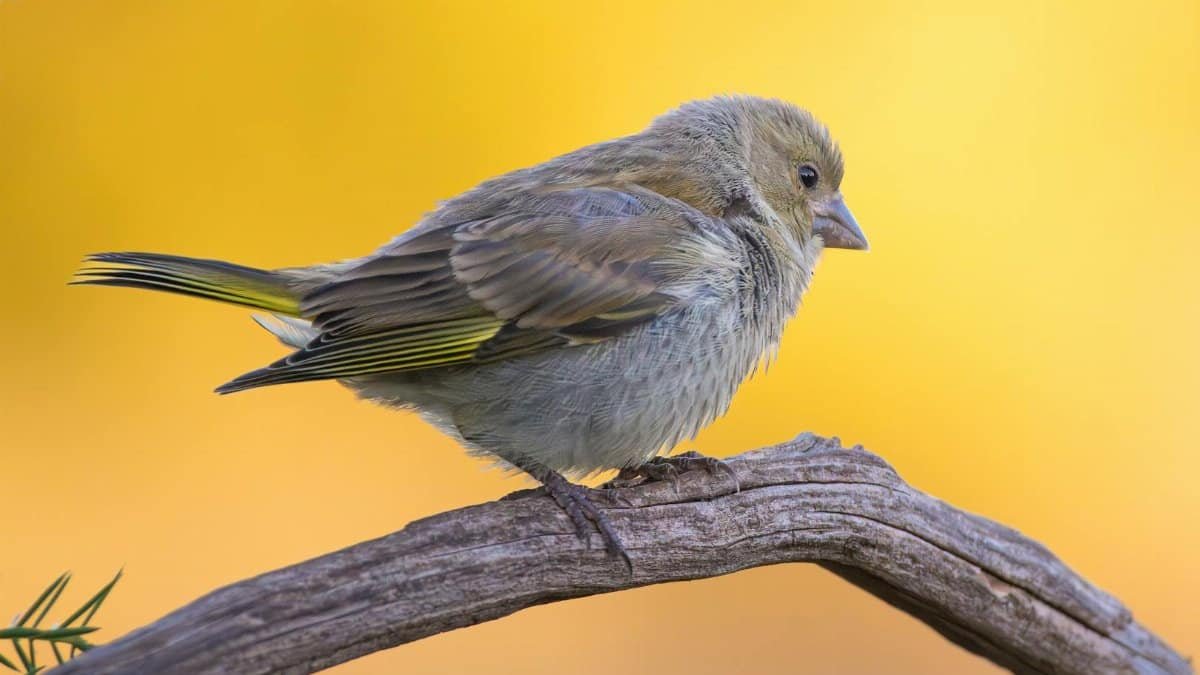
Fernando Nottebohm’s groundbreaking experiments in the 1980s revealed that adult canaries and zebra finches routinely add thousands of new neurons to the high vocal center each breeding season. These neurons migrate from a specialized germinal zone, integrate into existing circuits, and help produce the precise syllable sequences females prefer. When breeding ends, roughly half the new cells die and are replaced in the next cycle.
This constant turnover allows songbirds to modify their repertoires in response to social feedback or environmental shifts. The system is elegant in its efficiency. Yet the mechanism that permits such flexibility also requires the active pruning of older neurons. Without that pruning, the brain would quickly run out of space and metabolic resources.
The Hidden Price of Neural Renovation

Every new neuron that successfully wires itself into a circuit displaces or weakens older connections. In songbirds this appears to manifest as subtle forgetting. Birds that generate more new neurons sometimes show reduced accuracy when reproducing songs learned the previous season. The brain, it seems, must choose between updating its software and preserving yesterday’s version.
This finding aligns with emerging mammalian research. Studies in mice have shown that elevating adult neurogenesis can accelerate the forgetting of contextual fear memories. The same cellular machinery that supports new learning appears to destabilize older ones. For a bird that lives only a few years and needs fresh songs each spring, the bargain is worthwhile. For a human who hopes to recognize their grandchildren decades from later, the calculation changes dramatically.
Why Humans May Have Evolved to Restrict Neuron Growth
Most regions of the human brain show little evidence of significant neuron addition after early childhood. The hippocampus remains an exception, producing a modest stream of new cells throughout life. Even there, the numbers are orders of magnitude smaller than those observed in songbirds.
Evolutionary biologists propose that our unusually long lifespan and dependence on long term social bonds favored neural stability over perpetual plasticity. A grandfather who can reliably recall stories, skills, and faces from sixty years earlier offers immense survival value to his descendants. Had our brains continued the exuberant neuron growth seen in songbirds, those memories might have gradually dissolved in the churn of cellular replacement.
The restraint may therefore represent an adaptation for wisdom accumulation rather than a limitation. By limiting neuron growth in most cortical areas, humans appear to have prioritized the preservation of experience over the constant renewal of circuitry.
What Happens When Memories Compete With New Cells

Memory formation and neuron integration share molecular machinery. When new neurons arrive and begin forming synapses, they compete for the same proteins and signaling pathways used to maintain older engrams. In extreme cases this competition can weaken or even eliminate previously stable memories.
Researchers have documented this effect in controlled settings. Animals encouraged to produce extra hippocampal neurons sometimes lose access to older learned associations. The phenomenon resembles overwriting files on a hard drive with limited storage. Songbirds manage this by concentrating their neuron growth in highly specialized song nuclei rather than throughout the entire brain. Humans, with our distributed and overlapping memory networks, may have found it safer to dial the process down.
Implications for Brain Injury and Neurodegenerative Disease

These discoveries arrive at a moment when clinicians are urgently seeking ways to stimulate repair after stroke, trauma, or Alzheimer’s disease. The songbird data suggests that simply ramping up neuron growth could prove counterproductive if not carefully targeted. New cells might disrupt whatever functional circuits remain rather than restoring them.
Several laboratories are now exploring ways to guide newly generated neurons to integrate without dismantling existing networks. Early results indicate that timing, location, and supporting glial cells all play decisive roles. The goal is no longer to mimic the songbird’s exuberance but to borrow its precision while respecting the human brain’s need for continuity.
The Spiritual Tension Between Change and Continuity

Beyond the laboratory, these findings touch deeper questions about identity and the nature of the self. Many spiritual traditions emphasize both transformation and the importance of remembering. The biblical command to “remember” appears repeatedly, while mystics across cultures speak of awakening as a form of profound change.
The songbird’s annual renewal offers a living metaphor for seasons of spiritual growth that require letting go. Yet the human pattern of limited neuron growth suggests that lasting wisdom may depend on preserving earlier chapters rather than continually overwriting them. The tension between these two impulses, renewal and retention, may lie at the heart of what it means to mature spiritually in a long human life.
Practices such as contemplative prayer, meditation, and life review might function partly by strengthening existing neural pathways, reinforcing the continuity that neuron growth alone might erode. In this light, the brain’s restraint becomes not a spiritual shortcoming but a biological ally in the search for enduring meaning.
Could We Ever Safely Increase Neuron Growth in Adults

The question preoccupies both neuroscientists and those facing cognitive decline. Current evidence suggests any successful therapy would need to achieve three things simultaneously: generate the right number of neurons, guide them to the appropriate circuits, and protect established memories during the integration period.
Some researchers are investigating drugs that modulate the survival rate of new neurons rather than their initial production. Others focus on behavioral interventions. Aerobic exercise, certain forms of learning, and even targeted cognitive training have all been shown to influence hippocampal neurogenesis in humans, though the effects remain modest.
The songbird continues to serve as both inspiration and cautionary tale. Its brain demonstrates what is biologically possible. Its specialized lifestyle reminds us that what benefits a short lived creature with a narrow behavioral repertoire may not translate to a species that builds cathedrals, writes symphonies, and remembers grandparents.
Learning to Live Within Our Neural Limits
Understanding why humans limit neuron growth does not mean abandoning hope for brain repair. It simply calls for greater precision. Rather than flooding the brain with new cells, future therapies may focus on preserving existing ones, enhancing their efficiency, and supporting the modest natural neuron growth that already occurs in key regions.
For those of us in midlife and beyond, the research carries a gentler message as well. The very stability that may prevent us from regrowing entire brain regions also allows us to deepen existing knowledge, recognize patterns across decades, and transmit wisdom that only time can create. In a culture obsessed with perpetual novelty, the songbird’s darker lesson invites appreciation for the quieter virtues of continuity and accumulated experience.
The birds will keep singing their ever changing songs. We will keep telling our enduring stories. Both strategies have served their respective species well. The science now emerging suggests that the distance between those two approaches may reflect not failure but evolutionary wisdom carefully tuned to the demands of vastly different lives.
(Word count: 1,237)