
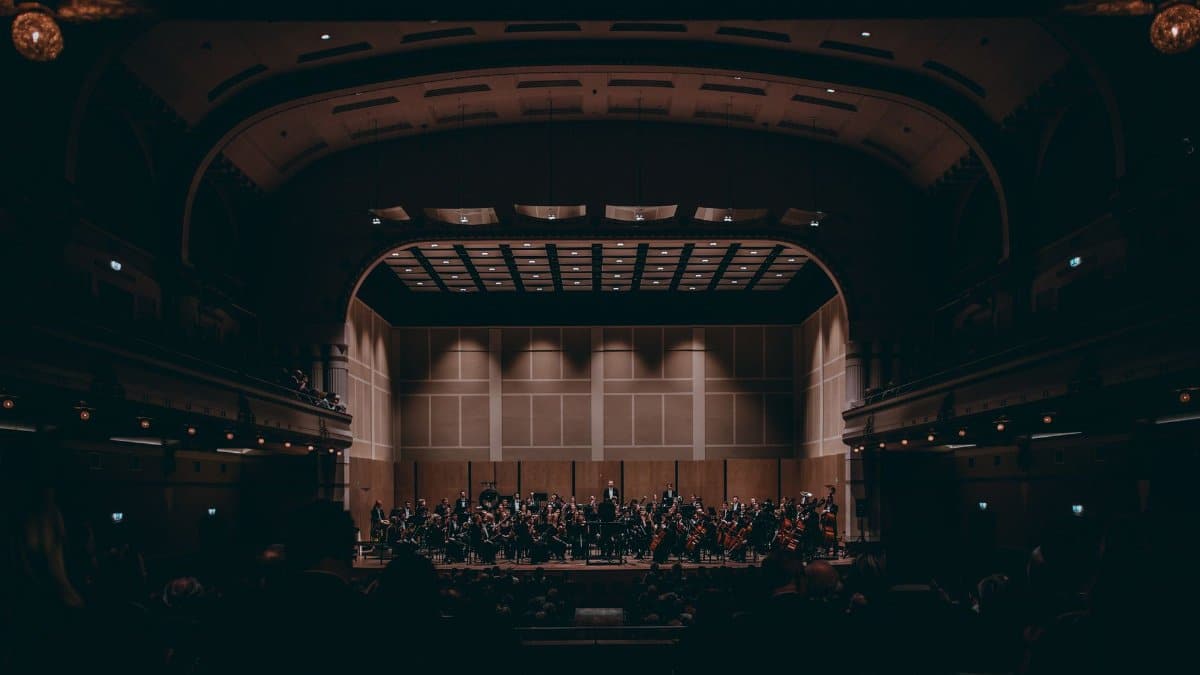
On a September evening in San Francisco, the lobby of Davies Symphony Hall fills with conversation before the house lights fall. The city has many openings, from theater to opera, yet the SF Symphony opening gala still carries a particular charge. It is the night the orchestra steps forward as a civic instrument, not only a concert series. This year the spotlight falls on violinist Hilary Hahn and conductor Giancarlo Guerrero, with Mendelssohn on the stand and a promise of new music from local composers later in the season. For listeners who treat the hall as a kind of secular sanctuary, the first downbeat is less a party than a renewal of attention.
A hall that still sets the tone
Davies Hall has never been a neutral room. Its scale, its sightlines, and the way sound gathers under the ceiling all instruct an audience in how to behave. People arrive dressed for a ritual they may not name. They check coats, find seats, and wait for a silence that feels earned. That silence is the real luxury. Outside, Market Street keeps its noise. Inside, a thousand small decisions about phones, programs, and whispered greetings give way to a shared pause.
An opening gala trades on that pause. It is part concert, part civic announcement, part reminder that a major orchestra still occupies a fixed place in the cultural calendar. The 2026 to 27 season begins not with a manifesto but with a familiar gesture: a celebrated soloist, a conductor asked to shape the evening, and a score the room already half knows. Familiarity is not a flaw here. It is a way of saying the institution is intact and ready to be judged.
Hahn and the Mendelssohn line

Hilary Hahn has spent much of her career making the standard violin repertoire sound newly considered rather than merely famous. Mendelssohn sits at the center of that repertoire. His concerto asks for clarity, speed of thought, and a singing line that never turns syrupy. In a gala setting, those demands can be mistaken for decoration. They are not. The piece rewards a player who trusts proportion more than display.
Pairing Hahn with Mendelssohn at the SF Symphony opening gala is a programming choice with a public face and a private standard. Audiences who know her recordings will listen for the clean attack, the unforced high register, and the way she lets a phrase finish instead of pushing it toward applause. Newer listeners may simply hear a melody that has survived because it is sturdier than fashion. Either way, the concerto functions as a test of the hall and of the partnership onstage. If the orchestra breathes with the soloist, the evening earns its ceremony. If it merely accompanies, the glamour thins quickly.
There is also a quieter point. Mendelssohn wrote music that many people first met as students, in lessons and youth orchestras and living room recordings. Hearing it again in Davies Hall is a return, not a discovery, for a large share of the crowd. Returns can be more revealing than premieres. They show whether attention has deepened or whether habit has replaced listening.
Guerrero at the podium

A gala conductor is often treated as a host. The job is larger than hosting. Giancarlo Guerrero has to set tempos that let Hahn speak, keep the orchestra from covering her, and still give the rest of the program a spine. Opening nights tempt everyone toward volume. The better instinct is balance. A conductor who understands that will make the evening feel composed rather than staged.
Guerrero arrives as a guest with a reputation for rhythmic vitality and for treating orchestral color as something to be shaped, not merely unleashed. That matters in a season opening, when subscribers are deciding, sometimes without saying so, whether they trust the people in front of them. Trust in classical music is built in small increments: an entrance that is together, a soft passage that stays soft, a finale that does not shout its importance.
The title on the season announcement puts Hahn and Guerrero side by side, which is fair. A concerto night is a duet of authority. Neither artist can carry the room alone. The audience hears the negotiation even when it cannot name it.
What an opening night asks of a city
San Francisco has spent recent years arguing with itself about downtown, about who belongs in public rooms, and about which institutions deserve loyalty when budgets tighten. A symphony gala does not settle those arguments. It does place them in a particular light. People still buy tickets, still dress up, still sit for two hours without a screen in their hands, or at least they try. That persistence is easy to mock and harder to replace.
The SF Symphony opening gala also functions as a signal to donors, board members, and the wider arts community. It says the calendar is real. Rehearsals happened. Guest artists flew in. The machine of a large orchestra, from librarians to stage crew, held. In a city that has watched companies shrink and seasons wobble, operational normalcy is itself a kind of news.
None of this requires the listener to romanticize wealth in the boxes. A gala crowd is not the whole city. It is a slice, often older, often able to pay, often already convinced that orchestral music matters. The more interesting question is what that slice owes the rest of the public once the speeches end. Access, education programs, and cheaper seats are not ornaments. They are the moral remainder of a night built on exclusivity.
Commissions that keep the repertoire alive
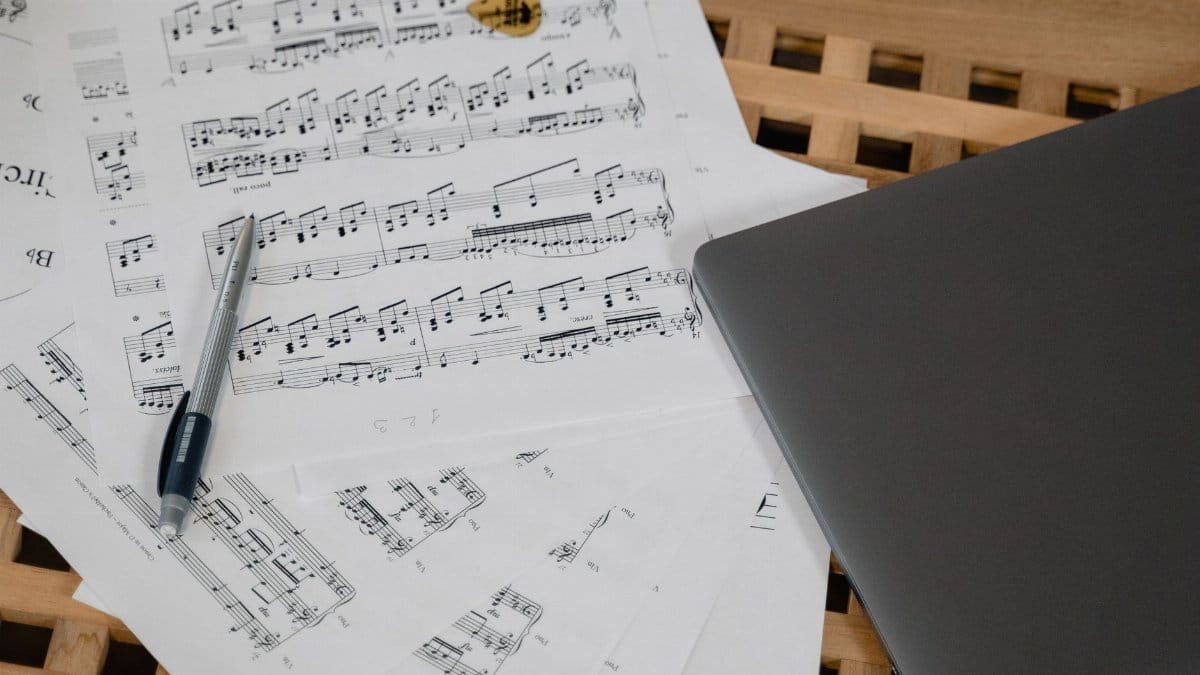
The season does not stay inside the nineteenth century. Later in the year the orchestra turns toward new local commissions, a necessary counterweight to the gala’s familiar glamour. A living orchestra that only recycles beloved scores eventually becomes a museum with a payroll. Commissions are how the institution admits that the present has a claim on the stage.
Local matters here. San Francisco composers work inside a city of fog, tech wealth, immigrant churches, experimental theaters, and neighborhoods that rarely appear in donor brochures. A commission cannot capture all of that, and it should not try to illustrate a press release. What it can do is put a new voice in front of an audience trained to compare everything with memory. That confrontation is healthy. Some listeners will resist. Some will find a phrase they want to hear again. Both reactions prove the music entered the room.
The timing is shrewd. Open with Hahn and Mendelssohn, then ask the same public to meet unfamiliar work. The gala builds credit. The commissions spend it. If the orchestra follows through with rehearsal time, clear framing, and repeat performances rather than a single anxious premiere, the new pieces have a chance to become more than obligations.
Listening as a spiritual practice

Calling a concert spiritual can sound vague, especially in a news category that sometimes treats spirit as trend. The claim here is narrower. Orchestral listening trains a form of attention that religious traditions have long valued: stillness, shared breath, the willingness to stay with a thought longer than comfort prefers. No creed is required. The practice is in the body. You sit. You wait. You let someone else set the pace.
Mendelssohn is useful for this because his surfaces are gracious. Grace can hide depth, or it can be the depth. Hahn’s playing, at its best, refuses the easy tear. It asks the listener to follow a line without being bullied by it. That is closer to contemplation than to spectacle, even when the dress code says otherwise.
People come to Davies Hall for many reasons that have nothing to do with prayer. Some come for status, some for a date, some because a parent once took them. The music does not audit motives. It does offer, for the length of a movement, a chance to be less scattered. In a decade of constant alerts, that chance is not small.
The audience in the room
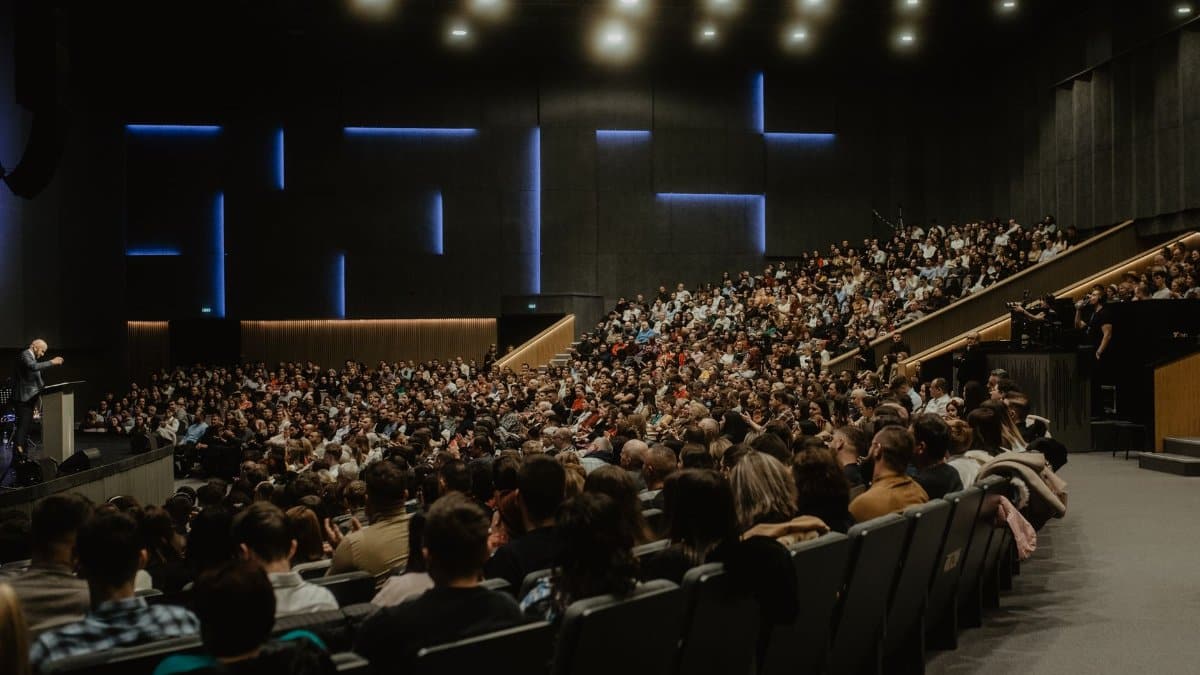
Opening night audiences are often described as glamorous and left at that. Glamour is a costume. Under it are habits. Regular subscribers know when to clap and when a movement is not finished. First timers watch their neighbors and hope they have not arrived at the wrong ritual. Both groups matter. An orchestra that plays only to the initiated slowly loses the plot of a public art form.
The presence of a star soloist changes the mix. Hahn draws listeners who might skip a subscription concert of unfamiliar symphonies. Some of them will return when the commissions arrive. Some will not. The institution’s task is to make the return plausible: program notes that respect intelligence, talks that do not condescend, and ticket paths that do not treat curiosity as a luxury good.
There is also the simple theater of recognition. When the concertmaster stands, when the conductor enters, when the soloist walks out with the violin already warm from the wings, the room performs its own overture. These gestures are old. They still work because they mark a boundary. The evening has started. Private chatter yields, at least for a while, to a common object of attention.
Money, access, and the price of grandeur

No honest account of a gala can ignore money. Large orchestras live on a braid of ticket sales, endowment income, and philanthropy. A glittering opening helps the braid hold. It photographs well. It reassures major givers that their name is attached to something visible. That reality does not cancel the music. It does shape who feels invited.
The ethical pressure is practical. If the SF Symphony opening gala is the face of the season, the season has to show another face soon: neighborhood concerts, student tickets, open rehearsals, school visits, and commissions that do not vanish after one night. Grandeur without a public remainder becomes a closed circuit. San Francisco has enough closed circuits.
Listeners can hold two thoughts at once. They can be moved by a Mendelssohn slow movement and still ask who could not afford the seat beside them. Criticism of price is not hostility to beauty. It is a demand that beauty not be rationed only to those already inside the ritual.
A season that has to earn its promise
Announcements are easy. Seasons are long. The pairing of Hahn and Guerrero will be judged on one night, then forgotten by people who never subscribe, and remembered by people who do. What lingers is whether the orchestra sounds like it wants to play together, whether guest weeks feel connected to a larger idea, and whether the local commissions later in the year receive the same care as the gala centerpiece.
Music directors, interim leaders, and guest conductors all leave fingerprints. Audiences may not follow board politics, but they hear uncertainty. They also hear confidence. A confident orchestra does not rush famous music and does not apologize for new music. It assumes the public can handle both, which is a form of respect.
The 2026 to 27 opening will not, by itself, define the institution’s next decade. It can set a standard. If Hahn is given room to phrase, if Guerrero keeps the ensemble alert rather than loud, and if the hall’s famous blend serves the score instead of swallowing it, the night will have done its job. The rest is repertoire, repetition, and the unglamorous work of showing up.
After the applause
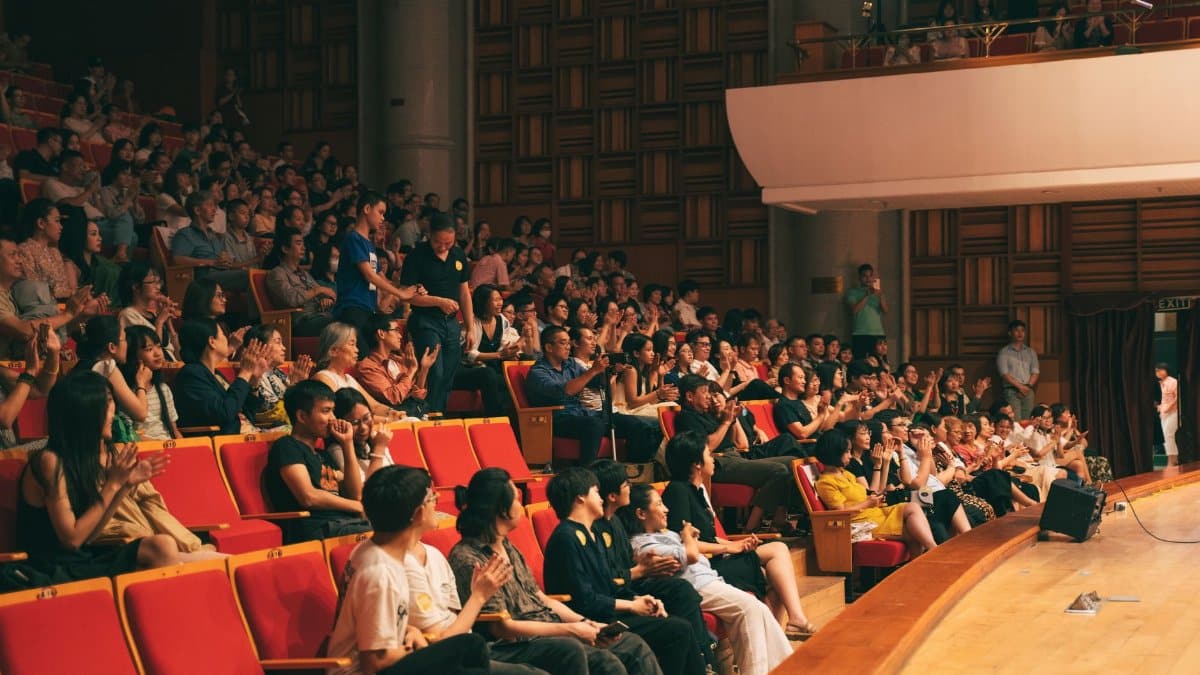
When the last cadence lands, the room will do what rooms like this always do. People will stand or they will not. They will compare the performance with a recording they love. They will spill back into the lobby and talk about dinner. The orchestra will pack up. The spiritual residue, if there is any, will be private and brief.
That brevity is not a failure. A gala is not a conversion. It is an invitation to keep a difficult art in public life for another year. The SF Symphony opening gala, with Hahn, Guerrero, and Mendelssohn at its center, makes the invitation in the oldest available language: a great player, a living conductor, a score that still holds. The newer language arrives later, in commissions from this city. Between those two languages, a season either becomes a habit worth keeping or a poster that fades on a lobby wall.
San Francisco will decide in the usual way, one ticket and one quiet minute at a time. The lights will rise. The street will still be there. For a few hours, though, a crowd will have agreed to listen as if listening were a civic act. On opening night, that agreement is the whole point.