
In a hall where sermons and statecraft have long shared the same air, the subject was not doctrine in the old sense but the machines now writing memos, scanning faces, and ranking people before a clerk ever sees a file. Pope Leo XIV told a Vatican gathering that the most urgent challenge in the race to build artificial intelligence is the need for an institutional ethical framework, a structure with names, duties, and the power to say no. That argument, gathered in public talk under the phrase Pope AI ethical framework, is less a gadget review than a claim about who gets to set the rules when software moves faster than law.
A warning meant for builders and believers
The pope did not pretend that Rome can halt a global industry. He framed the problem as institutional. Principles already exist in speeches, codes, and corporate posters. What is missing, he suggested, is a durable home for those principles, a place where they are taught, audited, and enforced when profit and haste pull the other way. For readers who meet artificial intelligence only as a chatbot on a phone, the point can sound abstract. It is not. The same systems that summarize a parish bulletin can also screen a loan, flag a worker, or shape a news feed. An ethic that lives only in a homily will not reach those rooms.
Journalists who have covered technology for years hear a familiar gap. Engineers speak of models and benchmarks. Executives speak of markets. Religious leaders speak of the person. The Vatican intervention tries to force those languages into one conversation before the defaults harden. Whether that effort succeeds depends less on eloquence than on whether anyone with authority treats the warning as an assignment.
Institutions rather than slogans

An ethical sentence is easy to applaud and hard to operationalize. The Pope AI ethical framework, as the pope described the task, begins with a blunt question. Which bodies will carry the principles into hiring rules, procurement contracts, school curricula, and the design reviews that happen on a Tuesday afternoon? A principle without an office is a wish. A principle with an inspector, a budget, and a public record is a policy.
Catholic social teaching has long insisted that markets need moral boundaries and that the state is not the only guardian of the common good. Universities, professional guilds, unions, hospitals, and parish networks all sit inside that map. Applied to software, the map asks who trains the people who train the models, who can challenge a harmful deployment, and who is accountable when a system quietly discriminates. Those are institutional questions. They do not dissolve because a product is new.
A lineage older than the current boom

None of this arrives from a blank page. Under Pope Francis, Vatican offices and partner universities promoted the Rome Call for AI Ethics, an appeal for transparency, inclusion, and responsibility signed by technology firms and faith leaders. Pope Leo XIV inherits that file and sharpens one edge of it. The earlier documents asked what artificial intelligence ought to respect. The newer emphasis asks who will make respect obligatory when a release date is already on the calendar.
That shift matters. A call can inspire. An institution can persist after the cameras leave. Church history is full of both successes and failures on that score. Hospitals and schools became real partly because charters, budgets, and trained people outlasted the founder. Moral campaigns that stayed at the level of proclamation often faded. The present argument is an attempt to choose the first path while the technology is still young enough to be steered.
Why speed keeps outrunning principle

The commercial race is not a metaphor. Companies compete to ship tools that write, see, and decide. Governments compete to host the data centers and to avoid looking slow. Workers meet the results as new software on an old job, often with little say in the design. In that climate, ethics arrives as a slide near the end of a deck. The pope’s claim is that this sequence is the danger. If institutions are identified only after the tools are everywhere, the institutions will spend their energy cleaning up rather than shaping.
Speed also flatters a certain kind of fatalism. People say the technology is inevitable, so the only adult response is adaptation. Inevitability is a poor substitute for judgment. Societies have slowed, banned, licensed, and redesigned powerful tools before, from medicines to cars to broadcast media. None of those histories was pure. All of them required offices with mandates. Artificial intelligence will not be the first invention to need a clerk with a stamp and a conscience with a statute behind it.
Companies, states, and the church

Three kinds of power sit at the table, and they do not trust one another equally. Companies hold the models and the talent. States hold licenses, liability rules, and the purse of public contracts. Churches hold a moral vocabulary and a network of schools, clinics, and congregations, but they do not write the code. A serious Pope AI ethical framework has to admit that imbalance instead of pretending a joint statement erases it.
For a company, the test is whether ethical review can delay a launch. For a government, the test is whether rules apply to domestic champions as well as to foreign rivals. For the church, the test is whether it will learn enough technical detail to avoid blessing vague promises. Each party can hide behind the others. Firms say they await regulation. Regulators say they await expertise. Clergy say they await both. The pope’s urgency is a refusal of that circle.
Labor, dignity, and the person on the other side of the screen

Artificial intelligence is often sold as a convenience for the user. Much of its cost is borne by people who never appear in the advertisement. Annotators label disturbing images for low wages. Teachers rewrite assignments because students submit machine prose. Nurses argue with triage software that does not know the patient in the bed. A framework worthy of the name has to count those people as subjects, not as friction.
Catholic language of dignity is not a technical specification, and it should not pretend to be one. It can still set a floor. A system that cannot explain a denial of care, credit, or work to the person affected fails a basic test of respect. A workplace that uses monitoring to squeeze every minute fails another. These are not futuristic puzzles. They are present tense disputes in American offices, warehouses, and clinics. Institutions that ignore them will not be credible when they later speak about existential risk.
What implementation would actually require
If identifying institutions is the urgent task, the next sentences have to be practical. Someone must own procurement standards for public agencies that buy these tools. Someone must train judges and journalists to ask better questions about error and bias. Someone must give workers a channel to contest automated decisions without fearing retaliation. Someone must fund independent evaluation that is not paid by the vendor whose product is under review. None of that is glamorous. All of it is what an ethical framework looks like after the press conference.
Education belongs on that list. Seminaries, business schools, and computer science departments still too often teach in parallel. A graduate who can discuss both model limits and moral injury is rare. The church could use its colleges for that crossing without claiming to run the industry. States could require plain language notices when a consequential decision is automated. Firms could publish the incidents they would rather bury. Each step is small. Together they are the difference between a slogan and a system.
An American public and a global pulpit
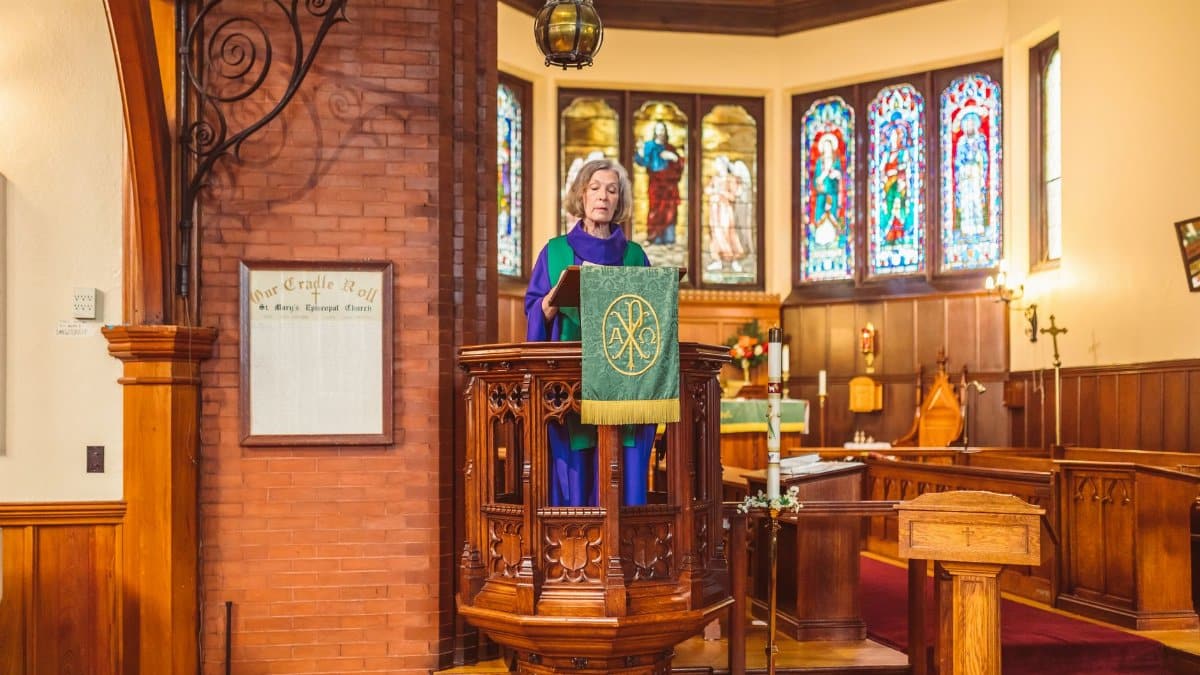
Readers in the United States will hear this Vatican message through a domestic argument that is already loud. Some want rapid deployment in the name of growth and national strength. Others want pauses, licenses, and hard liability. Many simply want to know whether a tool used on their child, their job application, or their medical chart can be questioned by a human. The pope is not a candidate in that fight. He is a reminder that the fight is also about institutions, not only about apps.
The audience is wider than American Catholics. The church’s schools and charities operate in countries where regulation is thin and where foreign firms set the terms. A framework announced in Rome and ignored in procurement offices abroad will confirm the cynics. A framework that shows up in contracts signed by Catholic hospitals and universities will be harder to dismiss. Example is a form of argument. In this case it may be the only form with reach.
The risk of moral language without teeth

There is a fair critique of any religious intervention in technology. Homilies can launder corporate reputation. A photo with a pontiff is cheaper than a redesign. If the Pope AI ethical framework becomes a gallery of signatures and no record of refused deployments, it will have failed on its own terms. The most urgent challenge the pope named is urgent precisely because talk is plentiful and offices are scarce.
Skeptics inside the church have another worry. Technical ignorance can produce bans that miss the point or blessings that miss the harm. The remedy is not silence. It is partnership with people who understand the systems and are willing to tell clergy when a proposed rule cannot be implemented or when a proposed partnership cannot be trusted. Moral authority that refuses expertise becomes theater. Expertise that refuses moral limits becomes a product roadmap. The interesting work is the unglamorous negotiation between them.
What reporters should watch next

The speech is a beginning, not a scorecard. The useful questions now are concrete. Which offices inside the Vatican and in bishops conferences will be tasked with follow through? Which technology firms will accept limits they did not draft? Which governments will cite the appeal when they write rules, and which will cite it only when they want a softer image? Which Catholic institutions will change a purchasing policy because of what was said in that hall?
I have sat through enough ethics panels to know that the transcript ages quickly. What lasts is a changed form, a new requirement, a person empowered to stop a rollout. If those artifacts appear, the pope’s ranking of the challenge will look prescient. If they do not, the remarks will join a long shelf of warnings that were accurate and unused. Either outcome will be visible. It will not require a theologian to spot it.
A standard the public can recognize

Ordinary readers do not need to parse model architecture to judge the stakes. They can ask whether a decision about their life can be appealed, whether the people who built the tool can be named, and whether anyone is paid to look for harm before the harm is news. Those questions are the public face of the institutional search Rome is urging. They translate a curial argument into a kitchen table test.
The Pope AI ethical framework will be judged by that translation. Not by how often the phrase is repeated, and not by how solemn the gathering looked, but by whether some office, somewhere with leverage, treats ethical limits as part of the job. The race will continue. The open question is whether anyone with authority is organized enough to meet it with more than hope.