
On a mild Roman morning, the bronze doors opened a little earlier than the posted schedule, and the small crowd in the square shifted from idle talk to a kind of held breath. Cameras rose. A few pilgrims crossed themselves. When the figure in white appeared at the window, thinner than in photographs from the spring consistory, the applause was restrained, almost careful, as if volume itself might be impolite. Pope Leo did not linger on his health. He thanked the doctors, asked for continued prayers, and turned, within a minute, to the work he said still waited.
A public return measured in small signals
The surgery, for a lung cancer found during a routine exam, had kept him out of the main liturgical calendar for several weeks. Vatican officials described the procedure as successful and the recovery as steady, while declining to offer a running medical chart to the press. What the public received instead was a sequence of signals: a written message read at a noon prayer, a brief audio greeting to hospital staff, then the appearance at the window. None of it was theatrical. All of it was meant to say that the office had not gone dark.
For readers far from Rome, the caution can look like evasion. Inside the Vatican, it is closer to habit. Popes have long treated the body as something to be managed so that the ministry can continue, not as a subject for serial confession. Aides who spoke on background said the priority in those first days was oxygen, rest, and a calendar stripped to what could not be postponed. The window appearance was scheduled only after physicians cleared a short period of standing and speech.
That staging matters because a pope is never only a patient. He is a sign, and signs are read by people who do not share a language. A pale face, a shorter blessing, a hand that trembles on the sill: each detail travels faster than any communique. The decision to appear, rather than to send another letter, was itself a sentence. He is back enough to be seen.
An agenda he insists has not moved
In the statement that followed, and in answers relayed through the press office, the message was blunt. There is no change to the agenda. There is no change to the priorities. The phrasing was repeated often enough that it began to sound like a fence around rumor. Speculation had already filled the gap left by silence: a slower pace, a narrower travel plan, a quiet retreat from fights that cost political capital. The denial was aimed at all of that at once.
What the agenda contains, in the telling of those close to the planning, is less a list of novelties than a continuation of files already open. Synod follow up. Diplomatic contacts in regions where the church is a minority or a target. Attention to migration, to the poor, to the credibility of bishops after years of abuse scandals. None of these items requires a new manifesto. They require time, and time is what illness calls into question. By saying the list stands, he was also saying that frailty will not be allowed to rewrite it in public.
Whether a list can survive a body is a separate matter. A pope can keep every priority on paper and still lose afternoons to fatigue. Officials have already shifted some audiences to written form and moved a foreign visit that had been penciled for early autumn. They describe those moves as scheduling, not policy. The distinction is tidy. It may not hold if the delays accumulate.
Unity named as the first task
If one word rose above the rest, it was unity. He called it the task that outranks the others, not because doctrine is soft, but because a church that cannot speak across its own fractures cannot be heard outside them. The appeal was familiar in Catholic life, and still sharp. Unity, in this usage, is not a mood. It is a discipline: staying in the same conversation when the temptation is to build parallel churches of the pure and the pragmatic.
The fractures are not abstract. In the United States, bishops and lay groups divide over politics, liturgy, and how hard to press on sexual ethics. In parts of Europe, empty pews sit beside loud arguments about identity. In Africa and Asia, growth brings its own strains, including arguments over inculturation and over how Rome should speak about family life. A pope who has just left a hospital bed does not dissolve those tensions by naming them. He does remind both wings that schism is not a think tank exercise. It is a wound with a history.
I have sat in enough parish halls to know how the word lands. To some it sounds like a plea for patience. To others it sounds like a request to wait forever. The statement did not pick a side in that hearing. It placed unity above the desire, common after any medical scare, to treat the next months as a victory lap or a last chance to force a favorite reform.
Married men and a door left closed for now

On one concrete question he was willing to be specific. He ruled out, for now, the ordination of married men to the priesthood. The phrase for now did real work. It was not a theological treatise, and it was not a forever. It was a boundary on the present agenda. Debate may continue in journals and synod halls. It will not, on his account, become a decision in this season.
The issue has hovered for decades, especially where priests are scarce and communities go months without the Eucharist. Some bishops in remote regions have asked Rome to consider viri probati, married men of proven character, as a pastoral exception. Others warn that a change at the edges becomes a change at the center, and that celibacy, whatever its costs, is bound up with the Latin church as they know it. The statement did not rehearse that argument. It simply took the question off the immediate table.
That choice will disappoint campaigners who hoped a health crisis might soften institutional caution. It will relieve those who feared a weakened pope might be pressed into a concession he did not intend. Both readings assume that illness makes a leader pliable. The text he authorized suggests the opposite instinct: when strength is limited, narrow the fights you are willing to open.
Illness and the optics of authority

A lung surgery is not a metaphor, though people will treat it as one. Breath is the medium of preaching, of the audible blessing, of the long address that still structures Catholic public life. To have that capacity interrupted is to remind even loyal Catholics that the papacy is occupied by a mortal. The modern church has lived this before, in long declines and in sudden absences. Each time, the institution discovers again that continuity is a practice, not a feeling.
There is also a temptation, especially in American coverage, to turn every papal illness into a horse race. Who gains if he slows. Which cardinal looks pastoral on camera. Which network already has a graphic ready. That habit flatters the watcher and cheapens the patient. The more useful question is simpler. What can still be done, by this man, with the strength he has, and what must be carried by others without pretending they hold his office.
Doctors who treat public figures often speak of a second recovery, the one that happens in reputation. A leader who returns too fast invites a collapse that becomes the story. A leader who vanishes invites the story that others are already governing in his name. The path he has chosen, brief appearances and firm verbal continuity, is an attempt to walk between those ditches. It asks the audience to accept incomplete information. Audiences are rarely generous on that point.
How parishes and the curia are hearing it
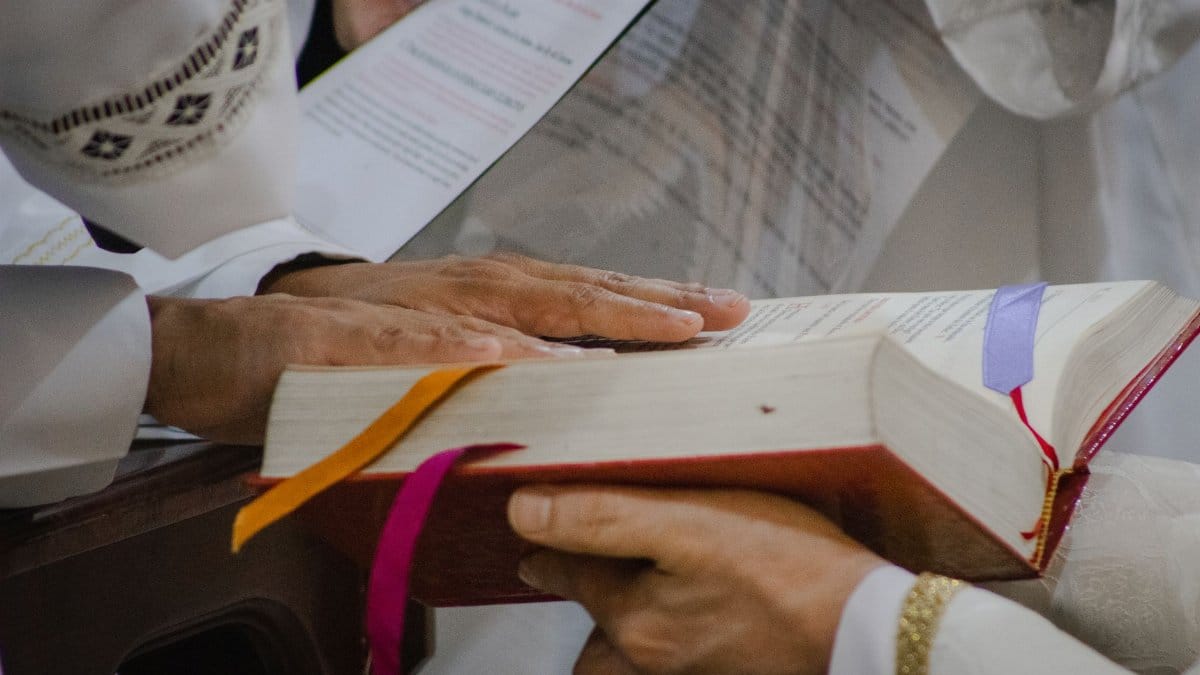
In conversations with pastors in the Midwest and the Northeast this week, the dominant note was relief edged with realism. People had prayed. They wanted him well. They also wanted to know whether the next year would be about hospitals or about the church they actually attend, the one with a leaking roof and a confirmation class that meets in a basement. The promise of an unchanged agenda reassures them only if the agenda includes the ordinary. Many are not sure it does.
Among curial officials, the reading is more procedural. An unchanged agenda means memos do not need to be rewritten and coalitions do not need to be rebuilt from scratch. It also means that rivals cannot easily claim a mandate from the sickroom. Power in Rome often moves by implication. A clear sentence, even a short one, closes alleys that implication would have opened. Several officials described the married priests line in exactly those terms: not a sermon, a lock on a door.
Lay reformers and traditionalists, oddly, shared a skepticism about the word unchanged. Both camps have learned that popes announce continuity and then spend years shifting emphasis by appointment, by silence, and by which reports get a preface. The test, they agree, will not be this week’s statement. It will be the names that appear on the next list of bishops, and the subjects that keep returning in his own voice once the voice is stronger.
Continuity is a claim that has to be kept

Continuity is easy to declare and expensive to perform. It requires showing up when showing up costs something. It requires letting subordinates act without letting them become the story. It requires a public that can tell the difference between a paused trip and a paused conviction. The statement tries to teach that difference in advance. Teaching it once will not be enough.
There is a moral stake here that sits above Vatican tactics. A church that speaks about the dignity of the sick cannot treat its own sick leader as either a mascot or a obstacle. The dignity claim cuts both ways. He owes the faithful honesty about limits. They owe him the refusal to consume his recovery as entertainment. American media, including the kind of feature this is, often fails that second duty. The appetite for plot is stronger than the appetite for patience.
Patience is not passivity. Catholics who want a different answer on married priests, or a harder line on politics, or a louder word on war, are free to keep asking. What they are not entitled to is a pretense that a postoperative week is the moment when every file must be settled. The papacy is long. A recovery is not. Confusing the two produces bad theology and worse journalism.
What the next season will actually show

The coming months will be legible in ordinary choices. Does he travel, and how far. Does he meet the bishops who disagree with him, or only those who already echo him. Does unity remain a theme when a specific fight, over money or doctrine or a painful personnel case, would be easier to win by isolating opponents. Those are the places where a slogan either becomes a practice or expires into stationery.
Health will intrude whether or not anyone invites it. Lung cancer, even when surgeons speak of clear margins, rearranges a calendar in ways memos cannot fully predict. Fatigue is not a press strategy. If the body requires a slower year, the honest version of an unchanged agenda may be a shorter one, pursued with the same aims. Pretending otherwise helps no one, least of all the people who have been told that priorities stand.
For now, the record is what he chose to put on it. The work continues. Unity comes first. Ordaining married men is not on the table in this stretch of time. The square will fill again, and the cameras will look for a stronger voice, a longer speech, a sign that the scare has passed into anecdote. The more serious viewers will listen for something else: whether the sentences he offered while still recovering are the sentences he is willing to live with when he no longer has illness as an explanation.