
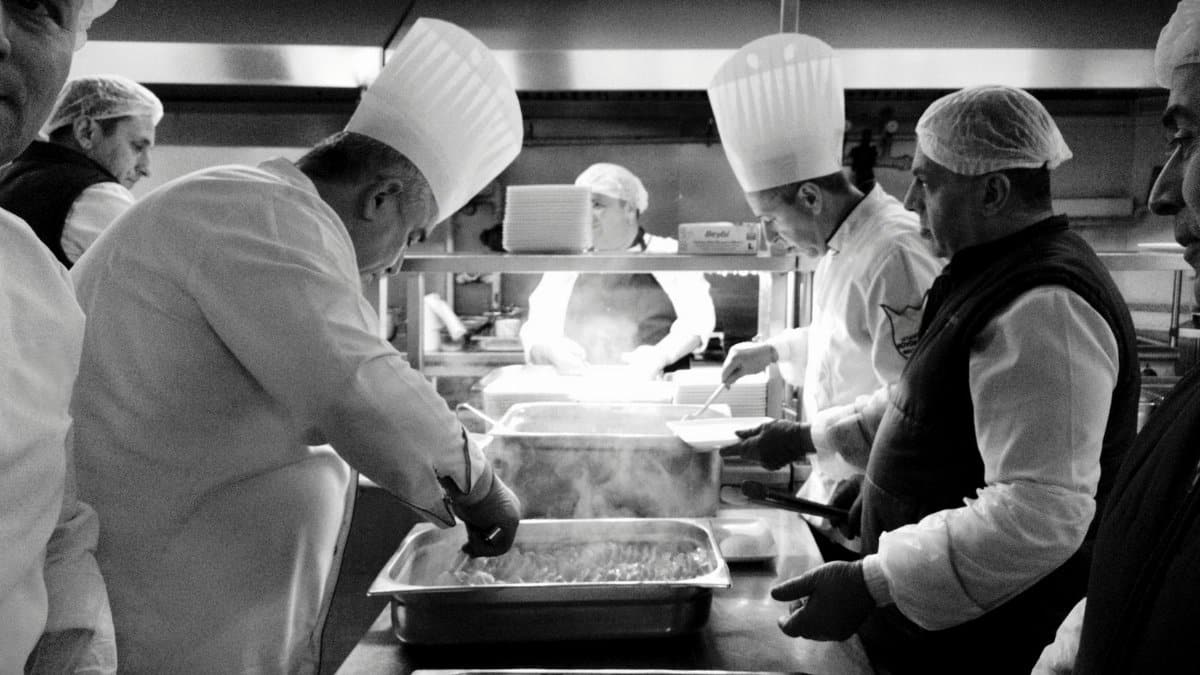
In a hall in Brazil on Nov. 8, a name that has sat on American bookshelves and in university kitchens for decades was read aloud with unusual care. Jacques Pépin, a faculty member at Boston University for 43 years, was named the inaugural recipient of the Basque Culinary World Prize Cooking Legacy award. The announcement did not crown a trend or a restaurant opening. It pointed at a life spent making difficult work look calm, and at the quieter claim that a cook is measured by what others can still do after he leaves the room.
A prize that arrives after the applause

Most culinary honors arrive while a chef is still building a brand. This one arrives as a summing up. Pépin is not a new discovery. He is a public teacher whose face has been familiar on public television, whose books have trained home cooks who never set foot in a professional kitchen, and whose university post has outlasted several generations of students. The Basque Culinary World Prize, associated with the Basque Culinary Center, has in other years recognized cooks whose work reaches beyond the plate into social questions. Adding a legacy distinction changes the frame. It asks not only what a chef is doing now, but what remains when fashion moves on.
As reported by the Boston Globe, the news landed in mid November, days after the Brazil announcement. For readers in Boston the local fact matters. A global prize attached itself to a man who has kept office hours, in one form or another, on a campus many of them pass without thinking of haute cuisine. Legacy, in that light, is not a cloud of reputation. It is a schedule, a classroom, a set of knives that students are allowed to use badly until they use them well.
What the Basque organizers chose to name

Names are arguments. Calling the distinction a Cooking Legacy award, rather than a lifetime achievement plaque, puts the verb of cooking ahead of the noun of fame. Cooking is repetitive. It fails in public. It depends on heat, timing, and the mood of ingredients that do not care about a résumé. Legacy, attached to that verb, suggests transmission: recipes, standards, and a way of standing at a stove that can be copied by people who will never meet the original teacher.
The inaugural nature of the honor also matters. A first prize has no comparison class. There is no previous winner to measure against, no established speech, no settled idea of who deserves it. Choosing Pépin sets a template. Future recipients will be read against a cook known less for empire building than for explanation. That is a particular kind of power. It tells younger chefs that clarity can be a career, not a step on the way to something flashier.
Forty three years that do not fit on a medal

Forty three years on one faculty is a strange number in a profession famous for burnout. Restaurants open and close. Television formats age. A university appointment, if it is real teaching and not a ceremonial title, requires showing up when no one is filming. Students arrive unformed. Some want spectacle. Some want a job. A few want to understand why an onion is cut a certain way, and why the reason is not snobbery but physics and respect for the person who will eat the result.
Boston has long treated food as both craft and civic life. Pépin’s long presence there stitches a European training to an American classroom. The city did not make him. He arrived with a formation already severe: the discipline of French kitchens, the early work near political power in France, the later decision to live and teach in the United States. What the university years add is duration. A legacy award that ignored that duration would be celebrating a highlight reel. One that includes it is celebrating attendance.
Technique as a moral habit

It is easy to romanticize knife skills. Pépin’s public teaching has always been plainer than romance. Watch the hands and you see economy. Nothing is tossed for drama. A chicken is taken apart because the parts have different uses, not because the camera likes a spin. That plainness is why so many people who never cooked professionally still feel addressed by him. He does not ask the home cook to impersonate a brigade. He asks for attention.
Attention is the part of his legacy that travels furthest. A sauce reduced too fast is not a personal failure of character, but it is a failure of watching. A stock skimmed with patience is not virtue in the abstract. It is a better liquid. The moral language creeps in anyway, because repeated care starts to look like a position on how to treat the world. Waste less. Explain more. Do not hide the work. Those are not commandments. They are the habits visible in the teaching.
An ocean crossing that became a method

Pépin’s path from France to the United States is part of the standard biography, and it is worth keeping in view when a prize with Basque roots honors him from a stage in Brazil. Cooking cultures do not stay inside borders, even when they insist on origin. A French technique, taught in English, recognized by an institution in the Basque Country, announced in South America, and rooted for decades in Massachusetts, is a map of how food knowledge actually moves. It moves through people who are willing to repeat themselves.
Repetition is underrated in stories about genius. The cook who explains a roast chicken for the hundredth time is doing something different from the cook who invents a dish once and lets a publicist carry it. Both can be valuable. Only one of them builds a commons. The Cooking Legacy award, by its wording, leans toward the commons. It suggests that the highest use of skill may be to make skill less scarce.
Fame is loud and legacy is usable

American food media has no shortage of famous cooks. What it sometimes lacks is a distinction between being known and being useful. Usefulness shows up in odd places: a parent who learned to bone a fish from a paperback, a line cook who steadies a wrist because a teacher once corrected the angle without humiliation, a viewer who stops fearing an omelet. None of that appears in a sales ranking. All of it is legacy if the word is to mean anything stricter than nostalgia.
Pépin has not been invisible to that media system. He has been on screens, on book tours, in partnership with other celebrated cooks, including long collaborations that introduced classical ideas to audiences who might have found them remote. The point is not that he stood apart from celebrity. The point is that celebrity was put to work. A demonstration that can be followed on a Tuesday night is a different artifact from a portrait that can only be admired.
The classroom as the real archive
Books yellow. Video files migrate into formats no one opens. A classroom is an archive that argues back. Students misunderstand, improve, leave, and sometimes return as teachers themselves. If Boston University has held Pépin for 43 years, the award is also, indirectly, a note about institutions that still make room for slow instruction. Not every campus does. Culinary education can tilt toward placement rates and equipment catalogs. Those matter. They are not the same as a standard of taste enforced kindly, week after week.
I have watched enough public cooking instruction to know how rare the unshowy correction is. The teacher who says, again, that the pan is too hot, without turning the mistake into a joke at the student’s expense, is practicing a form of respect that outlasts any single recipe. That is the part of Pépin’s reputation that colleagues tend to mention when they are not being asked for a slogan. It is also the part a legacy prize can honor without pretending that cooking is a sacrament. It is work. The reverence, if any, belongs to the refusal to waste the work.
A spiritual reading that stays in the kitchen
Calling this spiritual news would be a mistake if the phrase meant incense and doctrine. It is not a mistake if it means the human hunger for a task that is larger than the self and smaller than an ideology. Cooking sits in that range. It feeds bodies. It marks gatherings. It gives the day a sequence. For a teacher of Pépin’s kind, it also gives other people a way to join a tradition without having to worship the person who handed it over.
Legacy, in religious language, can curdle into inheritance and control. In a kitchen it has a built in corrective. The next person has to cook the dish. If the method fails in their hands, the legacy was theater. If it succeeds, the originator becomes less necessary, which is the decent outcome. An award that celebrates that outcome is praising a kind of disappearance. The teacher remains famous. The skill walks out the door with someone else.
Brazil, Boston, and the shape of a first

Geography is doing quiet work in this story. The announcement in Brazil places the honor outside both the Basque Country and New England, which keeps it from looking like a local toast. Boston supplies the long employment that makes the word legacy credible rather than promotional. France supplies the formation. The United States supplies the audience that learned to cook from explanations delivered in a second language with unusual patience. None of those places owns the prize. Together they describe a career that was never only national.
A first award also creates a burden for the people who will give the second. If the Cooking Legacy award becomes a celebrity capstone, it will blur into every other gala. If it keeps asking who made the craft more available, it will stay sharp. Pépin’s selection suggests the sharper path is available. Whether organizers take it is a question for later years. For now, the inaugural choice is clear enough to argue with, which is better than a choice so vague that no one can tell what was being praised.
What remains on the counter

After the speeches, the practical residue is what counts. A student in Boston still has to learn how salt behaves. A reader still has to trust that a written method was tested by someone who expected to be followed, not admired from a distance. A global prize can point at that residue. It cannot do the cooking. That limitation is healthy. It keeps an honor from pretending to be the work itself.
Jacques Pépin’s selection as the first recipient does not close a career that has already been long. It labels a standard. The standard is not mystery. It is repetition offered in public, correction offered without cruelty, and a willingness to stay in one place long enough for other people to get good. In a culture that often treats cooking as content, that standard is almost old fashioned. It is also, inconveniently, still the way anyone learns to feed someone else.