
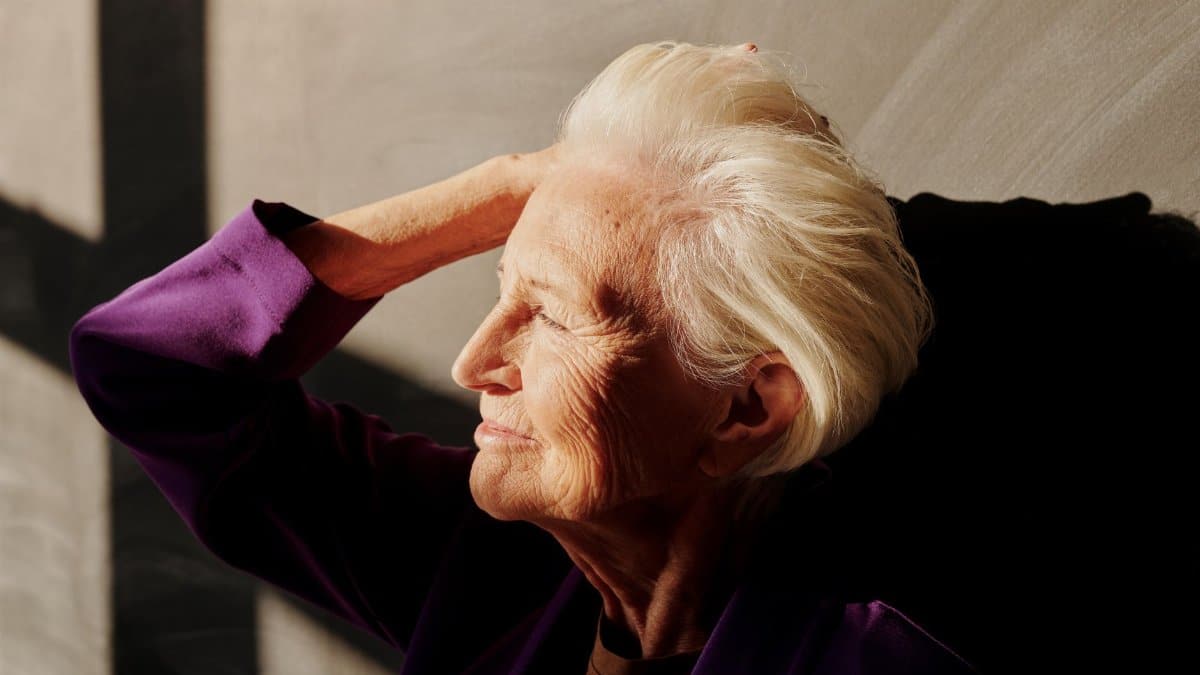
On a late August afternoon in Seattle, the sort of pale day that never quite decides whether to rain, a familiar name moved through museum offices, stadium corridors, and kitchens where people still talk about the city as if it were a shared project. Faye Sarkowsky obituary notices started to appear after the arts patron and Seahawks founding partner died on August 27 at the age of 92. She had lived long enough to see a regional port become a global capital, and she spent much of that span putting time and money behind institutions that tried to keep culture and sport within reach of ordinary residents. The notice itself is short. The public life it points toward is not.
A city that grew up around her

Seattle in the years when Faye Sarkowsky came into civic view was still arguing with itself about what kind of place it wanted to be. Timber, shipping, and Boeing payrolls had built a confident middle class, but the cultural furniture of a major city was thinner than the ambition. Symphony halls, museums, universities, and professional teams all needed patrons who would write checks before the applause was guaranteed. She became one of those people, not as a solitary heroine and not as a silent checkbook, but as part of a generation that treated institutions as something a family might help raise.
That generation is thinning now. When a figure from it dies, the loss is personal for relatives and colleagues, and it is also structural. Boards lose memory. Donor circles lose a person who knew which arguments had already been settled and which ones were worth having again. An obituary, in that sense, is not only a courtesy to the dead. It is a record of how a city was financed, argued over, and loved.
The Seahawks and a stake in public joy

Her name is tied, in the reporting that followed her death, to the founding years of the Seattle Seahawks. Professional football arrived in the city as a business deal and as a civic bet. Ownership groups in that era were often families and local investors who believed a team could stitch a scattered region into one crowd on Sunday. Herman Sarkowsky, her husband, was a developer and a central figure in that early ownership story, with interests that also reached basketball in Portland. She was described as a founding partner in the Seattle venture, which places her inside a decision that still shapes how the region spends its weekends.
It is easy, decades later, to treat a franchise as inevitable, a logo that was always going to exist. It was not. Leagues expand when local money, political patience, and a plausible fan base line up at the same moment. The people who assemble that alignment rarely get the credit that players receive, and they should not pretend to. Still, a team is a public institution of a particular kind. It gives strangers a reason to stand in the same weather and yell the same word. To have helped establish that habit is a form of civic work, even if the work also happened to be a business.
What an arts patron actually does

Arts patronage is often flattened into a photograph: a woman in formal dress beside a gallery wall, a name on a plaque, a gala table near the stage. The unglamorous part is longer. It is the meeting where a budget gap appears, the phone call that keeps a touring company from canceling, the willingness to fund a education program that will never produce a headline. Published accounts of Faye Sarkowsky place her in that slower labor across decades of civic work, especially in the arts.
Seattle’s cultural institutions spent the late twentieth century and the early twenty first trying to match the wealth accumulating in technology with a public culture that did not belong only to the newly rich. Older patrons mattered in that transition because they remembered the city before the boom. They could say, with some authority, that a museum is not a luxury item bolted onto a successful economy. It is one of the ways a place tells the truth about itself. Whether every gift she made met that standard is a question no obituary can fully answer. The pattern of her public life suggests she thought the answer was worth the expense.
Marriage, money, and the private half of a public name

Any honest account of a philanthropist has to sit with an uncomfortable fact. The freedom to give largely is usually built on the freedom to accumulate. The Sarkowsky name was associated with real estate development as well as with sport. Development fortunes are not morally simple. They rise with land, zoning, and the growth that displaces some people while enriching others. A fair remembrance does not scrub that context away in order to praise the gifts that followed.
It also does not reduce a woman to her husband’s balance sheet. Faye Sarkowsky’s public role, as described by those who covered her death, was not ornamental. Partnership in a founding ownership group, decades of arts support, and a reputation as a civic actor all imply judgment, persistence, and a willingness to be seen. Marriage can be a shared enterprise or a hierarchy with better stationery. From the outside, observers can see the enterprise more clearly than the private weather inside it. What they can say is that she remained a presence in Seattle life long after the founding era of the team had become history.
How a community learns someone has died
Death at 92 is not a shock in the way a young death is a shock. It can still rearrange a room. Children and grandchildren lose a person, not a symbol. Staff members at institutions lose a donor who knew their names. Friends lose the particular voice that had been on the telephone for half a century. The public notice arrives later, cleaned of the small facts that made the person difficult and dear.
In a city as restless as Seattle, that delay matters. New residents may never have heard the name. Older residents may remember a gala, a suite, a gift acknowledged from a stage, and little else. Between those two kinds of ignorance, a good obituary tries to build a bridge. It says: this person was here, this is what she touched, this is why a stranger might care. The Faye Sarkowsky obituary that circulated after August 27 did that work in the plain language of local news, which is often the right language. Grandeur would have been a kind of lie.
The spiritual weight of a civic life

This is not a church story, and it should not be forced into one. Nothing in the public record requires a reader to assign Faye Sarkowsky a denomination, a creed, or a private theology. What her life does invite is a question that religious and secular people share. What do we owe one another in the years we are given, and what remains when the person is gone?
One answer, incomplete but sturdy, is that institutions can carry a portion of a person’s care past the person’s death. A scholarship, a gallery wing, a team that still takes the field, a habit of giving that younger donors imitate: these are not immortality. They are closer to stewardship. In a culture that treats the self as the main project, a life organized around shared rooms is a quiet argument. It says the soul, if one wants that word, is not only an interior event. It shows up in what a person builds for people she will never meet.
Mourning, too, has a public form. Flowers, notes, a moment of quiet before a board meeting, a name read aloud. These rituals are easy to mock and hard to replace. They tell the living that a death is not merely an administrative fact. For readers who come to an obituary from a spiritual habit, the invitation is not to canonize the dead. It is to ask whether their own gifts, of money or of time, are aimed at anything that will outlast a mood.
What obituaries leave out on purpose
Every obituary is a selection. The Faye Sarkowsky obituary tradition in local journalism will emphasize the Seahawks, the arts, the age, the date, the city. It will say less about ordinary Tuesdays, illnesses, disagreements, the deals that did not work, the causes she declined. That omission is not always a cover up. Families are entitled to privacy, and reporters are not entitled to every room in a house.
Readers should still keep a little skepticism warm. Philanthropy can launder a reputation. Sports ownership can be romanticized into civic virtue when it was also a hunt for status and return. The honest posture is neither cynicism nor tribute. It is attention. Look at what was built. Look at who was left outside the building. Look at whether the institutions she supported became more open over time, or merely more polished. Those questions do not diminish a death. They respect the scale of the life.
Seattle after the founding generation

The city she leaves is richer, more crowded, and less sure of its manners than the city that welcomed a new football team. Technology money dwarfs the older fortunes. Housing costs have rewritten who gets to stay. Cultural institutions that once begged for survival now negotiate with donors who made their wealth in a decade rather than a lifetime. In that landscape, a patron who stayed for decades can look almost old fashioned, which is another way of saying she looks rare.
Rare does not mean unreproducible. The useful part of her example is not the size of any single gift, a figure this account will not invent. It is the duration. Civic work that lasts is mostly repetition: showing up, paying attention, refusing to treat a city as a backdrop for a personal brand. Younger Seattleites who find the old names remote can still borrow that habit without borrowing the mythology. A neighborhood arts group, a youth sports league, a library fund, a seat on a boring committee: the scale can change and the ethic can hold.
Reading the notice as a citizen
There is a small discipline in reading an obituary all the way through. Most of us skim for the age and the cause, then move on, faintly relieved or faintly warned. A fuller reading asks what the dead person thought a city was for. In this case the answer, pieced together from public roles, seems to have included beauty, spectacle, and the gathering of strangers. Art and football are not the same good. They do share a bet on attention, on the idea that people will leave their houses to be moved together.
That bet is under pressure. Screens keep us home. Inequality keeps some people out of the rooms that donors build. A Faye Sarkowsky obituary cannot fix those pressures, and it should not be asked to. It can remind a reader that someone spent a long life acting as if the rooms were worth building anyway. Whether that faith was justified is something each person tests by walking into a museum on a weekday or standing in a crowd when the team takes the field, and noticing who else was able to come.
What remains after the name is read

August 27 will recede. The plaques will stay until a renovation moves them. The team will keep its schedule. New patrons will be photographed in the same kind of light. None of that cancels the particular fact that Faye Sarkowsky is gone, and that the people who loved her are carrying a loss that no civic summary can touch.
For the rest of us, the decent response is simpler than praise. Remember the name accurately. Do not inflate the legend or shrink the work. Support, in whatever measure is honest, the kinds of institutions she spent decades trying to steady. And when the next notice appears, read it as more than a closing. A good obituary is also a question about the living: what, exactly, are we in the middle of building, and who will be able to use it when we are no longer here to explain ourselves?
A last look at the public record

The public record, as gathered in local reporting on her death, is enough to place her. She was 92. She died in Seattle on August 27. She was an arts patron. She was a founding partner in the Seahawks project that helped give the region a shared team. She belonged to a philanthropic generation whose money and persistence shaped rooms many residents now take for granted. The Faye Sarkowsky obituary is the formal sentence that gathers those facts and sets them down.
Beyond that sentence is the part no reporter can finish. A voice in a family kitchen. A preference, a grudge, a joke that does not translate. The spiritual remainder of a life is not a slogan about legacy. It is the fact that a person was irreplaceable to someone, and also, in a different way, useful to strangers. Both things can be true. Holding them together is the least a city can do when it says goodbye.