
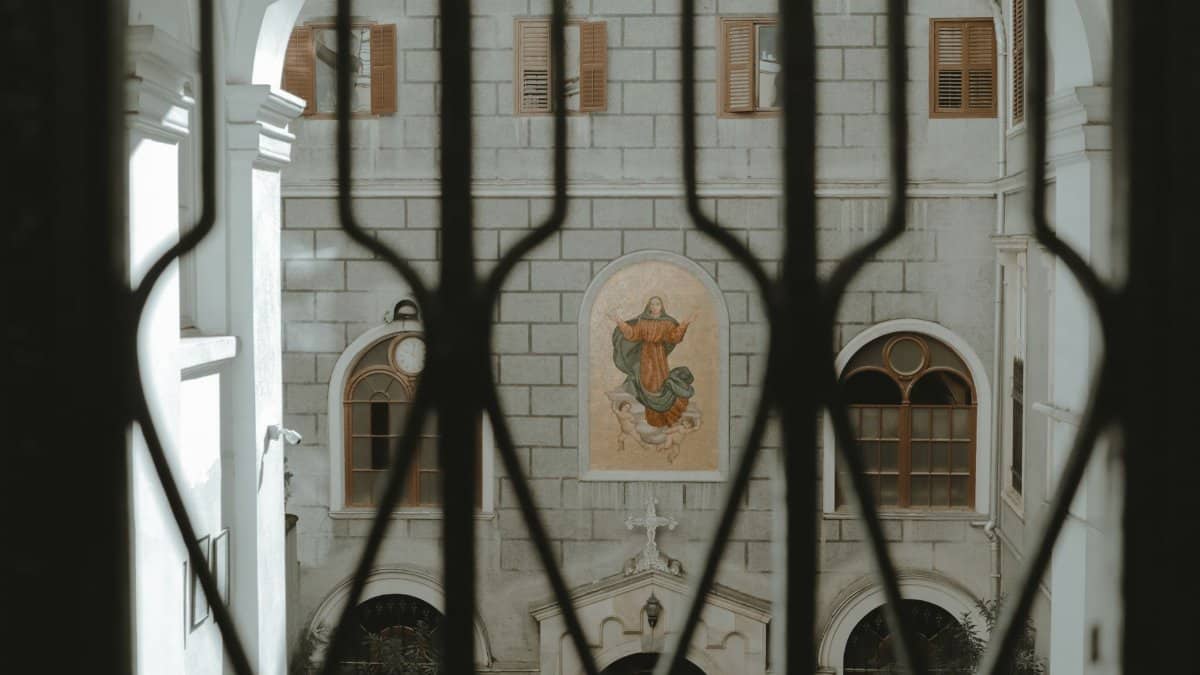
On a raw November evening in Boston’s North End, people waited in a quiet line that had nothing to do with restaurants or holiday lights. They had come for Padre Pio relics and a cloth said to be from the cloak of the Virgin Mary, carried into St. Leonard’s Church for a weekend of prayer, viewing, and a candlelit procession. For a parish that has long served Italian American families and newer arrivals alike, the visit felt less like a spectacle than a homecoming. The objects were small. The claim made for them was not. In a city that argues easily about almost everything, a church full of candles still has a way of lowering the volume.
What the weekend actually held
St. Leonard’s, on Hanover Street, is one of the oldest Catholic churches in Boston still rooted in an immigrant parish story. For this visit, organizers arranged a public display and a procession in which candles marked the path of the sacred objects through the neighborhood and into the sanctuary. The schedule was short. A weekend is not a pilgrimage season. It is a window. People who could not travel to southern Italy, or who had never thought of doing so, were told they could come close to something usually kept far away.
Parish announcements described two centers of attention. One was a set of Padre Pio relics, physical remains or items associated with the Capuchin friar canonized in 2002. The other was a cloth presented as having come from a cloak of the Virgin Mary. Church officials and hosts treated both with the language of veneration rather than exhibition. That distinction mattered to the people who stood in line. They were not there to inspect an artifact under glass the way a museum asks a visitor to inspect a painting. They were there to pray beside it.
A friar whose wounds became a public story
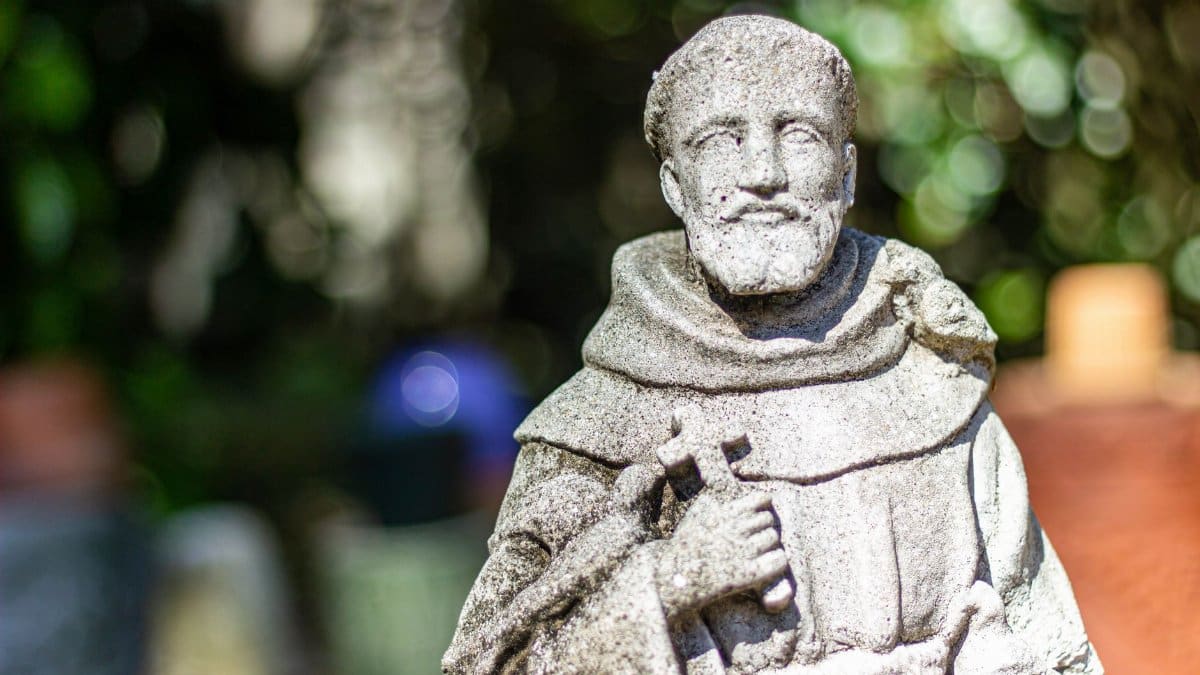
Francesco Forgione was born in 1887 in Pietrelcina, in the Campania region of Italy, and entered the Capuchin order as Padre Pio. For much of the twentieth century he lived at San Giovanni Rotondo, where reports of the stigmata, of long hours in the confessional, and of unexplained healings made him famous far beyond his monastery. Church authorities were not always comfortable with that fame. For years Rome restricted his public ministry. Devotees kept coming anyway.
He died in 1968. Pope John Paul II beatified him in 1999 and canonized him three years later, placing a figure once treated with caution at the center of modern Catholic devotion. In Italy his shrine draws millions. In the United States, especially in parishes with Italian roots, his image is already familiar: the bearded friar, the brown habit, the bandaged hands. Relics extend that familiarity into something people can approach. A glove, a cloth, a fragment of bone, a trace of blood. The theology is old. The emotional effect, for many, is immediate.
Why a relic still stops a city block
Catholic teaching holds that the bodies of holy men and women, and objects closely tied to them, can be honored because of the person, not because the material itself has magic. The practice is older than the modern church building on Hanover Street. Early Christians gathered at tombs. Medieval Europe moved bones of saints from town to town. Critics, inside the church and outside it, have long called the custom superstitious. Believers answer that memory needs a body, and that God is not insulted by the physical.
That argument rarely gets settled in a weekend. What a visitor can see is simpler. People kneel. Some cry. Some take photographs and then look embarrassed about the photographs. Some bring a sick relative’s name on a folded paper. In the North End, where saints’ feasts still close streets and where a fish dinner can be both supper and inheritance, the arrival of Padre Pio relics fit a neighborhood habit of treating heaven as local. One person in the crowd called the visit a once in a lifetime thing. The phrase traveled because it named the scarcity. These objects do not live here. They pass through.
The cloth and the harder claim

The second object asked for a different kind of trust. A cloth said to come from the cloak of Mary is not a relic of a modern saint whose life is documented in photographs, letters, and hospital records. It reaches toward the first century, toward a woman who appears in Scripture and in centuries of prayer, and toward a chain of custody that most visitors will never be able to verify for themselves. Hosts presented the claim as it was given to them. They did not stage a forensic briefing.
For some Catholics that is enough. Authenticity, in this setting, is partly an act of the church that sends the object and the church that receives it. For others, including plenty of people who still light a candle, the cloth is the point where devotion and doubt share a pew. You can honor Mary without being sure about a particular textile. You can also stand in front of that textile and feel that the question of proof is the wrong question for the hour. The North End crowd contained both instincts, often in the same family.
Candles on a street that already knows processions

The procession was the public face of the visit. Candlelight does a particular kind of work in a dense neighborhood. It slows walking. It makes a religious claim visible to people who had only come out for coffee or for a table. It also recalls the feasts this parish already knows, when statues move and bands play and the sacred is not confined to the nave.
This procession was quieter than a summer feast. November in Boston does not invite lingering. Wind off the harbor finds every gap between brick blocks. People cupped hands around flames and kept moving. Children were lifted to see. Older parishioners who have walked these streets for decades did not need a map. The route itself was a kind of sermon: the holy thing does not stay in the sanctuary. It goes out, briefly, and then comes back in, and the street is asked to notice.
A parish between memory and the next arrival
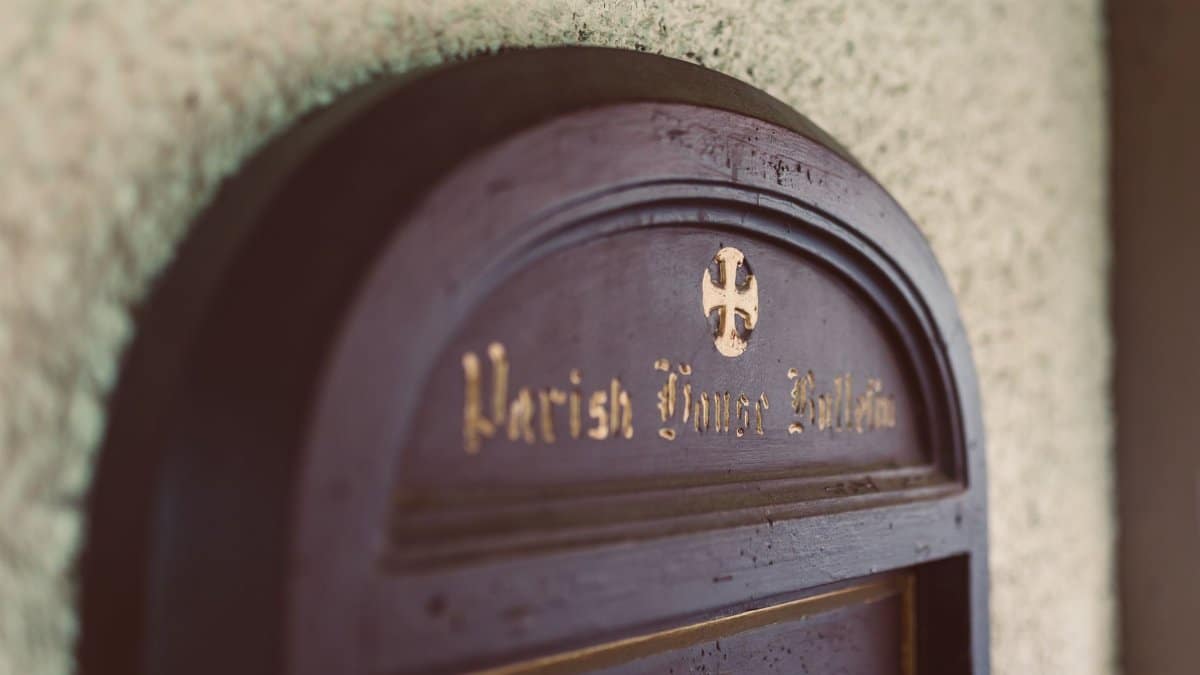
St. Leonard’s sits in a North End that is no longer only the North End of midcentury kitchens and mutual aid societies. Rents are high. Some families who once filled the pews now live in Revere, in Medford, in the suburbs that still come back for Christmas and for funerals. New residents walk the same sidewalks with less interest in saint days and more interest in the restaurant reservation. The church has not disappeared. It has had to learn a smaller, steadier kind of presence.
A relic visit is one way a parish says it is still a destination, not only a landmark. It gathers the scattered. It gives adult children a reason to drive in with a parent. It gives tourists a reason to step off the Freedom Trail and into a different kind of American story. None of that replaces Sunday Mass. It does remind a neighborhood that Catholic life here was never only private. It was always a little bit on the sidewalk.
What people asked for when they came close
Relic visits collect intentions the way a harbor collects weather. Health. Work. A marriage under strain. A son who has stopped calling. Grief that has not found a sentence yet. Padre Pio’s reputation as a confessor and as a man associated with healing gives those requests a particular address. People do not only admire him. They ask him to carry something upward.
The cloth associated with Mary pulled the prayers in another direction, toward mothers, toward protection, toward the old habit of speaking to her when the formal prayer feels too far away. None of this is unique to Boston. What was local was the mix of accents, the winter coats over good shoes, the way people genuflected or did not, and the way a line can become a temporary congregation without anyone taking attendance.
Skeptics, souvenirs, and the line between the two
Not everyone on Hanover Street was moved. Some walked past and kept walking. Relics can look, to a secular eye, like a category error: matter asked to do the work of meaning. There is also a commercial shadow that honest parishes have to watch. Holy cards, medals, and photos appear wherever crowds appear. Devotion and the gift table have shared a doorway for centuries. The test is whether the selling swallows the praying.
At St. Leonard’s the center of gravity, at least for this weekend, stayed with the objects and the candles rather than with the merchandise. That will not persuade a critic who thinks the whole practice is mistaken. It does answer a narrower worry, that a once in a lifetime thing can be staged as a show. A show wants noise. This wanted hush, and for long stretches it got it.
After the candles go out

When the weekend ends, the Padre Pio relics and the cloth will leave. The church will go back to ordinary Masses, to baptisms, to the slow work of keeping a building and a community alive in an expensive city. The people who waited in line will go back to kitchens and hospital corridors and late trains. Some will say nothing changed. Some will say they cannot explain what changed, only that they needed to be there.
A city like Boston is good at measuring things: ridership, rents, poll numbers, the distance between a promise and a result. A relic refuses that kind of measure. It offers proximity instead, and a story old enough to make a November night feel briefly arranged around something other than the calendar. Whether that is faith or longing or both, the line outside St. Leonard’s suggested that plenty of people still want the chance.