

On a gray morning in Seattle, the news moved the way it often does here, from kitchen tables to bus stops, a name passed along with the weather. Former Congressman Jim McDermott, the psychiatrist who represented the city for nearly three decades, had died, and the Jim McDermott obituary that followed tried to hold a life too large for a single column. He was a doctor who entered politics, a liberal who rarely softened his language, and a Seattle figure whose arguments about care, war, and government still echo in rooms he no longer enters. The same roundup of losses also named a psychologist, a bass singer, and a Pearl Harbor survivor, a reminder that a city mourns in more than one register.
A doctor who walked into politics

James Adelbert McDermott trained as a physician and practiced psychiatry before he made legislation his main work. That sequence mattered. He did not arrive in public life as a lawyer looking for a client or a businessman looking for a platform. He arrived as someone who had sat with people in distress and had decided that some of their suffering was shaped by policy. In Washington state he served in the legislature, learning the slow grammar of bills, budgets, and compromise, then carried that habit to Congress.
Colleagues and critics alike described a man who could be impatient with euphemism. Voters in Seattle’s Seventh District returned him again and again, from the late nineteen eighties until he left the House in twenty seventeen. The district, covering much of the city and nearby communities, rewarded a politics that treated health care, labor, and foreign policy as moral subjects rather than technical ones. A Jim McDermott obituary that stops at the title congressman misses the point of the career. The title was the vehicle. The vocation was closer to medicine practiced at the scale of a nation.
The Seattle seat and the years in Washington

Seattle in those decades was changing from a port and timber town with a strong union memory into a city of software fortunes and rising rents. McDermott’s politics did not chase that transformation so much as argue with it. He remained a Democrat of the old liberal school, more interested in universal coverage and international institutions than in the language of disruption. In the House he sat on committees that touched taxes and health, the unglamorous machinery that decides who can see a doctor and who pays.
Constituents remember town halls that ran long, a white beard that became a local landmark, and a speaking style that favored plain sentences over applause lines. He was not a national celebrity in the manner of later media politicians. His influence was cumulative. Fourteen terms is long enough to shape staff, to mentor younger members, and to become, for a generation of Seattle voters, the default picture of what their member of Congress looked like.
Care for the sick as a political creed

Health policy was the thread he pulled hardest. As a psychiatrist he had seen what happens when treatment is treated as a luxury. In Congress he argued for broader coverage, for mental health to be counted as health, and for the United States to look honestly at systems in other countries that insure everyone. He was an early and persistent advocate of a single payer approach, a position that put him to the left of many in his own party and made him a reference point for activists who felt the incremental bills never went far enough.
That stance did not pass into law under his name. Obituaries that measure a legislator only by statutes signed will undersell him. The creed still organized later debates in Washington state and in the House. When younger lawmakers speak of health care as a right rather than a product, they are walking a path he helped keep open. The Jim McDermott obituary, read that way, is less a closing of an argument than a record of how long the argument has already lasted.
Wars, dissent, and a sharp public voice

Foreign policy gave him his sharpest national profile and his most contested moments. He opposed the war in Iraq and was willing to say so in places and in language that angered colleagues. A trip to Baghdad before the invasion, and comments that seemed to some Americans to grant too much credence to the Iraqi government, drew lasting criticism. Supporters heard a doctor warning against a war he believed would harm civilians and soldiers alike. Detractors heard a partisan who had crossed a line.
The episode belongs in any honest account. A life in public is not a hymn. McDermott’s record includes votes, speeches, and judgments that reasonable people still dispute. What is harder to dispute is the consistency. He distrusted military solutions to political problems, favored diplomacy, and treated dissent as a duty rather than a tactic. In a city with a long antiwar tradition, that consistency was part of why voters stayed with him.
Marsha Linehan and the work of staying alive
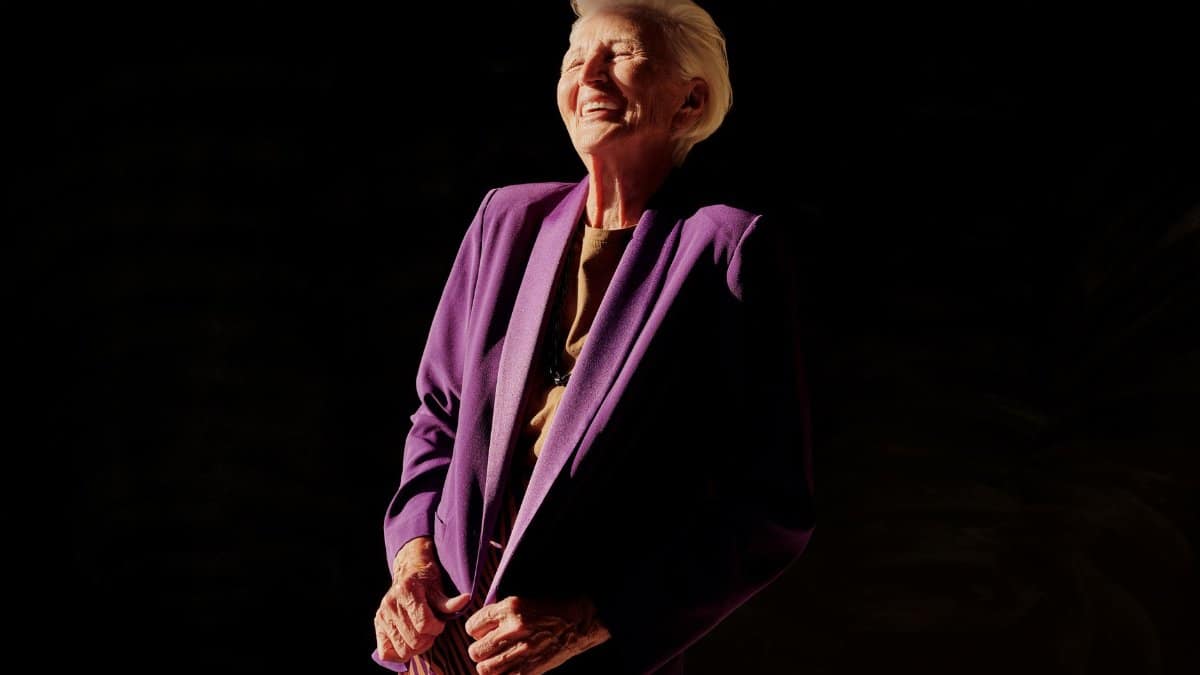
The same notices that carried McDermott’s name also marked the death of Marsha Linehan, the University of Washington psychologist whose work changed how clinicians respond to people in the most acute emotional pain. Linehan developed dialectical behavior therapy, a treatment first aimed at borderline personality disorder and at chronic suicidal behavior. She later told her own story with unusual candor, describing years of hospitalization and self harm in youth, and insisting that the therapy grew from that knowledge rather than from a textbook alone.
Her disclosure mattered to patients who had been told, implicitly or outright, that their lives were too chaotic for serious treatment. Here was a scientist at a major university saying that the person in the worst crisis might also be the person who eventually builds the map out. The spiritual resonance is not decorative. Linehan’s framework asked people to accept the reality of suffering and, at the same time, to change the behaviors that deepened it. Acceptance and change, held together, became a discipline rather than a slogan.
A therapy that asked people to hold two truths

Dialectical behavior therapy spread from a Seattle research clinic into hospitals, schools, and community programs across the country and abroad. It taught skills with plain names: distress tolerance, emotion regulation, interpersonal effectiveness, mindfulness. The mindfulness piece borrowed from contemplative practice without requiring a creed. Patients learned to notice a feeling without obeying it, to ride out an urge that once would have ended in injury, and to repair relationships that illness had strained.
Clinicians argue about methods, and no therapy saves everyone. What Linehan changed was the moral weather of the field. People who had been labeled manipulative or hopeless were recast as people who could be taught. Families found a language that was neither blame nor despair. In a roundup of deaths, her name sits beside a congressman’s because both spent their working lives on the question of who gets care, and both refused the idea that some suffering is simply the price of being difficult.
Richard Sterban and the bottom of the harmony

Richard Sterban occupied a different room in American memory, the low end of a four part harmony. As bass singer of the Oak Ridge Boys, he supplied the voice that many listeners can imitate even if they cannot name the man: the sudden drop under a bright chorus, the comic gravity that made a country hit feel like a shared joke. The group crossed from gospel stages into country radio and stayed there for decades, a rare passage in an industry that usually keeps sacred and secular catalogs apart.
Sterban joined a group already famous in church halls and helped carry it onto television, county fairs, and records that played in trucks and kitchens far from Tennessee. Obituaries for musicians often list hits and forget the labor. Harmony singing is a physical craft. Pitch, breath, and timing have to agree night after night, in rooms with bad monitors and long drives between them. The bass part is easy to parody and hard to sustain. Sterban sustained it.
From church halls to country radio

The Oak Ridge Boys began as a gospel ensemble tied to the nuclear town that gave them a name, singing for congregations that wanted conviction as much as tune. When the group moved toward country, some gospel fans felt the loss of a witness. Others heard the old church cadence still running under the new songs. That tension is a spiritual story as much as a commercial one. American popular music has always borrowed its deepest habits from hymnody: call and response, testimony, the promise that a low voice and a high voice can belong in the same sentence.
Sterban’s career is a chapter in that borrowing. He did not preach from a pulpit. He held the floor of the chord so the lead could soar. Listeners who never entered a sanctuary still absorbed, through radio, a structure invented for worship. An obituary can note the chart positions. It should also note the architecture of the sound, because that architecture is how a life in music actually touches strangers.
Geb Galle and a harbor that still teaches

The roundup’s quietest name may be Geb Galle, remembered as a survivor of the attack on Pearl Harbor. The generation that was young on that December morning is nearly gone. Each remaining death is not only a private loss. It is the closing of a direct witness. What we have afterward are letters, oral histories, and the discipline of memorial days that can harden into ritual if no one keeps asking what the ritual is for.
A survivor’s obituary does a specific kind of work. It refuses to let a famous date float free of a particular person who woke up inside it. Galle’s name, placed beside a congressman, a therapist, and a singer, widens the frame. Public service, clinical care, popular song, and wartime survival are not the same vocation. They share an insistence that a life is accountable to other lives. Remembrance, in that sense, is a civic practice with a spiritual core: the dead are not raw material for our arguments, and neither are they finished once the notice is printed.
Reading the names together

Newspaper obituary roundups can look like a convenience, several deaths gathered so none of them has to stand alone on a slow news day. Read carefully, the form is an argument about proportion. McDermott’s decades in office might have filled a page. Linehan’s influence on clinical practice might have filled another. Sterban’s voice is already archived in recordings that will outlast the paper. Galle’s survival belongs to a history still taught in schools. Placing them in one piece asks the reader to slow down and grant each name a full stop.
Seattle is a useful place for that exercise. The city contains a research university, a loud political culture, a music audience, and a port with its own memory of war and work. Losses here are not abstract. They show up in clinics that still use a therapy invented on campus, in district offices now run by other people, in radios that still drop into a familiar bass note, and in ceremonies where fewer veterans can stand. A Jim McDermott obituary is local news. It is also a chapter in a national argument about care and war. The neighboring names keep it from becoming only that.
What an obituary cannot finish

No notice can settle a reputation. McDermott will remain, for some readers, the doctor legislator who told the truth about coverage and about war. For others he will remain the member whose foreign trip went too far. Both readings can cite the record. The fair account includes the psychiatry, the long tenure, the health care creed, the dissent, and the friction. It also includes the ordinary fact that constituents trusted him with their seat for a generation.
Linehan’s legacy will be tested every time a clinician decides whether a suicidal patient is worth the hard work of skills training. Sterban’s will be tested every time a harmony group needs someone willing to sing the note nobody else wants. Galle’s will be tested every time a commemoration prefers pageantry to the specific dead. These are not metaphors imposed from outside. They are the practical afterlives of the work each person did.
Readers who search for a Jim McDermott obituary are often looking for dates, offices held, and the cause of death. Those facts belong in the record. They are not the whole record. The fuller reading is a civic one: a psychiatrist who treated government as a place where suffering could be reduced, appearing in print beside a psychologist who built a therapy out of her own survival, a singer who carried church harmony onto country radio, and a Pearl Harbor survivor whose generation is closing. Together they suggest what a newspaper still knows how to do when it is working. It names the dead carefully, and it leaves the living with more than a list.