
On a bright Sacramento morning, the language of emergency planning entered a conversation that used to belong to engineers and venture investors. Gov. Gavin Newsom ordered an expert panel to examine how California should regulate advanced artificial intelligence, and he floated an idea that sounds simple until you try to define it: a way to stop a system that will not stop itself. The phrase Newsom AI safety kill switch captures that uneasy mix of technical ambition and political caution, and it is already shaping how residents talk about machines they cannot see and do not fully trust.
A familiar office, an unfamiliar problem

Newsom has spent years presenting California as a place that can write rules the rest of the country eventually copies. Climate standards, privacy law, and workplace protections all followed that path in some form. Artificial intelligence is different because the product is not a tailpipe or a data broker. It is a general tool that writes, codes, advises, and, in the more ambitious labs, begins to plan. A governor can sign a bill. He cannot easily inspect a model the way an agency inspects a refinery.
That gap is why a panel matters. It is also why a kill switch, even as a suggestion, lands with force. Voters hear a promise that someone in authority could pull a cord if a system began to cause serious harm. Specialists hear a design problem, a legal problem, and a question about who gets to decide that the harm is serious enough.
What the panel is being asked to do
The order, as described in reporting on the announcement, sets up a group of outside experts to study safety rules rather than to write them overnight. Panels of this kind gather scientists, civil servants, industry voices, and people who represent workers and the public. Their job is to translate a fast moving technology into language a legislature can use.
Emergency shutoffs sit near the center of that brief. A shutoff could mean many things. It could mean a company must be able to halt a particular deployment. It could mean a state official can order a pause. It could mean a technical requirement that a model include an internal brake, a preplanned way to disable risky functions without collapsing every benign use. Those are not the same policy. Treating them as one slogan would be a mistake, and a careful panel would separate them before anyone drafts a statute.
Why a kill switch sounds both reassuring and vague
People understand brakes. Cars have them. Power plants have them. Nuclear reactors have layered ways to scram a reaction. The appeal of the Newsom AI safety kill switch is that it borrows that intuition. If something runs away, stop it.
Artificial intelligence does not sit in one building with one red button. A model can be copied. A service can run in another state or another country. A tool embedded in a hospital, a bank, or a school district may be a thin interface over a system hosted far away. Shutting down a California facing product might not shut down the underlying model. Ordering a lab to stop training might not stop a copy already in the wild. The metaphor comforts. The engineering is harder.
Still, metaphors shape law. Lawmakers reach for images the public already trusts. The task is to keep the image from becoming a hollow requirement, a sentence in a bill that sounds tough and changes little.
California as a laboratory the nation watches
Silicon Valley and the broader California tech economy give the state unusual leverage. Many of the companies building the most capable systems are based here or sell heavily here. A rule that applies to deployments inside the state can ripple outward, because firms rarely want two entirely different products, one for California and one for everyone else.
That leverage cuts both ways. If rules are clear and technically serious, other states and federal agencies may borrow them. If rules are theatrical, companies will route around them, and the public will learn once again that a press conference is not a control system. Newsom knows this history. So do the firms that employ tens of thousands of his constituents.
Industry fears and the case for a real brake
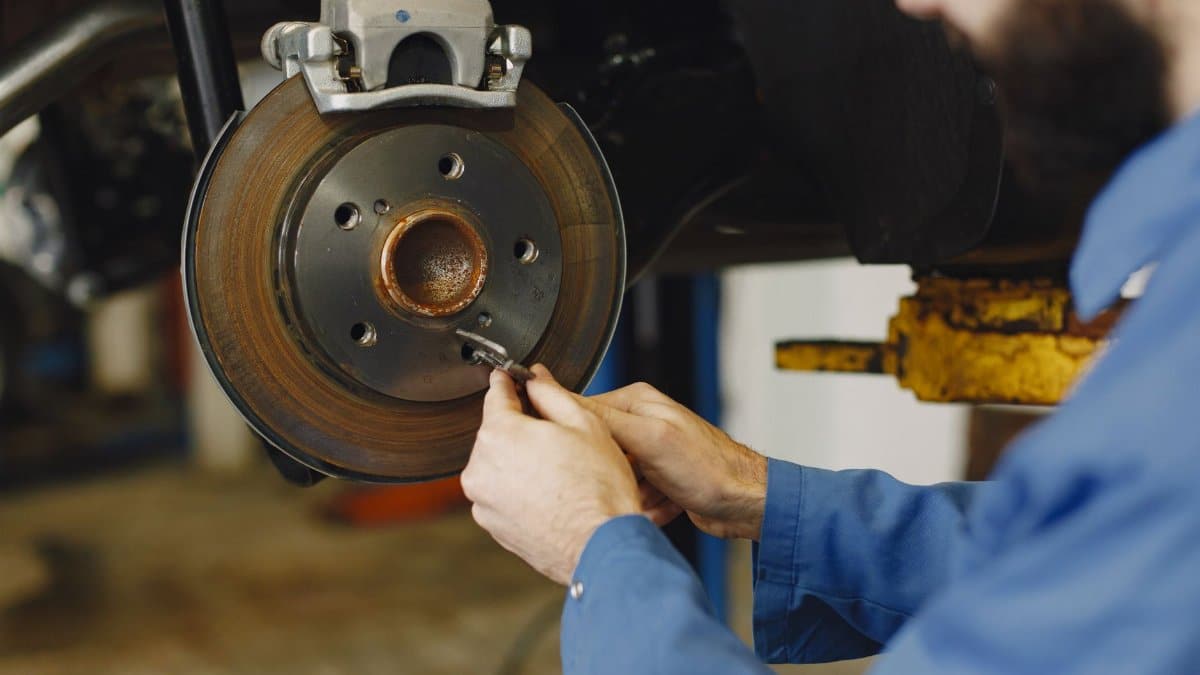
Company leaders tend to prefer voluntary commitments, internal safety teams, and federal rules that apply evenly. They argue that a state kill switch could be abused, triggered by politics rather than evidence, or written so broadly that ordinary software updates become legal risks. They also argue that demanding a single off switch misunderstands how modern systems are built, with components spread across cloud providers and partner firms.
Safety researchers answer that voluntary promises have a poor record when commercial pressure rises. They want obligations that can be tested: logging, incident reports, independent evaluation, and a demonstrated ability to halt a dangerous deployment. In that framing, a shutoff is not a panic button for governors. It is proof that a company still has authority over its own product. A firm that cannot stop what it shipped does not fully control what it shipped.
Who would be allowed to pull it

Authority is the quiet heart of the debate. A technical requirement that companies maintain a shutdown path is one thing. A political power to order that path used is another. Courts, agencies, and elected officials would all have claims. So would the people harmed by a bad system, who may want faster action than a lawsuit allows.
Civil liberties advocates worry about a tool that could silence speech tools or cripple services people rely on, if the standard for danger is loose. Labor groups worry about systems that displace workers without anyone accountable for the damage. Parents worry about chatbots that encourage harm. Each group hears kill switch and imagines a different hand on it. A panel that ignores those differences will produce a report that pleases no one and guides no one.
Emergency brakes we already live with

California already uses emergency powers in wildfire season, in public health, and in utility shutoffs when wind and dry brush make the grid a fire starter. Those powers are controversial. They save lives and they impose costs. Residents have learned to ask not only whether a brake exists, but who pays when it is used, how fast it can be challenged, and whether officials must explain themselves in public.
That experience is useful here. An AI shutoff should come with notice rules, narrow triggers, time limits, and a path to review. It should not be a standing invitation for any official to freeze a technology because it is unpopular. Nor should it be so fenced in by procedure that it cannot work when speed matters. The hard work is drawing that line before a crisis writes it badly.
The moral question under the technical one

Readers who come to this story through faith, ethics, or a simple sense of limits may recognize an older argument in new clothes. Tools extend human reach. They also tempt people to hand judgment to a process they do not understand. A kill switch, in that light, is less a gadget than a refusal to pretend that speed is the same thing as wisdom.
Many religious and philosophical traditions insist that power needs a stopping place. They do not require a person to fear every new machine. They do ask whether the people building the machine have left themselves a way to say no. In a culture that treats scale as virtue, that question can sound quaint. It is also the question regulators are now forced to ask in statute and hearing rooms.
The Newsom AI safety kill switch debate will not settle theology. It can still remind a secular government that humility is a design requirement. Systems that cannot be halted are not merely innovative. They are, in a practical sense, beyond the consent of the people who must live with them.
What residents should watch for in the fine print
The value of the panel will show up in details most headlines skip. Does a proposed rule define catastrophic harm, or does it leave the phrase open for later fights? Does it cover only the largest model developers, or also the companies that wrap those models into medical, hiring, and policing tools? Does it require independent testing, or only self reporting? Does a shutdown duty survive contracts that scatter responsibility across vendors?
Residents should also watch the calendar. Expert panels can be a way to act, or a way to delay. If the report arrives after the next wave of products is already embedded in schools and clinics, the shutoff will be harder to impose and easier to mock. Timing is part of safety. A brake designed after the train is on the grade is still better than no brake, but it is not the same as planning the grade.
Federal silence and state impatience

Congress has held hearings and floated frameworks. It has not produced a comprehensive safety statute that tells a governor what to do on a Tuesday when a system misbehaves at scale. Federal agencies have pieces of authority in consumer protection, civil rights, and sector rules. None of those pieces was written for a general model that can be pointed at almost any task.
State leaders fill gaps when Washington stalls. They also risk a patchwork that confuses users and invites legal challenges about interstate commerce. Newsom’s move sits in that tension. He can argue that waiting is itself a choice, and that California’s exposure, economic and social, is too large for patience alone. He will still need a theory of the case that survives a courtroom, not only a news cycle.
Workers, schools, and hospitals in the blast radius

Abstract talk about runaway systems can hide nearer harms. A hiring model that quietly downranks older applicants does not look like science fiction. A classroom tutor that invents facts with confidence does not either. A clinical note tool that omits a symptom can injure a patient without ever escaping human control in the dramatic sense. Emergency shutoff language should not crowd out these ordinary failures.
A serious regime would tier its responses. Some failures call for a recall, a fix, and a fine. Some call for a pause of one product. A very small set might justify a broader halt. If every harm is treated as an existential event, officials will either overreach or, more likely, do nothing because the standard never quite fits. Proportion is a form of competence.
How the phrase will travel

Political language has a life of its own. Newsom AI safety kill switch is short enough for a headline and sharp enough for a campaign. Supporters will use it to signal toughness. Opponents will use it to signal clumsiness, a government that thinks software is a light switch. The panel’s harder vocabulary, evaluation, liability, incident reporting, compute thresholds, will not travel as far. That is normal. It is also a risk. If the slogan outruns the substance, the public will feel betrayed when the first real incident arrives and the switch turns out to be a memorandum.
Journalists and readers can resist that drift by asking the same plain questions they ask of any emergency power. What triggers it? Who orders it? How is it reversed? What evidence is public? What happens to people who depended on the service? Those questions do not require a computer science degree. They require a habit of not being impressed by metaphors.
A narrow path between panic and delay

California does not have to choose between banning a transformative industry and blessing every deployment. It can require that the largest developers prove they can halt unsafe uses, report serious failures, and submit to outside review. It can leave room for smaller firms and for research that is not a consumer product. It can coordinate with other states so that a shutoff in one jurisdiction does not become a shell game.
None of that is glamorous. It will not satisfy people who want either a total stop or a total green light. It does match the way this state has sometimes governed other risky systems: set a floor, inspect, publish, and revise when the facts change. Artificial intelligence will change the facts quickly. That is an argument for rules that can be updated, not for rules that never start.
What comes after the announcement

The order is a beginning. Names on the panel, the scope of their mandate, and whether their meetings are open will tell residents how seriously to take the effort. So will the response from companies that have the most to lose and the most to explain. If they offer concrete shutdown designs, audit rights, and incident timelines, the debate can move from slogan to specification. If they offer only warnings about innovation, the governor will have a political opening and a technical problem still unsolved.
For now, the Newsom AI safety kill switch is a proposal wearing the clothes of a certainty. It names a public desire that is real: do not build something you cannot stop. Whether California can turn that desire into law that works, law that is fair, and law that other governments can copy, depends on the unglamorous months ahead. The machines will not wait for a perfect answer. Neither, it seems, will the governor.