
On a cold morning in Holyoke, new brick and glass catch the river light in a way the old soldiers home never managed. Families who once waited in parking lots now cross a lobby built for both distance and dignity. Six years after a coronavirus outbreak killed at least 76 veterans inside the former facility, the Commonwealth has opened a replacement that officials describe as a reckoning set in concrete. The Holyoke Veterans Home stands where grief and public obligation finally met a budget large enough to answer both. Ribbon cuttings rarely heal anyone. This one asks whether a building can keep a promise that management once broke.
A spring when the numbers would not stop

In March 2020 the virus moved through the aging Holyoke campus faster than staff, families, or state leaders could name what was happening. Veterans who had survived wars died in clusters. Some units were combined as staffing collapsed, a decision later condemned as a failure of basic infection control. Ambulances came and went. Outside, relatives stood at windows because they were not allowed inside. The death toll, reported as at least 76 veterans, became a statewide wound and a national symbol of how badly congregate care could fail when a new pathogen met an old building and a thin chain of command.
The outrage was not abstract. These were men whose names appeared on unit rolls and in parish bulletins across western Massachusetts. Many had lived at the home for years. Their final days were marked by confusion, isolation, and, in too many cases, the absence of a familiar hand. Public health officials would later describe the outbreak as among the deadliest in any long term care setting in the country during those first weeks.
What investigators said went wrong
Reviews by state authorities and outside experts found a pattern that was painfully ordinary until it was not. Communication lagged. Personal protective equipment was scarce or poorly used. Leadership did not move quickly enough to separate the sick from the well. Staffing plans assumed a stability the virus destroyed in days. Families learned of deaths from news reports or from one another before official word arrived.
Criminal cases against former administrators drew intense attention and then a long legal unwind that satisfied almost no one completely. What remained, after courts and headlines moved on, was a clearer moral finding: the home had been asked to function as both hospital and household without the systems either role requires in a pandemic. Accountability, in the civic sense, shifted from individual blame toward a demand that the next building and the next chain of command be harder to break.
Families who kept vigil from the parking lot

For daughters and sons, the cruelest detail was proximity without presence. They could see the facade. They could not sit at the bedside. Phone calls, when they happened, were brief and often conducted by exhausted aides. Some families organized shifts in their cars, as if waiting itself were a form of care. Clergy from nearby parishes offered prayers through glass. Those scenes still shape how people in the Pioneer Valley talk about the spring of 2020. Memory here is not a monument. It is a specific hour, a specific window, a name said aloud because no one inside could hear it.
Grief of that kind does not expire when a construction fence comes down. Several relatives have said publicly that they support a new facility and still cannot forgive the old one. Both feelings can be true. A community that treats them as a contradiction will miss what these families are actually asking for: candor, continuity, and a standard of care that does not depend on heroism from whoever happens to be on the night shift.
The long argument over what to build
Replacing the campus was never a simple appropriation. Lawmakers, veterans groups, and local officials spent years debating size, design, and cost. The project that emerged, widely described at about $484 million, is among the most expensive veterans homes undertaken in the region. Critics called the figure extravagant. Supporters answered that cheap care had already sent its invoice, and that invoice was counted in lives.
The design brief, as presented by state veterans officials, emphasized smaller households rather than long institutional corridors, better airflow, and rooms that do not force strangers into impossible closeness during an outbreak. Those choices are technical. They are also ethical. A floor plan is a theory of what a resident is owed when he can no longer defend his own privacy. In Holyoke, that theory was written after the old theory failed in public.
How the new campus tries to hold both medicine and home
Walk the public descriptions of the new complex and a double purpose appears. Clinical spaces sit beside rooms meant to feel domestic. Dining is planned at a human scale. Outdoor paths and shared rooms are arranged so that a resident can have company without surrendering every hour to a schedule. Infection control is no longer an afterthought taped onto a nineteenth century idea of barracks. It is built into how air moves and how units can close without abandoning the people inside them.
None of that guarantees safety. Buildings do not staff themselves. A thoughtful plan can still be hollowed out by vacancies, low pay, and the quiet attrition that hits caregiving jobs after every crisis. The test of this campus will not be the opening week photograph. It will be a winter night three years from now, when someone has a fever and the protocol is followed because it is ordinary, not because a camera is nearby.
Chaplains, names, and the work of remembrance
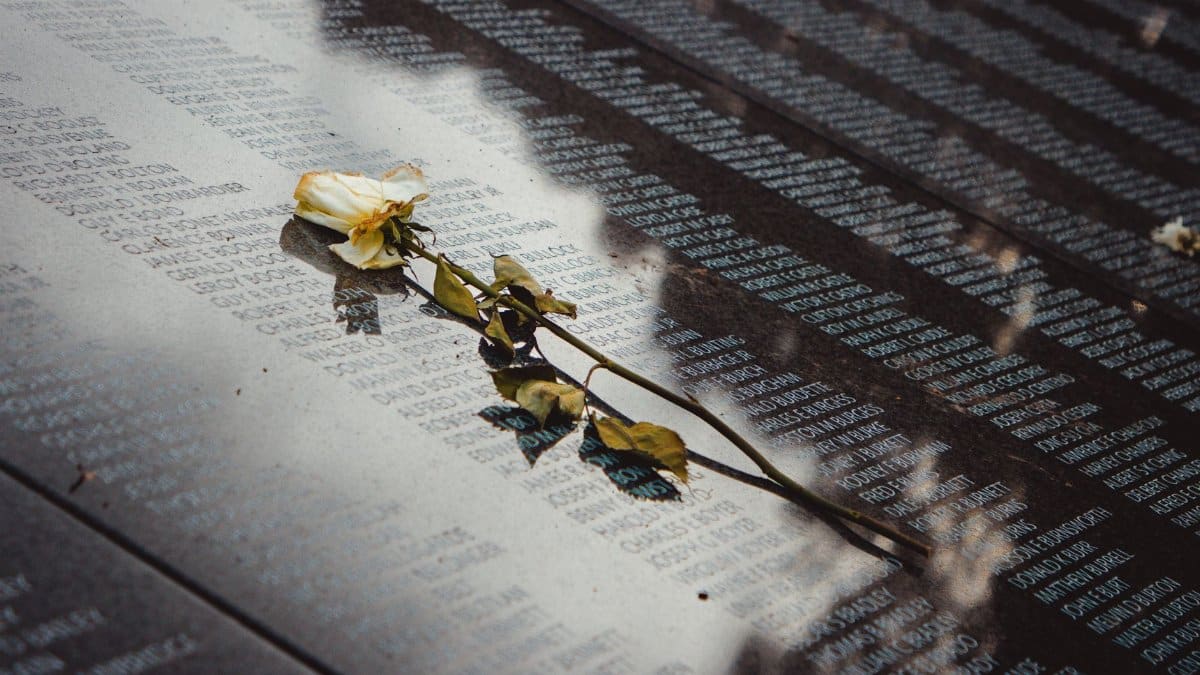
Western Massachusetts has always folded military service into parish life, VFW halls, and the calendar of civic mourning. The new home sits inside that older spiritual geography whether or not its architects intended a sermon. Memorial services, the reading of names, and the presence of chaplains are not decorations on a health care campus. They are how a community refuses to let a statistic remain a statistic.
Staff and families describe a hunger for ritual that is specific rather than grand. A flag handled with care. A chair left for someone who will not return. A moment of quiet before a meal on the anniversary of the outbreak. These gestures do not repair a failure of infection control. They do something else, equally necessary: they tell the living residents that their days are not merely a risk category. In a place organized around veterans, spiritual care is part of the mission, not a side program for the especially devout.
The people who stayed when leaving would have been easier
Any honest account has to include the aides, nurses, housekeepers, and food service workers who kept showing up while the virus moved through the old halls. Some became ill. Some lost colleagues and residents they had known for years. A number of them will work in the new building, carrying knowledge that no orientation manual can supply. Their institutional memory is a form of caution. It is also a form of loyalty that the state has not always repaid with wages or staffing levels equal to the rhetoric of honor.
Respect for that workforce is not a slogan. It is schedules that allow rest, training that treats infection control as a skill rather than a scolding, and managers who listen before they combine units in a panic. If the Holyoke Veterans Home becomes another place where dedication is praised and then exploited, the architecture will have changed and the moral structure will not.
What a reopening cannot promise

There is a temptation, especially in official speeches, to treat a new facility as closure. It is not. The men who died in 2020 do not get the benefit of better ventilation. Their families do not get those weeks back. A $484 million campus can reduce the chance of a repeat. It cannot convert a tragedy into a success story without sanding off the parts that still hurt.
Journalists and politicians should resist that sanding. The useful sentence is plainer: the Commonwealth failed a group of veterans, studied the failure, and spent years building a different kind of home. Whether that home deserves trust is an empirical question. Trust will be earned in inspection reports, in how quickly families are told the truth, and in whether residents are treated as neighbors rather than as a caseload.
A standard worth keeping when the cameras leave

Holyoke has lived with this story longer than the national attention span usually allows. The city knows the old campus, the river, the funerals, and now the new address. What it needs from the rest of Massachusetts is not another season of sympathy. It needs a durable standard: small enough households, honest communication, and leaders who will stop a dangerous practice even when stopping it is inconvenient.
I keep returning to the image of people waiting outside in 2020, close enough to see the building and not close enough to help. The Holyoke Veterans Home will be judged by whether that distance, the moral kind, ever opens again. A finer lobby is a start. The rest is daily work, unphotographed, and owed in full.