
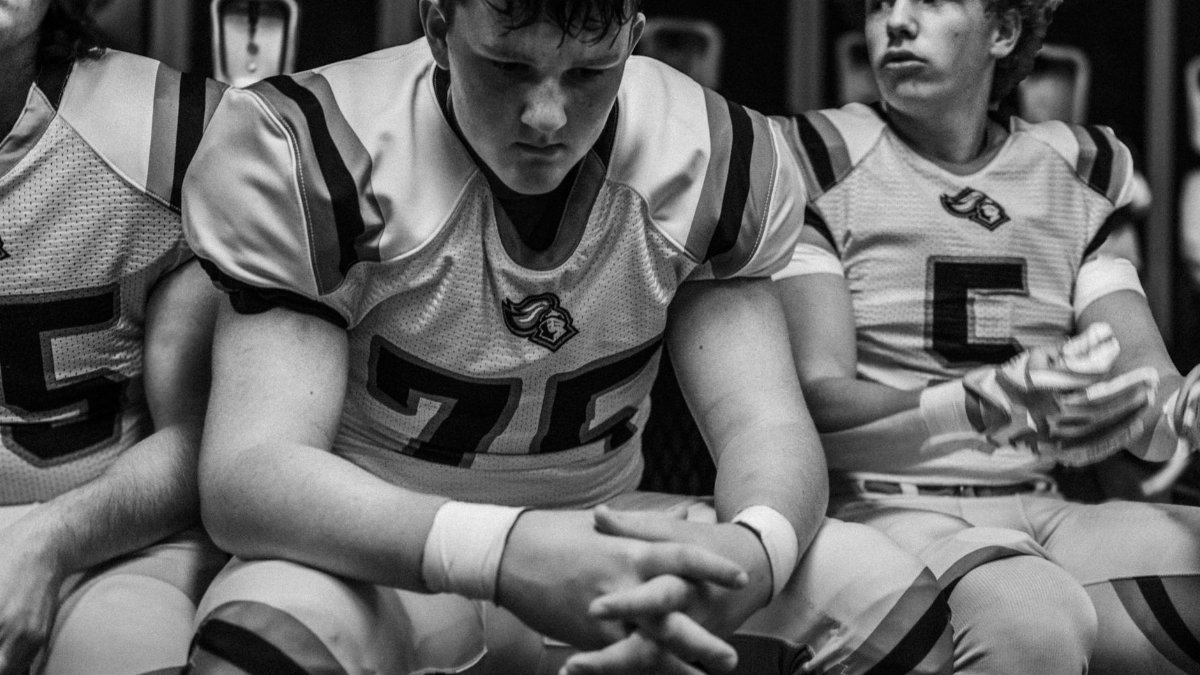
On a gray morning in Boston, a neuropathologist lifted a thin slice of stained tissue and found the same brown tangles that have shadowed American football for two decades. The pattern was familiar. The scale of the claim was not. An NFL CTE study described in recent reporting by The Boston Globe estimates that nearly 75 percent of former National Football League players who died from 2008 to 2023 likely had chronic traumatic encephalopathy. For families who have already buried husbands and sons, the figure lands less like a statistic than like a confirmation of what they watched in kitchens and hospital rooms.
What the estimate is really saying

Nearly three in four is a number that travels fast, and it should travel with its caveats attached. The estimate does not mean that three quarters of every living veteran of the league walks around with a confirmed disease. CTE still cannot be diagnosed with certainty in a person who is alive. The claim concerns men who died in a defined window, and it rests on a model that tries to correct for who ends up on a laboratory table.
That distinction matters. A raw count of donated brains has long shown a very high share of CTE among former professionals whose families chose donation, often because dementia, rage, or a suicide had already raised the question. Critics have rightly said that such a sample cannot stand in for every man who ever took a snap. The newer estimate tries to look past that funnel and still arrives at a figure close to 75 percent. If the model holds, the disease is not a rare curse visited on a few tragic cases. It is a common outcome of a long professional career in a collision sport.
How Boston University built the case

The work sits inside a research program that has become the country’s most visible archive of football brains. Since the early 2000s, the Boston University CTE Center has examined tissue from athletes, military veterans, and others with histories of repetitive head impact. Pathologists look for a distinctive pattern of tau protein, often clustered around small blood vessels in the depths of the cortical folds. Clinicians, interviewing relatives after death, try to reconstruct mood, memory, impulse, and sleep.
According to The Boston Globe account of the NFL CTE study, researchers used deaths from 2008 to 2023 and statistical methods meant to account for the fact that symptomatic men are more likely to be donated. The Globe’s summary is the public face of a technical paper, and readers should treat the headline number as an estimate with uncertainty, not as a census. Still, the direction of the finding is hard to shrug off. Adjusting for bias did not make the problem small.
Why donated brains mislead if you stop there

Selection bias is the honest objection, and it has been the league’s favorite one. Families donate when something has gone wrong. A man who played eight seasons, retired to a quiet job, and died of a heart attack at 78 with a sharp memory is less likely to appear in a brain bank. If you only count the donated cases, you will overstate how often the disease appears.
Researchers know this. The point of the newer work is to ask what the true share might be once that tilt is modeled. A high estimate after correction is more unsettling than a high estimate before it. It suggests that the missing men, the ones nobody thought to study, may not be as spared as comforting stories imply. It also suggests that public arguments stuck on the brain bank alone have been arguing with an outdated version of the evidence.
A disease still named only after death

CTE remains a postmortem diagnosis. That single fact shapes every conversation about the NFL CTE study. A living player can be told he has traumatic encephalopathy syndrome, a clinical label built from symptoms and history, but he cannot be told with laboratory certainty that tau has taken the classic form. Blood tests and scans are in development. None yet replaces the microscope.
The practical result is a strange kind of waiting. Spouses notice a shorter temper, a lost word, a man who cannot follow a plot he would once have explained to his children. Doctors rule out tumors, strokes, and ordinary Alzheimer disease as best they can. Years pass. Only after a funeral does a courier box leave for Boston, and only months later does a letter come back. By then the number in a newspaper cannot help the person it describes. It can only help the people who share his history and are still alive.
What families already knew

Talk to enough relatives and the study starts to sound less like news than like paperwork catching up. They describe a man who could not sit through dinner, who forgot the route to a store he had driven for twenty years, who became someone his children approached carefully. Some of those men had been celebrated on Sundays. A few had been anonymous special teamers whose names never made a montage. The disease, if the estimate is right, does not sort neatly by fame or by position, though longer careers and more collisions appear to raise the odds.
Grief in these houses is often mixed with anger at institutions and with guilt about youth leagues, permission slips, and the pride that once came with a helmet. A national percentage cannot settle those private accounts. It can, however, make it harder to tell a widow that her husband’s decline was a coincidence, or a failure of character, or simply age.
The league’s reforms and their limits
The National Football League has changed more in fifteen years than in the fifty before them. Kickoffs have been altered. Targeting rules are stricter. Independent spotters watch for concussion signs. Practice contact is limited. Settlements have paid retired players for qualifying neurological disease, though the claims process has been a battlefield of its own, and CTE itself has been awkwardly handled because it is confirmed too late for many benefit clocks.
None of that erases a career of subconcussive hits, the ordinary collisions that do not produce a highlight or a trip to the blue tent. Scientists increasingly suspect that the accumulation of those smaller blows, not only the dramatic knockouts, drives the pathology. Rule changes that reduce the most visible injuries may still leave the weekly arithmetic of contact largely intact. A study of the dead cannot score the new rules. It can only warn that the old game extracted a price that was not rare.
Dementia, mood, and the problem of overlapping illness
Former players get old, and old brains fail for many reasons. Diabetes, vascular disease, alcohol, depression, and ordinary Alzheimer disease all sit in the same communities. A careless reading of the NFL CTE study would blame every lost key and every angry evening on football. That would be bad science and bad sympathy.
The stronger claim is narrower and still severe. Repetitive head impact is associated with a specific pathology, and that pathology is associated with a cluster of changes in cognition, mood, and behavior that families recognize. When nearly 75 percent of a deceased professional cohort is estimated to have carried it, football cannot be treated as a minor variable in the background of aging. It belongs near the center of the medical history, alongside blood pressure and family genetics.
Youth fields and the inheritance of risk

Professional careers are short and extraordinarily well paid. Youth careers are long, poorly paid in any sense that matters, and chosen by parents. If the professional game leaves CTE in most of the men who die after it, the ethical question moves downhill, to high schools that still schedule full contact on autumn Tuesdays and to youth leagues that treat a nine year old’s helmet as a rite.
The evidence at younger ages is thinner, and it should not be inflated to match the professional estimate. Fewer hits, shorter seasons, and developing brains are not the same exposure. But the mechanism is not mystical. The brain does not know the logo on the helmet. Communities that treat the new estimate as a problem only for millionaires are choosing comfort over pattern. Flag football, fewer full contact practices, and later introduction of tackle are not radical ideas. They are ordinary risk management applied to children who cannot yet weigh a deferred disease against a Friday night.
Money, memory, and unequal care

The men in the estimate did not all leave the league with the same resources. A starter with a long contract may afford neurologists, home health aides, and a quiet house. A man who played three seasons in the 1980s may meet this illness on Social Security, in a crowded clinic, with a spouse still working nights. Race tracks through that gap, as it tracks through who was steered into certain positions and who was cut first.
Public attention follows famous cases. The estimate, if it is close to right, says the quiet cases are the majority. Any serious response has to fund diagnosis research that works in living patients, and it has to make benefits understandable to people who do not keep lawyers on retainer. A percentage in a newspaper is useless if the man it describes cannot get an appointment.
What scientists still cannot promise

There is no treatment that clears CTE tau the way a headline might wish. Trials aimed at related dementias may someday cross over. For now, clinicians manage sleep, mood, blood pressure, and safety in the home. Families are told to reduce further hits, which is advice that arrives decades late for the men already in the study and just in time for the men still practicing.
Honesty about that limit is a form of respect. So is honesty about uncertainty. Models can be wrong. Future papers may narrow the range. A lower figure would not restore the men already lost, and a higher one would not surprise many of the people who loved them. The responsible public stance is to hold the estimate firmly enough to change policy and loosely enough to welcome better data.
A reckoning that is also spiritual

Football in this country is not only an industry. It is a civic religion, with liturgies on autumn Sundays, saints in retired jerseys, and a promise that sacrifice will be honored. The NFL CTE study puts that promise under a hard light. If most of the men who died in a recent span likely carried a disease born of the game, then the honor cannot stop at highlight films and moment of silence graphics.
Communities will have to decide what they are willing to ask of a body in exchange for belonging. Some families will keep their sons in the sport and accept the risk with open eyes. Others will step away and feel the loss of a shared ritual. Neither choice is cheap. What is no longer available is the old story in which the wreckage was rare, private, and somebody else’s problem. The dead, counted carefully, have made that story difficult to tell.
What readers should carry from the number

Nearly 75 percent is not a reason to panic about every former high school lineman, and it is not a reason to look away from the professional game. It is a reason to read the method, to fund living tests, to tighten contact where the evidence is strongest, and to treat affected families as patients rather than as symbols. The Boston work will be debated, as it should be. Debate is not the same as delay.
The tissue under that microscope in Boston belonged to someone who once had a name the crowd shouted. The estimate says he was not an exception. That is the fact the sport now has to live with, on the field and long after the lights go out.